

The Ria de Muros e Noia , the Port of Santiago de Compostela
The Ria de Muros e Noia is one of the Galicia region’s least built-up coastal areas, and also one of the most beautiful. Fishing boats landing delicious, shellfish, white sandy beaches with good surfing, all framed by green hills with a riot of vegetation –it’s definitely worth a visit. Here is a route you might consider.
Mt. Louro and the Xarfas Lagoon
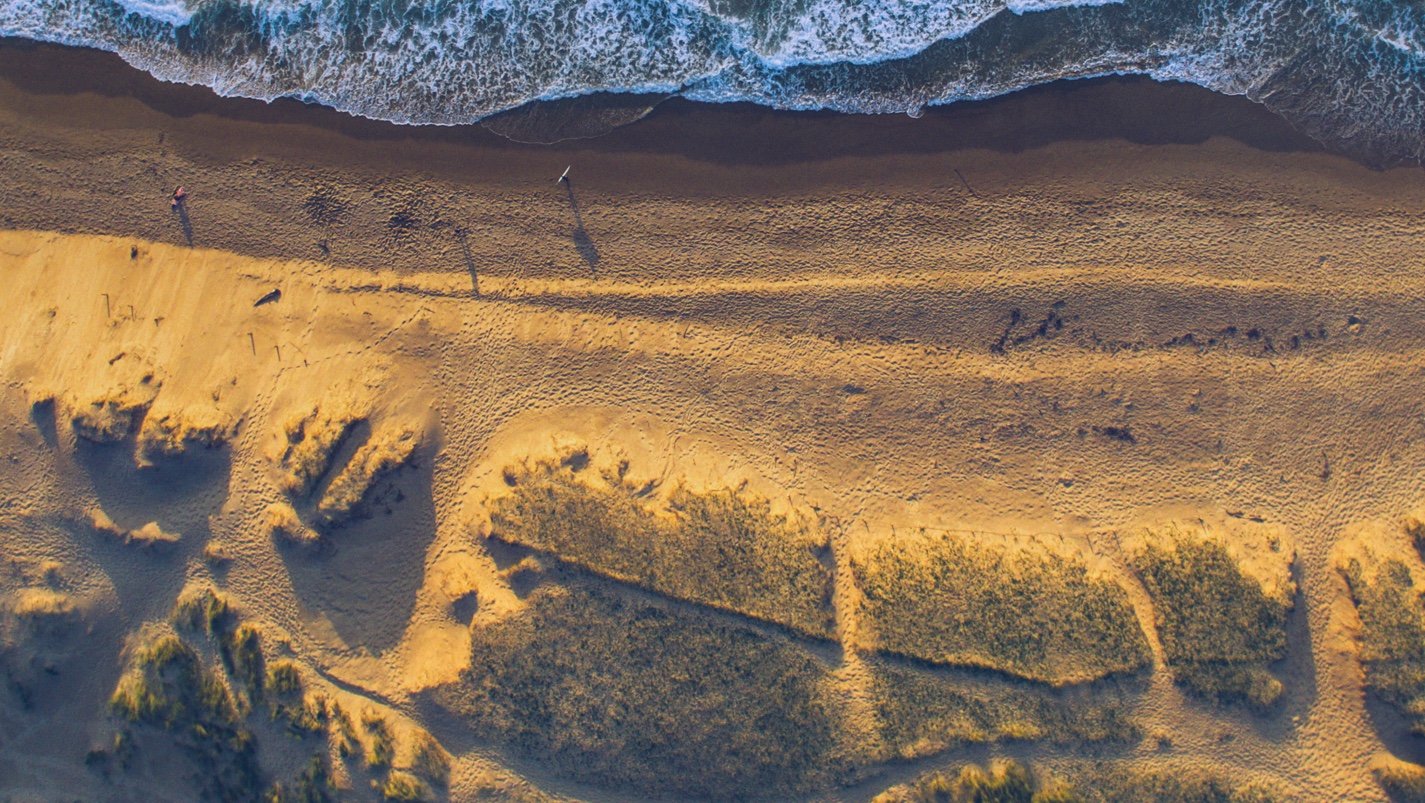
Starting from the northern extreme of the estuary, between the Costa da Morte and Muros, you can stand atop Louro mountain, a 241-metre high granite block, and feast on the views of the Ria de Muros e Noia and the Lagoa de Xarfas with its fabulous Area Maior beach. The surrounding –hills, dunes, beach and the lagoon—boast a wealth of flora and fauna. There’s even an observatory for watching migratory birds.
Muros
Heading south we come to the town of Muros, founded in the 10th C. , and now featuring modest fishermen’s houses next to lordly mansions from bygone times. A stroll the town in the late afternoon can be timed to coincide with the arrival of the boats in the evening after a day’s fishing. The fish is put up for sale immediately on the dock, which is also an interesting spectacle to watch. And it means your shellfish dinner will be fresh and delicious. You won’t be disappointed by any of the restaurants under the arches near the water’s edge.
Just three kilometres away on the road to Noia is the Muíño de Mareas do Pozo do Cachón, a flour mill powered by the tides, built in the last quarter of the 19th C. There is also an interesting museum.
Noia
Noia is the biggest town in the estuary, and is only 36 km distant from Santiago. According to tradition, it was named for Noah, who is believed to have settled there after the Biblical flood. The city’s coat of arms shows an ark and a dove bearing an olive branch.
The old quarter features two churches built in the local version of the Gothic style: San Martiño (15th-16th C.) and Santa María a Nova (14th C.), the latter with a fascinating collection of about 500 tombstones. The 16th C. convent of San Francisco may also be visited, and the town is replete with stately mansions, such as the Casa da Xouba, the Pazo Dacosta (or Casa de Rivas), and the Pazo Forno do Rato. In the Obre district the pazos (mansions) of Pena de Ouro and Bergondo are worth a visit.
Some five kilometres from de Noia, across the Tambre, we come to the Ponte Nafonso, a bridge built during the 12th C. reign of King Alfonso IX of Leon and Galicia. It consists of a score of pointed arches lying on granite ashlars. The setting against the sea and mountains makes the sight of the bridge all the more spectacular
Castro de Baroña
On the south side of the estuary, next to the fishing village of Porto do Son, is the Castro de Baroña, an Iron Age Celtic settlement, with a score of round or oval stone cottages, once thatched, on a small peninsula. The archaeological remains and the wonderful landscape make it a worthwhile visit.
Corrubedo Dunes Nature Park
Between the Ria de Muros and Noia and that of Arousa, to the south, lies this lovely park with beaches, dunes, fresh- and salt-water lagoons, wetlands, and even megalithic remains. One of the main attractions is the “moving dune”, a restless pile of sand about a kilometre long , 200-300 meters wide, and 20 metres tall.
Some Further Recommendations
Though the quickest way to explore the Muros and Noia estuary is by the AC-550 coast road, we recommend side trips into the surrounding hills to get the best views.
For lodging there are numerous country inns and guest houses on both sides of the water, most of them in old and typical buildings. A particularly unusual place to stay is the hotel Pesquería del Tambre, in the Tambre river valley on the site of and old hydroelectric dam transformed into a nature hotel by the architect Antonio Palacios.
Check out our flights to Santiago de Compostela and head west to the sea!
Text: Isabel y Luis Comunicación
Pictures: Turismo de Galicia
more info
10 Great Places in Chiado
Lisbon has that special magic of the cities that simply reek of history, that charm of the cities where so many things have happened and that offer so many ways to enjoy them. Lisbon, an intellectual and Bohemian city like few others in Europe, can be found at the mouth of the River Tagus on the coast of the Atlantic Ocean. The historic centre is built on seven hills, meaning that many of its streets are quite steep and that the three cable cars and one lift are very much appreciated by locals and tourists alike. Yes, the cable cars in Lisbon are truly special and give you the sensation of being in a city where things take their time and where being in a rush is not something the city’s inhabitants are fond of. Prepare yourself for enjoyment, relaxation and a wealth of experiences as you stroll through the delightful districts of this city.
The route we suggest here will take you through the district of Chiado.
Chiado is located between the famous Bairro Alto and La Baixa. Almost everyone who has been to Lisbon before remembers the district of Chiado for the statue of the Portuguese poet, Fernando Pessoa, sat at a table on the terrace of the Café A Brasileira. However, Chiado has much more to offer: businesses, cafés dating back to the early 20th Century and old shops. Chiado is the part of Lisbon where writers used to meet in the late 19th and early 20th Centuries, meaning that it has a certain aura of intellectualism (similar to Saint-Germain-Des-Pres in Paris) well-earned for having witnessed many literary geniuses walk its streets.
Here are ten places for getting to know the very best Chiado has to offer.
1. Young people gather at the Mirador de Santa Catarina for a drink at the feet of Adamastor while they observe the sunset as the day gives way to the Lisbon night life.
2. Starting you night in Chiado at Bicaense is never a bad idea. One of the coolest venues in Portuguese night life, this place has style, lacks pretension and offers a relaxed atmosphere. DJs and drinks to begin the night before heading over to the liveliest part of the Barrio Alto.
3. One interesting aspect of Chiado is Caza Das Vellas Loreto. This candle shop offers little in the way of cool and is nothing special if you are looking for unique places in the Portuguese capital but that is precisely what makes it special. If you happen to be in Chiado, take a look around this candle shop – they come in all shapes and sizes.
4. Cafe A Brasileira is the place you simply must visit in Chiado if you are a fan of poetry, literature and/or Pessoa. It is a legendary café and meeting place for the literary community in Lisbon. There is one table that has a seated statue of Fernando Pessoa. You have to see it.
5. Try a saikirinha (sake mixed with kiwi) on the chill out terrace on the top floor of the Hotel Bairro Alto. This is where all the beautiful people in Lisbon meet. It was recommended to us by one of the most influential bands in Lisbon, Buraka Som Sistema. Absoutely essential if you want to know what the local people get up to in Lisbon at night.
6. Perfect for enjoying a nice steak. Bohemian atmosphere, busy, happy. Treat your stomach and eat at La Brasserie De L’Entrecôte. Your stomach will thank you for it.
7. If your budget won’t stretch to an excellent steak or if you prefer to eat something lighter, theRestaurante-Lounge Storik offers wonderful international cuisine that will give something to remember from your visit to Lisbon.
8. Another interesting place in Chiado in terms of shopping and somewhere that is 100% Portuguese is A Vida Portuguesa. Here you will find a little bit of everything Portuguese: embroidery, pencils, traditional Portuguese products, soaps, icons of saints, etc.
9. The Cafe No Chiado is the perfect spot for a chat or reading the paper. You can also enjoy a bite to eat if that’s what you’re after. An oasis of peace and tranquillity to be enjoyed alone or in good company.
10. At the Teatro Mário Viegas, they perform the best and newest pieces from the world of Portuguese theatre. If you like the theatre, you should go see a show.
These places make you feel like going yourself, right? Check out our flights for a short break in Lisbon here.
more info

Reykjavik A Great Small City I
This, the first part of the post focuses on the rich music scene in the Icelandic capital. As we shall see, it is an enchanting, visitor-friendly city, full of contrasts.
To some extent, if you’ve only seen Reykjavik, you haven’t really seen Iceland. What you have seen, though, is its openness to the world, its warmer, more friendly side, making you feel comfortable despite being thousands of kilometres from home. For, once you leave the welcoming streets in Reykjavik’s city centre, the distances between built-up areas grow exponentially, with population centres distributed like in the United States. Reykjavik itself is the largest city on the island, with a population of 130,000 inhabitants – 215,000 if you include its surrounding areas. Once you leave the limits of Reykjavik, nature rules, but that is another story we will deal with some other time.
While the freezing winter temperatures preclude the sort of sightseeing we Mediterraneans are fond of, a visit to Reykjavik in spring, summer and early autumn can be a fantastic experience. In early October, temperatures in the city are still bearable for Spanish tourists, ranging from a minimum of two degrees to a maximum of ten. Well, that’s cold, but not untowardly so. With that in mind, and given the scarce sunlight hours, you will feel like walking up and down the street and peeking into the shop windows ranged one after the other in the city centre. Craft stores, fashion stores and boutiques with a huge variety of apparel. Those selling jerseys with colourful, handmade patterns come highly recommended. Then there are the restaurants, musical bars, art galleries and even record shops, making downtown Reykjavik a large business emporium, although worlds apart from the crowding of the large European city centres. Here, everything is carefully thought out, but endearingly so – shops all have their own personality and service is warm and friendly. You won’t be overwhelmed by ghetto-blasting piped music, endless queues or intrusive, frenzied marketing campaigns.
When you’re ready to grab a bite, your options range from strong-tasting local fare to Italian-style pizzas, like those served up at Primo Ristorante, while appetising Nordic- and Slavic-style soups are also much in vogue – be sure to visit Svarta Kaffi, at Laugavegur 54, where the soup is served in bread. Also worth trying are the hot dogs at Bæjarins Beztu Pylsur (Tryggvagata 1), a street stall where, according to George Clinton, they make the best hot dogs in the world. And, don’t worry about the service. Apart from the fact that you can come across people of various nationalities – among them, quite a few Spaniards – Icelanders are friendly yet discreet people. And, don’t be surprised if the waiters or waitresses seem very young by Spanish standards. While work may be considered ennobling, in Iceland they appear to have learned this earlier than in other European countries.
For those who don’t fancy walking about, Reykjavik has several bus lines covering the city centre and surrounding areas.
A trip to Iceland could start in the streets of Reykjavik and then strike out necessarily across the island, one of the most beautiful in the world for those seeking tranquility, a magical atmosphere and nature in the raw. In the city, buildings are painted in various colours, so you can come across one with blue walls adjoining another in stately white, tainted by the passage of time. In the wild, the white of snow and ice, the bright green of the vegetation, volcanic greys and browns and the one thousand and one hues of freely flowing waters combine to create a colour palette which underscores the majesty of this land’s natural surroundings, which Icelanders have long protected, a sentiment deep-seated in their hearts.
While your first port of call may be the city, you should also consider taking the chance to venture out into Iceland’s wild, free interior. To go no further, Reykjavik harbour provides numerous options of three- to five-hour boat rides to go whale-spotting. The idea is to observe various types of whales swimming freely in the cold Arctic waters; whales of different sizes, as well as an amazing variety of dolphins. But, don’t get your hopes up too fast – the animals aren’t just out there waiting for you to come along. It’s up to the gods of the sea whether you will be lucky enough to spot them, or whether your trip will be successful. Indeed, you are more likely to get the desired results by going on an outing to the areas where those “little Atlantic friars” the puffins live and nest. Some eight to ten million puffins are believed to inhabit the territory.
But, there is a lot more to do in a city like Reykjavik. From there you can watch the fantastic northern lights and, if you are lucky, you will coincide with one of the few occasions when the city lights are switched off to enhance everyone’s viewing experience of this natural wonder. You could also visit Hallgrímskirkja Church – with grey tones on the outside, and striking forms and interior spaces – or have a dip in the warm waters of any number of thermal baths, both in the city and outside it.
Our next post will focus on one of the most prolific and interesting music scenes on the planet. Fire up and discover the world’s northernmost capital – check out our flights here.
Text by Joan S. Luna (Mondo Sonoro)
Images by Los Viajes de ISABELYLUIS
more info
Vintage Barcelona
Whoever lands in Barcelona for the first time is well aware of its fame as a design hub. For decades the city has been known for its openness to new trends and its links to modernity. It is precisely that flair for the modern that has led dozens of stores specialised in vintage objects and furniture to be opened in the Catalonian capital.
From a Scandinavian teak sideboard to Formica worktops, all manner of lamps, French garden chairs and furniture by anonymous craftsmen, veritable gems are to be had in these shops, which you should not miss during your stay in Barcelona.
You’re Sure to Find it in Gràcia
One of the highest concentrations of retro furniture stores is in the district of Gràcia. What with its array of long-standing establishments, neighbourhood cinemas, artists’ studios and designers’ workshops, the district has become one of Barcelona’s main leisure and shopping areas. Strolling through its picturesque squares and narrow streets, Gràcia oozes charm throughout and is one of the best spots to experience the city’s genuine ethos. It was here that Alzira (C/ Verdi, 42) opened over ten years ago. Mónica, its owner, personally restores all the pieces of furniture on sale and the store has become a landmark in the sector, with a selection ranging from industrial trolleys to dining-room tables with tapered legs, psychedelic lamps and French crockery. Make sure you also see her collection of brooches from the 20s through the 70s. A short distance away, hard by the celebrated Plaça del Diamant, is La Mueblerí (C/ Topazi, 17), a veritable temple of furniture, where Aurora and her son import select pieces from various countries to merge them with traditional Spanish furniture. On sale in this former workshop converted into a store is a wealth of vintage school maps, sun wall mirrors, chairs of all kinds, doctor’s glass cabinets from the fifties and mid-century furniture. They also restore furniture and have an online sales website. Coco, their Jack Russell, would love you to stop by.
And, before leaving Gràcia, make sure you drop in on Topitos Furniture (C/ Torrent de l’Olla, 30), featuring one of the best selection of lamps in town, on display in a small space. David is a lighting lover and the treasures he has on offer include Lumica designs, mushroom lamps in sixties colours, opalines from the forties and lamps from Manises. Additionally, perched atop the garden tables and other furniture you will find a careful selection of bronze and ceramic animal figures, crockery and glasses in many colours and all kinds of decorative objects.
Vintage Stores in El Raval and El Born
And, from one tasteful quarter to another. El Born is one of the liveliest districts in Barcelona. Wending your way among restaurants, ebullient terrace cafés, historic buildings and droves of tourists you will come to Gidlööf (Passatge Mercantil, 1), a must-see for enthusiasts of things Scandinavian. Here, the Swedish textile designer, Sofia Gidlööf, and the Barcelona architect, Gium Costa, have crafted a space where 20th-century furniture and other items from northern Europe are on display alongside their own designs.
Still in the city centre is a charming lane near La Rambla which reveals a hidden gem in the form of El Changuito (Passatge de la Pau, 13), a shop specialising in retro garden furniture, vintage mirrors and lighting. The premises are spacious and the displays well curated; indeed, you can easily get lost inside it for a while. From El Changuito you can head into El Raval, one of Barcelona’s most multifarious districts. After a short walk you will come to Fusta’m (C/ Joaquim Costa, 62), a priceless store owned by Lidia and Oriol where original furniture and objects rub shoulders with vintage remakes. Oriol, a carpenter by trade, also makes super, customised furniture.
Now, all that’s left is to find the piece you were looking for. Why wait to seek it out in Barcelona? Check out our flights here.
Text and images by Aleix Palau for ISABELYLUIS Comunicación
more info