

From Beach To Beach Along the Camí de Cavalls
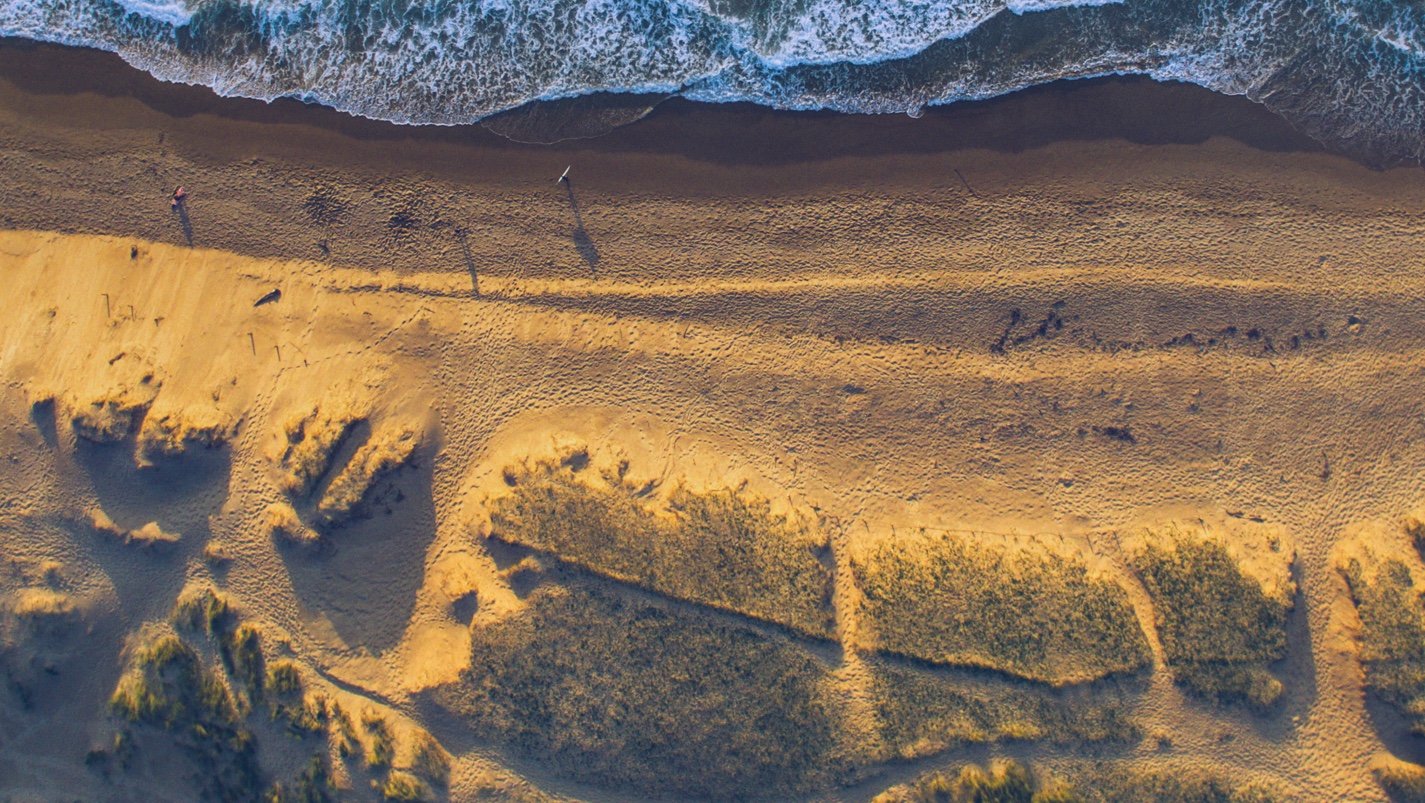
Why deny it – one of the main reasons for going to Menorca, albeit not the only one, is its magnificent beaches. They come in all sizes and shapes, suited to all tastes. Some have fine white sand and crystal-clear waters; others, reddish sand, surrounded by pine forests, while still others take the form of comparatively inaccessible, secluded coves. Some are for day-tripping with the kids; others, for the more adventurous…
An alternative way of roaming this small piece of the Mediterranean to seek out its beaches is by hiking along the footpath known as the Camí de Cavalls (Horse Trail), a route that encircles the island and enables ramblers to rim Menorca from tip to toe while taking in spectacular, ever-changing views from one stretch of the coastline to the next. Along this 185-kilometre route you will come across all types of beaches, as well as pasturelands and cultivated land, beautiful, refreshing pine forests, cliffs topped by ever-vigilant lighthouses, old watchtowers, urban precincts and, more importantly, all the magic you can imagine.
The origins of the Camí de Cavalls are hazy. What we do know, however, is that some stretches of the trail were already in use in the 14th century and that the need to defend the island from pirates and possible invasions led to the construction of defensive towers at strategic points, and to the building of a road that would encircle and connect the whole island. It fell into disuse in the 20th century and marked deterioration set in. However, following the enactment of the “Camí de Cavalls Law” in the year 2000, the footpath was repaired, restored and signposted, turning it into a veritable landmark for tourists and locals alike, as from there Menorca can be enjoyed in all its splendour and scenic variety.
The best time of year to venture along the trail is in spring or autumn, when the temperatures are milder and the route is less crowded. It is best negotiated on foot, although there are many stretches which can be comfortably covered by bicycle or on horseback, a tribute to the animal that gave the trail its name. Whatever way you undertake the trip, there are a number of basic recommendations you should follow, like wearing a hat to protect against the sun, or taking sufficient food and water with you, as not all beaches and coves you encounter along the way have a beach hut where you can refuel and, when you do find them, they are likely to be closed if you’re hiking off season.
The Camí de Cavalls is divided into 20 stages. Those in the north are more difficult to negotiate as the terrain is more arid, while the southern legs are more suitable for a family outing.
Stage 1: Mahón-Es Grau
Duration: 3 h 30 min, Distance: 10 km, Difficulty: Medium
Stage 2: Es Grau-Favàritx
Duration: 3 h 30 min, Distance: 8.6 km, Difficulty: Medium
Stage 3: Favàritx-Arenal d’en Castell
Duration: 5 h, Distance: 13.6 km, Difficulty: Medium
Stage 4: Arenal d’en Castell-Cala Tirant
Duration: 4 h, Distance: 10.8 km, Difficulty: Low
Stage 5: Cala Tirant-Binimel·là
Duration: 4 h, Distance: 9.6 km, Difficulty: Medium
Stage 6: Binimel·là-Els Alocs
Duration: 5 h, Distance: 8.9 km, Difficulty: High
Stage 7: Els Alocs-Algaiarens
Duration: 4 h 30 min, Distance: 9.7 km, Difficulty: Medium
Stage 8: Algaiarens-Cala Morell
Duration: 2 h 10 min, Distance: 5.4 km, Difficulty: Medium
Stage 9: Cala Morell-Punta Nati
Duration: 3 h, Distance: 7 km, Difficulty: Low
Stage 10: Punta Nati-Ciudadela
Duration: 4 h, Distance: 10.5 km, Difficulty: Low
Stage 11: Ciudadela-Punta de Artrutx
Duration: 5 h, Distance: 13.2 km, Difficulty: Low
Stage 12: Punta de Artrutx-Cala en Turqueta
Duration: 5 h, Distance: 13.3 km, Difficulty: Medium
Stage 13: Cala en Turqueta-Cala Galdana
Duration: 2 h 30 min, Distance: 6.4 km, Difficulty: Low
Stage 14: Cala Galdana-Sant Tomàs
Duration: 4 h 30 min, Distance: 10.8 km, Difficulty: Medium
Stage 15: Sant Tomàs-Son Bou
Duration: 2 h 30 min, Distance: 6.4 km, Difficulty: Low
Stage 16: Son Bou-Cala en Porter
Duration: 3 h 30 min, Distance: 8 km, Difficulty: Medium
Stage 17: Cala en Porter-Binisafúller
Duration: 4 h 30 min, Distance: 11.8 km, Difficulty: Low
Stage 18: Binisafúller-Punta Prima
Duration: 3 h 30 min, Distance: 8.1 km, Difficulty: Low
Stage 19: Punta Prima-Cala de Sant Esteve
Duration: 2 h 40 min, Distance: 7.3 km, Difficulty: Low
Stage 20: Cala de Sant Esteve-Mahón
Duration: 2 h 20 min, Distance: 6 km, Difficulty: Low
After learning about this valuable part of Menorca’s historical and cultural heritage, all that’s left is to book your Vueling and experience it for yourself!
Text by Los Viajes de ISABELYLUIS
Images by Franco Vannini
more info
Tell me what you eat and I will tell you where to go in Jerusalem
You want to eat local produce? Head for the Mahane Yehuda market, where you will find all the locally sourced commodities: fresh, sweet, fleshy dates, grains, seeds, spices, nuts, heaps of dried fruit, olives of all kinds, tahini (a paste made from toasted, ground sesame seeds – go to the specialists at the Halva Kingdom stall), local craft beer (in the Beer Bazaar), confectionery… You will come across over 250 quaint stalls in this market, also known as “The Shuk”. And, like any Middle Eastern market, it greets visitors with a blast of aromas, colours and an unusual, amusing chaos which we’re very fond of. Mahane Yehuda Street.
You want to eat hummus? No Israeli table can afford to be without this dish, based on mashed chickpeas, just like tahini. And, when you taste it, you will succumb to its intense flavour and eminently smooth, creamy and compelling texture. One of the most popular hummus dishes can be had at Rahmo, a traditional-cuisine, self-service eatery which, more than vintage, might be described as shabby. But, as is often the case in such traditional spots, their homemade cuisine is marvellous. Their hummus, based on a secret recipe which requires days of careful preparation, is served with a generous layer of virgin olive oil and large helpings of pita bread which you will never stop dipping. At Rahmo you could also try the kubbeh hamusta soup (ox meat and semolina cooked in a vegetable and lemon broth), and a variation with beetroot, both great local specialities. 5 Ha-Eshkol.
You want international cuisine? Menza, one of the prettiest and most modern eateries in Jerusalem, offers great contemporary cuisine with a nod to the world at large. It is located in a pleasant pedestrian precinct, adjoining the Fine Arts faculty, given over to a craft street market and buskers which liven up a sojourn on their terrace, where you can enjoy lunch or brunch. The inside features warm interior design, in line with contemporary taste. Their menu boasts the international dishes currently in vogue, including ceviche, tartare and kebab, prepared using locally sourced ingredients. 10 Bezalel.
You want an ice-cream? We can safely say that Mousseline is possibly one of the best ice-cream parlours in the world. A small establishment, the only thing it can boast about are its exquisite sorbets and ice-creams, which truly taste of the flavours they are advertised as. The options are highly varied and include both classic and unusual flavours – masala chai, saffron, cream cheese and red fruit, dark chocolate, almonds, rose water… We recommend the coffee and the vanilla ice-creams, as well as the lemon and mint sorbet. 6Ha-Eshkol Street.
You want to have pita bread or challah? According to those in the know, the best pita bread and challah – a traditional braided bread eaten on the Sabbath – is baked in Nechama’s Bakery. Opened in 1910, the bakery also churns out pastries, buns and different types of bread almost incessantly in full view of their customers. It is located in the Mea Shearim district and the aroma that wafts out of the oven is mouth-watering. Haside Pinsk-Karlin.
You want a typical breakfast? Modish Israelis have been seized by brunch fever. So, why not keep up with the times and indulge in this ritual? At Kadosh, with its ultra-cool air, which has remained open since 1967, you will find a broad variety of international dishes and confectionery. Above all, though, you will be able to taste their shakshuka. This traditional dish consists of fried eggs cooked over a slow fire in sautéed tomato and assorted vegetables. It is served with bread, varied salads and – needless to say – the ever-present hummus and tahini. Ideal for a brunch on their very cute terrace. 6 Queen Shlomziyon Street.
You want a falafel? The star of national street food, it is made of chickpeas, garlic, parsley, spices, olive oil, onion, cilantro and yeast. At Moshiko Falafel, a take-away establishment, you can savour one of the best falafels in Jerusalem – or in all Israel, according to die-hard devotees – served in pita bread and laced with yoghurt or tahini, gherkins and crudités. They are rich enough to sit in your stomach throughout a long stroll across the city and its cultural and historical sites. 5 Ben Yehuda.
Don’t miss out on Jerusalem’s delicious culinary offerings – book your Vueling to Tel Aviv here.
Text and photos by Laia Zieger of Gastronomistas.com
more info

Essential Culinary Highlights in Gijón
Some months ago we wrote about five must-visit restaurants in Gijón: Los Pomares, where the fabada is a winner; El Quinto, a wine tavern with globe-trotting tapas; Casa Trabanco, a cider mill with guided visits laid on and dishes based on ingredients from their own market garden; El Candil, which boasts the best fish in town, and La Bolera, a grillroom acclaimed throughout Spain.
Should the list not make the grade – it does, I can assure you – Gijón also hosts several gastro-events which provide an excellent pretext to visit.
Flavours of Arcu Atlánticu
Billed as a culture festival featuring a blend of literature, performing arts, fine arts, music and cuisine from the Atlantic regions of Spain, France, Portugal, Ireland and the United Kingdom, the festival also features star chefs in action. Graced with awards by the city of Gijón, they cook on an enormous stage in the Plaza Mayor before more than 1,000 people, flanked by giant screens, as if a rock concert were being staged. This year, it will be held on 1 August. The event has already hosted such celebrities as Elena Arzak, Eneko Atxa, Andoni Luis Aduriz and Dieter Koschina, the chef at the Vila Joya restaurant, until recently the only Portuguese eatery with two Michelin stars.
Natural Cider Festival
In the week from 22 to 28 August, Gijón tastes only of cider. Around thirty cider mills set up their cider-serving stalls in two urban settings – the Plaza Mayor and the marina (alongside a sculpture known as “The Cider Tree”, made up of bottles from 80 Asturian cider mills). For a token fee, visitors get a commemorative glass they can fill up free-of-charge at any of the stands throughout the day at the so-called Mercadín de la sidra y la manzana (cider and apple market). There are various activities during the week. The bus de la sidra or “cider bus”, which visitors can take to the local cider mills, cursos de escanciado (courses in cider-pouring) and cancios de chigre (cider tavern songs) when hundreds of people gather in the Plaza Mayor to sing the most popular songs of Asturias, while on Poniente Beach there will be an attempt to break the Guinness simultaneous cider-pouring record. Set in 2014, it brought together 8,448 cider pourers.
Gijón de sidra
The Gijón de Sidra festival is held for eleven days each October (this year, from 6 to 16 October), during which cider mills from all over Asturias are twinned with emblematic cider taverns in the city. Each tavern then offers a bottle of cider from the mill they represent, in addition to a homemade portion of food served in a cazuelina, all at a moderate price, accompanied by the singing ofcancios de chigre(cider tavern songs).
Gastronomic Workshops
You can always join some gastronomic workshop around the time of the traditional fiestas. The celebrations of Antroxu (Carnival), with pote (hotpot), picadillo (mince) and frixuelos (flour fritters); those of Holy Week, the Asturian de Pinchos contest (in February), the pinchos (meat on the skewer) contest at the Gijón Sound Festival (last held from 15 to 17 April), and the Pinchos de Gijón championship (in November).
The Cider Route
A good way of learning everything you need to know about cider, the Asturian beverage par excellence, is by indulging in it. Depending on the ticket you purchase, you can learn the secrets of cider making, visit outlets where it is sold, take part in tasting sessions or eat candies made with apple. (There are four types of ticket, which are sold at the Gijón Tourist Offices or online). Available throughout the year.
Gijón Gourmet
Epicureans have the chance to lunch or dine at seven of the best restaurants in Gijón (Casa Gerardo, Agua, Bellavista, El Candil, La Salgar, Casa Víctor, Ciudadela) at an attractive price – 50 euros in the case of Michelin-starred eateries and 45 euros in the others. The menu comprises two starters, two main dishes, dessert and wine. When booking, all you need to point out is that you want a Gijón Gourmet Menu (only tables of up to 8 diners are eligible for the offer).
Gijón Goloso
Gijón Goloso works in a similar way. Considering it is one of Spain’s cities with the most confectionery shops, sixteen of them were selected to make a special sweet which visitors can taste after buying a ticket online or at the Infogijón offices. Five tastings costs 7 euros, while 10 tastings costs 13 euros. The offer lasts all year long, so you have ample time to prepare your trip, as sweet-toothed tourists will never be short of their candies.
Text and photos by Ferran Imedio of Gastronomistas.com
more info

Lanzarote in Body and Soul
“Everyone tells me I ought to get some exercise, that it’s good for my health. But, I have never heard anyone telling a sportsperson they ought to do some reading.” This statement by Saramago prompted me to emphasise here the importance of striking a balance between tourist or sporting hyperactivity while travelling, and living out the experiences of others. Yes, friends, this is the advice of a hyperactive person – it does no harm to occasionally plan rest periods into one’s journeys, or to deploy a few good phrases as a mantra for competing. Indeed, Mr Saramago, you were dead right – you can also travel through reading, when your mind can find some rest, while in sport, not everything is physical. But, why Saramago in a post about Lanzarote? I found out – and high time it was too, for someone who has travelled to the island so often – that the Nobel prize-winning writer had spent his final years on Lanzarote. There, in the village of Tías, you will come across “A Casa” as he liked to call his home. Lanzarote was Saramago’s other homeland. “A whole lifetime to get here”, he announced, when he settled on this southerly island. The landscape of Lanzarote, the volcanoes, its warm nights, the peacefulness and the island’s inhabitants led him to write many of his articles, novels and diaries at his home in the Tías municipality. As the illustrious writer asserted, “This is not my land, this land of mine”, a phrase shown on the sculpture as a homage to him in front of “A casa” and “La Biblioteca”, as his house museum is known. Each and every object in “A Casa” has a special meaning – an olive tree to recall the country of his birth, or the clocks all set to 4 o’clock, as it was at that time he met his widow, Pilar. They all go to make this museum a happy, special place.
We cannot summarise all his work here, but we can choose three phrases that come in handy as motivating mantras at training sessions and competitions:
- There is something inside us with no name, and that is what we really are.
- There is something positive in defeat – it is never lasting. Triumph, however, has something negative – it is never lasting.
- We always end up arriving where someone is waiting for us.
After this short introduction about Saramago and his ties to the island, I must report that I flew to Lanzarote in March to compete in the tri122 de Costa Teguise. This is a triathlon I had advised you to consider, together with the Challenge Fuerteventura (April), as possible warm-up races for the Ironman Lanzarote, which is held in May each year, starting and finishing in Puerto del Carmen. The tri122 event went off well, without incident, although it was windy. The swim took place off the Playa de las Cucharas (where we went windsurfing the next day); the bike course had been altered from previous years, while the foot race was along the esplanade. My advice for this race would be very similar to the pointers I gave you in the Ironman Lanzarote post, so I won’t go into any detail there. For accommodation, I decided to stay at the Barceló, which is right on the Costa Teguise. I was pleasantly surprised to learn first-hand that they would soon have a better, specific programme for sportspeople in their facilities, given that, unlike the opposite side of the island, which we visited on the previous trip, here you can do open-water swimming, something we triathletes appreciate. In short, if you’re looking for wind and waves, the area of Famara is great and, to swim, windsurf and enjoy the beach, Costa Teguise would be the best option.
On a gastronomic note, this time I would choose two proposals:
- Before the race, a good choice for stocking up on carbohydrates is Portobello. Listen up – this is a markedly family setup based on homemade Italian food. Noteworthy is the fact that the owner was kind and helpful.
- The second proposal, for after the race, is La Bohemia. I believe it’s the best place in the Costa Teguise area. Their meat and roast are delicious and the service is excellent and friendly. Don’t worry, if you don’t eat meat, there are many other dishes to choose from on the menu.
As for the visits listed in the previous posting, we overlooked some of the island’s “great hits”, which I can reveal here – Playa de Jablillos, Playa Mujeres, Playa de Papagallo and Lago Verde. They are all splendid options for strolling and switching off, and even for reading! Also, if you like diving, there are facilities to discover scuba diving on the same beach where we went windsurfing.
You might ask: if I’m interested in sport in Lanzarote, are there any other interesting competitions on the island? Well, yes – there is the 70.3 Lanzarote on 19 September, and the 4 stage Mountain Bike and La Santa Duathlon in January. After these recommendations in two different Lanzarote posts, we’ll soon be hopping to another island, as I’m starting to get curious about hiking trails. Both Trans Gran Canaria, which takes place from 4 to 6 March 2016, and Transvulcania en la Palma, in May, are important enough on the international running calendar to be considering them when planning for next season.
Did you sign up for Ironman Lanzarote in the end? Book your ticket here if you’ve enrolled, or go for another date if you want to find out why everyone is training or competing in the Canary Islands.
Text by Raúl Casañas
Images by Ginés Díaz, Jules/Lanzarote InformacionTabayesco, Idoia Núñez
more info