

A route through the Bretagne
Exploring the Bretagne means reviving the exciting medieval European history, delving into its cultural roots, into its traditions and legends. You will discover stunning landscapes: its beaches, cliffs or amazingmedieval towns like Vitre or Fougères, and you will get the most out of the beneficial effects for the body of Atlantic waters. Bretons are fond of spas and some of the best spas to relax and get purified are located in Dinard and La Baute .
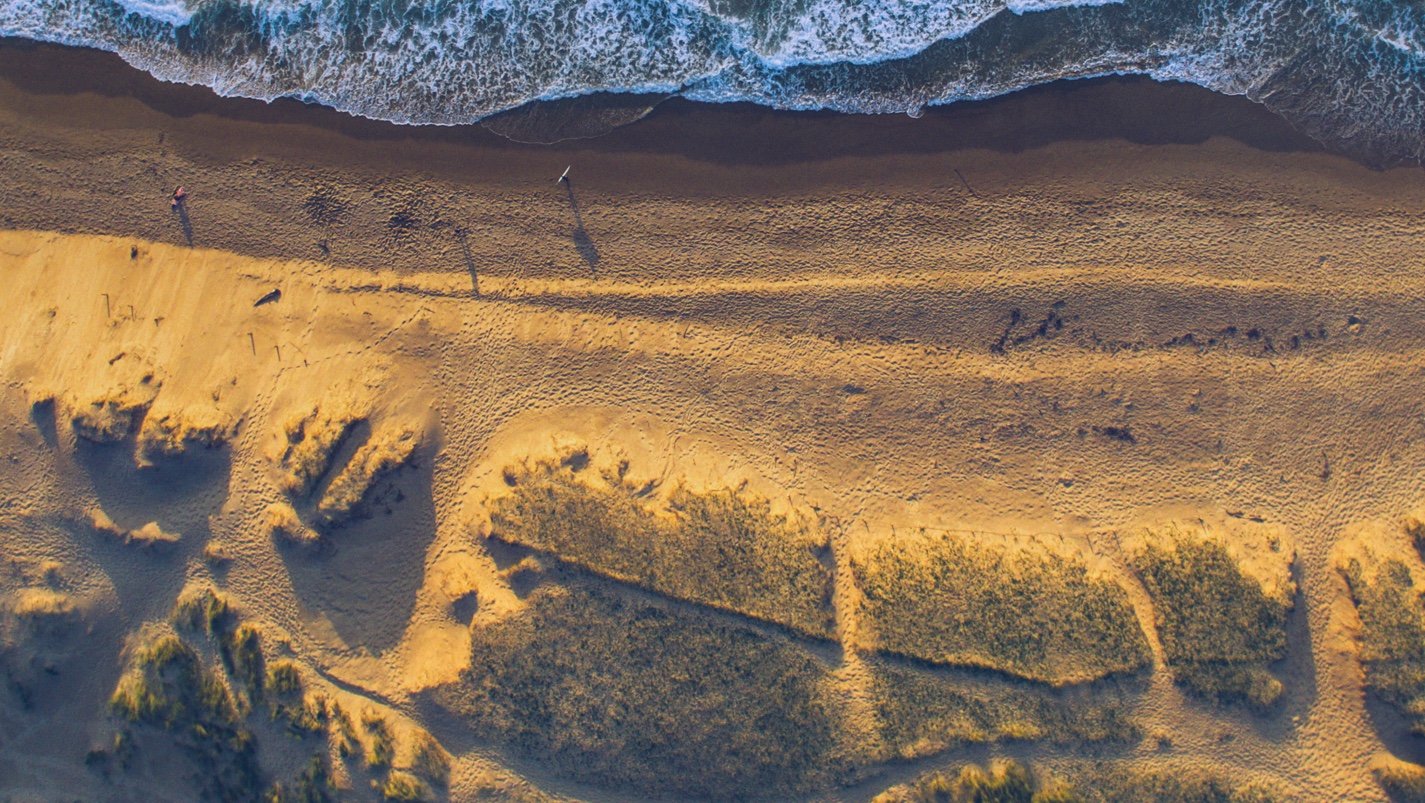
The French Brittany is a large peninsula. Its 1,200 kilometers of coastline and its landscapes and gastronomy prove its close relationship to land and sea, as well as its ancestral traditions, dating back to its Celtic past, actually closer to Ireland or Wales that France itself.
The beauty of the breton coastline is prolonged for its islands, to the North Brehart or Ouessant and the South Sein, Glenan, Groix and Belle-Ile to, paradise of wild beauty with its protected bays and their headlights, and a history and personality. Its ports were strategic points for trade as for military defense and even lands of banishment.
Rennes, capital of Brittany, although it is located at the gates of the Normandy region and is a prominent place of the architectural heritage and witness of the history of the region. Around the two Royal squares, Parliament and the City Council, and their features wood and Renaissance mansions half-timbered houses, centuries of history are drawn.
Brocelandia por CRTB
By the magic Broceliande forest, you will go over hidden trails that will take you by the Bridge of the Secret, the village of Paimpont and its beautiful Abbey and castles of Brocéliande and the passage of Holly.
To the north, in the estuary of the Rance river one comes to Dinan, with its charming old town, and one of the best preserved medieval cities. For its walled enclosure you will discover fascinating monuments as the basilica of Saint-Sauveur or the tower of l’Horlage.
From here the Coast Emerald spreads, with its Green shores dotted with villages, which passes from the walled city of Sain-Malo to the Coast of Pink Granite, which owes its name to its peculiar rock formations of pink shades. And between them, countless sites to explore: the rocky cliffs of Cap Fréhel or Rochefort-en-Terre with its low houses with slate roofs and the charm of the old villages.
Another attraction of the route by the Breton coast is to follow the Way of the headlights, which starts in Brest and ends in Portsall, to take a walk through the half-hundred lighthouses that dot its coastline.
Great painters such as Paul Gauguin and Maurice Denis have immortalized like nobody the Brittany. You can rediscover them in at the Museum of Fine Arts in Pont-Aven. Pont-Aven owes its reputation to the painters’ school that Gauguin led in this fishing village, arrived from Paris and willing to follow his teachings.This population keeps on preserving the nostalgic mills that were happening along the river, which so many times these artists recreated, and its fascination for the painting, but also you will be able to enjoy its famous confectioner’s.
Finishing up the Arch of the Brittany coast to the South, is Carnac, town which houses more than 3,000 prehistoric remains of between 5,000 and 2,000 BC years TIt is the oldest archeological site of Europe, divided into four major areas: Le Menec, Kermario, Kerlescan and Le Petit Menec. You can also complete your visit in the Museum of the prehistory of Carnac..
Eating in Britain
The dilated Breton coastline, bathed by the waters of the Atlantic, mark the gastronomy of the region, which has succeeded like no other, preserve its gastronomic specialities. Fish and seafood take the menus of the restaurants as anywhere else. One of the best oysters in the world, the Belon, and of course, mussels collected here.
In general, all the shellfish and seafood as the spider crab, lobsters or crabs, is collected in its cold waters. This also translates into delicious fish soups. Although if there is a fish by the that the Bretons have a special fervour, that is the cod, which was prepared in all ways imaginable.
But, apart from the fish, in Britain prepares excellent cheeses, as the curé nantais, and butter, cider and delicious pastries. Their crepes, croissants or Sabres will delight the greediest.
Makes you want to go, right? Do it! Check out our prices here!
more info

Slow Sightseeing in Mahón
An appealing and thoroughly slow day might involve strolling leisurely through Mahón, the island’s capital city, as it has one of the most beautiful promenades in the country. The clear waters and the gentle sea breeze wafting in from the gulf make a walk along this promenade an essential experience. We propose the following itinerary, having judiciously weighed up many other potential alternatives.
Venturing Out
Start out on the Camí de Ciutadella and link up with Calle s’Arraval, which leads you into Plaza Bastió. Still standing there is one of the old city gates, a vestige of the 14th century. It is worth stopping in the square to have a bite, before setting out on the walk. Head for Santa Rita, which offers tapas and well-drawn draught beer as its fortes. From there, make for the old town and stroll aimlessly about. After a while, you will inevitably draw gradually nearer to the harbour. The stretch running towards the Moll de Llevant jetty is very pleasant. The right side is lined solid with shops, from those selling craft souvenirs of the island to restaurants, ice-cream parlours and seafaring pubs whose calling card, currently in vogue, is a cocktail based on gin and tonic, downed – gulp! – to the rhythm of chill-out music.
A Stopover
But, let’s take a breather, and the best place to relax is Can Vermut, a youthful spot where you can have well-priced tapas while savouring one of their wonderful aperitifs. As an accompaniment, we recommend the huevos estrellados cabreados (fried eggs and chips with pungent red pepper), anchovies and homemade chicken croquettes.A great tuck-in there will cost you less than 15 euros. After that, the best way to promote digestion is to continue along the itinerary, at a leisurely pace, calmly taking in everything happening around you – enjoy the marvellous maritime views, with the breeze caressing your skin. Before pressing on, go over to the sea side of the street and delight in the sight of yachts and other vessels dotting the coastline. Also entertaining is watching the fish – some are really huge! –in the crystal-clear waters. One way of enjoying the moment is to chill out on the terrace of the kiosko, on the lower reaches of La Costa de Ses Voltes. There, the breeze is likely to rouse you from your lethargy and, if you order a coffee to boot – here, they are served strong – you will regain the necessary vitality for resuming your sightseeing venture.
“Wanderer, there is no path”
Refuelling would be in order now, particularly if you want to negotiate the steep slope back up to the old town. This will take you to the Museu de Menorca, which affords a stunning, panoramic view of the spectacular gulf. The museum is housed in the erstwhile convent of Sant Francesc, where the building and its contents are equally interesting. The latter include unique exhibits from all ages, illustrating the socio-cultural evolution and changes wrought in Minorca, from its pre-history to the present. After that you could have a stroll around the shopping centre, starting at the Plaça de la Constitució, where you can admire the neoclassical architecture of the Ayuntamiento or City Hall. Inside the adjoining Church of Santa María you can have a peep at the monumental organ, comprising 3,210 pipes and four keyboards, designed by the German masters Otter and Kirburz. Near there, at 11 Ses Moreres street, is the Heladería Ambrosia. Resisting the temptation to enter this ice-cream parlour when passing by would be something of a feat. So, you choose a flavour and then head for the Claustro del Carme, just a few metres away, immediately opposite the Plaza de España. From here, both sides of the Calle del Carme are lined with small shops offering wares ranging from confectionery and delicatessen to fine leather.
Tell Me a Story
After window shopping in Mahón, you’re certainly going to need a rest. You could go over to the Teatro Principal de Mahón, to see what’s on the programme. It is really well worth visiting. This was the first opera house to be unveiled in Spain and last year marked its 185th anniversary. The fact is that Minorca has a long-standing operatic tradition. The story goes that many companies that were touring the continent used to stop over at Minorca and it was here that they would stage their dress rehearsals before pressing on to London, Paris or Vienna. It was then that Minorcans came into contact with this genre of theatrical music, and the decision was made to build a theatre devoted mainly to opera, in order to enjoy works in a comfortable setting. And, to round off the day, we recommend going for a pomada – Gin Xoriguer and lemonade – at the Bar Nou. Opened in 1986 by Joan Saura in an art nouveau building, it is now a whole institution among Minorcans, and here they really know what they’re doing.
I’m sure you’re eager to explore Mahón – check out our flights here.
Text by ISABELYLUIS Comunicación
Images by ISABELYLUIS Comunicación, Can Vermut
more info
Dreams of Lava & Ice in the Icelandic Highlands
Iceland is prolific in place-names which are difficult to pronounce, recall and, of course, spell. Landmannalaugar is one of these but, once you have travelled to this oasis nestling in multi-coloured mountains, where spouting thermal springs, sulphurous vapours and fumaroles melt the ice, this musical, fifteen-letter name becomes a simple word you will never forget. On the contrary – each time you utter it, hear it or read it, you will be transported to that natural paradise which has irremediably become part of your very existence.
Landscapes From Another Planet
Here, in this remote spot, which can only be reached in a 4x4 vehicle – in summer, several 4x4 buses ply the route daily from Hella – begins one of the most popular and spectacular hiking trails in the country and, indeed, on the planet.
Officially, it is known as Laugavegur, which translates roughly to “thermal waters route”. It is usually negotiated from north to south for a distance of 56 km as far as Þórsmörk. The hike then continues another 26 km from there to Skógar along a trail known as Fimmvörðuháls. Along this route, which takes from 4 to 6 days, endless scenic surprises await the traveller, from rhyolite mountains with indescribable colours to fields of fumaroles, glaciers and waterfalls, and deserts of lava and active volcanoes.
Accessible Stages
Laugavegur is the most popular stretch of the trail and is divided into four accessible stages of from 12 to 15 km, with stopovers at Hrafntinnusker, Álftavatn, Emstrur and Þórsmörk. Experienced walkers can complete two stages in one go as there are few slopes and the daylight hours are particularly long in the northern summer. Þórsmörk has a station for 4x4 buses so you can take one back to Hella.
Continuing along the Fimmvörðuháls trail from the Þórsmörk valley, the slope becomes steeper and some areas are more exposed and windswept. This stretch can be divided into two spectacular stages with a stopover at the Fimmvörðuháls shelter. This stage is probably one of the most amazing ones in trekking. It takes you past the Mýrdallsjokull and Eyjafjallajokull glaciers, and across a lava field that emerged during the famous 2010 eruption – which grounded so many flights – culminating in a long descent on which you can admire a total of 24 spectacular waterfalls, with the legendary Skógafoss as the final flourish.
Practical Guide
Dates: Open from June to September.
Difficulty: In good weather, the route is easy as far as Þórsmörk, and moderate up to Skógar.
Weather: Weather conditions in the Icelandic Highlands can change drastically in a few hours, even in summer. You should keep checking the weather report at shelters and abide by warnings issued by rangers and the shelter managers.
Navigation: The route is signposted in early summer with yellow stakes placed every few metres. In the event of being overtaken by fog or bad weather, it is useful to have GPS with route tracking. However, bear in mind that the route can vary slightly from year to year, particularly at river crossings.
Gear: Essential to have mountain footwear and warm clothing.
Food: There are no restaurants or grocery stores anywhere along the trail, and they do not serve food in the emergency shelters. However, you can pay for camping or an overnight with a credit card. Thus, you have to be self-sufficient and stock up with all the food you are going to need during the hike (reckon on a minimum of 1 kg per person per day).
A Roof Over Your Head: You need to book in advance to sleep at the shelters along the route. For certain summer dates, this requires booking several months ahead and the trekking agencies usually hog most of the available places.
Camping: There are camping areas around the shelters and they are always pay sites. You don’t need to book ahead, however. Some have showers and rubbish collection. Others only have drinking water and toilets. It is advisable to take a light tent that can withstand strong winds.
Rivers: Avoid crossing rivers at their narrowest point, as that is where they are deepest. You should wear tightly-fitting waterproof sandals to prevent them being ripped off by the current.
Guided Treks: If you prefer to travel light – without having to carry food or camping equipment – want to ensure a reservation in the shelters along the way and enjoy the company of a guide, the specialised agency Tierras Polares covers the whole route in July and August in the course of an 8-day trip, of which six days are spent trekking. Prices from €1,595.
Day Tour All Year Around: You can also visit Landmannalaugar on a Super Jeep Tour. The super jeep is a 4x4 vehicle with oversize tyres which can take you into the Highlands any time of the year, and pick-up is at your hotel in Reykjavik. Price per person: ISK 35,000 (€250).
Venture into the wonderland of the Icelandic Highlands – book your Vueling to Reykjavik here.
Text and photos by Sergio Fernández Tolosa & Amelia Herrero Becker (Con un par de ruedas)
more info

Manchester Hunting For Vinyl
Manchester is one of the most highly industrialised cities in the United Kingdom, but also one of the most culturally alive. Particularly in terms of music – this is the cradle of punk, and of the groups that were spawned thereafter, notably Joy Division, New Order, The Smiths, The Stone Roses and Oasis, young bands eager to forge a better future, far removed from the industrial assembly lines. The fact is that this musical tradition also generated an extensive network of record shops, scattered across the city centre, stores which are still very much alive and kicking.
The good thing about Manchester is that, being a comparatively small city, roughly the size of Barcelona, it doesn’t take long to get from one end of it to the other. So, if you’re thinking of going there, while you’re visiting the stores we recommend in search of that record you are missing from a collection, or simply just browsing and getting your fingers grubby, you will also have time to wander through the area where the legendary disco, The Haçienda, was located, as well as the Museum – of Science and Industry, of course. So, let’s get started with those five temples of vinyl:
Empire Exchange
Rather than a store, this is more of a basement warehouse where you can wander about and breathe in dust, in search of that record by The Beatles or The Rolling Stones you need to round off your collection. Empire Exchange is acclaimed for having one of the most comprehensive selections of seven singles in England. Indeed, they stock records released from 1930 onwards. This temple of rare vinyls is located in the city centre, specifically, on Newton Street.
Piccadilly Records
Situated in the heart of Manchester, on such a venerable precinct as Oldham Street, you will feel like just another Mancunian when you stroll along it. Piccadilly Records specialises in rare albums which are hard to come by, but also in new releases of independent pop and rock and reissues of classics. Incidentally, the store is very near Piccadilly Gardens, one of the city’s loveliest green areas. It is ideally placed for visiting afterwards and having an impromptu picnic.
Clampdown Records
A small but charming shop which packs a punch, and its vintage appearance endows it with a special status. Here you will find an exquisite selection of used vinyls (especially punk and new wave) and, if you’re game for getting your fingers dirty, you can pick up some gems at a great price. Clampdown Records is on Paton Street, next door to Manchester’s old town. The area has a generous sprinkling of restaurants where you can grab a weekend brunch.
Vinyl Resting Place
Like Clampdown Records, this is also a small store which has maximised available space to a tee. It is on the third floor of Afflecks Palace, right in the centre of Manchester and near both Piccadilly Records and Empire Exchange. So, all you need is a good pair of trainers with air pockets to wander about and fit in. Vinyl Resting Place stocks a good collection of used vinyls, which range from reasonably-priced records to rare releases which will cost you an arm and a leg if you bite the bait. You’ve been warned!
Soundwaves Here We Come
This is the ideal spot for winding up your tour, as the store is also located in Afflecks Palace, just one floor down from Vinyl Resting Place – you just have to slide down the stairs to get there. The list of used vinyls at Soundwaves Here We Come encompasses virtually all styles. What’s more, if you’re lucky, you may catch some group playing live, as the store owners organise regular concerts to promote the city’s upcoming bands. Who knows – you may even be fortunate enough to cross paths withThe Stone Roses!
Put on your walking shoes and experience the magic of record hunting – check out our flights here.
Text by Xavi Sánchez for Los Viajes de ISABELYLUIS
Images by Marc Wathleu
more info