
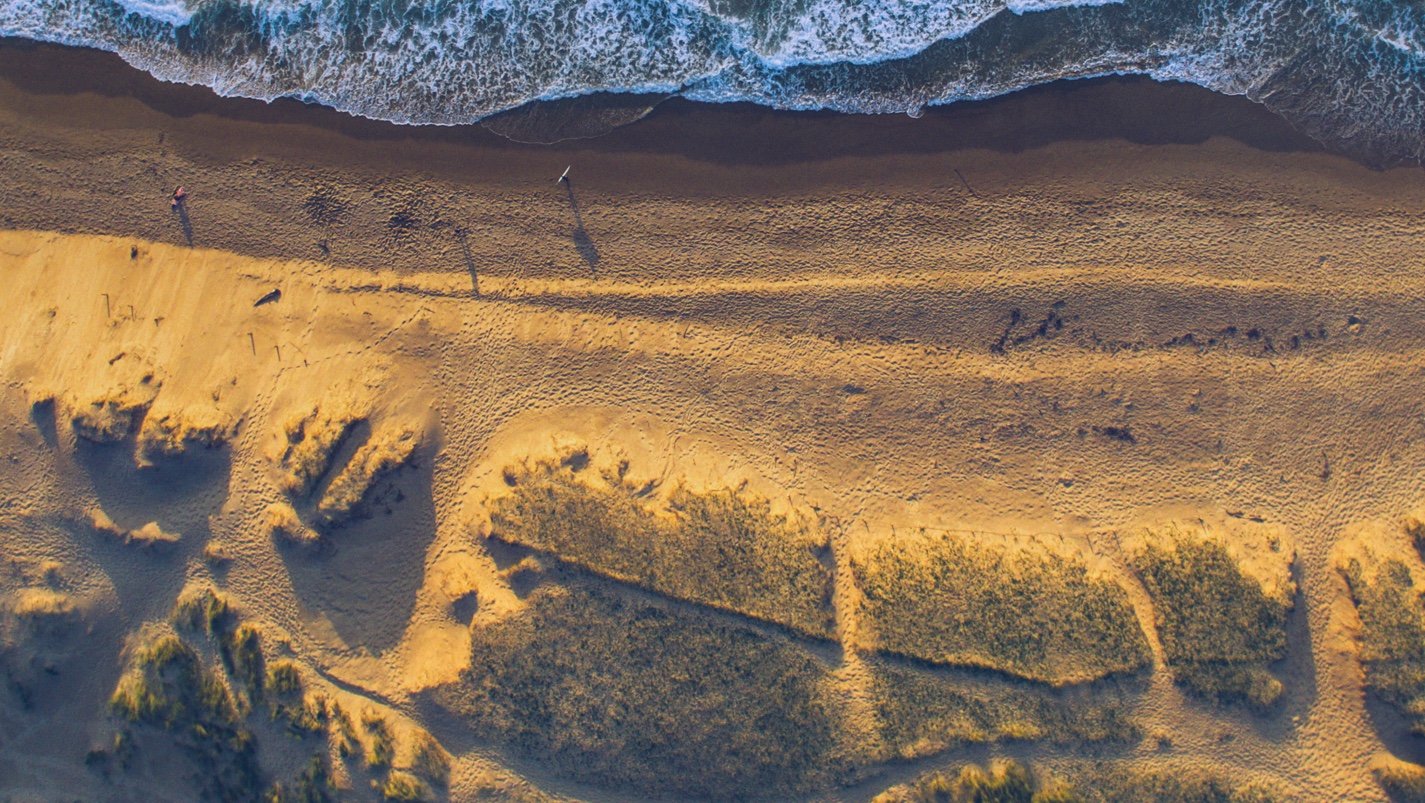

Lanzarote in Body and Soul
“Everyone tells me I ought to get some exercise, that it’s good for my health. But, I have never heard anyone telling a sportsperson they ought to do some reading.” This statement by Saramago prompted me to emphasise here the importance of striking a balance between tourist or sporting hyperactivity while travelling, and living out the experiences of others. Yes, friends, this is the advice of a hyperactive person – it does no harm to occasionally plan rest periods into one’s journeys, or to deploy a few good phrases as a mantra for competing. Indeed, Mr Saramago, you were dead right – you can also travel through reading, when your mind can find some rest, while in sport, not everything is physical. But, why Saramago in a post about Lanzarote? I found out – and high time it was too, for someone who has travelled to the island so often – that the Nobel prize-winning writer had spent his final years on Lanzarote. There, in the village of Tías, you will come across “A Casa” as he liked to call his home. Lanzarote was Saramago’s other homeland. “A whole lifetime to get here”, he announced, when he settled on this southerly island. The landscape of Lanzarote, the volcanoes, its warm nights, the peacefulness and the island’s inhabitants led him to write many of his articles, novels and diaries at his home in the Tías municipality. As the illustrious writer asserted, “This is not my land, this land of mine”, a phrase shown on the sculpture as a homage to him in front of “A casa” and “La Biblioteca”, as his house museum is known. Each and every object in “A Casa” has a special meaning – an olive tree to recall the country of his birth, or the clocks all set to 4 o’clock, as it was at that time he met his widow, Pilar. They all go to make this museum a happy, special place.
We cannot summarise all his work here, but we can choose three phrases that come in handy as motivating mantras at training sessions and competitions:
- There is something inside us with no name, and that is what we really are.
- There is something positive in defeat – it is never lasting. Triumph, however, has something negative – it is never lasting.
- We always end up arriving where someone is waiting for us.
After this short introduction about Saramago and his ties to the island, I must report that I flew to Lanzarote in March to compete in the tri122 de Costa Teguise. This is a triathlon I had advised you to consider, together with the Challenge Fuerteventura (April), as possible warm-up races for the Ironman Lanzarote, which is held in May each year, starting and finishing in Puerto del Carmen. The tri122 event went off well, without incident, although it was windy. The swim took place off the Playa de las Cucharas (where we went windsurfing the next day); the bike course had been altered from previous years, while the foot race was along the esplanade. My advice for this race would be very similar to the pointers I gave you in the Ironman Lanzarote post, so I won’t go into any detail there. For accommodation, I decided to stay at the Barceló, which is right on the Costa Teguise. I was pleasantly surprised to learn first-hand that they would soon have a better, specific programme for sportspeople in their facilities, given that, unlike the opposite side of the island, which we visited on the previous trip, here you can do open-water swimming, something we triathletes appreciate. In short, if you’re looking for wind and waves, the area of Famara is great and, to swim, windsurf and enjoy the beach, Costa Teguise would be the best option.
On a gastronomic note, this time I would choose two proposals:
- Before the race, a good choice for stocking up on carbohydrates is Portobello. Listen up – this is a markedly family setup based on homemade Italian food. Noteworthy is the fact that the owner was kind and helpful.
- The second proposal, for after the race, is La Bohemia. I believe it’s the best place in the Costa Teguise area. Their meat and roast are delicious and the service is excellent and friendly. Don’t worry, if you don’t eat meat, there are many other dishes to choose from on the menu.
As for the visits listed in the previous posting, we overlooked some of the island’s “great hits”, which I can reveal here – Playa de Jablillos, Playa Mujeres, Playa de Papagallo and Lago Verde. They are all splendid options for strolling and switching off, and even for reading! Also, if you like diving, there are facilities to discover scuba diving on the same beach where we went windsurfing.
You might ask: if I’m interested in sport in Lanzarote, are there any other interesting competitions on the island? Well, yes – there is the 70.3 Lanzarote on 19 September, and the 4 stage Mountain Bike and La Santa Duathlon in January. After these recommendations in two different Lanzarote posts, we’ll soon be hopping to another island, as I’m starting to get curious about hiking trails. Both Trans Gran Canaria, which takes place from 4 to 6 March 2016, and Transvulcania en la Palma, in May, are important enough on the international running calendar to be considering them when planning for next season.
Did you sign up for Ironman Lanzarote in the end? Book your ticket here if you’ve enrolled, or go for another date if you want to find out why everyone is training or competing in the Canary Islands.
Text by Raúl Casañas
Images by Ginés Díaz, Jules/Lanzarote InformacionTabayesco, Idoia Núñez
more info

Amongst beaches and dunes
Fuerteventura’s volcanic origin gives a great natural beauty, with miles and miles of white sand and turquoise sea, sun for the whole year and a very characteristic flora and fauna you’ll discover in the different natural parks. It is perfect for water sports such as surfing , diving , windsurfing and kitesurfing , with a lot of schools and training courses specilized in these sports , and it is also a good place for hiking .
Some things you should not miss if you visit Fuerteventura
Cofete Beach is located in the south of island and surrounded by mountains. It is easily reached from Morro Jable by a narrow road, though its complicated access makes it not too crowded . There are 12 miles of pristine beach , where there is no building but only open sea, has become one of the most famous of all the Canary Islands. Here takes place the traditional release of turtles to begin their new life in freedom. In the dock of Morro Jable you can also visit the turtles’s kindergarden. It opens to the public Monday through Friday from 9:00 to 13:00 h.
Corralejo’s Dunes and its great beaches in the municipality of La Oliva, running from Three Islands hotel to Barreta’s beach . They are placed within the Natural Park of Corralejo’s Dunes , which has more than 2600 acres, and forms a landscape of exceptional beauty. Feel the tingle of turquoise waters on your feet and relax with that wonderful feeling that happens when you are in these desert dunes next to the crystal clear sea. Within the park it is also the mountain Esmeralda , a natural area of great historical and geological value, some call it the magic mountain.
Opposite the Dunes Park there is Islote de Lobos, a small island attached to Fuerteventura which owes its name to the ancient seals that at some point came to populate the island, also known as sea lions. You can reach it by taking one of the boats that leave from the port of Corralejo. You can tour Islote de Lobos on foot or by bicycle, visiting some of its points of interest, such as the mountain of La Caldera, its coves and swim in its natural pools or explore the wonderful deep sea.
The ancient capital of Bentancuria is largely the essence of the island. Founded in 1405 by the Norman conqueror Jean de Bethencourt is at the bottom of a picturesque valley. Lose yourself in its local elegant craft shops. Some of the pieces are made with techniques inherited from the natives, and museums like the Casa Museo Arquebiologico or Centro Insular de Artesanía. Discover also its architecture, especially church of Santa Maria de Betancuria , fully restored and open to the public.
Picture by Thomas Fietzek
We’ll be there. If you want to come too, check out our flights here.
more info

Nine reasons to visit Tenerife at any time of the year
Volcanoes, nature, sport, gastronomy, tradition, architecture… It would be difficult to find another destination offering as much as Tenerife, whose privileged situation also makes it a perfect island to visit at any time of the year.
more info
Fall in Love with Beaches in Cádiz
The highly awaited magical sunsets are a very special moment for locals and tourists who celebrate it from the beach and its chiringuitos. A show full of breathtaking colour tones from blue to orange, from red to purple, due to the effect of Rayleigh dispersion, an atmospherical effect of great beauty. To enjoy better these magical sunsets, you should take Pepa Cádiz which will take you through the bay of Cadiz.
Gastronomy, sun, and more than 80 beaches of all kind, fine sand and clear waters, makes the province of Cadiz one of the most popular destinations in summer. Let's make a route to the most beautiful beaches in Cadiz.
Playa de La Caleta (Cádiz)
Located at the border of Cadiz historic center. Some of the scenes for films such as Alatriste, El Amor Brujo and 007:Die Another Day, with Halle Berry coming out from the water, were rolled at this beach. Balneario de la Palma and Castillo de San Sebastián recreated the typical atmosphere of Cuba island. Not surprisingly, Cadiz is a city twinned with La Habana.
Playa de Cortadura (Cádiz)
The longest beach in Cadiz, with its nearly 4 kiómetros long and the only one considered unspoilt, is located next to the walls of Cortadura which served as the defense of the city from the seventeenth to the nineteenth century. In an area of the beach of sand dunes nudism is allowed.
Calas de Conil
Some coves of beautiful landscapes. All around, there are some marked trails between juniper fields for walking and cycling. Especially recommended Cala Del Pato. From here you can access the Cala Roche (also known as the Unknown), in which there is some permissiveness for nudism (as in the Cala Tio Juan de Medina). It lies at the foot of a cliff.
Playas de Trafalgar (Caños de Meca)
Although the core of Caños de Meca is small, it has lots of clean calm-water beaches and some coves where you can enjoy of some privacy. The beaches at Faro de Trafalgar are generally wilder and therefore less crowded. Here you can forget about everything and enjoy the quiet of their sands, despite the impression created when remembering that the famous Battle of Trafalgar happened in these waters in 1805 But there is also crowded family beaches as Playa del Pirata, which has numerous facilities and beach bars.
Zahara de los Atunes
If you would love a nice beach but you also need other incentives, come toZahara de los Atunes. You will enjoy from the better atmosphere and its delicious cuisine in its beach bars Before arriving in Tarifa there is just one of the most spectacular beaches advancing inland, practically virgin, with a dune over 30 meters. Come to the natural pools of Claudia, near the Roman ruins, created by erosion. Deep yourself into its green clay; your skin will get smoother than with any beauty treatments.
Playas de Tarifa
Located opposite the junction of Mediterranean waters and the Atlantic Ocean the beaches of Tarifa are worldwide popular for its ideal conditions for windsurfing, kite surfing, scuba diving and snorkeling. The beach Rio Jara, at the mouth of the river Jara , is a favorite for windsurfing and kitesurfing, especially for beginners in the shallow waters. Like the northern beach of the Lances But if you prefer a quieter beach on the southern beach area of the Lances are not allowed to windsurf or kitesurf in July and August, as in the Playa Chica, the last beach on the Mediterranean.
Picture La Caleta by emijrp/ picture Playa de Bolonia by Anual/ picture Punta Paloma by Manuel Gonzalez Olaechea
Makes you want to go, right? Do it! Check out our prices here!
more info