

The Fine Taste of Minorca Gin
The provenance of Minorcan gin clearly goes back to the time the island formed part of the British Empire, from 1713 to 1802. Indeed, demand by the British and Dutch seamen inundating the taverns was what prompted Minorca’s master craftsmen to embark on geneva or gin production. Thus arose the first distilleries to produce this coveted elixir.
The Doyen
Gin Xoriguer Mahón was probably the first gin to be made in the Mediterranean. Its origins go back some three hundred years when, on account of its strategic position, the port of Mahón became one of the most prized enclaves among the major maritime powers. The earliest recipe for Mahón gin was drawn up in 1750 by Miguel Pons Justo, who founded the legendary Minorcan distillery. Here, the secret formula for what is known as “Gin Xoriguer Mahón” has been preserved until the present. With its authentic bottling tradition, Xoriguer is one of the few distilleries in the world that still uses craft production methods, listed under the PGI (Protected Geographical Indication) as “Gin de Mahón”. Its special character resides in the craft methods applied to production, and the wine alcohol and juniper berries selected and left to stand for years that go into the making.
“Cocktails Perquesi” Mahón Gin Cocktail
To delight in its exquisite flavour, who better to guide us than the experts in combining these stimulating drinks? Cocktails Perquesi gifted us the recipe and the method for making a cocktail based on the Minorcan gin par excellence, Gin Xoriguer. The recipe, known as Frozen Pomada, is a variation on a fresher note of the classic gin-and-lemonade pomada.We hope you like it:
Ingredients:
6 cl. gin Xoriguer
2.5 cl. liquid sugar
1.5 cl. lemon juice
1.5 cl. lime juice
Crushed ice
5 cl. premium fever tree lemon
Lime twist garnish
Method:
Place all the ingredients – except the premium lemon refreshment – in a blender and mix with lots of crushed ice to yield a crushed-ice drink.
Serve in a glass, top up with about 5 cl. premium fever tree lemon and garnish with lime twist. Ready to serve.
Cocktails Perquesi is an ongoing project by mixologist, Mauri Jiménez. It is a cocktail catering service in the classical sense, although not limited to this. His mission is to socialise the world of cocktails and present it to the public in a clear, simple and honest way. The above cocktail is designed to bring a bit of Minorca into the home.
If you liked this cocktail, why not come and enjoy it in its original setting? Minorca awaits you – check out our flights here.
Text by ISABELYLUIS Comunicación and Cocktails Perquesí
Cocktail by Cocktails Perquesí
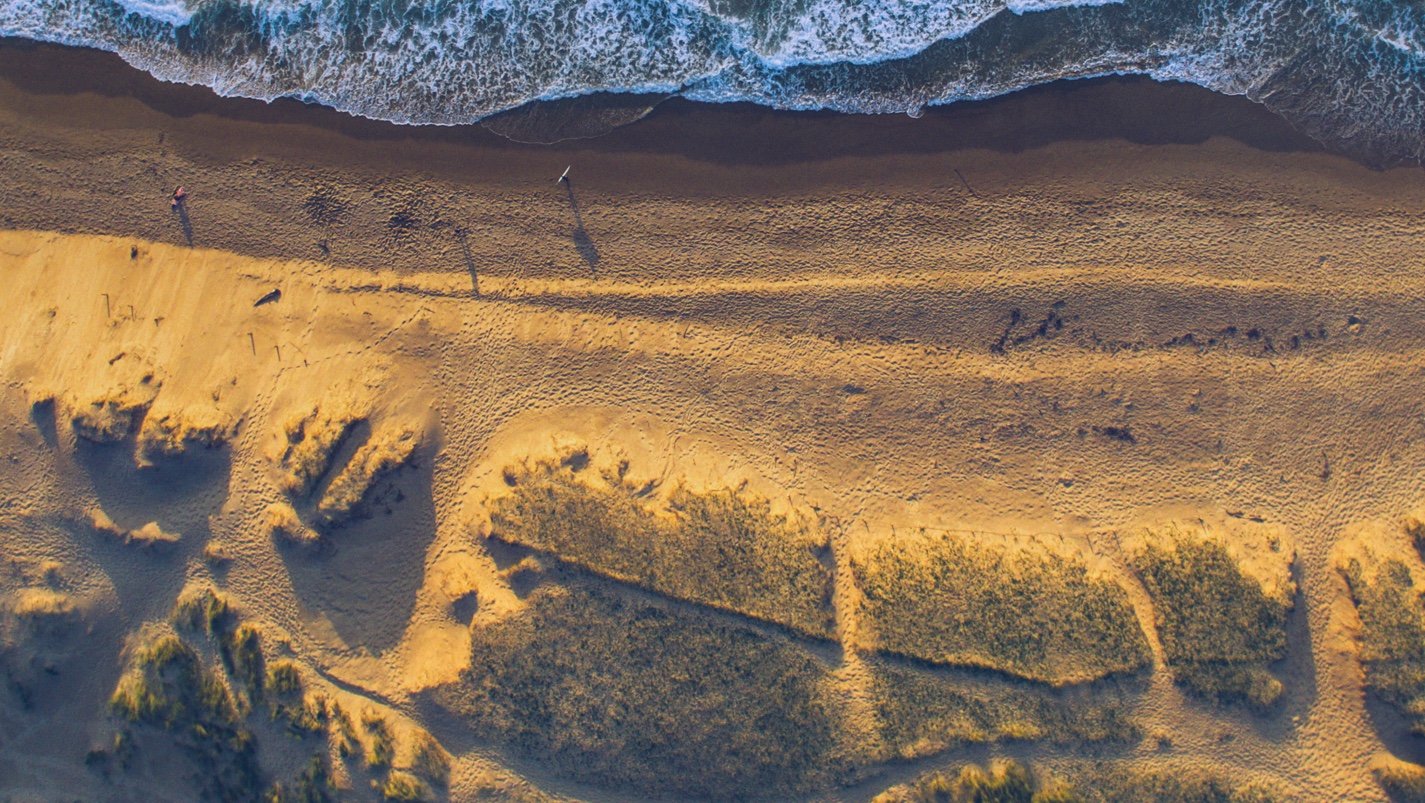
Images by Marcelo Salomao
more info
Bacalhau, broth and guts
Porto welcomes its visitors with the best of its rich cuisine. It is placed in an exceptional location, on the banks of the Duero and bathed by the Atlantic Ocean. That favours that in Porto you can eat good seafood, taste the best wines and delight your assorted pastries.
You can find restaurants to suit all tastes and all pockets. You can eat very well for only 5 € in its houses of meals, or in Michelin-starred restaurants, like The Yeatman.
One thing to consider when you sit in a restaurant is that the appetizer being served first, and without asking, is not a present. It has to be paid. This leads sometimes to misunderstandings.
Also, it's common to start a meal at any restaurant with a soup, preparing rich and in many different ways.
One of the areas with more choice of restaurants is Ribeira. It is a very lively place, from which you have the best views over the city. Here you can come to eat the grilled octopus or cod Chez Lapin and "Guts Oporto" da Filha da Mãe Preta.
In the Rua de Aviz there were many of the bookstores in the city. Today it is a hive of trends. Among the new art galleries we found the Book restaurant, where once was sited Livraria Aviz. You will see that all around this place reminds its past as a library.
Wine tourism is one of the best options for the city and its delicacies. To do this it is advisable to cross to the other side of the river, where we can find wineries like Vila Nova de Gai. On this side of the river you can also taste many recipes for cod, which are so famous throughout Portugal, El Bacalhoeiro (Avenida Diogo Leite, 74).
The Café Santiago has a good reputation in serving the best francesinhas, one classic of Oporto´s cuisine. You know that it is true when you see the big queues at their gates in order to get one in Rua Passos Manuel 226. Francesinha is a slice of bread filled with different types of sausage and meat, and covered with melted cheese and bathed in hot sauce. You can imagine that with these kind of ingredients it is a very heavy dish that will fill you with lots of energy; even more if you accompany it, as usual, with a few chips and a cold beer.
In order to know what products are popular in Porto, approach the Bolhao market. It was built in 1914, and it is one of the emblematic buildings to live day by day of tripeiros (gutties). Curious adjective, right? Citizens of Oporto are know tripeiros because, during preparations for the conquest of Ceuta in 1415, they had to turn to the issue all the meat and keep only the gut. Now, as tripas à moda do Porto is in the dish in town!
Francesinha by jfcfar| Tripas a moda do Porto by MariaCartas
A place well worth discovering! Check out our flights here.
more info
Three (or four) meals in Brussels
By Laia Zieger from gastronomistas
Breakfast or Brunch at the Maison Dandoy
Opened in 1829, Maison Dandoy is one of the oldest pastry shops in the city. To go with an exquisite cup of hot chocolate, you can choose from an endless range of local sweet delicacies; large, light and crunchy Brussels Waffles, or the sweeter, softer Liege variety, Speculaas biscuits flavoured with cinnamon and other spices, Sablés (butter biscuits) and ‘Greek Style Bread’; a baguette sprinkled with cane sugar.
Rue Charles Buls, 14 - Bruxelles
For lunch, make your way to Chez Lola
Fashionable, contemporary and cosmopolitan, Chez Lola serves international dishes made with local, market ingredients. Standouts include cold roast beef served with homemade mayonnaise, foie gras and bouchée à la reine; puff pastry bathed in béchamel and studded with small pieces of different meats, mushrooms and snails. It’s worth noting that the menu always has a special section of dishes using in-season ingredients, be they asparagus, mussels or artichokes.
Place du Grand Sablon, 33 - Bruxelles
At the end of a perfect day, have dinner at La Taverne du Passage
The Galerie de la Reine, an old shopping arcade with a glass covered ceiling, is one of the city’s most emblematic spaces. Inside is this must-visit restaurant, whose menu is an ode to Belgium’s national cuisine. La Taverne du Passage’s décor, with it’s elegantly classical lines, and formal, white jacket and black bow-tie waiting staff, evoke another era or at least seem to have stepped out of a silent movie.
The specialities of La Taverne du Passage include (of course!) mussels with pomme frites (with various sauces to choose from) and prawn croquettes (probably the best in the city). But above all try the steak tartar. Prepared at the table with two teaspoons of homemade mayonnaise, this alone is worth your trip to Brussels.
Galerie de la Reine, 30 - Bruxelles
*And at any time of the day when hunger strikes, throw restraint out the window for a cone of pomme frites at Friterie du Café Georgette. Not your average chip, the potatoes are hand cut and fried the old fashioned way – in beef fat. They can be enjoyed with dozens of sauces at your disposal.
Rue de la Fourche 37/39 - Bruxelles
For More Information: Tourist Office of Wallonia-Brussels
Makes you want to go, right? Do it! Check out our prices here!
more info
Recorriendo la Cidade Vella
By the narrow and winding cobbled streets in the old district of A Coruña you can revive its history. Here you can find most of the main landmarks and picturesque nooks of the city.
Cidade Vella is an urban grid that goes from María Pita square to the arts center curated by the Luís Seoane Foundation, and through other remarkable places like Xeneral Azcárrega square, Bárbaras convent or Santiago’s church. This is also the shopping district, with some great antique and handicrafts shops, where you can always buy something special. Of course you can also try the most remarkable specialties from the Galician cuisine at some of the bars or restaurants around this area.
Starting at María Pita square, this is the hearth of the city; named after a heroine that fought the British army, lead by the corsair Francis Drake, on 1589. At the center of the square, a monument by the artist Xosé Castiñeiras, stands in honor of this brave woman.
After the square, Santiago’s church is probably one of the oldest in the city. Romanesque, it was built during the 12-13th century, and at the west façade, the apostle Santiago is represented horseback.
Later, you will pass by evocative Azcárraga square that, in the past, was the most important square of Cidade Vella, taking to the House of the Municipality or the Artillery Depot. The most relevant events and celebrations took place here and also a great market with all sorts of products.
Near here there is the house where Galician poetess Rosalía de Castro lived, from 1870 to 1879, with her husband Manuel Murguía. She is one of the most relevant literary figures from the 19th century, a precursor to the modern poetry who helped restoring Galician own language and culture.
Walking to Bárbaras square, there is a convent founded in the 14th century, which later was taken by the Franciscan order. The name is given from a hermitage dedicated to Santa Bárbara, which was originally in this place.
Following, we find Santo Domingo church and convent, originally outside the walls of the old district but rebuilt, inside the Cidade Vella, in the first half of 17th century. The convent was expanded on 1726 but the church was demolished and nowadays there are only two chapels, Remedios and Rosario.
We’re getting closer to the viewpoint at San Carlos garden, which follows a romantic style and includes a statue dedicated to Roman Magnus Portus Artabrorum. There is also the coffin from general John Moore, which spawns interest among the British and who helped liberating the city from French troops who attacked in 1809. Initially, it was built as a defensive castle, outside the walls, in 16th century, but, little by little, its importance as a bulwark was lost and was eventually abandoned. In the 18th century it was regained as a garden designed by Carlos F. de Croix.
Getting close to the end of this route, the arts center curated by Louis Seoane Foundation, located at an old barracks that have been rebuilt, was opened in 2003. The foundation aims to disclosure the artwork and intellectual legacy from the artist, painter and writer Luis Seoane, and also to develop other exhibitions regarding contemporary culture and reflections.
Ayuntamiento by Carlos Fernández San Millán | Tumba de Sir John Moore by Marcus | Plaza Azcárraga by FirkinCat
A place well worth discovering! Check out our flights here.
more info