

Toulouse In 8 Discoveries
First Discovery – The Pink City
It was in Toulouse I discovered that dusk can be pink, particularly if you watch it from the banks of the river Garonne. The light can be rather fickle, especially when it strikes from a high or low angle on the marble of the grand edifices which bedeck the city’s historic centre. The Place du Capitole, its daytime beauty matched at night by a lighting display, is the point of departure for any route through this city in the new Languedoc-Roussillon Midi-Pyrénées region. This is where the Capitole building stands, now home to the City Hall and National Theatre. Its eight pink marble columns symbolise the power of the eight districts that made up Toulouse in the 18th century. The square also has some hidden treasures, like the paintings under its colonnade where the city’s history is recounted.
Second Discovery – Home to Carlos Gardel and the Inquisition
In Toulouse I learned that Carlos Gardel was born in France, despite the Uruguayans claiming the king of tango as a fellow countryman, as I did that Antoine de Saint-Exupéry, author of The Little Prince, had stayed at the Hotel Le Grand Balcon, like all the pilots in the Compagnie Générale Aéropostale. Toulouse is also the birthplace of institutions, as antagonistic as they are important, like the Inquisition – founded to combat the Cathars – the Jeux Floraux, and the Gay Science, dating from the 14th century.
Third Discovery – A Vast Heritage
Toulouse is the site of the largest Romanesque church in the West, the Basilica of Saint-Sernin, also one of the major stopovers on the Road to Santiago on its passage through France. Close by stands the Convent of the Jacobins, a magnificent example of monastic construction and, further along the Garonne, we come across the Basilica of Notre-Dame de la Daurade, consecrated to the Black Madonna, draped in mantles made by great dressmakers.
Fourth Discovery – Pablo Picasso
It was in this city that I realised how passionate Toulousians are about Pablo Picasso. Les Abattoirs Museum, regarded as one of the leading cultural centres in Toulouse, features as an exhibit The Remains of the Minotaur in a Harlequin Costume, the work of the universal artist from Málaga.
Fifth Discovery – Aeroscopia
Toulouse is France’s aerospace capital – the Airbus factory is located at Blagnac – particularly after the inauguration of the Aeroscopia Museum which, covering an area of 7,000 square metres, houses such legendary aeroplanes as the Concorde and the Super Guppy, the forerunner of the celebrated Beluga.
Sixth Discovery – Its Markets
In Toulouse I discovered that markets have a life of their own in France and that, apart from being venues for shopping, their restaurants attract a host of customers. The Victor Hugo Food Market, the Marché Cristal – where fruit and vegetables are sold in the open air – and the Marché des Carmes are some of the best known ones.
Seventh Discovery – N5 Wine Bar
Here, as in the rest of the country, the wine bar concept is very much in vogue. A fine example of this is the N5 Wine Bar, where you order wine by the glass (choosing both the type and the amount) and your order gets chalked up on a card which keeps track of your consumption. Be sure to try their tapas, such as the culatello di Brozzi, foie gras or Bronat cheeses.
Eighth Discovery – Toulouse Nightlife
Lastly, Toulouse is the French city with the most pronounced Spanish influence. You can tell as soon as you arrive when you start chatting to locals or when you give yourself over to the Toulousian night. In France’s fourth largest city, the people go out onto the street, regardless of the cold, and live it up for as long as they can hold out. Toulouse nightlife draws droves of locals and foreigners, many of them students, who gather at the nightspots on the Rue des Filatiers and the Carmes, Trinité, Wilson and Victor Hugo squares.
Toulouse is the perfect destination for a weekend getaway. Check out your Vueling here.
Text by Tusdestinos.net
Photos by Toulouse Tourism
more info

A Route through the Périgord Vert
The Périgord, a former French province distributed across the departments of the Dordogne and Lot-et-Garonne, in the region of Nouvelle-Aquitaine, is divided into four sub-districts named after the dominant colour in the area. Thus, the Périgord Pourpre (Purple) is so called on account of the colour of its wine; the Périgord Noir (Black), named for its truffles and the dark woodlands there; the Périgord Blanc (White), for the limestone prevalent in the soil, and the Périgord Vert for the intense green of its meadows and oak forests.
The Périgord Vert, the northernmost of the four, has its capital in the commune of Nontron where for centuries the main activities are trades relating to leather and the art of table dressing. This town is the best spot from which to strike out on a route through the lush meadows of France as it traverses an amazing variety of landscapes belonging to the Périgord-Limousin Regional Nature Park. You won’t be at a loss for things to do in the Périgord Vert as it offers a host of activities, including hiking routes or tours of oil mills and fortified castles.
Another itinerary that comes highly recommended is the well-known Richard the Lionheart Route which stretches for over 180 kilometres and covers 19 areas open to the public. The route is signposted on both sides of the main road by a lion crowned with a heart pierced by an arrow, in remembrance of Richard the Lionheart’s sad end. Dotted along the whole route are vestiges of the battles and power struggles among the Dukes of Aquitaine, sparked by marriage agreements, which also involved the Kings of England and the French monarchs.
Touring the Périgord Vert
Apart from soaking up nature in the Périgord Vert, it is worth visiting the charming villages in this sub-district of France, notably Brantôme, famous for its Abbey and the Church of Saint-Pierre, which boasts the oldest belfry in France, dating from the Visigoth period. Brantôme is sited on the banks of the river Dronne, which runs along gentle meanders that set up a beautiful picture postcard scenery known as the “Venice of the Périgord”. Setting out from the abbey, by crossing the unusual, 16th-century right-angled bridge, you get to the monks’ garden and the heart of the town, featuring numerous vestiges from the 16th, 17th and 18th century. However, the best guarded secret of Brantôme are its troglodytic caves, where Benedictine monks once sought refuge. A few kilometres from Brantôme along the river Dronne lies the village of Bourdeilles, a commune with two landmark buildings – a medieval fortress and a Renaissance building housing an interesting collection of 15th- and 16th-century Spanish furniture.
Book your Vueling to Bordeaux and delight in the fantastic scenery of the Pèrigord Vert, a two-hour ride away.
Text by Tus Destinos
more info
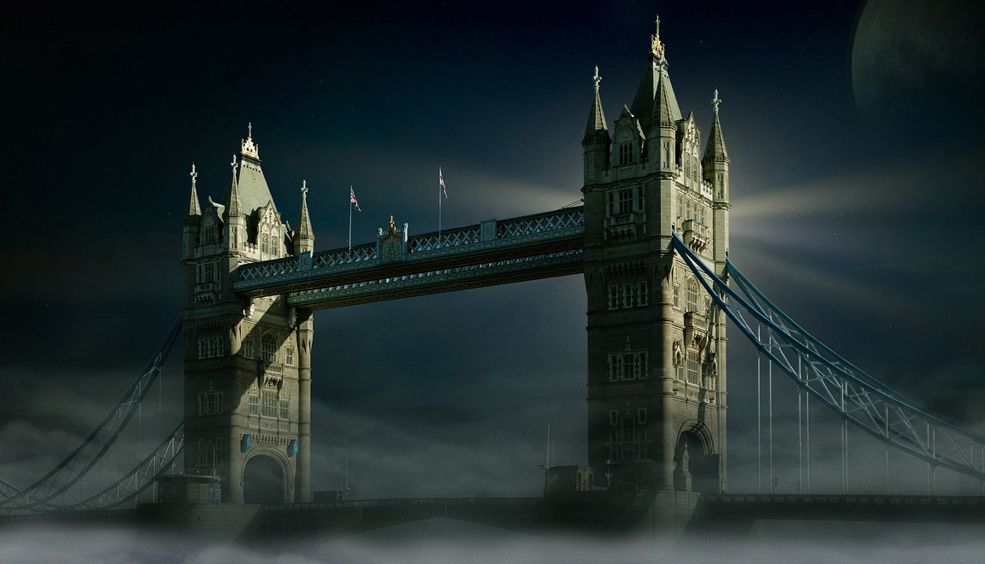
Enjoy the spookiest Halloween ever. The best destinations in Europe!
Celebrate Halloween in one of the cities that we suggest in this post. If you love dark tourism and all things spooky, don’t miss these fang-tastic plans for 31 October (and the days around it!).
more info
Female pilots who broke through more than glass ceilings
Thérèse Peltier, Raymonde de Laroche, Ruth Law, Amelia Earhart, Geraldine “Jerrie” Mock, Hélène Dutrieu… Quite a few female pilots have not only broken through those metaphorical "glass ceilings" but have reached the sky! And with 8 March, International Women's Day, just a few weeks away, we want to refresh your memory about some of the names that made aviation history.
more info