
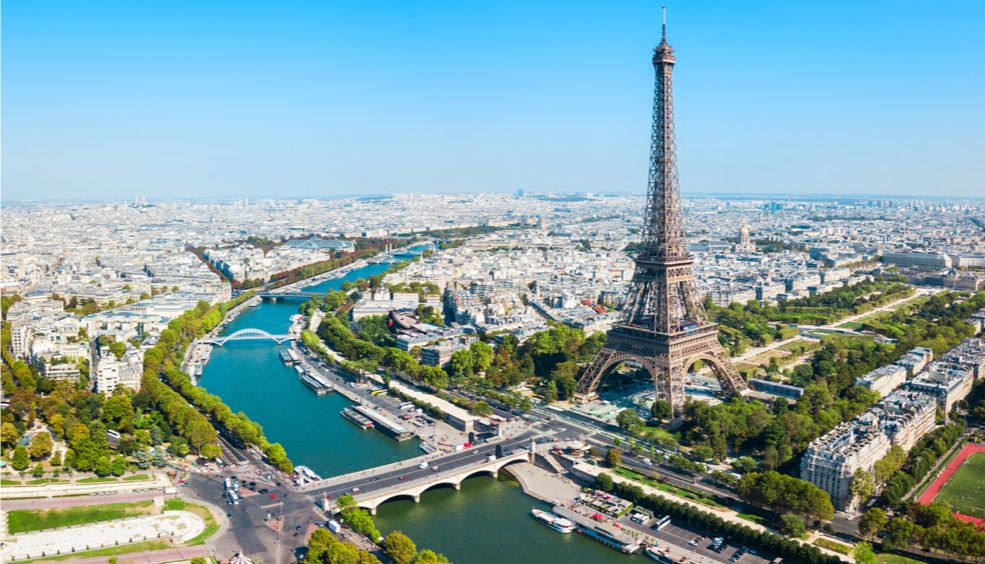
These are Vueling’s new routes to Paris-Orly
New routes connecting Paris with Spain, Italy, UK, Denmark, Germany, Norway, Sweden, Ireland, Morocco and Malta, since November 2021.
more info
The Aosta Valley
In less than 1 hour drive from Turin you can easily reach the area of the Western Alps. A unique place, with a typical alpine scenery, deep valleys, lakes, summits crowned with castles and the beautiful villages of the valley.
The Aosta Valley has many interesting landmarks such as Mont Blanc, the highest point in the Alps and of Europe, and other major mountains like Monte Rosa (4,683 meters), the Matterhorn (from 4810 meters) or Gran Paradiso (4,061 m) at the Gran Paradiso National Park. This was the first italian natural park, which was created to protect the alpine ibex -a symbol of the park- and other alpine species. Here are around 2000 different species of vegetation amongst the 5,600 varieties cataloged of the entire Italian flora.
Cows are the queens of the valley. If visiting in spring and fall, sure you'll be there to witness the "Bataille de Reines" exhibits (battle of queens), that farmers organize in the region to establish the reign of these cattle, which is decorated with bouquets of flowers to distinguish her from the others. It is a fascinating spectacle that locals and tourists enjoy.
We were lucky to happen to be there for a Sunday's battle of queens in the pretty village of Cogne, at the foot of Gran Paradiso. Thousands of people come this far to enjoy a nice day outdoors and admire closely these animals. It's a little shocking of a show for outside but it is a bloodless event for animals.
These cows produce Fontina, a cheese with denomination of origin in the valley. Another typical food of the region is the motzetta, served thinly sliced as an appetizer, accompanied by rye bread. Or the jambon de Bosses, which is seasoned with herbs de Provence.
The Aosta Valley is a place of myths and legends, with magnificent castles that dot the whole place. It has a rich heritage that boasts over 100 structures from medieval castles, watchtowers or churches that can be visited.
And as of the first of November, the ski season opens in the tracks of Cervinia and Valtournenche. Cervinia is known as the "land of many waters" by the many rivers and lakes that surround it. It is also one of the most famous ski destinations in the Italian Alps.
Also Chamois, that happens to be the highest village in Europe, at 1815 meters. A pretty village between idyllic landscapes, with a nearby alpine resort. It has five ski slopes and alpine hiking trails of striking beauty.
One of the most frequent visits made in the Aosta Valley is the ascent of Mont Blanc, starting from the village of La Palud. A funicular ride somewhat intimidating for those who suffer from vertigo, but it's worth to have a 360 ° view over the entire Alps. The ride has two stops: one at 2000 meters, where you have a restaurant to test their culinary specialties in a pleasant terrace. You can also visit the alpine botanical garden. The second stop is the Torino refuge, at 3,375 meters. From the cable car stop, you still have to climb a very steep metal stairs and if you're lucky and the sky is clear, you can enjoy the magnificent views of the snowy mountains.
Makes you want to go, right? Do it! Check out our prices here!
more info
The city of vermouth
In general the rule is that the further north you go in Italy, the more entrenched is the habit to enjoy the appetizer. Not surprisingly, the Piedmont area is known for the production of vermouth with brands such as Martini, Cinzano and Carpano.
The vermouth was invented in the cellar of Antonio Carpano’s in Turin in 1786 and from there the Piedmontese nobility made it fashionable. There are other versions that trace their origin to Hippocrates, the famous Greek physician who mixed white wine with plants like the wormwood to create a beverage for medicinal purposes. But it was not until 1838 that the brothers Giuseppe and Luigi Cora began to develop it industrially and distributed it worldwide.
Now the word vermouth has a more generic meaning. It refers both to the drink and to eat a tapa before lunch. In Italy the starter is not at noon as in Spain, but after work. It usually starts from 18:00 and end at 21:00 AM and is an economical way to take a break from work while sipping a drink and snacks, which can be alcoholic or not.
A very common option is the spritz, -with aperol, champagne, an orange slice and ice- the Negroni -with gin, campari, vermouth and an orange slice- the mascerotti -with wine, soda and champagne- or the Amaretti di Voltaggio, which goes along with their famous focaccia, savory pastries and other delicacies.
In Genoa, a port where botanical species from around the world arrived, the habit is strictly fulfilled and the tastiest appetizers are prepared. Here vermouth is a deeply ingrained habit, a social act that almost no one renounces. A moment to enjoy after work, listening to the tinkling of ice crashing.
You can have it in the historical premises or in the modern establishments that agglutinate especially in the Piazza delle Erbe, San Donato, Via San Bernardo or Porto Antico area.
Here’s the theory, now let's put it into practice!
Pasticceria Liquoreria Marescottis Cavo
Via di Fossatello, 35R and 37R
In the old town of Genoa, -the largest medieval quarter in Europe- you can find this historic café, bakery and liquor store. A local that dates back from the eighteenth century, which retains its old Charles X style furniture and a floor designed by Rubens himself. Tourists come to the establishment to observe the "prettiest pastry Genoa", to try their high quality confectionery and the Marescotti appetizer, a herbal vermouth.
You must keep an open mind to find the restaurant on the first floor because they have no sign.
Le Corbusier
Via di San Donato, 36R
Another historic local is Le Corbusier, specialists in cocktails-some self-created- and that has gained prestigious national and international awards. Martini itself can be found in twelve different variants.
Caffè il Barbarossa
Piano di Sant Andrea 23
www.cafeilbarbarossa.com
With an enviable location -very close to the house where Christopher Columbus lived-, and one of the most fun places to enjoy the most original appetizer in Genoa with its pleasant outdoor area, especially during summer.
The Caffè Barbarossa offers a wide range of whiskeys, cocktails and international wines and sparkling Genoese, in their restaurant, you will find vegetarian and vegan dishes. Look closely at their walls where the original rates of the brothels of the historical town hang.
Libreria delle Erbe
Piazza delle Erbe, 25R
An old bookstore downtown now transformed into a modern place. It still retains the spirit of the literary coffee -to consult and buy books-but, while enjoying cultural interventions you can also have a good coffee, snacks, cocktails, wines and beers.
They have a full weekly program of activities for lovers of art and culture.
Picture by Termolan
We’ll be there. If you want to come too, check out our flights here.
more info
The Modernist Side of A Coruña
Modernism emerged in the late-19th and early-20th century, marking a break in style with the past, in line with the prevailing cosmopolitan, entrepreneurial mindset of the moment.
In 1883, the city needed to expand, leading to the construction of its famous Ensanche district,which spans the present-day streets of Juana de Vega,Picavia,Feijoo, Plaza de Lugo and Plaza de Pontevedra.
With the wealth they had acquired from foreign trade, the local bourgeoisie commissioned luxury residences in this new area, modelled on those of Vienna, Paris, Prague, Budapest and Berlin, in an outward show of their prosperity and cultural pursuits. This enabled them to distinguish themselves from the old Corunnan aristocracy, who still lived in the Ciudad Alta and Ciudad Vieja districts in dilapidated mansions with dark rooms, lacking proper ventilation or glazed window balconies, with their backs to the sea and to modernity.
Strictly speaking, Modernism came to the city in 1906 with the arrival of the Cuban architect, Ricardo Boán y Callejas, and the Corunnan architect ,Antonio López Hernández, who brought the new trends in building design from Austria, Switzerland and Germany. They also brought journals, catalogues and photos from those countries featuring designs by the Austrian, Otto Wagner, and the Belgian, Victor Horta.
One of the most striking features of these houses are the female faces adorning some of the buildings that are still standing. They were mostly inspired by the countenance of an English lady, Elizabeth Siddal, the wife of the Pre-Raphaelite painter, Dante Gabriel Rossetti. She was immortalised in the guise of her languid, enigmatic beauty and her long tresses following her death from an overdose of laudanum, a mixture of opium and alcohol.
Modernism in A Coruña was influenced by the ornamental style of the English architect, Owen Jones (1808-1874). Local artists decorated the facades and doorways with irises, horse-chestnut leaves, water plants, roses and camellias in multi-coloured garlands which seem to reach out to the passer-by and lavish pleasure on the senses.
Galleries are awash with the Mackintosh Rose motif of Charles Rennie Mackintosh, as well as twirling, sap-bearing plant stems. The transparent glass surfaces spread out among them like dragonfly wings. However, Japanese influences also come to the fore in the form of embossed irises, reeds and butterflies on lilies, star-shaped holly leaves and lotus flowers framing windows and lifts, by way of a country-like, ecological architecture. Enjoy a Modernist route through the city – download the guide here.
Modernist Top 5 in A Coruña
1. Casa Rey (1911)
The work of Julio Galán, his architecture distils the essence of the glass city. The rippling cornice, the Mudéjar inspired glazed ceramics and the wrought iron balconies made in the Wonenburger foundry make it a veritable dolls house for the ladies of those times that adorned its balconies with their head-dresses of gardenias and palm leaves. Chocolate was one of the exotic wares shipped from the Indies and other colonies to the port of A Coruña, and chocolateries dating from that period are still open to the public on the streets of Riego de Agua, Plaza de Lugo and Estrecha de San Andrés. Hence the origin of the popular Corunnan demonym ofcascarilleiros(huskers),an allusion to the cocoa husks which filled the streets with their aroma. Plaza de María Pita, 12.
2. Casa Molina (1915)
Designed by Rafael González Villar. The building was the home of Don Raimundo Molina, a representative of Royal Dutch Lloyd and consul of the Netherlands. He was also the father of the well-known mayor, Don Alfonso Molina. Influenced by the Italian Modernism of Turin, the garlands and draped ribbons of the building form a theatrical final curtain to the Old City. C/ Santiago, 2.
3. Kiosko Alfonso (1912)
Also designed by Rafael González Villar, this is a magnificent example of early-20th-century recreational architecture. With its rectangular floor plan, it operated as a café, music hall and cinema, the central screen of which divided the auditorium into two rooms. In the first room, the audience saw the positive film, while a negative of the film could be viewed at a lower fee from the other. Converted into an exhibition hall in 1982, the original Modernist decoration is still intact, including dragons which surround and immerse the audience in a world of mystery and fantasy. Jardines de Méndez Núñez.
4. Compostela, 8 (1910)
Also the work of Julio Galán Carbajal. The foyer, with access at no. 8 Calle Compostela, is the most striking entrance hall in the city. Walls, ceilings and the archway leading into the lift turn the space into an original stuccowork greenhouse, brimming with intertwined water plants, lotuses, lilies and irises. The lions at the entrance, the eagle and the caryatids on the cornice form a symbolic defence of the house’s residents, reminiscent of ancient Persian palaces.
5. Plaza de Lugo, 13 (1912)
Lastly, this bourgeois residence designed by Antonio López Hernández, linked to the family of the Corunnan actor, Fernando Casado Arambillet (better known as Fernando Rey), features overflowing ornamentation as an outward show of the economic prowess of its residents. It is theatrically adorned with a large garland of roses, leading the eye towards the huge female caryatid dominating the ensemble. The decorative syntax makes this the most beautiful building in A Coruña.
Don’t wait to see these Modernist architectural jewels in A Coruña. Check out our flights here.
more info