

Day of the Canary Islands: 10 places not to be missed
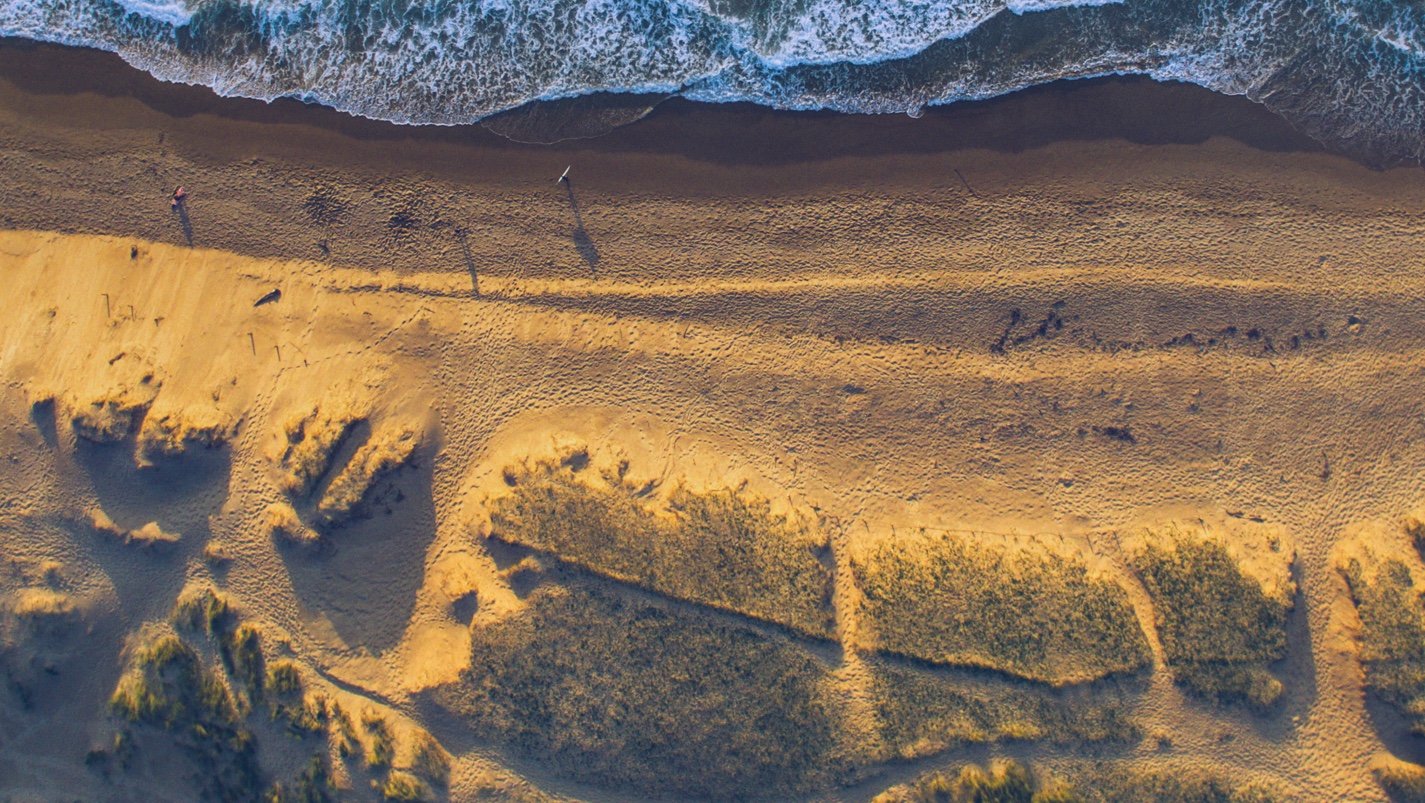
Urban beaches, idyllic little coves, rolling hills, mountainous landscape, lunar landscape, sunsets, forests, mountains, fairy-tale paths and friendly locals. The Canaries have it all!
more info
Lake Starnberg
By Michael Schurmann from easyhiker.co
There is no shortage of attractive hiking destinations for day trips near Munich where you are during the Oktoberfest. Both the Goldsteig and the Altmühl-Panoramaweg “top trails” are just a train ride away, and of course, there are always the Alps.
But Lake Starnberg tops the list of day trip destinations because it is by far the easiest to reach and is the scene of a titillating piece of German royalty history. (More of that if you promise to read through.)
You can go there by City Rail (the S-Bahn) in 30 minutes from Munich Central Station, and the round trip is covered by the Munich day pass which gives you unlimited access to all the city’s public transport facilities (a steal at €20 for up to five persons).
Another reason why Lake Starnberg tops that list: it won’t take you long to reach it from Starnberg station.
On a clear day, you can even see the Alps at the far end.
This far end, it must be said, is quite a long way away. Lake Starnberg is about 20 km long, and although it is quite narrow (never more than 5 km wide), the whole tour around the big pond may easily come to about 50 km.
“Road leading to Possenhofen hiking trail in Starnberger See near Munich”
For a day trip, this is clearly off the scale. But thankfully, there are plenty of alternatives.
On the right side of the lake, for example, there are two more S-Bahn stations further down the track (Possenhofen and Tutzing), so in theory, you could take the train there and walk back to Starnberg (7 km and 14 km respectively).
This was, in fact, our original plan: a walk to Possenhofen, the childhood home and favourite retreat of the star-crossed empress Sissi.
But the road to Possenhofen was so busy (even used by trucks) and so far away from the actual lake – it was practically lined with residential homes, gardens and boat houses – that we broke off our trip after app. 1 mile and returned to Starnberg.
Fortunately for us, we then discovered that the “left” (or western) side of the lake provides a much more pleasant ambiente.
A recognized hiking trail, the “König Ludwig Weg”, runs down the entire length of the lake’s west bank. That should, at the very least, ensure that you are safe from truck traffic.
No S-Bahn trains circulate down this side of the lake, but ferries take you to several of the small towns that are scattered around, including Seehausen at the lake’s southern tip.
If you have a full day, this is what you could do: Hike all the way to Seehausen and return by boat.
We only had the time for one section of this trail, however, and decided to walk the 6 km from Starnberg to the town of Berg.
Out of the station and standing in front of the lake, turn left.
The first half mile takes you past a mix of residential and recreational buildings: homes, gardens, boat houses and a public swimming pool.
After the first of two wooden bridges, however, the scenery becomes far more idyllic: swans in the lake, groups of sturdily built Bavarian women training their Nordic walking skills, young families and students skipping a boring lecture.
When you return to the asphalted road, in the outskirts of Berg, you will see some of the most expensive real estate in Germany.
Lake Starnberg, so pretty and so near to Munich, Germany’s richest city, is very much the Alpine version of the Cote d’Azur (or Beverly Hills).
After walking about 15 minutes, you will find the boat pier on your right.
“Sign leading to Koenig Ludwig Weg hiking trail in Starnberger See in Munich”Check the arrival and departure times, because the traffic back to Starnberg is infrequent and somewhat irregular, and if you miss one boat, you may have to wait a couple of hours for the next one.
If you can, make time for an excursion to the Votivkapelle (just follow the signs) another 30 minutes away.
This chapel was erected to commemorate one of the great unsolved mysteries of German history.
It stands very near the place where the mad King Louis II of Bavaria, (builder of Neuschwanstein Castle and generous supporter of Richard Wagner’s operatic works), explored Lake Starnberg in a vertical direction. (A wooden cross in the water marks the spot.)
Was it an accident? Did he commit suicide? Or was some sort of jiggery pokery involved? (For a full round-up of events, go HERE.)
On the way to the chapel, you will come across a plaque on a boat house where it says that Ludwig often set out from there to meet with his “soul mate” Sissi on the other side of the lake.
I found it strange and almost touching to see that after all these years, the Bavarians still can’t quite seem to cope with the fact that their beloved “Kini” did not fancy girls all that much.
For a less shamefaced account of the king’s life, watch Ludwig II, directed by Luchino Visconti and featuring the male model Helmut Berger as the eponymous royal, one of the campiest movies ever made: the thinking man’s Wizard of Oz.
If you do not have the time to experience Mr. Visconti’s Magnum Opus in its full Wagnerian languor of 247 minutes, do yourself a favour: sample the director’s operatic ambition here.
The latter section also features here a must-watch Bavarian-style gay orgy with folk dancing, zither music and much mutual groping.
No wonder the locals hated the film so much that they tried to have it banned when it was first released in 1972.)
Now, return to the pier where – if there is still time – you can have a coffee or a beer on the terrace of the Hotel Berg before taking the boat back to Starnberg.
If you have started your day before 12, you can still be back at your favourite Oktoberfest beer tent before the evening rush begins – and won’t miss any of the action.
Why not take a trip to Munich? Have a look at our flights here!
more info
Al final del camino
Camino de Santiago. A trip to experience.
It’s a fact. Everyone who has walked the road to Santiago agrees, the trip leaves marks for life. But, what does Camino de Santiago have to cause such profound impression to everyone? Is it for the people you meet along the way or the amazing landscapes it goes through? Is it, maybe, the reward of arriving by your own merits to the final destination, Santiago, after many days walking?.
The numbers are compelling: every year, more and more pilgrims arrive to Santiago de Compostela, especially on Holy Years. This is a unique experience that combines a sport challenge and seeking for authenticity and discovering your own self. The final goal is to arrive to Santiago, the center of Jacobean tradition and a place of pilgrimage, after the grave of apostle Santiago was found in the 9th century.
The route has become a mass phenomenon, connecting a network of roads with Santiago as the final destination. No other city is so warm welcoming for travelers and pilgrims; this is a meeting point for people from all over the world.
The city. A great monumental complex.
Santiago de Compostela was declared Cultural Heritage of Humanity in 1985, because of its urban beauty, monuments and for keeping the spiritual essence of an apostolic sanctuary.
The city combines perfectly tradition and modernity, in a great monumental complex. The Obradoiro square, which welcomes thousands of pilgrims, is a good example of how the past and the future coexist here, hand-in-hand. Taking a look around the square we can discover many different architectonic styles from buildings that were built during over 700 years on the making. The people look from the Cathedral to the Hostal dos Reis Católicos or from the Colexio de San Xerome to the Pazo de Raxoi, headquarters for the city council.
Along to the abundant green areas, many urban parks and forests surrounding the city, Santiago is a magic and charming place to visit.
For the food lovers.
Whether you choose a good and economic three-course menu, which recovers the energy of the pilgrims, or you prefer a casual meal of tasty portions or original mixes, Santiago is the place to go for food lovers.
Who can resist a tasty pie filled with the most daring combinations, pork with turnip tops, the best seafood, veal, octopus or a strong Galician soup? Or the distinctive taste of a wide variety of cheese: tetilla cheese, Arzúa-Ulloa, O Cebreiro or San Simón?.
Tarta de Santiago is a famous dessert, with over 200 years of history, combining the right proportions of ground almonds, eggs, sugar, butter and hints of cinnamon, under the Apostle cross drawn on sugar.
You can combine culture and gastronomy, can’t you? The place to go is Abastos market, a beautiful building from 1941. This place is the second most visited place in Santiago after the Cathedral. Around here you will find great restaurants and even places where you can ask the owner to cook the products you have purchased at the market.
So you feel like visiting Santiago, do you? Book your flights here!
more info
The 7 lighthouses of Menorca
Menorca's lighthouses are part of the island's environment and its rugged coastline. That is why they are located in some of the most beautiful and wild areas, turning your route into an encounter with Menorca's nature and its diverse landscapes. Beyond the first function to point the way to the boats, they form a unique postcard in the already beautiful coast of Menorca.
All lighthouses are managed by the Port Authority of the Balearic Islands and on their website you can find the technical specifications of each.
Favàritx Ligthouse
Its location in the natural setting of the Natural Park of s’Albufera des Grau, the wettest part of Menorca, about 20 miles north of Mahon, makes it one of the most visited.
Key Point of the Island’s Biosphere’s Reserve, here we find a variety of waterfowl and raptors such as the osprey, the kite or the booted eagle
Cavalleria Lighthouse
About 14 kilometers from Es Mercadal, at the southernmost tip of the island, this impressive lighthouse stands on a cliff over 80 meters and with fantastic views over the sea.
If you visit the lighthouse of Cavalleria you will observe a curiosity: a few piles of stones facing the sea will surprised you. They are build by the tourists who come to the lighthouse because, according to tradition, who creates these forms and expresses the desire to return to Menorca to the Lighthouse, will see their wish come true.
Punta Nati Lighthouse
Opened in 1913, its creation comes from a tragic accident. And it is because in this area of strong winds and ocean currents the modern French Général Chanzy steam was wrecked by a big storm three years before.
Days with strong wind from the north you can enjoy a natural spectacle when the crack near the lighthouse ejects water with great force, in a sort of bufador lambasting the headlight, which sometimes has been damaged by the pressure.
Illa de l'Aire Lightouse
On Mahon’s south, in the town of Sant Lluis, there is the touristic Platja de Punta Prima. From here you can observe perfectly Illa de l'Aire and its lighthouse’s silhouette surrounded by turquoise waters and rich marine life.
One feature of the island is to house an endemic species of Menorca and Mallorca: black lizard. But not only the small reptile inhabits the island, it also houses numerous birds on their migratory path.
Artrutx Lighthouse
With carachteristic thick black and white stripes, the lighthouse Artrutx is 7 kilometers from Ciutadella. It was built in the mid nineteenth century, in 1858, and at first, it worked with oil until 1930 that electricity came to the lighthouse. Now the Artrutx Lighthouse it is part of the historical heritage of Menorca.
Near the lighthouse there are the coves den Bosch and Son Xoriguer, one that has the greater waves and therefore enables windsurfing.
Sa Farola
It is located on the seafront of Sa Farola so you can get there calmly strolling about 30 minutes from the center of Ciutadella. During the trip you can enjoy the beautiful scenery or a swim in the Caleta es Frares with its platforms for the bathers located halfway.
Sant Carles or Mahon Lighthouse
Considered to be the first lighthouse on the island, it was built in 1852 on the ruins of Castell de Sant Felip, on the tip of Sant Carles. After some discussion about its location, it was replaced by a metal tower of black and white stripes.
Near the lighthouse there is Fort Marlborough, a unique hexagonal shape building surrounded by a trench dug in the ground and built by the British between 1710 and 1716, with galleries that you can visit.
Pictures by www.portsdebalears.com
Why not take a trip to Menorca? Have a look at our flights here!
more info