

The Ria de Muros e Noia , the Port of Santiago de Compostela
The Ria de Muros e Noia is one of the Galicia region’s least built-up coastal areas, and also one of the most beautiful. Fishing boats landing delicious, shellfish, white sandy beaches with good surfing, all framed by green hills with a riot of vegetation –it’s definitely worth a visit. Here is a route you might consider.
Mt. Louro and the Xarfas Lagoon
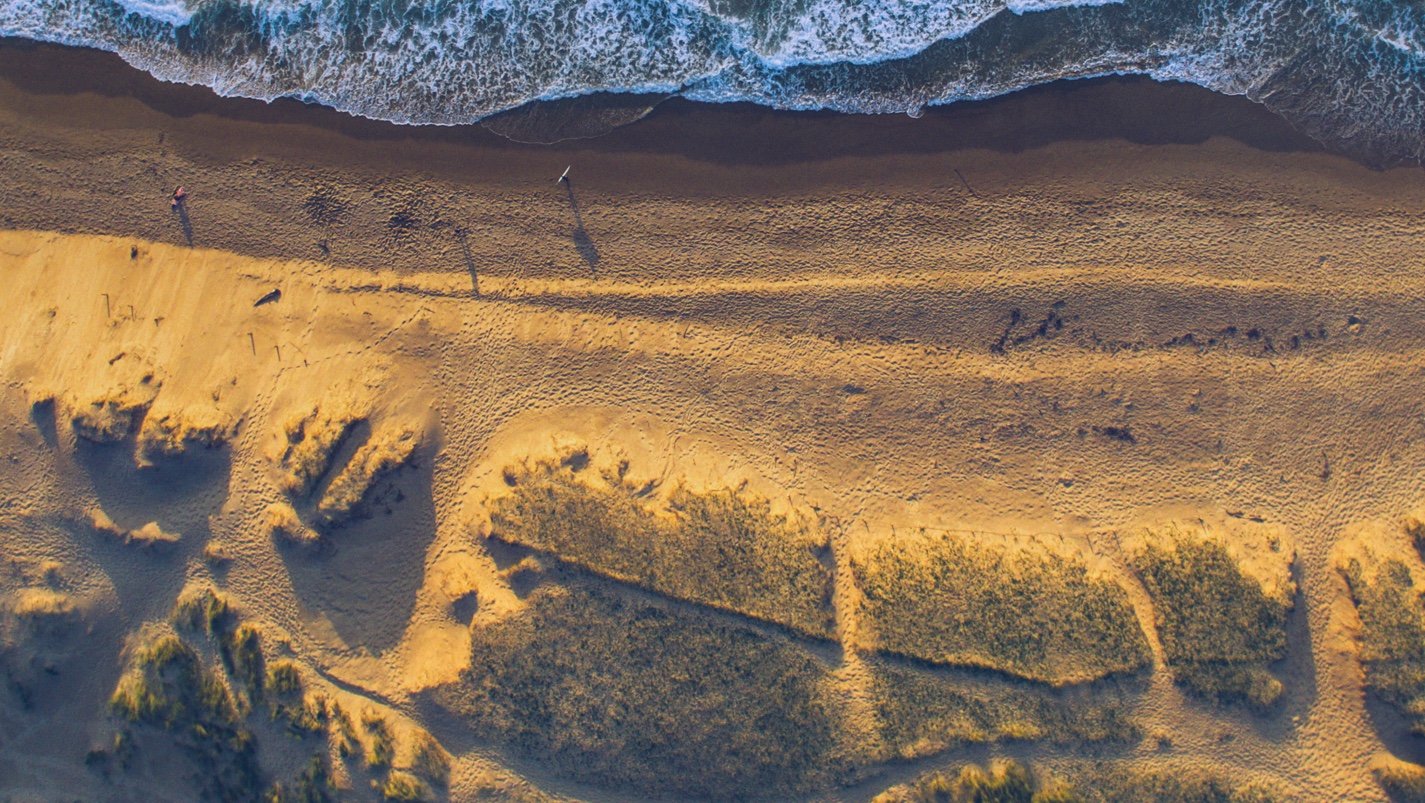
Starting from the northern extreme of the estuary, between the Costa da Morte and Muros, you can stand atop Louro mountain, a 241-metre high granite block, and feast on the views of the Ria de Muros e Noia and the Lagoa de Xarfas with its fabulous Area Maior beach. The surrounding –hills, dunes, beach and the lagoon—boast a wealth of flora and fauna. There’s even an observatory for watching migratory birds.
Muros
Heading south we come to the town of Muros, founded in the 10th C. , and now featuring modest fishermen’s houses next to lordly mansions from bygone times. A stroll the town in the late afternoon can be timed to coincide with the arrival of the boats in the evening after a day’s fishing. The fish is put up for sale immediately on the dock, which is also an interesting spectacle to watch. And it means your shellfish dinner will be fresh and delicious. You won’t be disappointed by any of the restaurants under the arches near the water’s edge.
Just three kilometres away on the road to Noia is the Muíño de Mareas do Pozo do Cachón, a flour mill powered by the tides, built in the last quarter of the 19th C. There is also an interesting museum.
Noia
Noia is the biggest town in the estuary, and is only 36 km distant from Santiago. According to tradition, it was named for Noah, who is believed to have settled there after the Biblical flood. The city’s coat of arms shows an ark and a dove bearing an olive branch.
The old quarter features two churches built in the local version of the Gothic style: San Martiño (15th-16th C.) and Santa María a Nova (14th C.), the latter with a fascinating collection of about 500 tombstones. The 16th C. convent of San Francisco may also be visited, and the town is replete with stately mansions, such as the Casa da Xouba, the Pazo Dacosta (or Casa de Rivas), and the Pazo Forno do Rato. In the Obre district the pazos (mansions) of Pena de Ouro and Bergondo are worth a visit.
Some five kilometres from de Noia, across the Tambre, we come to the Ponte Nafonso, a bridge built during the 12th C. reign of King Alfonso IX of Leon and Galicia. It consists of a score of pointed arches lying on granite ashlars. The setting against the sea and mountains makes the sight of the bridge all the more spectacular
Castro de Baroña
On the south side of the estuary, next to the fishing village of Porto do Son, is the Castro de Baroña, an Iron Age Celtic settlement, with a score of round or oval stone cottages, once thatched, on a small peninsula. The archaeological remains and the wonderful landscape make it a worthwhile visit.
Corrubedo Dunes Nature Park
Between the Ria de Muros and Noia and that of Arousa, to the south, lies this lovely park with beaches, dunes, fresh- and salt-water lagoons, wetlands, and even megalithic remains. One of the main attractions is the “moving dune”, a restless pile of sand about a kilometre long , 200-300 meters wide, and 20 metres tall.
Some Further Recommendations
Though the quickest way to explore the Muros and Noia estuary is by the AC-550 coast road, we recommend side trips into the surrounding hills to get the best views.
For lodging there are numerous country inns and guest houses on both sides of the water, most of them in old and typical buildings. A particularly unusual place to stay is the hotel Pesquería del Tambre, in the Tambre river valley on the site of and old hydroelectric dam transformed into a nature hotel by the architect Antonio Palacios.
Check out our flights to Santiago de Compostela and head west to the sea!
Text: Isabel y Luis Comunicación
Pictures: Turismo de Galicia
more info
Bordeaux – 10 Essentials in the Wine Capital
Scarcely an hour’s flight away from Barcelona, Bordeaux is the perfect spot for a short getaway. This is an “easy” city to visit – it’s small, pedestrianised centre invites you to stroll among its stone buildings which exude the same leisurely character as its inhabitants. Well-pleased with its wines, its new Herzog & de Meuron stadium, its future venue as the City of Wine Civilizations and the advent of Joël Robuchon (with his 26 Michelin stars, next after La Grande Maison), Bordeaux gives off its touristic charm nonchalantly, in its defining elegant, bourgeois fashion. Here are some gourmet guide pointers:
1. L’Intendant – A Stunning Wine Shop
Four storeys linked by an architectural spiral staircase houses some 15,000 bottles and 600 epitomes of Bordeaux wine. The ground floor contains the labels of small producers, while the most expensive ones are accommodated on the top floor. The dearest of all – Yquem, at €6,000. Here are some good wines for far less – just allow yourself to be guided by the experts.
2. Taste Initiation at Le Boutique Hotel Wine Bar
The bar à vins (wine bar) at this charming, 27-room hotel offers excellent tastings for venturing into the world of French wines, and their sommelier, Martín Santander, speaks Spanish to wit. His “Tour de France” blind wine tasting features five bottles, prompting guests to ascertain the different French types and varieties. This is the only venue in the city that specialises in natural wines.
3. Where to Have Some Wine – the CIVBBar à Vins
The headquarters of the Conseil Interprofessionnel des Vins de Bordeaux boasts a wonderful wine bar. The bar counter dates from the 19th century and the stained-glass windows from the 20th, while the design is 21st century. You can only order wine by the glass from the wine list, at very reasonable prices – most average between €2 and €3.50, with the odd €8 option from among the Grand Cru.
4. Alliance in a Fashionable Restaurant – Garopapilles
Designer wines and cuisine in one. The chef, Tanguy Laviale, and the wine connoisseur, Gaël Morand, hold out promise of a great experience in this pretty locale, where food and drink form an inseparable tandem. The wine bar is in the entrance, while the intimate, magical restaurant is concealed at the back. In a sole, surprise, deftly combined tasting menu, the chef deploys his imagination in dishes such as foie gras on a bed of cabbage and shiitake, or velvet crab consommé. Highly recommendable haute cuisine sans tablecloth. The menu, without wine, works out at €32 at lunchtime and €62 for dinner.
5. The Best Fish – Le Petit Commerce
A fish restaurant and genuine bistro, unpretentious but with the sort of French charm that captivates. What’s more, here the lunch menu costs just €14. The cuisine of the restauranteur, Fabien Touraille, has become so popular that, with his three restaurants, he’s taken over Parlament Saint Pierre street. His goal – to popularise fish; his fish is even good on Mondays.
6. Hipster Organics – Darwin
These once derelict barracks have been transformed into a top-notch complex of sustainable, creative co-working firms, a large organic restaurant, a sports centre and soon… an eco-lodge.
7. Tempting Chocolateries – Saunion, Cadiot-Badie, La Maison Darricau
It is worth visiting at least these three vintage localities for their great chocolatier tradition – at Saunion, do try Le Gallien (caramel and praliné) and the Guinettes (fresh cherries with alcohol syrup and fondant). A speciality of Cadiot-Badie is Le Diamant Noir (grape ganache), in addition to chocolate shoes and wine bottles which make the perfect souvenir. At La Maison Darricau, don’t miss out on the Pavé (praliné, wine, sugar and cinnamon).
8. The Canelé Tradition – Baillardran
A typically Bordelais confectionery made of flour, egg yolk and vanilla which is crunchy on the outside and smooth inside. The Baillardran chain, which you’ll come across everywhere, makes them on a daily basis.
9. Hotel, Drinks and Brunch – Mamma Shelter
The affordable design chain, which has the famous Philippe Starck as a partner, features a hotel in the centre of Bordeaux. An excellent choice for accommodation; otherwise, at least drop in and have a drink in this locale at night, or brunch on Sunday – it is very cool and all the rage. Rooms from €69.
10. Street Food – Chartrons Market
This open-air market is held every Sunday on the banks of the Garonne. You have a large choice of food stalls where you can have a casual meal. Our favourite were the oyster stalls, where the price was €6.50 for half a dozen oysters.
The Bordeaux Tourist Office organises excursions to some of the quaint viticultural châteaux, as well as other activities.
Come and discover Bordeaux for yourself! Check out our flights here.
Text by Isabel Loscertales / Gastronomistas
Photos by Isabel Loscertales / Gastronomistas
more info
100 Years of German History on Wheels
The BMW group is marking its 100th anniversary this year by holding a temporary exhibition showcasing the company’s history, from 1916 up to the present, through a display of 100 “masterpieces”. We travelled to Munich to witness the inauguration of this landmark exhibition. There we learned both the history of this emblematic automaker and of Germany, and retraced its technological evolution over the last century.
The Building
The museum is housed in a futuristic complex called BMW Welt, ideally located near the Olympiapark. The venue not only serves automobile enthusiasts, as it also hosts regular exhibitions on themes related to technology, design and innovation. Designed by the Austrian architect’s studio, Coop Himmelb(l)au, it took four years to build. It was originally slated to open for the final stage of the 2006 World Cup in Germany, but it wasn’t completed in time, and eventually opened a year later. It is a vibrant building as it can be adapted to a variety of uses – it can operate as a market, a communications centre and also a meeting point for the exchange of ideas.
This is a modern building designed to be experienced with the five senses. Here you can see, hear and feel technology and design. It features a permanent auto exhibition, among other content. Prominent, too, is the Junior Campus, a place where children learn how to approach technology in an entertaining and edifying manner.
The Museum
The BMW Museum is a multi-purpose space which features presentations of new BMW car models, among other things. The museum interior is arranged into key sections, namely seven great thematic areas, each set within its own environment and endowed with a distinct aesthetic. On our visit, we learned that the main idea behind the conceptualisation of the museum space was to exploit the carmaker’s history as an expression of its modern, sophisticated character, one in which innovative technology is at the forefront, and design is used to enthral at first sight. However, cars are not the only exhibits here, as you will also see motorcycles and all kinds of technology as applied to motor sports. Also on display is the latest motor invention by the Bavarian automaker.
100 Masterpieces
BMW celebrates its 100th anniversary this month, and one of the main events they are hosting is the show, 100 Masterpieces, a temporary exhibition showcasing the company’s history from 1916 to the present. To this end, 100 works have been selected to exemplify one of the most innovative companies in the world. It is a journey through different periods and the display is spectacular.
The works are displayed within a hemispherical building on five platforms which stand for five specific periods through which the company’s history is presented. As is to be expected, the exhibition starts with the first “masterpiece” of BMW – the founding in 1916 of Bayerische Motoren Werke (Bavarian Motor Works). From here on, the journey through time moves between posters of different eras, each of which closely reflects the corresponding art avant-gardes of those times. The following section is dedicated to the company staff. Here, the focus is on the legion of workers, each of whom played their part in the construction of the German colossus. This section also touches on such aspects of the business as health, architecture, internationalism, production, corporate culture and sustainability. The itinerary is chronological and gradually reveals achievements of all kinds, notably motorbikes like the incredible R35, the near-pioneering R12, the striking K1, the Dakar-winning GS, and the innovative R NineT. And, automobiles – the latest BMW 7 Series, the legendary James Bond Z8, the iconic Mini Cooper, the amazing Isetta, a period trend-setter, and the futuristic i3 and i8. They have all made history at BMW, as has the production of aircraft engines. The exhibition also features a number of milestones in motor racing. We were particularly impressed by the display of rare mock-ups, films and photographs, as well as various preliminary sketches of fantasy prototypes. In all, the exhibition goes far beyond pleasing four-wheel fanatics. It is more of a lesson in history, aesthetics, design and sociology presented in a highly attractive fashion.
Don’t pass up the chance to discover the ins and outs of one of the icons of international motoring. Check out our flights here. The exhibition runs until 30 September 2017.
Text by Los Viajes de ISABELYLUIS
Images by Germany Travel
more info
Top 10 Pavilions at Expo Milano 2015
Expo Milano 2015 is in full swing, after more than seven years’ preparation. Going back over 160 years, this is one of the longest-standing international events. The central theme for this edition is Feeding the Planet, Energy for Life, covering the fields of technology, innovation, culture, traditions and creativity as related to food and diet. After touring the exhibition site for several days, we have drawn up a selection of the 10 best pavilions. This was no easy task, as this year there are over 145 participating countries.
10. Mexican Pavilion
The Mexican pavilion, designed by the Loguer Design firm, features an external structure in the shape of a large corn cob. The interior replicates to scale the agricultural irrigation system applied in the Mexican Basin during the reign of King Nezahualcóyotl, a veritable achievement in sustainability which involved harnessing the environment without degrading it.
9. Spanish Pavilion
Designed by the firm, B720 Fermín Vázquez Arquitectos. In an event of this order, which promotes healthy eating, the Mediterranean diet takes centre stage. The Spanish Pavilion combines the structure of a greenhouse with that of a traditional granary. On display in the latter is produce used in regional cuisine, as well as the processes involved in food growing and production.
8. Italian Pavilion
The Italian Pavilion, designed by Nemesi & Partners Srl, Proger SpA and BMS Progetti Srl, connects up with the various exhibition areas, the auditorium and the conference halls. The building is well worth visiting, the axes of which are fused with the structure itself. Here, too, the architecture is sustainable, based on evocative avenues and the use of new technologies.
7. China Pavilion
The undulating Chinese Pavilion was created by a consortium of Tsinghua University, the Beijing Qingshang Environmental & Architectural Design Institute, and the New York Studio Link-Arc team. Based on the theme, "Land of Hope, Food for Life", it showcases this huge nation’s progress in feeding its people through agriculture and distribution. The interior features a stunning field created by LEDs, simulating cultivation according to the Chinese lunisolar calendar.
6. Austrian Pavilion
This is actually a lush forest, located in the open air, enabling visitors to wander among the foliage and breathe fresh air. The leafy vegetation sets up a microclimate so that, although uncovered, the shade provided by the trees endows the structure with a temperature five degrees lower than the surrounding area. The forest generates enough oxygen for 1,800 visitors every hour.
5. Ecuador Pavilion
This is one of the most widely acclaimed projects among both the critics and the public at large, the work of the Spanish studio, Zorrozúa y Asociados. The theme, "Journey to the Center of Life", is implemented to perfection on the facade of the Ecuador Pavilion, as are others, such as the opportunities provided by the agricultural sector in terms of sustainable development, common welfare, the fight against hunger and feeding the world’s cultures and ethnic groups. A prominent feature are the curtains covering the whole building, the work of KriskaDECOR. This is the first time the whole surface of a pavilion has been clad with curtains.
4. German Pavilion
This pavilion is known as the “Fields of Ideas”. You can’t get more German than that, can you? Architectural devices have been used to reflect Germany’s rich, natural landscapes, including sinuous curves, a huge green canopy and enormous solar trees which produce energy using organic photovoltaic technology. We followed a route through the “sources of nutrition” – water, soil, climate and biodiversity – before arriving at the “Garden of Ideas”. The pavilion has numerous secluded spots for relaxing and taking in the landscapes and live music, DJ sessions and other shows.
3. Brazil Pavilion
Here, architecture and stage scenery are combined to provide visitors with an experience of Brazilian values. Implemented very successfully is the idea of a soft, decentralised, flexible network pervading the whole structure. According to its artificers, it stands for the country’s pluralism. Set in the middle of 130 other buildings, the Brazil Pavilion is a good place to take a breather – we took one – by way of a public square that attracts passers-by.
2. United Arab Emirates Pavilion
Designed by the iconic architectural studio, Foster + Partners, it features tall, undulating walls reflecting the UAE’s desert landscapes. This structure is built to provide a cool interior, as the 12-metre-high walls protect against the sun and set up shaded walkways for visitors. Strolling along them led us to the open-air exhibition areas, ending in a striking gold auditorium.
1. United Kingdom Pavilion
For us, the stand-out UK Pavilion is the most spectacular of them all for its originality and the way the theme has been implemented in actuality. Designed by the British artist, Wolfgang Buttress, it is strikingly reminiscent of a honeycomb. Visitors to the pavilion follow the path of a bee, winding their way through a field of flowers, to the heart of the bee hive. Sounds and visual signs are synchronised in real time to an actual bee-hive in the United Kingdom. The sounds emitted by the queen bee can be heard throughout the exhibition and the light provided by LEDs swells in response to an increase in the activity of the bees.
Don’t miss out on Milan. What better way to discover the present and future of many of the world’s nations than by visiting a Universal Exhibition? Come and check out our flights here.
Text by ISABELYLUIS Comunicación
Images by Expo Milano 2015
more info