
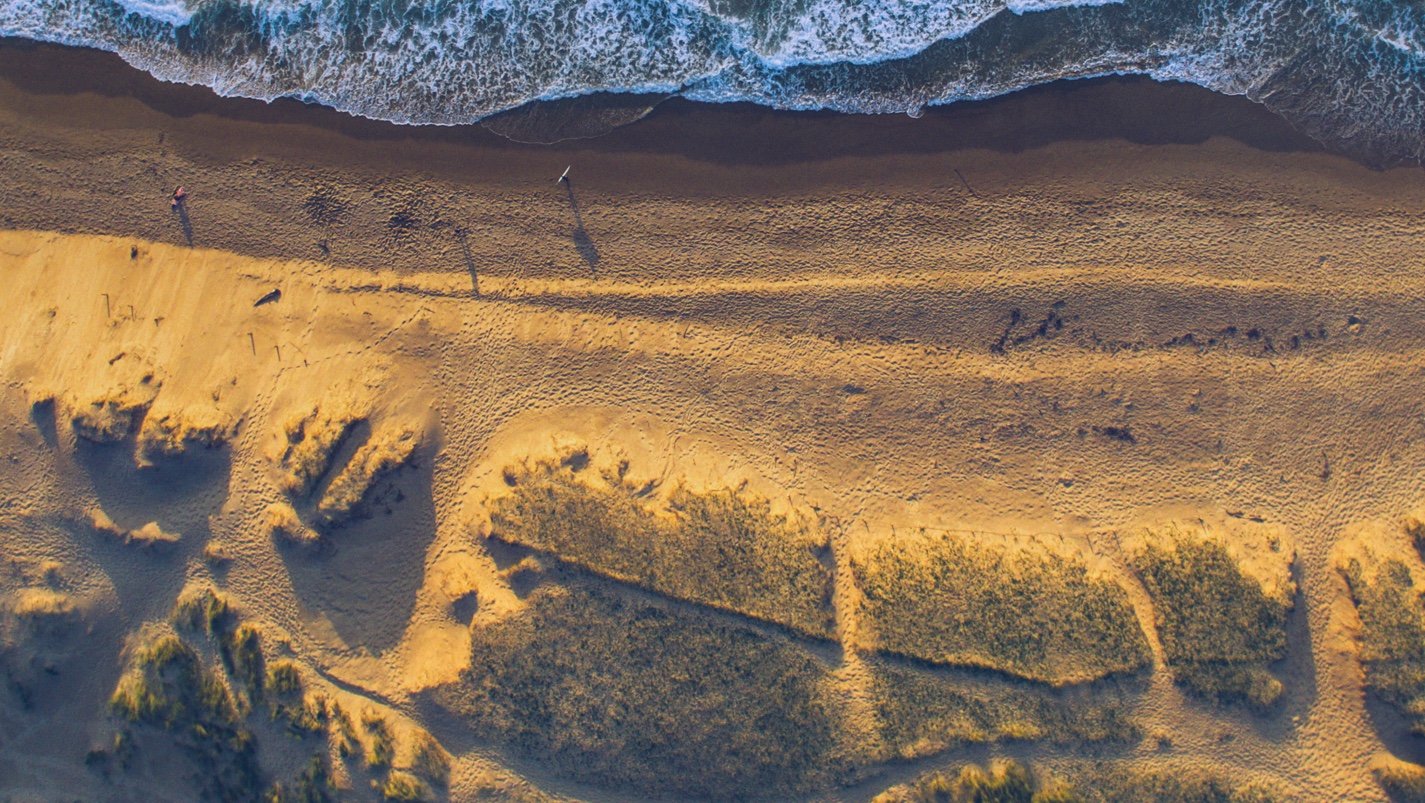

The Rugged Side of Majorca
Majorca is renowned the world over for its beaches and coves, but the Sierra de Tramuntana, which rises over a thousand metres above the island’s north coast, is a veritable paradise for hiking enthusiasts. An intricate network of centuries-old tracks and footpaths has been upgraded into a set of fully-fledged walking routes traversing a surprisingly rocky landscape carpeted with dense forest. Peeping out of the clearings are a number of quaint villages and hamlets that preserve their pristine charm. A long-distance footpath, known as the Dry Stone Route (Ruta de Piedra en Seco) or GR-221, runs from one end of the range to the other, flanked by the most rugged landscapes in Majorca. The route, imbued with the region’s rich cultural heritage, covers 120 km and can be done in full or by sections. For visitors with a tight schedule, we have selected three of the best sections along the trail.
1. Ses Basses and La Trapa – the Stunning Sa Dragonera Vantage Point
The walking route starts at the Coll de Sa Gramola, a mountain pass accessible from the Andratx main road. From here, a trail heads westwards towards the caseta de Ses Basses. After that the path narrows and leads to an area with various viewpoints overlooking the sea, affording wonderful panoramic views. The trail gradually merges into the wild landscape which compounds a rugged, breathtaking setting against the backdrop of the island of Sa Dragonera protruding into the sea. After a descent flanked by vegetation, you come to an old Trappist monastery now under restoration. The project will eventually include a shelter for hikers. For the return trip, you go back the same way you came.
Recommendations:
This is an easy route, covering 15 km for the whole round trip, ideal for a morning’s hike.
Access: Coll de Sa Gramola lies 5 km from Andratx, reached via the Ma-10 main road, where there is a parking area. If you happen to come in two cars, you can extend the excursion beyond La Trapa as far as Sant Elm, where you can park one of the cars beforehand. The walking distance from Coll de Sa Gramola to Sant Elm is 13 km in all. Remember to take water as there are no drinking sources on the way and little shade.
2. Camí de s’Arxiduc – a High-Flying Lookout Between Valldemossa and Deià
The excursion begins at the Charterhouse of Valldemossa, the former residence of King Sancho I of Majorca. Exit the village of Valldemossa following the white and red markers of the GR-221 along a stony path with a steep gradient that ends at the Es Cairats shelter, which is still closed. It should be noted that original route of the GR-221 was very different from the current one as it used to go over the summit of Talaia Vella, from where it joined up with the Camí de s’Arxiduc. On the new route, old lime kilns are visible on the ascent leading to Es Cairats, as are charcoal kilns and the small shelters once inhabited by those in charge of managing resources in the magnificent holm oak woods.
After the shelter, the footpath turns into a track and you soon come to a wild, open area. The GR-221 markers lead to the summit of Puig Gros, the Pla des Aritges plain and Es Caragolí, where the route finally links up with the panoramic Camí de s’Arxiduc. Before taking a detour to descend towards Deià, it is well worth walking a few extra yards – even though this involves going back on our tracks – along this emblematic route, as it runs along the ridge of the mountains. It was commissioned by the Archduke Louis Salvador of Habsburg-Lorraine in the late-19th century for the sole purpose of being able to enjoy the scenery.
Recommendations:
While only 13 km long, the route has a difficulty of medium-high, on account of the slopes and terrain, which is very rocky and steep in some stretches.
Access: You can leave your car in Valldemossa and take the bus back from Deià.
3. From Sóller to the Monastery of Lluc – A Weekend in the Mountain Heartland
One of the most spectacular, varied, accessible and best appointed sections of the GR-221 is the one that connects the historical town of Sóller to the Monastery of Lluc. It covers a distance of 35 km and can readily be divided into two stages – of 19 km and 15 km each – with an overnight in the Tossals Verds shelter.
Stage 1 – On the first day, the GR-221 markers point you from the centre of Sóller to the bucolic Biniaraix gorge. This involves a pronounced accumulated slope, leading up to the Coll de l’Ofre and the Cúber dam. From here, the more seasoned hikers can proceed to the Tossals Verds shelter via the new Pas Llis bypass, with an added ascent and a brief, simple equipped pass. The alternative is the old route which goes around Coll des Coloms and does not entail any difficulty.
Stage 2 – After regaining your strength in the shelter, you proceed along the GR-221 towards the panoramic areas of Coll des Prat and Coll des Telègraf. From here, a long descent leads you to the monastery along a winding path which snakes through a holm-oak wood featuring old but recently restored ice pits.
Recommendations:
The trek lasts two days and the difficulty level is medium to high, as it includes steep slopes – with a daily accumulated slope of over 1,100 metres – and prolonged descents along tracks. The terrain is rocky and requires mountain footwear, in addition to trekking poles. While the path is signposted with posts, waymarkers and paint marks, it is advisable to take your own hiking map, such as the one published by the Editorial Alpina. You should also book overnights at the Tossals Verds shelter in advance, as capacity is limited (website).
Access: You can get a bus to Sóller from Palma, or you can travel on the old Sóller railway, which has been plying the route daily since 1912. You can take the L330 line bus to make the return journey from Lluc to Palma.
Don’t wait to discover the rugged enclaves of Majorca – check out our flights here.
Text by Sergio Fernández Tolosa & Amelia Herrero Becker of Con Un Par de Ruedas
Photos by Con Un Par de Ruedas
more info
Julio Cortázar and Rayuela's Paris
Even the experts consider it an ‘antinovel’, there is no doubt that Rayuela influenced many generations since it was released and, because of it, Julio Cortázar became a literary benchmark whose centenary of his birth is celebrated this year. If Maga and this unparalleled adventure in Paris also fascinated you, our route through the French capital will help you remembering the most remarkable moments in Horacio Oliveira’s history.
"¿Will I find Maga? Many times I just had to look out coming by rue de Seine, the arch that takes you to Quai de Conti, and only the olive and ash light floating on the river let me distinguish the forms, its tiny shape by Pont des Arts, sometimes walking from side to side, sometimes stopped at the iron parapet, leaned against the water. And it was so natural to cross the street, ascend the steps on the bridge, get in the tiny waist and get closer to Maga smiling unsurprisingly, convinced like me that a chance encounter was the less casual in our life, and that people who arrange dates is the same that needs ruled paper to write each other or that pushes from the bottom the tooth paste”
Quai de Conti: The novel, like our route, starts at rue de Seine, Quai de Conti and Pont des Arts, places where Horacio y Maga met each other, with a special symbolism for the author considering the centric location of this part of the route that take us along the left side of Seine river. Our protagonist also mentions the library Mazarine, located at the other side of the arch and the most antique library in the country.
Pont des Arts: As a connection between Institut de France and Louvre (previously known as Arts Palace), you can find the centric iron bridge where Oliveira got drunk at the first part of the book. Now full of lockers promising everlasting love, the panoramic views over Cité island and all the bridges is one of the most beautiful pictures you can take of the city.
Louvre Museum: Even Rayuela is full of cultural references, when we are talking about visual arts Louvre museum is the only reference Cortázar gives us about this city on this field. The most visited arts museum in the world appears on our way after taking Pont des Arts. This place is a must to anyone because of its wide collection and masterpieces such as “La Gioconda” by Leonardo da Vinci and a stunning building including, since the 80s, a great glass pyramid that you should visit.
Rue du Jour: The latest partners of Horacio at the city, homeless people, feed themselves thanks to the soup dish that they receive here. By the church Saint Eustache, people in need receives food at this street, located at Les Halles, a gardened area right in the city centre where there are two more places we will pass by.
"Au chien qui fume" restaurant: Located at Rue du Pont Neuf, this is one of the cafés named at chapter 132 and is also a meeting point for Etienne and Horacio on the way to the hospital to visit Morelli. This is a typical French restaurant, with an elegant and traditional decoration and a careful cuisine selection. Following this street we find the next stop…
Pont Neuf: Even it name means new bridge, it’s completely the opposite, and it’s the oldest. Here we say goodbye to Horacio and Maga in this route. Made of arches, the bridge took almost 30 years on the making and during the 18th century it was the centre of crime and commerce in the city. Passing by the bridge we will go back to the left side of the Seine, where we will stay.
Rue Dauphine: Even it’s part of a dispensable chapter, Pola, Horacio’s French lover, lives in this street. The street starts after Pont Neuf, and it was named after France’s dauphine, Henri IV’s son.
Rue de la Huchette: This is another place where Horacio thinks his lover can be at. A must-visit pedestrian street with many famous places like the theatre Huchette and Caveau de la Huchette. We pass through from the boulevard Saint-Michel until we reach Rue du Petit-Pont, before we get to the Notre-Dame cathedral.
Notre Dame: Chance makes the protagonists meet again at this iconic landmark of the city, one of the most beautiful and most visited French gothic cathedrals, which was finished on 1345 and is located at the Cité island. Who hasn’t heard about Notre Dame and its famous hunchback? Either as the Quasimodo by Victor Hugo or by Disney, the gargoyles are part of the collective imaginary
Rue du Sommerard: The street where Horacio Oliveira lives and one of the oldest in the city, which during the Roman age took to the baths at Cluny. Next to the famous Saint-Germain Boulevard, Sommerand is nonetheless more relaxed and perfect to take a relaxed walk.
Rue Valette: This is a magic place for our protagonists, in one of the hotels here they consummate the relationship for the first time and here is also where Horacio took Pola. Rue Valette is at the quarter of Sorbonne University and follows the Rue de Carmes, the meeting point for students.
Rue Monge: One of the places where is believed Maga lived after separation and the death of his son Rocamadour. This is a important street located at the university area on the Paris district nº 5.
Rue Monsieur Le Prince: The incomprehensible chance also takes place at this street, which used to be a road and leads to the Edmond Rostand Square along the Saint-Michel Boulevard. Notice also that Polidor restaurant, where the story of Cortazar’s "62 A Model Kit" takes place, is also here. We pass by this place if we go to Odeon.
Rue l’Odéon: Remember here, with Horacio, parts of his relation with Maga, eating at Carrefour de l’Odeon and riding the bike by Montparnasse. The impressive Odeon theatre gives the name to this street and neighbourhood, full of life by night and day, where we can find all kinds of bars, cafés and restaurants. From here, take Saint-Sulpice Street to arrive to the next stop.
Rue de Tournon: This is the street where we walk back to Madame Trépat house, with Horacio. Even traditionally it was full of old bookstores, many luxury fashion shops moved here on the past few years. It’s one of the most prestigious streets, from the Senate and across Saint-Sulpice street, which lead us to the end of this route. Mario Vargas Llosa lived here too.
Montparnasse cemetery: The last stop in this route is also the location at the last chapter of Rayuela, where Horacio takes a little paper and also where Julio Cortázar was buried. At the hearth of Montparnasse neighbourhood, this was inaugurated on 1824 and is the second in the city, with many remarkable people resting here along with the author, such as Simone de Beauvoir, Samuel Beckett or Jean Paul Sartre.
Image from Henri Marion
A place well worth discovering! Check out our flights here.
more info
Rome’s Other Churches
They call it “The Eternal City”. The fact is that Rome still dwells in a historical limbo typified by a coexistence between Etruscan, Roman, medieval, Renaissance, Baroque and even Fascist vestiges. In this cradle of our civilisation and hub of the Catholic religion, monuments like the Colosseum, the Vatican, the Forum and the Pantheon are visited by millions of tourists each year. But, other jewels known to far fewer visitors also lie concealed in this great city. We roamed its most emblematic quarters and discovered the twelve most spectacular yet little known churches.
Trastevere
Here, tourists and locals jostle about one of the city’s liveliest, most characterful quarters. Here, too, stand some of Rome’s most fascinating medieval churches, in particular, Santa Maria in Trastevere.
1. San Francesco a Ripa – Bernini’s Other Ecstasy
Piazza di San Francesco d’Assisi 88
Possibly Gian Lorenzo Bernini’s best known work is the Ecstasy of St Theresa. However, what many are unaware of is that a church in the very heart of Trastevere conceals another ecstasy by this artist. The church in question is San Francesco a Ripa, home to his Blessed Ludovica Albertoni, a masterpiece in marble which you are sure to enthuse over. The church is also famous for having been built on the former site of a hospice where St Francis of Assisi lodged during his visit to Rome in 1219. Indeed, his crucifix and stone pillow can still be seen in the cell where he stayed.
Piazza Navona
The Piazza Navona, one of the great works of the Italian Baroque, is built on the site of the Stadium of Domitian, hence its oval shape. The area features myriad vestiges of Borromini, Bramante and Bernini in the guise of fountains, churches and palaces. With a lively atmosphere during the day and by night, this is one of the best spots to take the city’s pulse.
2. Santa Maria della Pace – Bramante’s Proportions
Vicolo del Arco della Pace 5
This superb church was designed by Baccio Pontelli in the second half of the 15th century and includes a cloister by Bramante from the year 1504. Here, the great Italian architect applied the rules of classical proportions to generate an effect of spaciousness in an otherwise small area.
Campo de’ Fiori
The streets in this quarter have preserved their medieval atmosphere and sited here is one of Europe’s most famous open-air markets. It was a centre of the Renaissance, featuring buildings such as the Palazzo Farnese and Palazza Spada. Wandering through its streets, we came across the colourful Jewish ghetto, the Roman Theatre of Marcellus and the surprising Portico of Octavia.
3. San Girolamo della Carità – A Baroque Festival
Via de Monserrato 62A
This church is located near the church of Santa Maria in Monserrato degli Spagnoli, on the spot where St Filippo Neri lived. It houses the stunning Spada Chapel, which is well worth the visit. Designed by Borromini, it is an ode to the Italian Baroque, with statues, marble- and jasper-veined panels and all kinds of gilt decoration simulating curtains and flowered damasks.
Esquilino
Esquilino is the largest of Rome’s seven hills and a quarter which still retains much of its original character. Roman vestiges are in evidence in many spots, noteworthy being the ruins of the Baths of Trajan and the Domus Aurea. However, if it stands our for anything it is for its numerous churches, some of them built in private homes.
4. Santa Bibiana
Via Giovanni Giolitti 154
The simple facade of Santa Bibiana was Gian Lorenzo Bernini’s first architectural commission. The building houses the remains of St Bibiana, who was scourged to death with leaded thongs in Roman times. The small pillar inside the church is believed to be where the martyr was tortured. The interior also features a marble statue of the saint sculpted by Bernini himself. Interestingly enough, it was the first clothed figure sculpted by the Neapolitan artist.
5. Santa Prassede
Via di Santa Prassede 9A
The Basilica of Saint Praxedes, a celebrated gem of Byzantine art, houses one of Rome’s most interesting mosaic ensembles. The church was commissioned by Pope Paschal I in the 9th century, on the site of a former oratory from the 2nd century. While it has undergone alterations, its original medieval structure is still visible. The central nave contains a well where tradition has it St Praxedes buried the remains of 2,000 martyrs. Pride of place, however, goes to the beautiful mosaics, depicting saints, animals, palm trees and poppies. The church also contains part of a column, brought here from Jerusalem, to which Christ is said to have been tied and scourged.
Lateran
The Lateran Palace, the papal residence during the Middle Ages, stands next to one of the most spectacular churches in Rome, St John in Lateran.
6. Scala Santa and Sancta Sanctorum
Piazza di San Giovanni in Laterano 14
Many sightseers overlook this spot when visiting St John in Lateran. The building, designed by Domenico Fontana, houses the two remaining vestiges of the Lateran Palace, namely the Scala Santa and Sancta Sanctorum. The former is a set of 28 steps where, according to tradition, Christ walked up to Pilate’s residence before being tried. They were brought from Jerusalem by the mother of Emperor Constantine, St Helena, and ordered to be placed in this spot by Pope Sixtus V when the Lateran Palace was destroyed. The steps are considered holy and an object of pilgrimage, so that visitors are only allowed to ascend them on their knees. At the top of the stairs is the Sancta Sanctorum containing a painting which was allegedly executed by St Luke with the assistance of an angel.
7. Santa Croce in Gerusalemme
Piazza di Santa Croce in Gerusalemme
While now very different in appearance, the original church was founded by St Helena, the mother of Constantine the Great, in the year 320 AD. It houses relics from Christ’s Crucifixion. The crypt contains a statue of St Helena which had originally been unearthed in the Ostia archaeological site. The tomb of Cardinal Quiñones, confessor to Charles I of Spain, was sculpted by Sansovino.
8. Santo Stefano Rotondo
Via di Santo Stefano Rotondo 7
St Stephen in the Round is one of the oldest churches in Rome. Founded in 468 AD, its striking circular ground plan is difficult to forget. The four side chapels house part of the original medieval frescoes, while the standout feature is a 7th-century mosaic depicting Jesus with SS Felician and Primus.
Caracalla
The spectacular ruins of the Baths of Caracalla have long been the main attraction in this part of the city which is ideal for strolling in. What in Roman times was a residential area now boasts many green zones and affords views of the Roman wall and the Porta San Sebastiano, one of Rome’s best preserved gates.
9. Santa Maria in Domnica
Piazza della Navicella 2
Dating from the 7th century, the church is thought to have been built on the site of a former fire station. It is well worth getting to this eminently untouristic church to enjoy the peaceful atmosphere. Don’t miss the stunning mosaic in the apse, commissioned by Pope Paschal I in the 9th century.
10. San Giorgio in Velabro
Via Velabro 19
Primitive in appearance, this church was inexplicably targeted by a terrorist attack in July 1993 which destroyed the portico and tympanum. They were restored and no signs of the attack remain. Noteworthy in the apse is a fresco by Pietro Cavallini. A prominent feature in one corner of the facade is the Arco degli Argentari, dedicated to Emperor Septimius Severus in 204 AD.
11. Santa Sabina
Piazza Pietro d’Illiria 1
Like San Giorgio in Velabro, this is one of Rome’s churches that best preserves the Christian basilica layout. It features a pulpit, choir and 16th-century throne, while the windows illuminate a nave graced with exquisite Corinthian columns. The doors in the side portico, with carvings depicting Biblical scenes, date from the 5th century.
Environs of Rome
The catacombs, Via Appia Antica and Borghese Gallery are located beyond the city centre.
12. Santa Costanza
Via Nomentana 349
Inspired by circular-plan churches such as the Palatine Chapel at Aachen, or Santo Stefano Rotondo, Santa Costanza is one of the early Christian jewels. Originally built as a mausoleum for the daughters of Constantine the Great, the 12 columns supporting the vault are a veritable feat of engineering. A replica of the Costanza sarcophagus housed in the Vatican Museum is set in a niche.
Text by Aleix Palau for Los Viajes de ISABELYLUIS
more info

The Seven Deadly Sins of Turin
The sins of lust, gluttony, greed, sloth, wrath, envy, and pride were singled out as the deadliest by early Christians, and yet their popularity remains unchecked. Turin, with its sublime beauty, its elegantpalazzosand boulevards, and enchanting personality, is a great place to indulge your favourites.
Lust
Lust is commonly regarded as being produced by excessive thinking. For abundances we have the Palazzo dell’Accademia delle Science,containing the Museo Egizio Museum, which holds the most important collection of Egyptian archaeological treasures outside Cairo. But nothing is more opulent than the Piazza Castello. This square boasts several museums, theatres, and cafés of note. There we find the Museo Civico d’Arte Antica in the fabulous Palazzo Madama, a castle that is half medieval and half Baroque, and the museum contains modern and contemporary works of art. At night it’s easier to reach the state of lust. The city’s best night spots are in Murazzi del Po, amongst the archways next to the rive, between the Vittorio Emanuele I and Umberto I bridges. Much to be recommended are the clubs Hiroshima Mon Amour (Via Bossoli, 83), the United Club (Corso Vigevano, 33) which is the meeting point for the city’s rock scene, and Blah Blah (Via Po, 21), in a former cinema.
Gluttony
For unbridled consumption of food and drink to the point of satiety and beyond, try a breakfast or brunch at the morning food specialist Andrea Perino(Via Cavour, 10), a favourite of such luminaries as Alexandre Dumas, Friedrich Nietzsche, and Giacomo Puccini. Or have an excellent cup of coffee at the welcoming Caffè Mulassano (Piazza Castello, 15). This art nouveau café, decorated with gilt carvings of bronze, wood, and leather, was once frequented by the Savoy family and by performers from the adjacent Teatro Regio. Here you’ll find the city’s best stand-up espresso. To continue with luxurious excess, there’s the Caffè San Carlo (Piazza San Carlo, 156), an unbeatable option. There’s nothing like its cakes and sweets, made to recipes more than a century old. To end the day with some serious overeating, your best choice is Sfashion (Via Cesare Battisti, 13), for Turin’s best pizzas, with thick dough and traditional Neapolitan ingredients. But your gluttony needn’t end there. Keep in mind that the first chocolate in tablet form was made in Turin when you visit Al Bicerin (Piazza della Consolata, 5) to try some. In addition, in March the city hosts a famous chocolate fair, known as Cioccola-tó.
Greed/Envy
Greed is a sin of excess in the acquisition of wealth. The elegant tree-lined boulevards and porticoed promenades feature the city’s most expensive fashion boutiques. More affordable clothing is to be found on the pedestrian mall on Via Garibaldi, and in Via Po there are amazing shops selling records and vintage or alternative clothes. But we can also find just the opposite in Turin, the birthplace of Arte Povera (“poor art”), a revolutionary artistic movement in the 1960s, whose members employed humble materials to awaken memories and symbolisms through sculpture and installations. The movement had a major international impact thanks to artists like Gilberto Zorio, Giuseppe Penone, Mario Merz, and Michelangelo Pistoletto.
Sloth
Sloth is related to ordinary laziness or the lack of motivation to do anything. It’s a well-known fact that during a trip the days are often exhausting. That’s why it makes sense to schedule in some relaxation time, and the best place to chill in Turin is Parco Valentino, the park on the banks of the Po. A number of open-air bars and restaurants operate there from late spring to early autumn. And at night, there’s nothing better than to walk back to your room at the Hotel Dogana Vecchia (Via Corte d’Appello, 4), built in the early 19th C. Mozart was a guest there, and so was Napoleon. The location in the Quadrilatero Romano makes it one of the city’s best hotels.
Wrath
Wrath may be described as a disorderly, uncontrolled sentiment, such as that which can be provoked by one of the world’s greatest historical mysteries: The Holy Shroud of Turin, revered by many as the burial shroud of Jesus ever since 1898, when photographic techniques revealed the negative imprint of a man’s face and body on the cloth. The Museo della Sindone is in the crypt of the church of the Sacra Sindone (Via Santo Doménico, 28). Another building that can disquiet us is the Museo Nazionale del Risorgimento Italiano, located in the Baroque Palazzo Carignano, a former residence of princes.
Envy/Jealousy
Envy is characterised by the coveting of someone else’s possessions. And that’s the predominant feeling among visitors to the Museo dell'Automobile as they eye the four-wheeled gems on display, the most marvellous cars on the planet. But to turn our envy a deeper shade of green we should visit Turin’s cathedral, the Duomo di San Giovanni (Piazza San Giovanni), built in 1491-1498 on the site of three old churches. In one of the chapel the actual Holy Shroud of Turin is kept.
Pride
On nearly all lists of sins, pride is regarded as the original one and the most serious of all. It is identified as the desire to be more important or attractive than others. In the past, the local football teams led the league at a distance from the rest. In the 1940s Torino FC was the undisputed leader, winning five consecutive titles, but the entire teams died in a plane crash in 1949. Four decades later it was the turn of Turin’s other first-division team, Juventus, starring the three-time Golden Boot winner Michel Platini. But there are other sources of pride, such as one of the city’s most famous symbols, the 167-meter tower Mole Antonelliana (Via Montebello, 20), with an aluminium spire, reaching closer to heaven than any other building in this magical city.
Have a look at our flights here!
Report by Isabel y Luis Comunicación
Pictures by Turismo Torino e Provincia
more info