

Lyon Sparkles In Light
What started out as a religious festival in honour of the Virgin Mary has become one of Lyon’s – and, by extension, France’s – standout cultural events. Worship of Mary the mother of Jesus in the capital of the Auvergne-Rhône-Alpes region goes back a long way, its origins steeped in the Middle Ages. During the plague which ravaged France in 1643, for instance, the city was placed under her protection.
To uncover the roots of the Fête des Lumières (Festival of Lights), you have to go back in time to 8 December 1852, the date on which a statue of the Virgin was unveiled. Executed by the sculptor, Joseph-Hugues Fabisch, it was placed in the Chapel of Notre-Dame-de-Fourvière. The event was widely celebrated in the city and, in keeping with the traditional way of marking important commemorations in those times, the facades of well-to-do homes were lit up with candlelight. What might have been just an isolated event in Lyon’s history was later reenacted each year on 8 December, when the nativity of the Virgin is celebrated, gradually becoming the festival of lights which we know today. Over time, the religious nature of the festivity has been replaced by one more akin to cultural entertainment, while the candles have been replaced by grand spectacles of light designed by renowned artists, and the celebration itself has been extended from one to four days.
The festival has grown so popular over the years that it now attracts up to 4 million visitors who flock to Lyon, eager to witness for themselves the huge, charming and magical display of light. This can be daunting for newcomers arriving in the city to discover and enjoy the Fête des Lumières. We advise you to book your accommodation in advance and to be patient when attending the various light shows, as you are bound to encounter large crowds. What we can guarantee, however, is that you will be amazed by the earnestness with which the Lyonnais celebrate this festivity, and by the sheer number and quality of the visual displays, most of which are held in the old town and around Lyon’s major landmarks.
What’s More…
Apart from visiting Lyon for its Festival of Lights, which this year runs from 8 to 11 December, we recommend you take the opportunity to discover some of the city’s other charms, too. Be sure to visit its historic centre or Vieux Lyon, designated a World Heritage Site by UNESCO in 1998, where you can breathe the medieval atmosphere, visit Roman ruins – most notably the Roman Theatre of Fourvière – and do a spot of shopping at the Carré d’Or. Cuisine is another of the city’s fortes, and has earned it international accolades. Indeed the city features such standout chefs as Paul Bocuse and Eugénie Brazier. So, make a point of dropping in on at least one of the countless bouchons, as restaurants are known in Lyonnais parlance, and treat yourself to their excellent local cuisine.
Come and experience first-hand this stunning festival of lights – book your Vueling here.
Text by Los Viajes de ISABELYLUIS
Images by Fulvio Spada
more info

Winter Holiday at the Foot of Mont Blanc
Chamonix, the rakish star of the French Alps, is the perfect spot for a winter getaway where you can get the most out of the snow in every possible way and with splendid views of the highest mountain in Europe, Mont Blanc. Situated just 16 kilometres from Switzerland and 11 kilometres from Italy, this destination draws snow sport devotees from everywhere, as well as those eager to go on outings in the superb natural surroundings, relax in a spa and even do a spot of shopping in the town of Chamonix.
The Best Black Pistes in France
Snow sport enthusiasts will find a veritable paradise in Chamonix as they ski against the spectacular backdrops, either of Mont Blanc or the valley where Chamonix is located. The 115 kilometres of ski runs – 12 for beginners, 26 blue, 20 red and 12 black – are a delight for any skiing or snowboarding devotee. While it is acclaimed for its large number of pistes with a high difficulty rating, suitable only for the most intrepid skiers, it also has areas where young children or learners can enjoy snow sports.
The Aiguille du Midi, at an altitude of 3,842 metres, is the objective of choice for those less fearful of heights, as well as others seeking out the most precipitous down slopes which only specialists can handle safely. It is well worth going up in the cable car and overcoming one’s fear of heights, if only for the superb panoramic views of the French, Italian and Swiss Alps to be had from here. The Brévent-Flégère pistes are more accessible and also afford magnificent views of Mont Blanc.
Heady Scenery
Those less inclined to do sport can rest assured that you don’t need to ski in order to enjoy the views, which can be reached by going up the comfortable cable cars. Mont Blanc, at a stunning altitude of 4,810 metres and famed for being the cradle of mountaineering, is the main focus of attention for visitors to the area. As mentioned earlier, both Aiguille du Midi and the peak of Le Brévent are perfect vantage points for viewing the scenery. Other panoramas worth considering here are provided by the glaciers. A standout example is Mer de Glace, located on the north face of Mont Blanc, which is 7 kilometres long by 200 metres deep, making it the longest glacier in France.
De Luxe Après Ski
Unlike other Alpine ski resorts, which feature only a few villages with limited aprés ski facilities, after a long, hard day of skiing or scoping the area in search of sensations, Chamonix boasts a whole town full of amenities for rounding off your day. You can go shopping, have a drink while listening to live music, or replenish your strength by trying some culinary classics of the region of Savoy, like raclette or fondue. What more could you want?
Book your Vueling to Geneva, which lies just 88 kilometres from Chamonix, and indulge in a surfeit of snow at the foot of the highest peak in Europe.
Text by Los Viajes de ISABELYLUIS
Images by Christian Bertram
more info
Cognac destilerías y mucho más
On its passage through Cognac and its surrounding area, the river Charente is privileged to flow through vineyards yielding white grapes that are made into one of France’s leading brandy DOs – cognac. This popular drink, which is produced by a double distillation of the wine in copper stills, is the area’s veritable driving force and one of the main attractions for whoever visits this destination in the Charente department. There are also other draws – apart from its well-known distilleries – that make this beautiful corner in the west of France well worth visiting. Ready to discover them?
Visiting Cognac
Cognac is not only the brandy. Before or after embarking on a route of the distilleries where this liqueur is made – after which this beautiful city is named – you should make a point of strolling through the city itself and succumbing to its charms. Set on the right bank of the river Charente is the castle which witnessed the birth of King Francis I, an emblematic figure of the French Renaissance, one of whose iconic artists was Leonardo da Vinci. Once in the old town, known as Vieux Cognac, we recommend you wander through its back streets where you will be transported willy-nilly to a bygone era.
Cognac Distilleries Route
As we said, the most coveted product of the area is cognac, and the distilleries where it is made, one of its main tourist attractions. There you can see first-hand how this delicate liqueur is made and, needless to say, let yourself be carried away by its bouquet and flavour in whatever tasting sessions you attend. Prominent among the best known distilleries is Hennessy, Camus, Remy Martin, Martell and Otard, located in Cognac Castle. You are advised to first get genned up at the Cognac Tourist Office, where they will show you the available routes for visiting both the large wineries and the smaller, family businesses.
Sailing the River Charente
The river Charente, after which the department is named, is one of the area’s major landmarks. For centuries it has been navigable, the artery along which such goods as salt, paper and fabrics were transported, with Angoulême acting as one of its principal river ports. One of the various options for sailing down the river is La Dame Jeanne, a replica of a gabare, the flat-bottomed boat that conveyed goods along the river in former times.
Stopping Off At Angoulême
Comic devotees would inevitably associate the name of the capital of the Charente department with the festival dedicated to the ninth art which attracts a host of enthusiasts each year. Apart from this event, Angoulême has a medieval past which has endured the passage of time. Indeed, its streets are redolent with this medieval legacy and one standout landmark is its Romanesque Cathedral.
Fire up and discover this beautiful area and its stellar product – cognac. Book your Vueling to Bordeaux, located just over one and a half hours from Cognac
Text by Los Viajes de ISABELYLUIS
Images by Pug Girl
more info
Tracking Down Banksy in Calais
A few days ago, after Banksy had updated his website, we noticed that his work is now displayed at various points in “The Jungle” refugee camp in Calais, one of the largest camps in western Europe. Despite his identity still being cloaked in anonymity, Banksy is currently one of the most highly valued artists around. His sharp, critical wit is undoubtedly the hallmark of his work.
Noteworthy among the four new artworks he posted is the one showing Steve Jobs carrying an early-eighties Macintosh, with a sack slung over his shoulder, reminiscent of the bags the forced migrants often take with them on their harsh journey. This is clearly a reference to the whole migratory movement being enacted from Syria to Europe. Jobs was, of course, the son of a Muslim Syrian immigrant and was adopted by a middle-class family of Armenian origin. That is the conceptual link Banksy draws between Steve Jobs and the Syrian diaspora.
Another Banksy offering in the same area makes reference to a famous work by Théodore Géricault, The Raft of the Medusa, painted between 1818 and 1819, depicting a group of castaways in danger, packed onto a drifting raft. This alludes to the dangerous voyage embarked on by many of these refugees who risk their lives crossing the Mediterranean on flimsy rafts. In this version, the castaways are crying out for help to a modern cruise ship speeding past near the horizon. The artist had previously drawn attention to the issues surrounding the refugee crisis in a work entitled, Dismaland.
In addition to these artworks, members of Banksy’s team set up 12 permanent installations in Calais, and a makeshift children’s playground in the camp precinct. The materials used were either sourced locally or were remnants of the Dismaland project brought here for the purpose. This new project is known as Dismal Aid.
A Much Frequented But Little Visited City
Calais is primarily a city of passage. Some 15 million people are estimated to pass through it each year as it is a compulsory way station for access between France and England. In contrast, comparatively few people actually spend some time visiting the city. However, we can wholeheartedly recommend this city in the north of France, with little over 75,000 inhabitants and just 34 km from Dover, as a tourist destination. Its charm lies not in its architecture or monuments but in its privileged siting on the seaboard and the majestic Côte d’Opale.
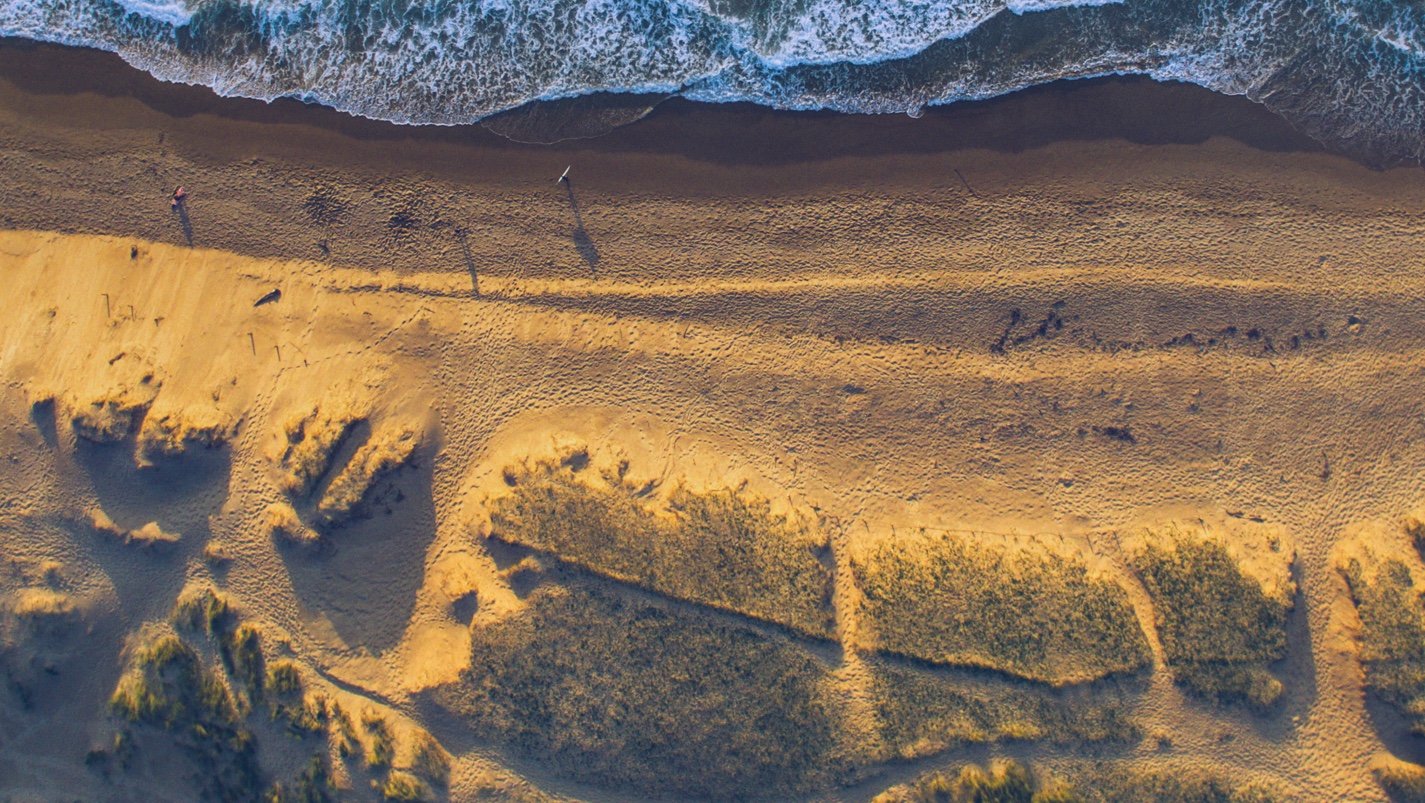
The city is not celebrated for its grand monuments or buildings, but it does have such landmarks as the Musée Mémoire 1939-1945, dedicated to the Second World War and housed in a bunker, a sculptural group by Rodin known as The Burghers of Calais, located opposite the City Hall, and the Cité Internationale de la Dentelle et de la Mode, the city’s Lace Museum. On display is a century-old mechanical loom with 3,500 vertical threads and 11,000 horizontal ones. Calais’ genuine heritage lies in its natural surroundings and local scenery is stunning. Come armed with your camera as the views are breathtaking. The attractive seafront is dotted with striped changing booths which take you back to the early 20th century. The sands stretch westwards for 8 km along the dune-filled Blériot beach, so named as it was here that the pioneer aviatorLouis Blériottook off on the first ever solo flight over the English Channel in 1909.
By the way, when you feel like having lunch or dinner, be sure to head for the Histoire Ancienne, a bistro specialising in regional and French dishes, some cooked on an open wood fire. This very pleasant, Parisian-style restaurant was opened in the 1930s. Prices are affordable, with dinner ranging from 19 to 28 euros.
Don’t miss your getaway to Calais – check out our flights to Lille here.
Text by ISABELYLUIS Comunicación
Images by Rob Sinclair, Carawah, Olivier Duquesne
more info