

Your Best Getaway Ever In 4 Days
Now that the end of the year draws near, you are bound to have a few spare days. Here’s a great recommendation for spending a delightful long weekend in Gran Canaria. As you will see, it is time enough to get a good taste of one of the pearls of the Atlantic. Why wait to discover it? Four days on the island will yield any number of plans to take a well-earned break from your routine. Here, then, is a compendium of practical tips for making the most of your stay on the island.
Thursday
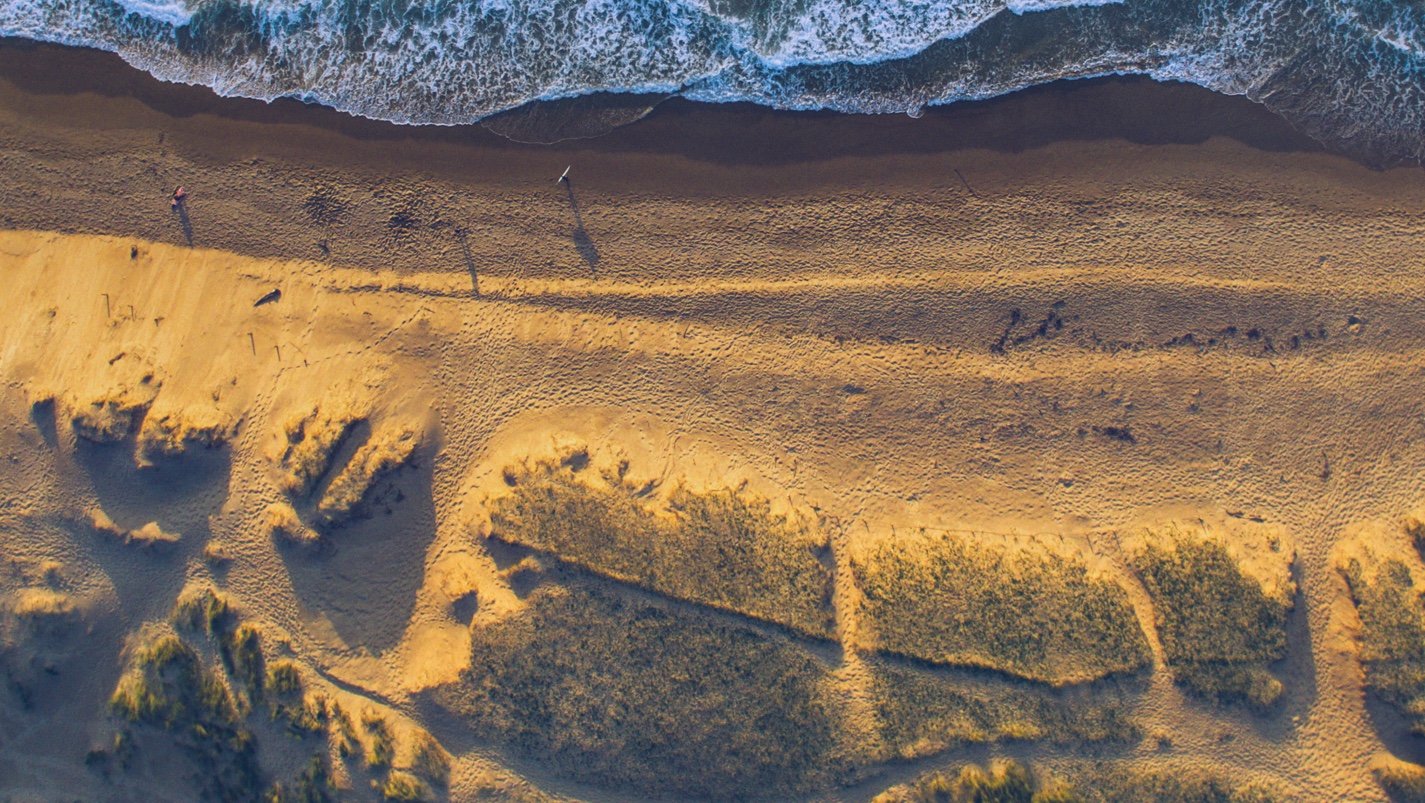
As soon as you leave the airport, your best bet is to head south and have your first weekend splash in the ocean. Maspalomas and Playa del Inglés await you with their large tracts of pale yellow sand where you can sunbathe safely all year around. If you’re looking to switch off real quick, take an adventurous stroll in the heart of the sand dunes or play golf on one of the quiet courses in the area.
Be sure to visit charming Puerto de Mogán, the ideal spot for promenading and savouring fresh fish in any of the restaurants at the seaside.
Friday
Begin the day by taking a route across the north of the island. And where better than to aim for the town of Arucas, where homes are harmoniously interspersed with banana plantations? Its most striking landmark is the Neogothic Church of San Juan Bautista, built with stone quarried in the municipality itself. Another highlight of your itinerary is the Arehucas rum factory, where the celebrated beverage is made in the oldest and largest rum distillery in Europe.
On the way to the north-western triangle of Gran Canaria, make a point of visiting the Gáldar Painted Cave, a museum and archaeological park based on a large native deposit. If you then press on towards the picturesque village of Agaete, you will marvel at the rugged rock formations adorning the coastline. Enjoy a sunset there and take time to upload to your social networks some stunning panoramas. Your main subject is likely to be the striking dragon’s tail plotted by the cliff faces which the ocean has eroded over millions of years.
Saturday
Time to discover Las Palmas de Gran Canaria, a modern, cosmopolitan capital city. Have a walk through Vegueta, the historic old town and stop over at the Christopher Columbus House Museum which boasts a valuable cultural legacy encapsulating the relationship which the island has maintained with the Americas for five centuries. The Calle Mayor de Triana has all you need for a busy shopping day, as it is lined with shops stocking both local brands and international labels.
The Pérez Galdós House Museum, where the universally acclaimed Canary Island writer was born, is another point of interest before heading to Las Canteras, one of the finest urban beaches in Spain. Open-air concerts are held there as part of the “Ruta Playa Viva” (Living Beach Route), one of the most attractive leisure proposals in the city.
Sunday
The rich natural heritage of Gran Canaria reaches its climax in the island’s interior. On Sunday you can drop in on the street markets to taste the best of local cuisine and choose a souvenir from among their regional craftwork. Devotion in Teror involves pampering the “Virgen del Pino” (Virgin of the Pine), the patron saint of the Canary Island diocese. This is where you start a climb up to Tejeda and Artenara.
A phenomenon known as the “sea of clouds” spreads out at your feet, in a breathtaking landscape which Miguel de Unamuno described as a “petrified storm”. Look out over the Roque Nublo and Roque Bentayga outcrops; then close your eyes and engrave that stunning picture in your mind’s eye forever. Why wait to experience it for yourself? Check out our flights here.
Images by the Patronato Turismo Gran Canaria
more info
Local Design Gems
Walking through central Prague it’s hard not to get trapped in the elaborate net of touristy souvenir shops and hot wine stands. But just like in the Dark Ages, there is a hidden layer to the today’s city bustling with lights, sights and stores. Jewelry, accessories and home décor by local artists feeding on the country’s rich design traditions may be hard to spot by accident – but now you don’t have to.
ARTĚL
Started by Karen Feldman back in 1988, now ARTĚL is a renowned glassware brand with 2 stores in Prague and a reputation far beyond. Today, they carry Karen’s own patterned glass items as well as countless multidisciplinary articles by young local designers. Earrings to candles and rings to buttons and postcards, ARTĚL is a seminal element in the local design scene.
Celetná 29 (entrance on Rybná), Prague 1
www.artelglass.com
open daily 10:00-19:00
KUBISTA
Housed in a gorgeous cubist building called the House of the Black Madonna, Kubista shares it with the Czech Museum of Cubism and the Grand Café Orient restaurant upstairs. Focusing on one-of-a-kind cubist (and other) jewelry, lamps, and ceramics, Kubista offers a refined, intimate shopping experience. Each item has the designer’s name on the tag, and extra careful packing and shipping for fragile purchases are available.
Ovocný trh 19, Prague 1
www.kubista.cz/en/
open Tue to Sun 10:00-18:30
DOX DESIGNSHOP
The DOX Centre for Contemporary Art is alone worth a visit, but the Designshop within it puts the huge complex on the must visit map. Attracting a younger crowd in terms of both buyers and designers, the DOX Designshop shows how ambitious artists experiment with jewelry as well as traditionally Czech glass and porcelain,. The Bookshop right nearby offers the best design, art and photo book selection in town.
Poupětova 1, Prague 7
www.dox.cz/en/premises-and-shops/designshop
open Mon 10:00-18:00, Wed & Fri 11:00–19:00, Thu 11:00-21:00, Sat & Sun 10:00–18:00
closed Tuesday
FUTURISTA
A unique gallery slash shop slash workshop spot right next to the Bethlehem Chapel, Futurista Universum strives to offer what’s freshest in the local design world. Go there for an impressive selection of contemporary jewelry with an edge, cheeky accessories, and beautiful minimalist glassware. Check the website for the list of current exhibitions.
Betlémské náměstí 5a, Prague 1
www.futurista.cz/en/stranka-o-nas-2
open Mon to Fri 11:00-18:30, Sat 10:00-18:30
BELDAFACTORY
A family-run business dating back to the 1920-s, BELDAFACTORY fuses classical, contemporary and quirky in their distinctive jewelry, wedding rings and tableware designs. Made by hand with metal, precious stones and enamel, these are offered in their very own shop in central Prague, along with selected works by other local artists. Unique glass and porcelain articles are also available.
Mikulandská 10, Prague 1
www.belda.cz/english
open Mon to Fri 11:00-18:00
Image: Kubista
So you feel like visiting Prague, do you? Book your flights here!
more info

On the trail of Corleone. Movie spots in Sicily
Movie tourism is a fun way to explore a city, discovering the places where some of our favorite scenes were filmed and where our favorite actors ever acted.
No one can deny the close relationship between Sicily and the cinema when 60 kilometers from Palermo, we come across a city like Corleone that makes the island a world tourist destination for curious and moviegoers.
Let us therefore take a tour around the locations of one of the most famous trilogies in movie history!
1.- Massimo Theatre
The Masimo Theatre in Palermo is located in Piazza Verdi and is the largest of the opera houses in Italy and the third largest in Europe, a neoclassical building dating from the nineteenth century.
On the front steps of this Opera House in Sicily, Coppola filmed the final scene of the film The Godfather III, one of the highlighted moments, in which Mary, Michael Corleone’s daughter, is killed by a gunman while the Intermezzo for Pietro Mascagni Cavaleria’s Opera Rusticana is played on the background .
2.- Villa Malfitano
This neo-Renaissance villa style is found in Via Dante Alighieri, 167 and is home to the Whitaker Foundation. The art collections compiled by the owner during his travels, like furniture, paintings, porcelain and Flemish tapestries from the sixteenth century garnish the rooms in the inside. Its beautiful garden is rated 5 hectares with curious plants from around the world, such as Tunisia, Sumatra, Australia, and some 150 different kinds of orchids. You can visit Villa Malfitano every morning from Monday to Saturday
Here took place the toast to Anthony‘s debut as opera singer. Anthony is the son of Michael Corleone.
3.- Castello degli Schiavi
Castello degli Schiavi, a Sicilian villa into decay already used in 1968 by Pier Paolo Pasolini to shoot some scenes for the movie The orgy is located in Via Marina Fiumefreddo, in the other end of the island. But surely, appearing in The Godfather I and II, has made the castle famous. Coppola used it for various scenes, especially is remembered for being Michael Corelone‘s death place.
4.- Corleone
Even if the name makes this famous family come to your mind, Corleone was not the real place for the film’s shooting. Want to know why? By the time of filming “The Godfather”, a judge’s murderer was nearby so they had to find new location for filming scenes corresponding to Corleone. They finally took place in two small coastal towns: Savoca and Forza D’Agro.
Despite his fame, today Corleone is a key city in the fight against the Mafia. The proof of this is Laboratorio della Legalità, a museum center founded by organizations involved in fighting the mafia, and dedicated to Magistrate Paolo Borsellino, killed during the mafia’s massacres. At the time, this building provided shelter to Bernardo Provenzano, the head of the Sicilian Cosa Nostra until his arrest in 2006.
Do not leave Corleone without trying their famous cannoli, a Sicilian origin dessert prepared here as nowhere else! This is a tube-shaped pasta filled with sweet creamy made of ricotta . “Leave the gun, take the canoli” says Peter Clemenza in a movie scene.
5.- Other Sicilian movie sites
If you are interested in this type of film tourism, you can also get close to Chiusa Sclafani, the magical village that inspired Giuseppe Tornatore to create Giancaldo in Cinema Paradiso as well as Bagheria, Castelbuono, Cefalu, Palazzo Adriano or Santa Flavia de Sicila. Piazza Bellini in Palermo was the scene of some sequences for Talented Mister Ripley.
Imagen de Michael Urso
A place well worth discovering! Check out our flights here.
more info

Have a Delicious Viennese Ice cream
You’ve spent the whole day traipsing about the city, tracking down the legacy of the Habsburgs in Vienna, soaking up its architectural gems, like Schönbrunn Palace, and visiting such splendid museums as the Albertina. The heat is oppressive – recall that it is not always cold in Vienna and in summer it bears its brighter side, as long as it doesn’t rain. You are also starting to become fatigued. Maybe it’s time to take a breather and chill out on your visit to Europe’s “musical capital”. You have heard a lot about the city’s magnificent cafés and the weighty tradition surrounding them, but what increasingly draws your attention is the sheer number of ice-cream parlours scattered about the Austrian capital. Time to check out whether Viennese ice-creams have anything on the popular Italian ice-creams. And, you are amazed to find that the Italian fare has found a stiff competitor in Vienna!
In a nutshell, this could be the experience of many tourists or other travellers passing through the city on discovering the Viennese penchant for this refreshing confectionery. You might wonder how ice-creams ever arrived here in the first place, and how they got to be so good. After doing a bit of research into the history of ice-cream, the first thing you realise is how muddled are the references when it comes to establishing a place and time when that creamy delight first appeared on the scene. However, it transpires that it first came to light in Mesopotamia around 4,000 BC in the form of boiled rice mixed with spices and milk, all wrapped in snow. This is one of the diverse forms the original recipe seems to have acquired. It was the Italians who spread it across Europe, while the French started adding some fresh ingredients to the blend. What all the sources consulted coincide in is that ice-cream reached Vienna in the 19th century, brought here by northern Italians, and that the city played an important role in applying new techniques to ice-cream making. It would not be amiss to conclude that the Viennese flair for crafting confectionery, added to the skills of the Italians when making ice-cream, inevitably led to such a successful final outcome.
So, if you’re planning to escape to Vienna, be sure to add to your to-do list the task of venturing into the heart of its myriad ice-cream parlours and trying out their refreshing delicacies. The city is said to have the largest concentration of ice-cream parlours in Europe. Among the most popular venues are Eissalon am Schwedenplatz (located in the Schwedenplatz), Zanoni & Zanoni,which is at Lugeck 7, and the Gelateria Hoher Markt,on Hoher Markt. Another well-known chain of parlours is Paolo Bortolotti, which has three venues on Mariahilferstrasse. And if, in addition to getting tasty ice-cream, you would like it served up in an ambience charged with design, then Eis Greissler is your spot. When it comes to choice, there are even vegan ice-creams to be had – the place to go is Veganista, located in the Seventh District.
Incidentally, for those of you who are fans of Empress Elisabeth – better known asSissi,whose presence is one of the leading draws on any visit to Vienna – one snippet of her lifestyle claims that, as part of her unusual and limited diet, she regarded violet ice-cream as one of her few favourite foods. So, you might want to try that original flavour.
Venture on a getaway to Vienna to savour their tempting ice-creams. Book your Vueling here.
Text by Los Viajes de ISABELYLUIS
more info