

Journey To a More Intimate Gran Canaria
One August morning in 2014, Stephen Curry, one of the world’s best basketball players, looked out of the window in the hotel where he was staying in the south of the island, together with the American national team, and wrote a message for posterity on the social networks: “Gran Canaria, God’s creation” was the immortalising phrase he wrote while taking in the scenery. He thus confirmed, decades later, that what the writer and journalist Domingo Doreste had said about his land of birth being a miniature continent was still true. The key to this is the combination of factors which make Gran Canaria a unique destination for nature lovers.
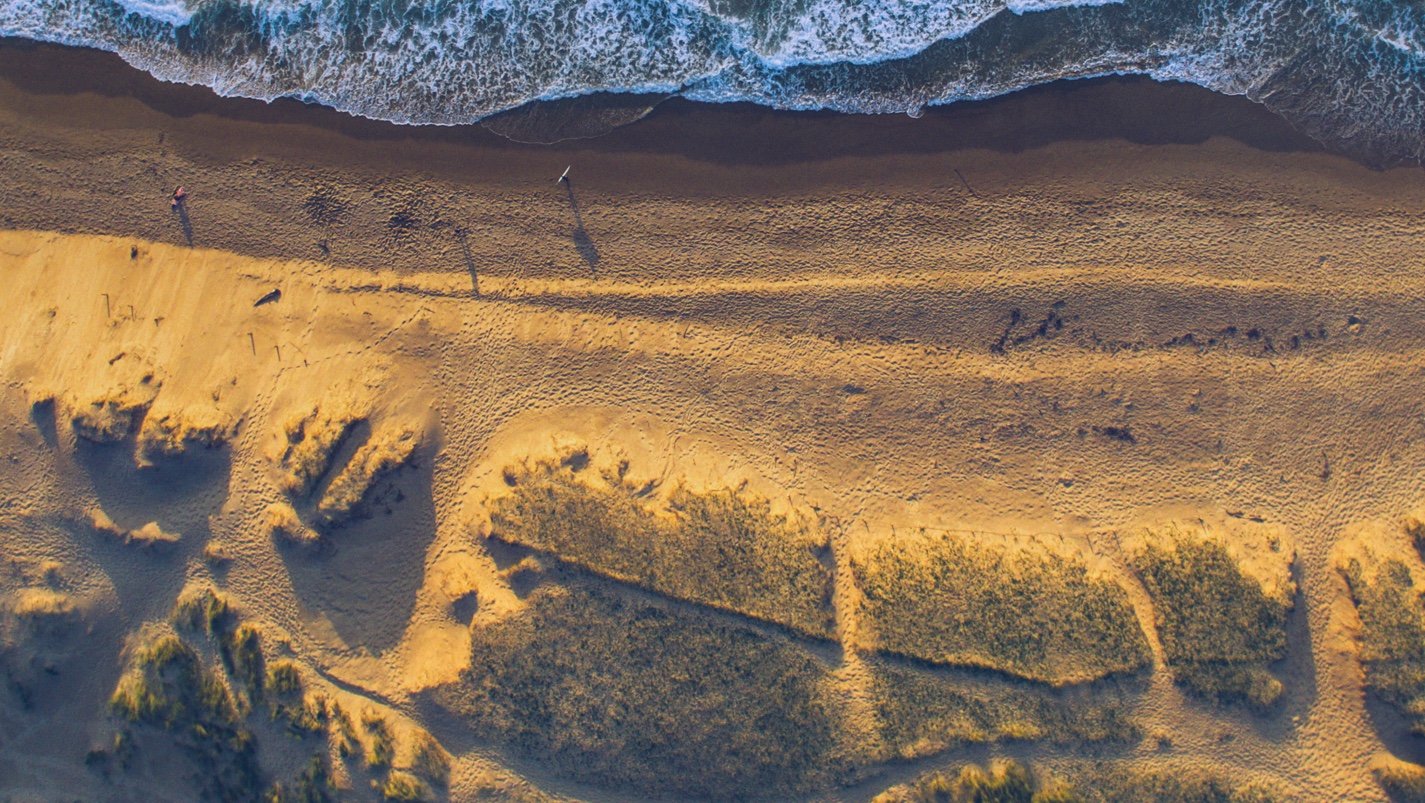
In 2005, almost half the island’s surface area was designated a Biosphere Reserve by UNESCO, a tribute to the incalculable wealth of its species and a state of conservation which has kept human impact on the environment to a bare minimum. Indeed, man’s traces in the protected nature areas open to visitors is hardly perceptible. Each strip of land, whether on the coastline or in the mountains, reveals a genuine flourish of beauty.
One of the must-visit landmarks is Caldera de Tejeda, which affords stunning views of the north-west of the island. It is home to both Roque Nublo and Roque Bentayga, two basalt monoliths regarded as emblematic by the islanders. The summit is presided over by El Pico de las Nieves, at an altitude of 1,949 metres. This great height often puts it above the cloud level, setting up an effect known as the “sea of clouds”.
This spectacular backdrop, swathed in silence, exerts a great pull on visitors seeking direct contact with the living legacy of Macaronesia, the ensemble of five archipelagoes in the North Atlantic, made up of the Canary Islands, the Azores, the Cape Verde Islands, Madeira and the Savage Islands. The flora of Gran Canaria is one of the island’s great draws and has aroused interest among the scientific community for centuries. Over a hundred plant species are indigenous to this island alone, while another five hundred species are endemic to the Archipelago. Laurel forests and towering pines are conducive to immersing oneself in an environment blessed with a privileged climate. If you’re fond of botany, be sure to visit the Jardín Viera y Clavijo – also known as the Jardín Canario (Canary Island Garden) – given over primarily to flowers and plants endemic to the seven Canary Islands.
The indigenous fauna scattered across the island is also interesting. In addition to lizards, perenquenes (Canary wall geckos) and such iconic birds as the blue chaffinch, Gran Canaria is home to almost fifty types of nesting birds. The sea is another of its fortes. The waters surrounding the island feature a broad variety of fish, notably the comber, grouper, island grouper, cow bream and white seabream, among many others. It is also quite common to spot dolphins and whales coasting along at a safe distance.
Gran Canaria’s biodiversity can be seen in all its splendour from the Red de Miradores, a network of viewpoints comprising 31 observation platforms affording the best possible views and where you can take great photos. Further, if you’re an enthusiast of trekking, climbing or cycling, Gran Canaria offers endless opportunities in the form of routes with various difficulty ratings.
Accommodation at stunning sites is provided by a good range of rural hotels and houses spread across the whole island. Small spiritual retreats, where you can dispel all stress, located in gorges and other concealed tracts of land, guaranteed to enhance your experience of Gran Canaria.
Come and live it out for yourself. Check out our flights here.
Photos by Patronato Turismo Gran Canaria
more info

Toulouse In 8 Discoveries
First Discovery – The Pink City
It was in Toulouse I discovered that dusk can be pink, particularly if you watch it from the banks of the river Garonne. The light can be rather fickle, especially when it strikes from a high or low angle on the marble of the grand edifices which bedeck the city’s historic centre. The Place du Capitole, its daytime beauty matched at night by a lighting display, is the point of departure for any route through this city in the new Languedoc-Roussillon Midi-Pyrénées region. This is where the Capitole building stands, now home to the City Hall and National Theatre. Its eight pink marble columns symbolise the power of the eight districts that made up Toulouse in the 18th century. The square also has some hidden treasures, like the paintings under its colonnade where the city’s history is recounted.
Second Discovery – Home to Carlos Gardel and the Inquisition
In Toulouse I learned that Carlos Gardel was born in France, despite the Uruguayans claiming the king of tango as a fellow countryman, as I did that Antoine de Saint-Exupéry, author of The Little Prince, had stayed at the Hotel Le Grand Balcon, like all the pilots in the Compagnie Générale Aéropostale. Toulouse is also the birthplace of institutions, as antagonistic as they are important, like the Inquisition – founded to combat the Cathars – the Jeux Floraux, and the Gay Science, dating from the 14th century.
Third Discovery – A Vast Heritage
Toulouse is the site of the largest Romanesque church in the West, the Basilica of Saint-Sernin, also one of the major stopovers on the Road to Santiago on its passage through France. Close by stands the Convent of the Jacobins, a magnificent example of monastic construction and, further along the Garonne, we come across the Basilica of Notre-Dame de la Daurade, consecrated to the Black Madonna, draped in mantles made by great dressmakers.
Fourth Discovery – Pablo Picasso
It was in this city that I realised how passionate Toulousians are about Pablo Picasso. Les Abattoirs Museum, regarded as one of the leading cultural centres in Toulouse, features as an exhibit The Remains of the Minotaur in a Harlequin Costume, the work of the universal artist from Málaga.
Fifth Discovery – Aeroscopia
Toulouse is France’s aerospace capital – the Airbus factory is located at Blagnac – particularly after the inauguration of the Aeroscopia Museum which, covering an area of 7,000 square metres, houses such legendary aeroplanes as the Concorde and the Super Guppy, the forerunner of the celebrated Beluga.
Sixth Discovery – Its Markets
In Toulouse I discovered that markets have a life of their own in France and that, apart from being venues for shopping, their restaurants attract a host of customers. The Victor Hugo Food Market, the Marché Cristal – where fruit and vegetables are sold in the open air – and the Marché des Carmes are some of the best known ones.
Seventh Discovery – N5 Wine Bar
Here, as in the rest of the country, the wine bar concept is very much in vogue. A fine example of this is the N5 Wine Bar, where you order wine by the glass (choosing both the type and the amount) and your order gets chalked up on a card which keeps track of your consumption. Be sure to try their tapas, such as the culatello di Brozzi, foie gras or Bronat cheeses.
Eighth Discovery – Toulouse Nightlife
Lastly, Toulouse is the French city with the most pronounced Spanish influence. You can tell as soon as you arrive when you start chatting to locals or when you give yourself over to the Toulousian night. In France’s fourth largest city, the people go out onto the street, regardless of the cold, and live it up for as long as they can hold out. Toulouse nightlife draws droves of locals and foreigners, many of them students, who gather at the nightspots on the Rue des Filatiers and the Carmes, Trinité, Wilson and Victor Hugo squares.
Toulouse is the perfect destination for a weekend getaway. Check out your Vueling here.
Text by Tusdestinos.net
Photos by Toulouse Tourism
more info

A German Christmas in Birmingham
A trip to Birmingham in the period from mid-November to the run-up to Christmas has a surprising added enticement, particularly for lovers of Christmas markets. That is when the Frankfurt Christmas Market and Craft Fair is held, a market in the purest German style in Britain’s second largest city. What’s more, it is the largest market of this type both in the United Kingdom and outside German itself. Not to be scoffed at!
For a few weeks, a number of quaint wooden stalls transform the city centre into a picturesque village revolving around the theme of Christmas. This magnificent market is sited in Birmingham’s emblematic Victoria Square – the heart of the city, with its Town Hall and Council House – as well as in Chamberlain Square and Centenary Square. As befits the occasion, Christmas lights and decoration are very much in evidence there.
So, what can visitors expect to find in the market? First, all kinds of Christmas decoration and gift objects, most of them hand made, such as wooden toys, candles and dolls. A large portion of the market is dedicated to craftwork sourced both locally and abroad.
Additionally, in line with German Christmas markets, fair-goers can spice up their visit by trying some of the German and Austrian culinary delicacies on offer: German sausage, pretzels, schnitzel, German beer, like weissbier (wheat beer), the popular mulled wine known as glühwein and hot chocolate. The market also offers attractions, ideal when accompanied by children, and the atmosphere is gingered up by live music.
More Christmas Shopping
In you haven’t had enough with just the market and require a stiffer spot of Christmas shopping, Birmingham is the perfect place to splash out. Here are some relevant recommendations:
Bullring. the city’s shopping area par excellence. It runs from New Street to St Martin’s Church and features no fewer than 160 shops, as well as two department stores. You are unlikely to remain impassive at the sight of the stunningSelfridgesbuilding, designed by the Future Systems architects studio and a veritable icon of the city.
Jewellery Quarter. As its name indicates, this is where jewellery business are concentrated. Here, 40% of the United Kingdom’s jewellery is produced. Located in downtown Birmingham, it boasts a tradition going back several centuries. The quarter houses some 100 retail outlets where you can purchase both new pieces and vintage jewels by weight.
Great Western Arcade. A shopping arcade located between Colmore Row and Temple Row, in the heart of the city. One of its major attractions are the premises themselves, as the stores are housed in an elegant Victorian building.
Custard Factory. Enthusiasts of things original and striking will find themselves at home on these premises, the former Bird’s Custard factory, situated in the industrial district of Digbeth. The interior is taken up artists’ and creatives’ studios, side by side with shops and bars where you can take a breather. There is a grand total of 30 stores displaying the latest trends in fashion, vintage garments, contemporary jewellery, artworks, bicycles, skateboards and many other things.
Mailbox. If exclusive design and luxury brands are for you, look no further than this shopping area located in Commercial Street. This complex includes the BBC Birmingham studios, the Harvey Nichols luxury department store, and two hotels. The back of the building, which gives onto a canal, is full of terraces with bars and restaurants for you to relax in after all your hectic shopping.
Ready for a Christmas shopping spree in Birmingham? Check out your flights here.
Text by ISABELYLUIS Comunicación
Photos by Horst Gutmann, Custard Factory, Basti V, Tony Hisgett, Guy Evans
more info

Easter in Sicily – between Christianity and Paganism
As in much of Spain, Holy Week unfolds with great intensity in most of Sicily. This comes as no surprise – the processions of penitents commemorating Christ’s Passion and Death were brought to the island by the Spanish in the 16th century. While they abound across Sicily, the processions that arouse the greatest expectation are those held in villages like Enna and Caltanissetta, both of which lie about an hour’s drive away from Catania.
But all Sicily’s beautiful, timeless villages preserve their deep-rooted traditions, each with its own character. A holiday on the island during Holy Week could combine sightseeing in coastal towns, discovering local architecture and tasting their delicious cuisine. And, during the festivities, the religious guilds stage spectacular Easter processions in which the Baroque aesthetic prevails.
If you want to savour some of these ancient festivals, go to Prizzi on Easter morning. There they celebrate the Ballo dei diavoli (dance of the devils). In this folk tradition from the Middle Ages, death, dressed in yellow, accompanied by devils clad in red, roam the town heckling the passers-by, who can only get rid of their tormentors by giving them a donation. This takes place just when the madonna and child make their entry. This curious form of revelry, a mix of the religious and the profane, represents the eternal struggle between good and evil.
A similar event known as the Diavolatais held in Adrano.The main square or Piazza Umberto provides the backdrop for this battle between good and evil, represented by Lucifer and his devils on one side and St Michael the Archangel on the other.
Another picturesque celebration is the Madonna Vasa Vasa,in Modica, in which the faithful crowd around the floats on their way to the church of St Mary of Bethlehem to witness the traditional bacio di mezzogiorno (the noon kiss) between the Virgin Mary and the resurrected Christ. Vasa means “kiss”. Dressed in mourning, the Madonna is carried through the streets of Modica in search of her son, to the rhythm of drumming. Throughout the procession, the people sing, dance and drink to celebrate the event. While strolling through the winding streets of Modica’s charming historical centre, visitors will eventually come across the striking Baroque architecture in the area around the Castle of the Counts of Modica, listed as a World Heritage site since 2002.
One of the oldest and most enigmatic celebrations is the Procession of the Mysteries, held in the historical centre of Trapani. Full of light and emotion, this procession consists of twenty float groups depicting the Passion and Death of Christ which parade through the streets for 24 hours, starting on Good Friday afternoon. The figures are borne on the shoulders of the massari to the rhythm of a traditional music known as annaccata.
As in all traditional festivities, Holy Week in Sicily has its characteristic confectionery. The colomba pasquale (Easter dove), also known as the palummeddi or pastifuorti, is eaten in the home. This typical sweet is usually shaped like a dove or rooster, although new shapes are emerging all the time. It consists of flour, sugar and cinnamon, topped off with a hard-boiled egg as a symbol of Easter and rebirth. A similar pastry is the cuddura, typical of the Calabria region. Based on flour and water, it is similarly adorned with hard-boiled eggs. The casatta siciliana is another cake eaten at Easter, although it is sold in pastry shops all year around. If you would like to taste some of these delicacies, the best assortment is to be had at Pasticceria Irrera, on the Piazza Cairoli 12 in Messina, and at Caffè Sicilia, on Corso Vittorio Emanuele III, 125 Noto de Siracusa.
Go for it! Check out our prices here!
Text by ScannerFM
Image by Clemensfranz, Carmelo Giuseppe Colletti, Rmax75, Giovanni, Traktorminze
more info