
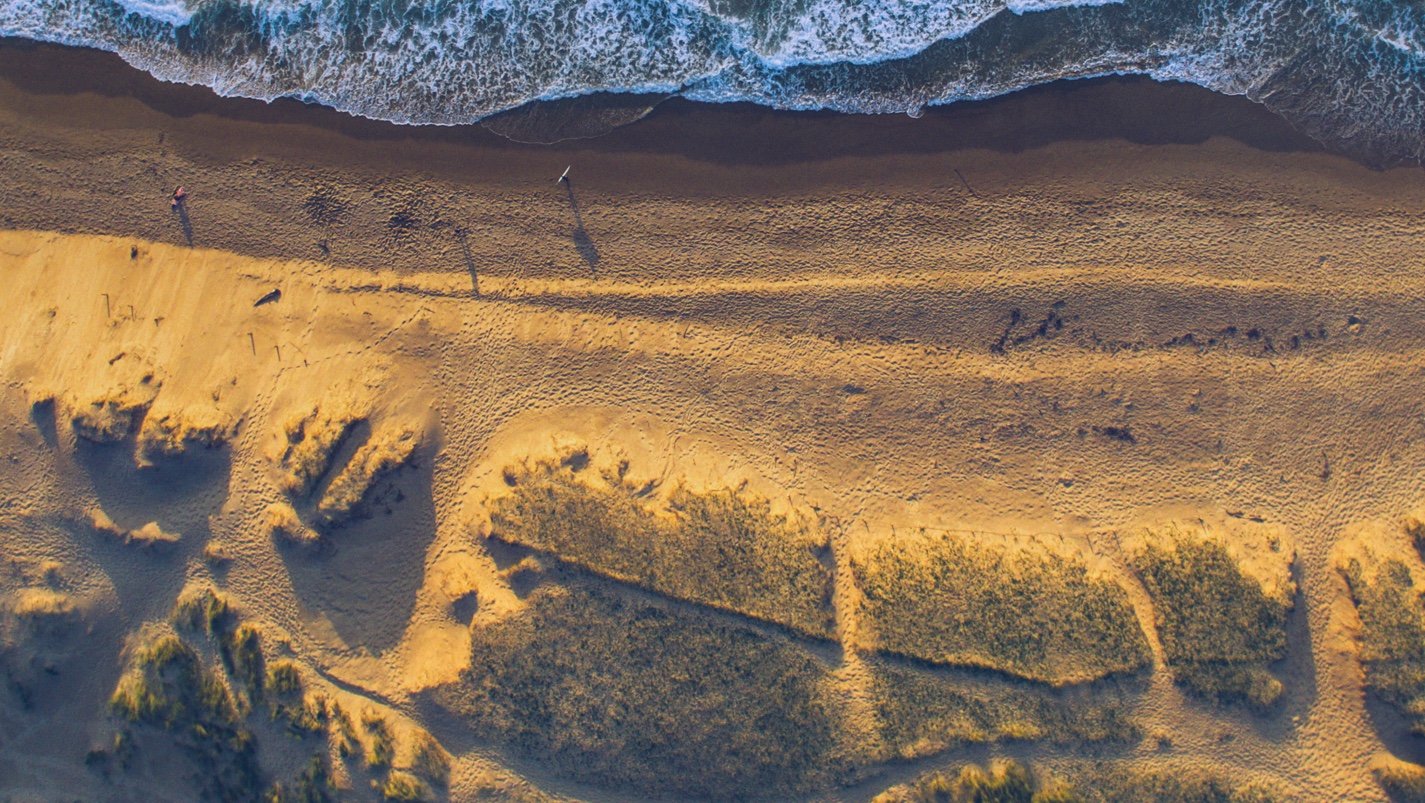

From Beach To Beach Along the Camí de Cavalls
Why deny it – one of the main reasons for going to Menorca, albeit not the only one, is its magnificent beaches. They come in all sizes and shapes, suited to all tastes. Some have fine white sand and crystal-clear waters; others, reddish sand, surrounded by pine forests, while still others take the form of comparatively inaccessible, secluded coves. Some are for day-tripping with the kids; others, for the more adventurous…
An alternative way of roaming this small piece of the Mediterranean to seek out its beaches is by hiking along the footpath known as the Camí de Cavalls (Horse Trail), a route that encircles the island and enables ramblers to rim Menorca from tip to toe while taking in spectacular, ever-changing views from one stretch of the coastline to the next. Along this 185-kilometre route you will come across all types of beaches, as well as pasturelands and cultivated land, beautiful, refreshing pine forests, cliffs topped by ever-vigilant lighthouses, old watchtowers, urban precincts and, more importantly, all the magic you can imagine.
The origins of the Camí de Cavalls are hazy. What we do know, however, is that some stretches of the trail were already in use in the 14th century and that the need to defend the island from pirates and possible invasions led to the construction of defensive towers at strategic points, and to the building of a road that would encircle and connect the whole island. It fell into disuse in the 20th century and marked deterioration set in. However, following the enactment of the “Camí de Cavalls Law” in the year 2000, the footpath was repaired, restored and signposted, turning it into a veritable landmark for tourists and locals alike, as from there Menorca can be enjoyed in all its splendour and scenic variety.
The best time of year to venture along the trail is in spring or autumn, when the temperatures are milder and the route is less crowded. It is best negotiated on foot, although there are many stretches which can be comfortably covered by bicycle or on horseback, a tribute to the animal that gave the trail its name. Whatever way you undertake the trip, there are a number of basic recommendations you should follow, like wearing a hat to protect against the sun, or taking sufficient food and water with you, as not all beaches and coves you encounter along the way have a beach hut where you can refuel and, when you do find them, they are likely to be closed if you’re hiking off season.
The Camí de Cavalls is divided into 20 stages. Those in the north are more difficult to negotiate as the terrain is more arid, while the southern legs are more suitable for a family outing.
Stage 1: Mahón-Es Grau
Duration: 3 h 30 min, Distance: 10 km, Difficulty: Medium
Stage 2: Es Grau-Favàritx
Duration: 3 h 30 min, Distance: 8.6 km, Difficulty: Medium
Stage 3: Favàritx-Arenal d’en Castell
Duration: 5 h, Distance: 13.6 km, Difficulty: Medium
Stage 4: Arenal d’en Castell-Cala Tirant
Duration: 4 h, Distance: 10.8 km, Difficulty: Low
Stage 5: Cala Tirant-Binimel·là
Duration: 4 h, Distance: 9.6 km, Difficulty: Medium
Stage 6: Binimel·là-Els Alocs
Duration: 5 h, Distance: 8.9 km, Difficulty: High
Stage 7: Els Alocs-Algaiarens
Duration: 4 h 30 min, Distance: 9.7 km, Difficulty: Medium
Stage 8: Algaiarens-Cala Morell
Duration: 2 h 10 min, Distance: 5.4 km, Difficulty: Medium
Stage 9: Cala Morell-Punta Nati
Duration: 3 h, Distance: 7 km, Difficulty: Low
Stage 10: Punta Nati-Ciudadela
Duration: 4 h, Distance: 10.5 km, Difficulty: Low
Stage 11: Ciudadela-Punta de Artrutx
Duration: 5 h, Distance: 13.2 km, Difficulty: Low
Stage 12: Punta de Artrutx-Cala en Turqueta
Duration: 5 h, Distance: 13.3 km, Difficulty: Medium
Stage 13: Cala en Turqueta-Cala Galdana
Duration: 2 h 30 min, Distance: 6.4 km, Difficulty: Low
Stage 14: Cala Galdana-Sant Tomàs
Duration: 4 h 30 min, Distance: 10.8 km, Difficulty: Medium
Stage 15: Sant Tomàs-Son Bou
Duration: 2 h 30 min, Distance: 6.4 km, Difficulty: Low
Stage 16: Son Bou-Cala en Porter
Duration: 3 h 30 min, Distance: 8 km, Difficulty: Medium
Stage 17: Cala en Porter-Binisafúller
Duration: 4 h 30 min, Distance: 11.8 km, Difficulty: Low
Stage 18: Binisafúller-Punta Prima
Duration: 3 h 30 min, Distance: 8.1 km, Difficulty: Low
Stage 19: Punta Prima-Cala de Sant Esteve
Duration: 2 h 40 min, Distance: 7.3 km, Difficulty: Low
Stage 20: Cala de Sant Esteve-Mahón
Duration: 2 h 20 min, Distance: 6 km, Difficulty: Low
After learning about this valuable part of Menorca’s historical and cultural heritage, all that’s left is to book your Vueling and experience it for yourself!
Text by Los Viajes de ISABELYLUIS
Images by Franco Vannini
more info
Le Marais de París
Le Marais is the most cosmopolitan and modern district in the city of Paris.It is where Gus Van Sant filmed Paris, je t’aime. Let us take you on a tour of some of the most iconic places, shops, restaurants and cafés in this part of town.
The Saint Martin Canal is one of links between the Ourcq Canal and the River Seine and is somewhere that always has a great atmosphere: young people, street artists, cycle paths, cafés and terraces for enjoying some food and drink beside the canal. It’s a great place for a walk, a cycle ride or a spot of rollerblading. More than 2 of the total 4.5 kilometres are underground, while the rest of the journey also crosses metal walkways and bridges.
Located in the centre of Paris, the Comptoir General is a shared work space for social entrepreneurs spanning 650 m2 with a capacity for 200 people. Its mission: to welcome all the events that relate to sustainable development, social progress, the spread of cultures from around the world, illumination and inspiration.
Chez Prune is a popular restaurant with views of the Saint-Martin Canal where you can choose to eat one of their four daily specials: fish, meat, salad or a vegetarian dish. By night, it is the perfect place to have a drink in a relaxed and truly Bohemian atmosphere.
Pop In is one of the best bars in Paris, with a great atmosphere, concerts and exhibitions. The place truly stands out because of its atmosphere and permanent offer of art and culture.
The bar is on the ground floor. There is a first floor room with comfortable sofas that look like small living rooms in which to enjoy moments of privacy and another room for the concerts and theme nights organised by the venue.
Of course, despite the name of the place, they don’t only listen to pop music here! Pop In offers a range of musical styles from glam, pop rock and garage to punk for a young and cool clientele!
However, the most fashionable part of Paris has now relocated to Rue Vieille du Temple and surrounding streets with a large offer of galleries, shops and such modernist bars and restaurants as La Perle; the most chic place in town at the moment. This charming establishment enables patrons to watch the world go by and is always full of the chic crowd.
At the heart of Marais, you will find this tea room with its Bohemian and nostalgic atmosphere. The 70s posters and furniture give the place a slightly chaotic but cosy feel.
Another of the most fashionable restaurants is Derrière. With its eclectic décor, Derrière looks just like an enormous apartment. On the ground floor, for example, you will find a ping-pong table for enjoying a quick game between courses. Another room looks like an office with piles of paper everywhere and there is even a living room for a perfect TV dinner. You really get the feeling that you are eating in someone’s house. Heading upstairs, you will find a bedroom with an enormous bed that doubles as a dining room.
The art galleries include Gayte Lyrique, a place dedicated to digital culture and modern music, and Le Bal de Foto, which is dedicated to the representation of reality through image in all its forms: photography, video, cinema and the new means of communication.
If you want to buy books in Paris, we recommend Shakespeare & Co and OFR. Shakespeare and Company appears in the Woody Allen film “Midnight in Paris” and can be found in the Latino district. It was founded by the eccentric US bibliophile George Whitman in 1951 and still has that chaotic spirit and a sense of being somewhere special for filling your rucksack with books.
For going shopping, there is nothing like the legendary Colette or, better still, the Merci – a store concept located in sombre, industrial surroundings. Kiliwatch is a true temple for the lovers of vintage but they also sell new clothes and books. You’ll always find something to take away with you!
When night falls, one of the best places to go out for a dance or a few drinks is the Social Club, where you’ll discover new bands and artists. We were told by Liset Alea (singer with Nouvelle Vague) that this is one of her favourite places. A strange and eclectic night out.
Image: Marimarina
Why not take a trip to París? Have a look at our flights here!
more info

7 must in Budapest
Recently landed in Budapest, the Pearl of the Danube, we enter one of the most romantic cities of Eastern Europe with countless opportunities to enjoy our stay. If you’re asking yourself where to start, we have 7 essential sights to see during your visit:
1.- Admire the most emblematic monuments
The stunning Hungarian capital is full of important monuments that you cannot miss.
The worlds third largest Parliament, a symbolic landmark of Budapest rises imposingly on Kossuth Sqaure, boasting a neo-Gothic style. The latter, together with the Buda Castle, an old residence of the kings of Hungary and Budapest’s oldest Chain Bridge define the personality of this city, which was indeed a major power during the Austro Hungarian Empire.
2.- Discover the Art Noveau
Budapest is known for its numerous examples of art noveau architecture, a slightly peculiar style that intertwines elements of nature, asymmetrical shapes and sinuous curves, which decorate the facades of the buildings in the streets. The architectural merit of such exaltation is largely attributable to Ödön Lechner, also known as the “Hungarian Gaudí”, whose most famous work corresponds to the Royal Postal Savings Bank, which is full of floral patterns, colourful mosaics and some components of popular culture. Villa Balázs Sipeky and the Institute of Geology are other notable samples of the work of this brilliant architect. Our favourite example of art noveau is Walkó House, because of its facade, decorated with eight different varieties of animals.
3.- Relax your body in the Széchenyi Baths
Budapest has numerous thermal spas and baths for whenever you want to take a day of rest and revitalization after a long walk around the city. Széchenyi is the most majestic and largest spa in Europe, with fifteen indoor pools, ten saunas and steam rooms and three large outdoor swimming pools. It is common to see locals enjoying the spas, as they are a nice meeting point to chat.
4.- Go for a drink to the Bars of the ruins
If you want to immerse yourself in the most modern and happening Hungarian underground scene, you cannot escape from Budapest without going to one of these bars, which are located in old buildings, with a slightly worn out and decadent look but decorated in such a way that the vintage kitch look makes them very special. The best atmosphere in the city is definitely found in these bars, which are decorated with all kinds of Antique furniture, extravagant paintings and curious objects. We recommend the legendary Szimpla Kert Kazincy Street; the Instant bar, decorated like the wild west movies or the chaotic Púder, where there are also theatre performances and dj sets at night.
5.- Visit the Muvesz Mozi Cinema
Budapest is known for its rich film culture, so it is definitely worth stopping by to visit one of their alternative cinemas. Intellectuals and big screen lovers residing in the capital visit Muvesz Mozi, where they show a large variety of movies- from old films that where made five years ago to recent independent films made by new and upcoming directors. In addition, this special cinema has a very cool café, decorated with different atmospheres to fit the different spaces, making you feel like a traveller through time and space.
6.- Visit the Sziklakorhaz museum, a hospital and secret bunker
This spectacular museum housed in what was once a hospital adjacent to a nuclear bunker in Budapest during World War II shows, in an extremely real and almost scary way, what was once experienced within these underground walls. The various facilities and rooms for the wounded, wax mannequins, medical devices and even the possibility to activate the emergency alarm at the end of the tunnel give you an idea of what happened, even if it mean getting goose bumps!
7.- Try the cuisine
The Central Market is one of the greatest culinary references in the city, where you can taste the typical traditional goulash or buy fresh groceries to cook at home. Kosher sweets are also a Hungarian specialty, we recommend the ones at Cukrászda Fröhlich. Last but not least, you must try the bread and butter with paprika and onion, which is served at any bar or restaurant. If you like spicy food, Budapest is the perfect place for your palate.
Why not take a trip to Budapest? Have a look at our flights here!
Picture by teofilo
more infoBilbao is in fashion
By Tensi Sánchez from actitudesmgz.com
t gives me great pleasure to debut as a writer for My Vueling City and, naturally, my first post is about Bilbao. Without boasting or bragging too much, it must be said that no other European city has anything of which “My City” could be envious of. See for yourself as you read on.
Bilbao has been able to reinvent itself to an extent that few other European cities have achieved. In less than fifteen years, Bilbao has gone from being an industrial city to a city where the focus is on services, and the constant change continues to this day.
There is no surprise then that the majority of large international companies have set up shop in Bilbao; the regional capital of Biscay. Bilbao can also claim to have put itself on the map as an architectural benchmark.
Residents and visitors alike can enjoy a highly varied lifestyle that includes a great combination of the modern, the traditional, good food and shopping.
Just one weekend is time enough to immerse yourself Bilbao’s lifestyle. Here are a few suggestions about my favourite places in the city.
Everybody knows that good food abounds in these lands and this is precisely one of the strengths in Bilbao. Restaurants can be found dotted all over the city and cater to a wide range of culinary tastes. Exploring the many options is a delight for all the senses as you are seduced by the cuisine and often spectacular visual treats.
Here are some great examples: Un Señor de Bilbao, La Cuchara de Valentina, Nerua, La chuleta sin espina and Shibui, the latter being the only place in the city to offer haute cuisine, Japanese-style.
Bilbao is also the perfect city for trend setters and trend followers. A clear example of mixing the modern and the traditional can be found at Enkarterri Concept Store; clothes, furniture and food, all franked by the Basque label.
When talking about fashion and design, I must mention Persuade, the quintessential temple to avant-garde fashion and, dare I say it, the most amazing shop I have ever seen in my whole life ( although not suitable for all budgets), and Shopa, which specialises in design, clothes, books, wine and much more, is located inside the iconic La Alhóndiga leisure building and was designed from start to finish by French industrial designer, Philippe Starck.
And finally Lu:la, Narata, Serie B, Charada, Cultto and Ah Moda are shops that exude fresh and different fashion.
After a hectic morning of shopping, treat yourself to brunch in Plaza Nueva in the old town. You cannot come to Bilbao and leave without trying the famous Basque pintxos! Just take a short walk and you’ll see for yourself that there are countless bars just waiting to be discovered.
Visiting one of the many contemporary art galleries is another option but Epelde y Mardaras is undoubtedly the most peculiar. Located in an enormous flat dating back to 1840 with the chance to order lunch or dinner, it really is an incredible experience.
For vintage style at its purest, go to Almoneda Campos – an intriguing shop full of all kinds of items from times gone by. However, if you’re looking for something more exclusive and modern in terms of decoration and design, I have two excellent suggestions: Urbana 15 and Mosel.
Enjoying a carefully-prepared evening drink is a must in this city. My favourites are to be had at Corto Maltes, La Gallina Ciega, El txoko de Gabi and, of course, on the terrace at Hotel Domine with those marvellous and unbeatable views of the Guggenheim Museum – the perfect place to round off an evening in Bilbao.
And if that’s not enough for you, there is always an online agenda of cultural and leisure activities happening in Bilbao, ilovebilbao.com. I recommend you sign up for free before planning a trip to Bilbao because it will help you find information about everything that is going on, up to a week in advance.
Vueling offers a large selection of connections to the city so there is no excuse for not planning your “perfect weekend”. Bilbao is in Fashion… ¿What are you waiting for? Book your flight now!
By Tensi Sánchez from actitudesmgz.com
more info