

Toulouse In 8 Discoveries
First Discovery – The Pink City
It was in Toulouse I discovered that dusk can be pink, particularly if you watch it from the banks of the river Garonne. The light can be rather fickle, especially when it strikes from a high or low angle on the marble of the grand edifices which bedeck the city’s historic centre. The Place du Capitole, its daytime beauty matched at night by a lighting display, is the point of departure for any route through this city in the new Languedoc-Roussillon Midi-Pyrénées region. This is where the Capitole building stands, now home to the City Hall and National Theatre. Its eight pink marble columns symbolise the power of the eight districts that made up Toulouse in the 18th century. The square also has some hidden treasures, like the paintings under its colonnade where the city’s history is recounted.
Second Discovery – Home to Carlos Gardel and the Inquisition
In Toulouse I learned that Carlos Gardel was born in France, despite the Uruguayans claiming the king of tango as a fellow countryman, as I did that Antoine de Saint-Exupéry, author of The Little Prince, had stayed at the Hotel Le Grand Balcon, like all the pilots in the Compagnie Générale Aéropostale. Toulouse is also the birthplace of institutions, as antagonistic as they are important, like the Inquisition – founded to combat the Cathars – the Jeux Floraux, and the Gay Science, dating from the 14th century.
Third Discovery – A Vast Heritage
Toulouse is the site of the largest Romanesque church in the West, the Basilica of Saint-Sernin, also one of the major stopovers on the Road to Santiago on its passage through France. Close by stands the Convent of the Jacobins, a magnificent example of monastic construction and, further along the Garonne, we come across the Basilica of Notre-Dame de la Daurade, consecrated to the Black Madonna, draped in mantles made by great dressmakers.
Fourth Discovery – Pablo Picasso
It was in this city that I realised how passionate Toulousians are about Pablo Picasso. Les Abattoirs Museum, regarded as one of the leading cultural centres in Toulouse, features as an exhibit The Remains of the Minotaur in a Harlequin Costume, the work of the universal artist from Málaga.
Fifth Discovery – Aeroscopia
Toulouse is France’s aerospace capital – the Airbus factory is located at Blagnac – particularly after the inauguration of the Aeroscopia Museum which, covering an area of 7,000 square metres, houses such legendary aeroplanes as the Concorde and the Super Guppy, the forerunner of the celebrated Beluga.
Sixth Discovery – Its Markets
In Toulouse I discovered that markets have a life of their own in France and that, apart from being venues for shopping, their restaurants attract a host of customers. The Victor Hugo Food Market, the Marché Cristal – where fruit and vegetables are sold in the open air – and the Marché des Carmes are some of the best known ones.
Seventh Discovery – N5 Wine Bar
Here, as in the rest of the country, the wine bar concept is very much in vogue. A fine example of this is the N5 Wine Bar, where you order wine by the glass (choosing both the type and the amount) and your order gets chalked up on a card which keeps track of your consumption. Be sure to try their tapas, such as the culatello di Brozzi, foie gras or Bronat cheeses.
Eighth Discovery – Toulouse Nightlife
Lastly, Toulouse is the French city with the most pronounced Spanish influence. You can tell as soon as you arrive when you start chatting to locals or when you give yourself over to the Toulousian night. In France’s fourth largest city, the people go out onto the street, regardless of the cold, and live it up for as long as they can hold out. Toulouse nightlife draws droves of locals and foreigners, many of them students, who gather at the nightspots on the Rue des Filatiers and the Carmes, Trinité, Wilson and Victor Hugo squares.
Toulouse is the perfect destination for a weekend getaway. Check out your Vueling here.
Text by Tusdestinos.net
Photos by Toulouse Tourism
more info

A German Christmas in Birmingham
A trip to Birmingham in the period from mid-November to the run-up to Christmas has a surprising added enticement, particularly for lovers of Christmas markets. That is when the Frankfurt Christmas Market and Craft Fair is held, a market in the purest German style in Britain’s second largest city. What’s more, it is the largest market of this type both in the United Kingdom and outside German itself. Not to be scoffed at!
For a few weeks, a number of quaint wooden stalls transform the city centre into a picturesque village revolving around the theme of Christmas. This magnificent market is sited in Birmingham’s emblematic Victoria Square – the heart of the city, with its Town Hall and Council House – as well as in Chamberlain Square and Centenary Square. As befits the occasion, Christmas lights and decoration are very much in evidence there.
So, what can visitors expect to find in the market? First, all kinds of Christmas decoration and gift objects, most of them hand made, such as wooden toys, candles and dolls. A large portion of the market is dedicated to craftwork sourced both locally and abroad.
Additionally, in line with German Christmas markets, fair-goers can spice up their visit by trying some of the German and Austrian culinary delicacies on offer: German sausage, pretzels, schnitzel, German beer, like weissbier (wheat beer), the popular mulled wine known as glühwein and hot chocolate. The market also offers attractions, ideal when accompanied by children, and the atmosphere is gingered up by live music.
More Christmas Shopping
In you haven’t had enough with just the market and require a stiffer spot of Christmas shopping, Birmingham is the perfect place to splash out. Here are some relevant recommendations:
Bullring. the city’s shopping area par excellence. It runs from New Street to St Martin’s Church and features no fewer than 160 shops, as well as two department stores. You are unlikely to remain impassive at the sight of the stunningSelfridgesbuilding, designed by the Future Systems architects studio and a veritable icon of the city.
Jewellery Quarter. As its name indicates, this is where jewellery business are concentrated. Here, 40% of the United Kingdom’s jewellery is produced. Located in downtown Birmingham, it boasts a tradition going back several centuries. The quarter houses some 100 retail outlets where you can purchase both new pieces and vintage jewels by weight.
Great Western Arcade. A shopping arcade located between Colmore Row and Temple Row, in the heart of the city. One of its major attractions are the premises themselves, as the stores are housed in an elegant Victorian building.
Custard Factory. Enthusiasts of things original and striking will find themselves at home on these premises, the former Bird’s Custard factory, situated in the industrial district of Digbeth. The interior is taken up artists’ and creatives’ studios, side by side with shops and bars where you can take a breather. There is a grand total of 30 stores displaying the latest trends in fashion, vintage garments, contemporary jewellery, artworks, bicycles, skateboards and many other things.
Mailbox. If exclusive design and luxury brands are for you, look no further than this shopping area located in Commercial Street. This complex includes the BBC Birmingham studios, the Harvey Nichols luxury department store, and two hotels. The back of the building, which gives onto a canal, is full of terraces with bars and restaurants for you to relax in after all your hectic shopping.
Ready for a Christmas shopping spree in Birmingham? Check out your flights here.
Text by ISABELYLUIS Comunicación
Photos by Horst Gutmann, Custard Factory, Basti V, Tony Hisgett, Guy Evans
more info

The 3 Best Crêperies» in Rennes
We travelled to Rennes but, before embarking on this delectable tour, just a word of clarification – a crêperie does not only serve crêpes, but two, distinct variations. First, there are the galettes, in which the dough is made of water, butter, eggs and buckwheat. They are usually filled with savoury ingredients and accompanied with a glass of cider or a buttermilk known as lait ribot. Then of course, there are the crêpes proper, which are sweet. You have been warned!
Traditional and… Organic Galettes – Crêperie Paysanne
Make sure you stop over at this restaurant in the place Sainte-Anne pedestrian precinct, in the heart of the city. Their crêpes and galettes are really exceptional and the helpings plentiful, spilling out of the dish. The peculiarity of Crêperie Paysanne is that all the dishes are made with organic, regional ingredients. We can recommend traditional Brittany galette, with ham, cheese and an egg garnish. With such tasty, fresh ingredients, this basic galette gives off all its potential in flavour and aroma, particularly if washed down with cider or apple juice, which here are especially potent on account of their organic, homemade character. As if that were not enough, the galettes can be accompanied with a glass of lait ribot, which is currently made only in Brittany. The taste? Something like natural buttermilk, but with a sour, yoghurt aftertaste. Average price: galette + drink - €13 per head.
33 Savoury Specialities, & 33 Sweet Ones – Crêperie Saint-Georges
This is the crêperie which locals recommend and that is always a reliable sign. Here they offer more than 33 galettes and the same number of crêpes. The menu’s originality lies in the fact that each dish pays homage to some illustrious “George”. Special mentions go to George Clooney, featuring fresh goatsmilk cheese, spinach, tomato, cucumber sorbet and basil, and Giogio Armani, with a filling of pan-cooked foie gras, sautéed potatoes, duck magret, fleur de sel and balsamic reduction. Among the most original crêpe dishes are assorted sweets, and Milka or Smarties chocolate, but only for the really sweet-toothed. Modern, elegant interior design which exudes serenity. Average price: galette + drink - €12 per head.
Peace & Food – La Rozell
In downtown Rennes, La Rozell is another prominent venue. While their menu is as worthy of any other crêperie, what singles this one out is its priceless interior patio, where you can dine amid lush vegetation – a genuinely peaceful backwater, secluded from noise and the city bustle. Of the galettes, we especially liked l’armorique (sautéed scallop, bacon, cream and mushrooms). For dessert, try the fouesnantaise,made of apple flambéed with Lambig (a local, cider-based spirit), or the tatin caramel, a delicacy filled with salted butter – one of the region’s treasures – sautéed apple, homemade caramel and vanilla ice-cream. A taste of heaven! Average price: galette + drink - €12 per head.
You’re getting hungry, right? Come to Rennes and try their crêpes and galettes. Check out our flights here.
Text and images by Laia Zieger (Gastronomistas)
more info
Tracking Down Banksy in Calais
A few days ago, after Banksy had updated his website, we noticed that his work is now displayed at various points in “The Jungle” refugee camp in Calais, one of the largest camps in western Europe. Despite his identity still being cloaked in anonymity, Banksy is currently one of the most highly valued artists around. His sharp, critical wit is undoubtedly the hallmark of his work.
Noteworthy among the four new artworks he posted is the one showing Steve Jobs carrying an early-eighties Macintosh, with a sack slung over his shoulder, reminiscent of the bags the forced migrants often take with them on their harsh journey. This is clearly a reference to the whole migratory movement being enacted from Syria to Europe. Jobs was, of course, the son of a Muslim Syrian immigrant and was adopted by a middle-class family of Armenian origin. That is the conceptual link Banksy draws between Steve Jobs and the Syrian diaspora.
Another Banksy offering in the same area makes reference to a famous work by Théodore Géricault, The Raft of the Medusa, painted between 1818 and 1819, depicting a group of castaways in danger, packed onto a drifting raft. This alludes to the dangerous voyage embarked on by many of these refugees who risk their lives crossing the Mediterranean on flimsy rafts. In this version, the castaways are crying out for help to a modern cruise ship speeding past near the horizon. The artist had previously drawn attention to the issues surrounding the refugee crisis in a work entitled, Dismaland.
In addition to these artworks, members of Banksy’s team set up 12 permanent installations in Calais, and a makeshift children’s playground in the camp precinct. The materials used were either sourced locally or were remnants of the Dismaland project brought here for the purpose. This new project is known as Dismal Aid.
A Much Frequented But Little Visited City
Calais is primarily a city of passage. Some 15 million people are estimated to pass through it each year as it is a compulsory way station for access between France and England. In contrast, comparatively few people actually spend some time visiting the city. However, we can wholeheartedly recommend this city in the north of France, with little over 75,000 inhabitants and just 34 km from Dover, as a tourist destination. Its charm lies not in its architecture or monuments but in its privileged siting on the seaboard and the majestic Côte d’Opale.
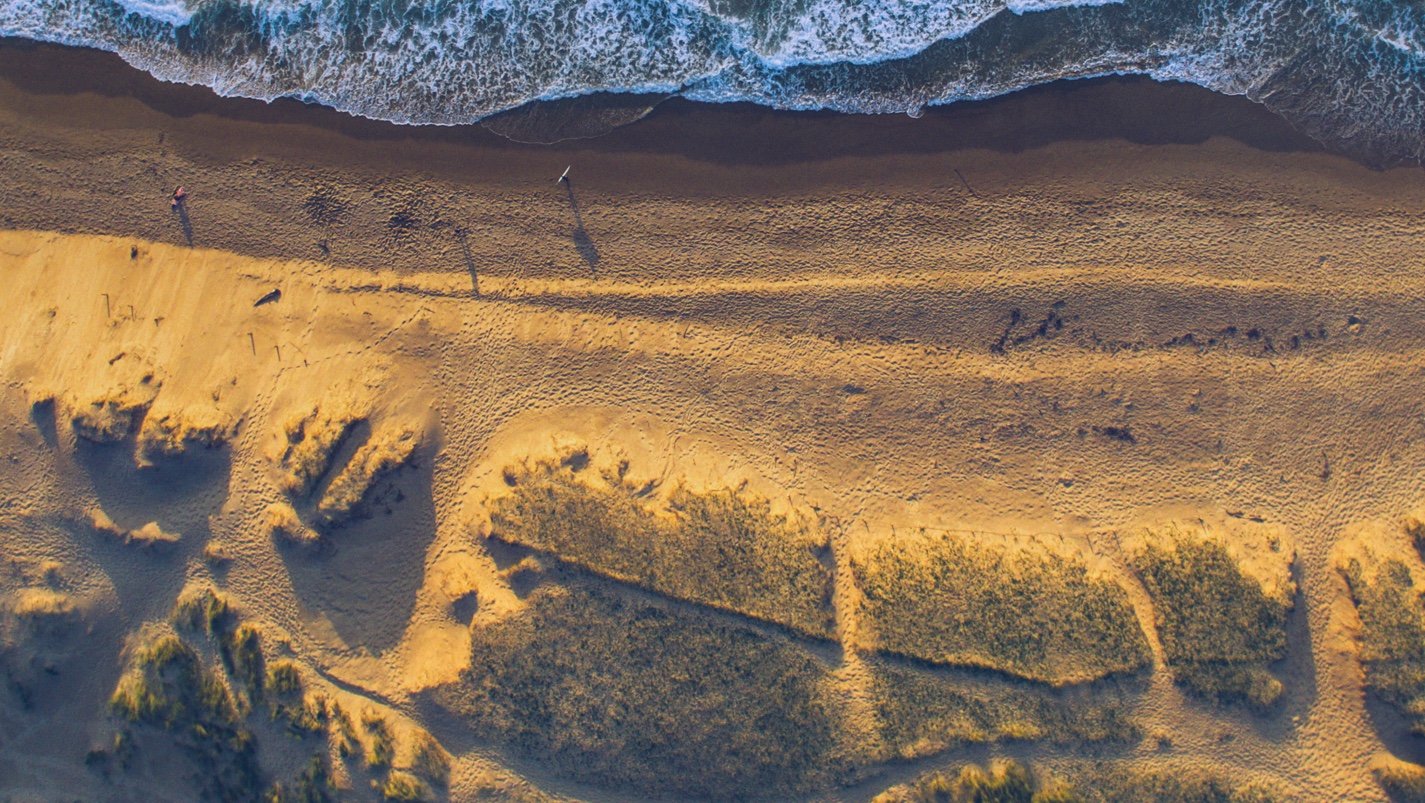
The city is not celebrated for its grand monuments or buildings, but it does have such landmarks as the Musée Mémoire 1939-1945, dedicated to the Second World War and housed in a bunker, a sculptural group by Rodin known as The Burghers of Calais, located opposite the City Hall, and the Cité Internationale de la Dentelle et de la Mode, the city’s Lace Museum. On display is a century-old mechanical loom with 3,500 vertical threads and 11,000 horizontal ones. Calais’ genuine heritage lies in its natural surroundings and local scenery is stunning. Come armed with your camera as the views are breathtaking. The attractive seafront is dotted with striped changing booths which take you back to the early 20th century. The sands stretch westwards for 8 km along the dune-filled Blériot beach, so named as it was here that the pioneer aviatorLouis Blériottook off on the first ever solo flight over the English Channel in 1909.
By the way, when you feel like having lunch or dinner, be sure to head for the Histoire Ancienne, a bistro specialising in regional and French dishes, some cooked on an open wood fire. This very pleasant, Parisian-style restaurant was opened in the 1930s. Prices are affordable, with dinner ranging from 19 to 28 euros.
Don’t miss your getaway to Calais – check out our flights to Lille here.
Text by ISABELYLUIS Comunicación
Images by Rob Sinclair, Carawah, Olivier Duquesne
more info