
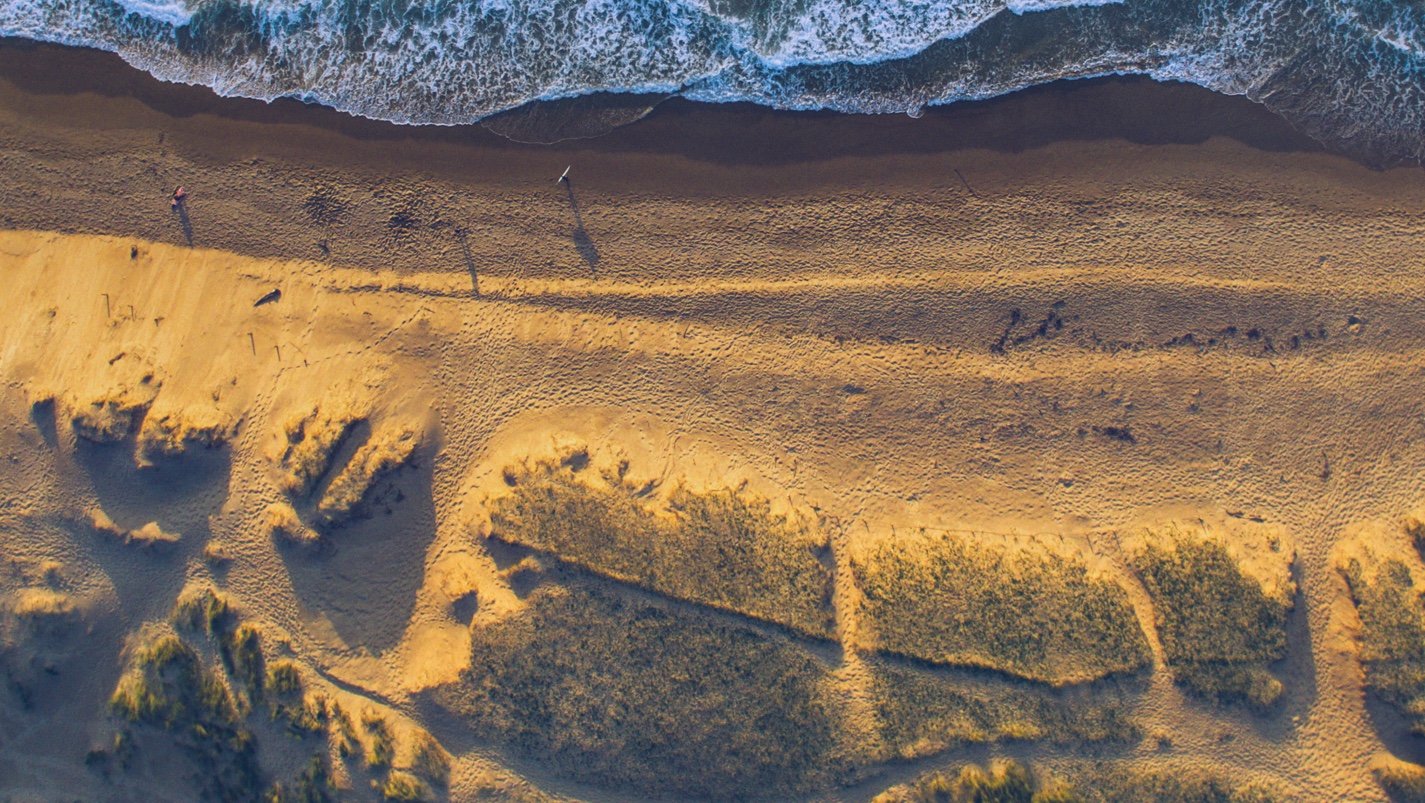

Lake Starnberg
By Michael Schurmann from easyhiker.co
There is no shortage of attractive hiking destinations for day trips near Munich where you are during the Oktoberfest. Both the Goldsteig and the Altmühl-Panoramaweg “top trails” are just a train ride away, and of course, there are always the Alps.
But Lake Starnberg tops the list of day trip destinations because it is by far the easiest to reach and is the scene of a titillating piece of German royalty history. (More of that if you promise to read through.)
You can go there by City Rail (the S-Bahn) in 30 minutes from Munich Central Station, and the round trip is covered by the Munich day pass which gives you unlimited access to all the city’s public transport facilities (a steal at €20 for up to five persons).
Another reason why Lake Starnberg tops that list: it won’t take you long to reach it from Starnberg station.
On a clear day, you can even see the Alps at the far end.
This far end, it must be said, is quite a long way away. Lake Starnberg is about 20 km long, and although it is quite narrow (never more than 5 km wide), the whole tour around the big pond may easily come to about 50 km.
“Road leading to Possenhofen hiking trail in Starnberger See near Munich”
For a day trip, this is clearly off the scale. But thankfully, there are plenty of alternatives.
On the right side of the lake, for example, there are two more S-Bahn stations further down the track (Possenhofen and Tutzing), so in theory, you could take the train there and walk back to Starnberg (7 km and 14 km respectively).
This was, in fact, our original plan: a walk to Possenhofen, the childhood home and favourite retreat of the star-crossed empress Sissi.
But the road to Possenhofen was so busy (even used by trucks) and so far away from the actual lake – it was practically lined with residential homes, gardens and boat houses – that we broke off our trip after app. 1 mile and returned to Starnberg.
Fortunately for us, we then discovered that the “left” (or western) side of the lake provides a much more pleasant ambiente.
A recognized hiking trail, the “König Ludwig Weg”, runs down the entire length of the lake’s west bank. That should, at the very least, ensure that you are safe from truck traffic.
No S-Bahn trains circulate down this side of the lake, but ferries take you to several of the small towns that are scattered around, including Seehausen at the lake’s southern tip.
If you have a full day, this is what you could do: Hike all the way to Seehausen and return by boat.
We only had the time for one section of this trail, however, and decided to walk the 6 km from Starnberg to the town of Berg.
Out of the station and standing in front of the lake, turn left.
The first half mile takes you past a mix of residential and recreational buildings: homes, gardens, boat houses and a public swimming pool.
After the first of two wooden bridges, however, the scenery becomes far more idyllic: swans in the lake, groups of sturdily built Bavarian women training their Nordic walking skills, young families and students skipping a boring lecture.
When you return to the asphalted road, in the outskirts of Berg, you will see some of the most expensive real estate in Germany.
Lake Starnberg, so pretty and so near to Munich, Germany’s richest city, is very much the Alpine version of the Cote d’Azur (or Beverly Hills).
After walking about 15 minutes, you will find the boat pier on your right.
“Sign leading to Koenig Ludwig Weg hiking trail in Starnberger See in Munich”Check the arrival and departure times, because the traffic back to Starnberg is infrequent and somewhat irregular, and if you miss one boat, you may have to wait a couple of hours for the next one.
If you can, make time for an excursion to the Votivkapelle (just follow the signs) another 30 minutes away.
This chapel was erected to commemorate one of the great unsolved mysteries of German history.
It stands very near the place where the mad King Louis II of Bavaria, (builder of Neuschwanstein Castle and generous supporter of Richard Wagner’s operatic works), explored Lake Starnberg in a vertical direction. (A wooden cross in the water marks the spot.)
Was it an accident? Did he commit suicide? Or was some sort of jiggery pokery involved? (For a full round-up of events, go HERE.)
On the way to the chapel, you will come across a plaque on a boat house where it says that Ludwig often set out from there to meet with his “soul mate” Sissi on the other side of the lake.
I found it strange and almost touching to see that after all these years, the Bavarians still can’t quite seem to cope with the fact that their beloved “Kini” did not fancy girls all that much.
For a less shamefaced account of the king’s life, watch Ludwig II, directed by Luchino Visconti and featuring the male model Helmut Berger as the eponymous royal, one of the campiest movies ever made: the thinking man’s Wizard of Oz.
If you do not have the time to experience Mr. Visconti’s Magnum Opus in its full Wagnerian languor of 247 minutes, do yourself a favour: sample the director’s operatic ambition here.
The latter section also features here a must-watch Bavarian-style gay orgy with folk dancing, zither music and much mutual groping.
No wonder the locals hated the film so much that they tried to have it banned when it was first released in 1972.)
Now, return to the pier where – if there is still time – you can have a coffee or a beer on the terrace of the Hotel Berg before taking the boat back to Starnberg.
If you have started your day before 12, you can still be back at your favourite Oktoberfest beer tent before the evening rush begins – and won’t miss any of the action.
Why not take a trip to Munich? Have a look at our flights here!
more info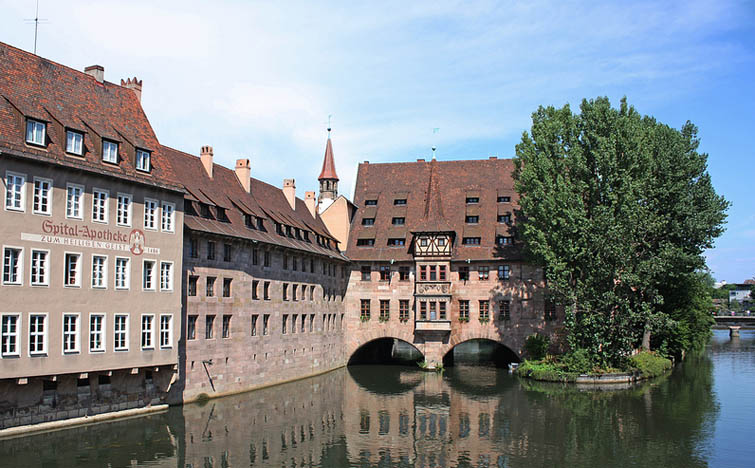
A tour through the history of Nuremberg
Nuremberg is one of those cities that allows you to organise an interesting tour through history without leaving town and no need for a time machine. A city that was bombed in 1945 and rebuilt shortly afterwards, its leading role throughout medieval, modern and contemporary history has left it with many historical attractions.
It was the capital of the German Empire between the 11th and 14th Centuries, a key centre during the German Renaissance and the main setting for the Thirty Years War (1632). Thanks to its importance during the imperial époque, Hitler made it the headquarters of the Nazi Party Congress and it was also in Nuremberg where various Nazi war criminals were tried and sentenced in Court Room 600 in the Palace of Justice .
Its history has left the city with many interesting monuments to be visited and Bavarian artists, such as Albercht Dürer have given Nuremberg an artistic heritage not to be missed. This tour offers a route through the city so you can find out all about in just one day.
Nuremberg Palace of Justice (Justizpalast)
Our tour of Nuremberg starts at this seat of judicial power, which today remains fully operational. It was here that the Nuremberg Trials took place that lasted almost one year and where the sentences handed out to some of the heads of the Nazi regime became a landmark in the history of international law.
The Court Room 600, the scene of these historic trials, is still used as a courtroom today and at the weekends, when it is not in use, offers guided tours. As an alternative, if you find the room closed, you can visit the “Memorium Nuremberg Trials” exhibition which can be found in the East Wing of the building.
German National Museum (Germanische Nationalmuseum)
Although this involves a large chunk of time and patience, as you have to queue up to get in, the visit to the German National Museum is well worth it as it is possible to see one of the greatest collections of modern German art to be found in Nuremberg, Germany and the world, all under one roof. Until 2 September, you can see “The Early Dürer”, a retrospective exhibition of the early works of German artist Albercht Dürer, a son of Nuremberg and the greatest exponent of the 16th Century German Renaissance.
On your way in or after your visit, opposite the museum entrance, is the Street of Human Rights , 29 commemorative columns that bear the 30 articles of the Universal Declaration of Human Rights . One curious thing, there are 29 columns and 30 articles (in 30 different languages) because the last column, in Spanish, had to be taken away because it was blocking the exit for the fire station. They said they’d replace it but…
Marriage Carousel (Ehekarussell)
Going into the city centre, at the foot of the Weißer Turm (White Tower), you will find a fountain that is not suitable for the recently married: the Marriage Carousel was sculpted in 1984 by Jürgen Weber. Its figures were inspired by the poem “Bittersweet Married Life” by Hans Sachs. The sculptures depict falling in love at the beginning, the routine of living together and ends up with… well, you’ll see for yourself.
Church of St. Lawrence (Lorenzkirche)
The Church of St. Lawrence, built in the 13th Century, is an example of the Hallenkirche (hall churches), the typical German Gothic churches, with three aisles of the same height. Most of it was rebuilt following the Second World War bombardments and among its curious details that catch your attention are the nets that protect the statues in the portico so that birds can’t make their nests there or the Braille information panel we came across at the entrance.
Hospital of the Holy Spirit (Heilig-Geist-Spital)
This is one of the most well-known postcards of the city of Nuremberg, photographed from the bridge opposite. On the banks of the River Pegnitz, the building was constructed between 1332 and 1339. Having fulfilled its duties as a hospital, it is currently a municipal home for the elderly.
Market Square (Hauptmarkt)
Another of the must-see spots you simply must not miss on any tour of Nuremberg, is dominated by the Church of Our Lady (Frauenkirche) built in 1358 by order of Emperor Charles IV. Its famous marketplace (particularly well-known for its Christmas Market but also offers a fresh produce and traditional food market during the rest of the year). Here you will find the Beautiful Fountain (Schöner Brunnen) that dates back to the 14th Century . The square is encircled by innumerable souvenir shops and the city tour bus stop is located right beside the historic fountain.
Bratwursthäusle
At this stage in the tour, we suggest a rest and something to fuel the stomach chance by sampling some traditional German food. Opposite the old Town Hall we found the Bratwursthäusle restaurant, where we could try the traditional German bratwurst accompanied by the equally emblematic pretzel. So sit down on the terrace and guten appetit!
Albercht Dürer’s House (Albercht Dürer Haus)
Fed and watered and after a short rest, you will be ready to walk to the highest area of the city. Before you leave the city walls, we recommend a visit to the house-museum that used to be the home of Albercht Dürer that includes in its exhibition, a chance to see the process carried out by Dürer when creating his famous etchings . Interestingly, in the square opposite the house, we discovered a curious sculpture reminiscent of one of the most well-known works by Dürer, the hare.
Imperial Castle of Nuremberg (Kaiserburg)
When you pass through the walls, you might be surprised to see gardens and orchards in the moat. The city hall rented the space out to the citizens of Nuremberg who use it as an urban vegetable patch or garden… Following the wall along for a few metres, we reach the Imperial Castle of Nuremberg from which point you can see the entire city (see the panoramic view at the start of this article). It was the residence of the German emperors from 1050 to 1571 and as well having preserved some of its original living quarters that are open to visitors, many other parts of the castle are still inhabited today.
Zeppelin Field (Zeppelinfeld)
To conclude this tour, we leave the city centre and to do this, if you haven’t done so already, we recommend you use the city’s public transport, specifically, the No. 36 bus route. You have to take this bus from the stop that is fairly near the castle then get off at the last stop on the line, that will leave you right opposite the Documentation Centre , inaugurated in 2000, the former Nazi Party Congress.
The original project for this building was to construct a half section of an amphitheatre in the style of the Roman Coliseum , with a conference auditorium in its centre. Now the building houses an interesting and modern information centre that can be visited, with a permanent exhibition documenting the history of the precinct and the ruthless abuse of power by the Nazi regime.
From there, you have to border the lake to reach the Zeppelinfeld itself: an enormous grandstand inspired by the Pergamon Altar from which Hitler directed the parades and Nazi Party congresses. Today, the area is very run-down and the city of Nuremberg only uses it for a >rock music festival held at the start of June (reminiscent of the 1970s) and a car race that takes place during the first week of July. Strange, isn’t it? Even so, you should pay a visit even if it is only to say “I’ve been there” before you go back into the city. Talking of the return, close to the Zeppelin Field there are two stops for the local train (S2) which will drop you off at Nuremberg’s central station.
Useful information
As regards transport, other than the cases we’ve mentioned, the rest of the tour can be done on foot. However, our advice is to pick up the Nürberg Cardfrom any of the city’s Tourist Offices that, for 21 €, gives you two-day access to all the museums and public transport. Children under 12 can get their card free of charge.
Another option to think about for getting around the city is NorisBike, a public bicycle hire service available to both residents of and visitors to Nuremberg. You can find more information about this service (in German) at aquí.
We’ll be there. If you want to come too, check out our flights here.
more info

Eight Very Basque Sports
You will often hear me say that I feel Basque by adoption and, if there is something I especially like about the Basque Country, it is their passion for sport in general. There are some I am not very good at, and are only suitable for locals, such as harrijasotzea (stone lifting), lasto altxaketa (bundle lifting), aizkolaritza (tree-felling), esku pilota (open-hand pelota) and even football, which is really big here. There are three local teams in the first division – Athletic de Bilbao, Real Sociedad and Eibar.
However, there are other sports which, as far as I’m concerned, are also well-entrenched in Euskadi. I have chosen the eight I would like to take part in (as a sportsman or spectator) in the next few months. I would also encourage you to try them out, or at least to come and watch them.
1. Cycling – The most widely commented sport may be football, but, in the Baque Country, the one engaged in by most is cycling. Professionally, there is the Vuelta al País Vasco (where you can delight in the famous muro de Aia, in Zarauz, including some ramps with a gradient of 28%), and the Clásica de San Sebastián. For the amateurs, there is the Bilbao-Bilbao, a race you can safely jot down in your agenda. Orbea, the oldest make of bicycles in the world, is visible in all these trials and this year marks it’s 175th anniversary. It has a track record of almost two centuries, in which it has won Olympic Games, triathlon world championships and mountain bike competitions. In short, a sport all Basques can be proud of.
2. Road Racing – After cycling, running is the next most popular sport. The most genuine local race I have ever seen is the Behobia-San Sebastian, a straight-line race that starts near Irún and ends in Donostia-San Sebastián. I will be there again in November and I hope you wll also run it some time. Run for it! Literally, if you haven’t signed up already, because the tickets sell out like hot cakes, both for the race, accommodation and flights.
3. Mountain Running – This is undoubtedly the most genuinely Basque form of running. (It is referred to as trail, but is actually a mountain race.) The culminating race is the Zegama-Aizkorri which, like theBehobia, links two towns and has a limited number of tickets available.
4. Open-water Swimming – With a coastline of over 250 kilometres, the Basque Country may be regarded as territory to be conquered by boat and – why not? – by swimming. The Basques have little fear of cold water or the Cantabrian Sea. Crossings like the Mundaka Swim (from Bermeo to Mundaka), on 27 June, the Getaria Zarautz, on 26 July, or the Vuelta a la Isla en Donosti are unique experiences. Be warned – admission is limited. If you like swimming, we recommend you check out bestplacestoswim and add your comments.
5. Traineras – The trainera is a vessel associated with the Cantabrian seaboard. It is a rowing boat – although it can be fitted with sails – which emerged in the 18th century as a fishing vessel. It subsequently evolved into what is now considered a sporting rowing boat which is strictly regulated in terms of weight, size, etc. Unlike the Olympic rowing boat, the trainera is fixed-seat. Why should this be so? Well, here it is a question of tradition, as that it how the old arrantzales (fishermen) used them. The major competition is the ACT, while the most prestigious one is possibly the Bandera de la Concha, held in Donosti every September. I was lucky enough to spend one morning with the oarsmen of Mundaka, known as Mundakarra, who had competed in the latter race in 1986 and 1987. Now, thirty years on, their trainer, Sabino, continues to spread his infectious enthusiasm among the youth of Mundaka. I also caught the bug – if I am tempted just once more, I’ll be taking up the oars next season!
6. Triathlon – Very much in vogue are the races known as the Ironman or Half Ironman (the most demanding race in this category, which involves swimming 3.86 km, cycling for 180 km and running for 42.2 km). In Euskadi, a full-blooded Basque triathlete is likely to attempt them all. They are all tough and spectacular – Bilbao Triatlón, Zarautz, Memorial Onditz and, while we’re at it, the X-Terra Basque Country. The first two are half-distance; the third is Olympic, with a women’s version the previous day, and the last one is a cross triathlon. What characterises them all? The fact that these races are set against incredible backdrops and an exciting atmosphere.
7. Surfing – Surfing and, now, SUP (Stand Up Paddle) are highly popular in these northern climes. Near Bilbao is the beach of La Salvaje, or Sopela, and Mundaka itself, considered to have had (or to still have) the best left-hander in Europe. All the classics of the ASP (Association of Surfing Professionals) have surfed here. Further towards Donosti lies Zurriola, in the centre of San Sebastián or Zarautz. Schools like Pukas are doing a great job. Apart from surfing itself, SUP (Stand Up Paddle) is also riding the waves big time. Bilbao is very much up with this new pastime, which is why it hosts the Iberdrola Bilbao World SUP Challenge, one of the leading races on The Euro Tour circuit.
8. Red Bull Cliff Diving – This sport is not in any way Basque, but in the last year its popularity has soared after this majestic, stunning competition was held in the Bilbao estuary in 2014. It was so successful for both parties that El Botxo is now included on the Red Bull Cliff Diving circuit for the finals. Here, we’re all supporters of the Czech, Michal Navratil. Who are you rooting for? If you want to soak up the spectacle, you ought to start booking your ticket and accommodation for 27 September. What advice could I offer if you’re up for it? For your overnights, just opposite where the competition takes place is the Barceló Nervión. And, here are four suggestions for eating out: for a good Sunday brunch, nothing better than the Brass or the mercado de La Rivera. If, on the other hand, you’re looking for something more traditional, like the ritual of crawling for pintxos, you are best advised to roam the historic centre or García Ribero street. A third option which would imply more sophistication, but without burning a hole in your pocket, is the Bascook, where Aitor Elizegi has spent years blending the most traditional Basque cuisine with the latest gastronomic trends. Lastly, if you want to indulge in good local fare and you don’t mind leaving Bilbao, go up to Kate Zaharra. There, you will be treated to wonderful views and the best fish you have ever tasted. If after all the intensity you’re still strong enough to work out in the gym or simply wish to chill out in a spa, UP Bilbao offers day tickets.
There you have it – 8 very Basque sports which are also a way of leading a healthy, active life with a local flavour. And, you don’t need to have a surname such as Zubizarreta, Ibarretxe, Urkullu or Igartiburu. Personally, I am elated at having been adopted by this magical land, with all its diversity. Are you up for discovering what sport means to the Basques? Book your ticket here and start working out.
Text by Raúl Casañas
Images by Pello Osoro, Ioana Manolache, Jon Saez, Igor Arzanegui, Jon San Juan, RominaAmato, RedBull ContentPool

London – a City of Football Fields
In England, football culture is a world apart. Match days become a liturgy in which fans turn soccer players, the pitch and the ball into their own holy trinity. Football fever has London as its holy city, and its numerous stadiums as endearing temples of goal worship. The city boasts five teams in the Premier League, a list of companies added to a sizeable bunch of historic clubs. Here, then, are the 10 best stadiums in London.
10. Leyton Orient FC
Stadium: Brisbane Road. District: Leyton
While lacking a prize-winning record, and although having spent several seasons drifting in the Football League Two, Leyton Orient FC is one of London’s most endearing teams, as is their stadium. Inaugurated in 1937,Brisbane Road breathes everything one would expect from a historic British field – terraces, throaty songs and a sour smell of warm beer.
9. Queens Park Rangers FC
Stadium: Loftus Road Stadium. District: Shepherd’s Bush
While the West Endstands for an upmarket London, Queens Park Rangers FC encapsulates its glamorous side in football. Once the seat ofShepherd’s Bush FC (the club closed down in 1915), since 1917Loftus Road has been the home of The Hoops. Another iconic shoebox exuding footballing legend from its four grandstands, which its owners are unfortunately thinking of retiring.
8. Millwall FC
Stadium: The Den. District: South Bermondsey
Their football fans are known to be among Britain’s most belligerent, to which the followers of Millwall FC reply with their chant: “No one like us, we don’t care”. Founded in 1885 by a group of stevedores, from 1910 to 1933 Millwall played at a stadium known asThe Den.It was then demolished to make way forThe New Den,the first stadium to be built after the Hillsborough tragedy. It was also the home ground for the fictitious club,Harchester United,the fortunes of which were the plot of a television series,Dream Team,broadcast by the Sky channel from 1997 to 2007.
7. Tottenham Hotspurs FC
Stadium: White Heart Lane. District: Tottenham
Founded in 1882, Tottenham Hotspurs FC set up atWhite Hart Lane in 1899. Until 1972, it was one of the few stadiums that lacked advertising signage installations, after which it also succumbed to football marketing. Eternally vying for the hegemony of North London football with their eternal rivals, Arsenal, Spurs couldn’t keep turning down the prospect of extra revenues from advertising. Despite the charm of their home ground, the development plans of the Lilywhites, as the Spurs’ fans are known, involves building a new stadium alongside the existing one
6. Fulham FC
Stadium: Craven Cottage. District: Fulham
Fulham FC have always had a soft spot for their stadium, while berating the ground of their rivals, Chelsea, with whom they have kept up one of the staunchest rivalries in London football. Built in 1866,Craven Cottage is one of the most historic and architecturally beautiful grounds in English football. In front of the main entrance to the stadium is a statue of…Michael Jackson, a personal tribute to the King of Pop from his friend, the club’s chairman,Mohamed Al-Fayed.
5. Chelsea FC
Stadium: Stamford Bridge. District: Fulham
Stamford Bridgewas originally earmarked to be Fulham FC’snew ground, after having been based since 1866 at Craven Cottage just opposite. When the latter refused to move, another occupant of the premises had to be sought. Eventually, the London Athletics Club was founded for the purpose, and in 1905 it was renamed Chelsea FC. Located at the Shed End of the pitch is theChelsea Centenary Museum,surely one of the most interesting football museums in London.
4. West Ham United FC
Stadium: Upton Park. District: Upton Park
Thames Ironworks FCemerged in 1895, later to be calledWest Ham United FC, the team of the shipyards’ ironworkers. West Ham’s social legacy has led their fans, the “hammers”, to stake their claim as representatives of the East London working-class spirit. They dispute this class pride with their archrivals, Millwall. Their cockney essence comes to the fore on match days atUpton Park,West Ham United’s home ground since 1904. The Upton Park team is nicknamedThe Academy of Football,on account of its excellent work with homegrown talent, among other things. Sadly, as of the 2016–2017 season, West Ham will move to theLondon Olympic Stadium.
3. Arsenal FC
Stadium: The Emirates Stadium. District: Holloway
Unveiled in the summer of 2006, the Emirates Stadiumis one of the most striking colosseums in the world. Even so, Arsenal FC will always be associated with its old home ground,Highbury.After the club moved from these premises, Highbury has been reconverted into luxury apartments. The original facade of the stadium has been preserved intact, while the rectangular pitch has been turned into a green square. The flats are located on the site of the former main stands.
2. The Football Association
Stadium: Wembley. District: Wembley
Wembley stadium, crowned by its emblematic twin towers, opened on 28 April 1923. That same evening it hosted the FA Cup Final between Bolton Wanderers and West Ham United. From then on it has become, as Pelé once declared, “…the cathedral of football. It is the capital of football and it is the heart of football.” Demolished in 2003, the new Wembley was erected on the same site and, while it is no longer the original ground, it is still regarded astheSTADIUM.
1. Brentford FC
Stadium: Griffin Park. District: Brentford
Founded in 1889, in its one-hundred-year history,Brentford FChasn’t played a single season in the top flight. This modest record has not prevented The Bees, as the fans of this West London club are known, from topping this chart. Why is this so? Because, not only doesGriffin Parkevoke everything one could imagine when picturing an English football ground – it also has the unique claim to being the only football stadium in Britain (and, probably, the world) that has a pub in each of its four corners. It wins the number 1 spot, hands down!
Whether you like football or not, a tour of these veritable sports cathedrals is worth the trip to London. Check out our flights here.
Text by Oriol Rodríguez
more info