

Authentic Santander
Their interior design and decor are clearly aimed at newcomers and avant-garde visitors, but they retain the traditional flavours of their cuisine through formulas cherished for their long-standing success. I am referring to Bodega La Cigaleña and Bodega del Riojano, two beacons of Santander whose labour reminds us that wholesome traditional cuisine based on no-frills quality produce is the secret of their permanence over time.
Bodega La Cigaleña
Wine, wine, wine; produce, produce, produce; history, history, history – that’s what makes Bodega La Cigaleña the epitome of classics in downtown Santander, a place well worth visiting, particularly to savour their food and drink. Simple dishes based on the finest ingredients is the perfect excuse to try the best wines – especially the natural ones – a trend picked up on some years back like some visionary pioneer by the manager of the establishment, Andrés Conde Laya, the third generation of business owners here since it opened in 1949. An eatery with the atmosphere of a rustic inn and a museum of myriad curiosities.
And, if they are not natural wines, don’t fret, as their wine cellar, with some 10,000 items, can count itself among the finest in Spain. You need only to look up to discover a ceiling crammed with bottles – they have, for instance, a Madeira wine from 1830.
Not-to-be-missed dishes include a sauté of 18 vegetables (a tribute to a creation by Michelle Bras), and grilled octopus and Norway lobster covered in a thick sauce of lobster heads. A word of advice – let yourself be guided by Andrés when it comes to choosing a wine.
Bodega del Riojano
Bodega del Riojano, which celebrates its platinum anniversary this year, is one of the quaintest eateries in town on account of its wine casks decorated by artists. Most of them are located above the heads of the guests. This restaurant-gallery features snapshots of Woody Allen, and works by Ramon Calderón, Antoni Clavé, Oswaldo Guayasamil, Eduardo Gruber, Manuel Viola, Miguel Ibarz and even the comedians, Andreu Buenafuente and Moncho Borrajo.
Their culinary offerings could be described as homemade, with a prevalence of traditional recipes and stews, like their leading performers – red beans, peppers stuffed with beef, and pork and codfish with tomato. Also noteworthy are their mussels and prawn croquettes and their scrambled eggs with ham and baby broad beans.
Text and photos by Ferran Imedio of Gastronomistas.com
more info
See In the Summer at Santiago de Compostela
In a few days’ time we will usher in the summer solstice and the shortest night in the year, an auspicious moment marked by a number of rituals. A host of countries in Europe pay tribute to the change of season, not to mention the excitement associated with the long-awaited summer holidays. Fire is usually the main ingredient in most of these celebrations, whether in the guise of bonfires to burn the old spirits of the year we are leaving behind, or firework displays that light up and colour the sky as everyone waits for dawn on the longest day of the year.
Santiago de Compostela is one of a plethora of locations in Europe where the night of St John is celebrated. In keeping with the tradition that stretches across all Galicia, the city’s streets and public squares are lit up with bonfires in the course of what is undoubtedly the most magical night in the year. On this night alone, the bonfires are known here as cacharelas. The people of Santiago de Compostela leap over them, a deed believed to ward off witchcraft and the evil eye cast by meigas, the name by which evil spirits are known in Galicia. Be sure to join in this magic ritual to see in the summer on the right foot. The city’s historic centre has the most crowded bonfires, particularly in the Plaza de Irmán Gómez and the streets of Algalia de Abaixo and Valle Inclán, although you will also find bonfires blazing in the Pelamios quarter, San Juan Park in Vista Alegre and the district of San Lorenzo.
Alongside the bonfires, centre stage also features sardines, the streets of Santiago redolent with their aroma. The sardines are grilled over the bonfires and eaten together with the traditional Galician empanadas (a sandwich pie) and red wine – a great culinary combination for a night out that is bound to extend well into the morning.
Another purification ritual which Santiagans take very seriously is to leave overnight in water a sprig of magical plants and herbs, including rosemary, mint, camomile and rose, and wash themselves with that infusion the following morning. Anything goes when it comes to warding off the evil spirits, so don’t hesitate to get your spray of herbs at the Mercado de Abastos and join in the tradition.
And, There’s More
Coinciding with the festivity of St John and for the second year running, a festival organised by Turismo Santiago will be held from 22 to 24 June at which you can delve more deeply into Galician rituals and traditions associated with the arrival of summer. Among the scheduled activities are itineraries for picking the herbs for St John, a free train which runs from one bonfire to another, wickerwork exhibitions, traditional dance workshops, storytelling sessions of myths and legends about meigas and magic spells, music and the conjuro de la queimada (a ritual consisting of an incantation accompanied by mulling and drinking a pomace brandy called orujo). There will also be a market where you can taste locally sourced traditional products in season.
Text by Turismo Santiago de Compostela
more info
Shopping in Ventimiglia
By Michael Shuermann from Easy Hiker
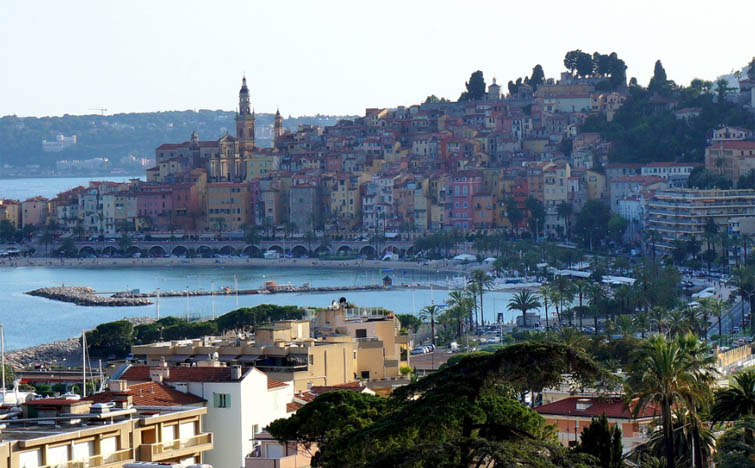
I still remember the first time we came into contact with Ventimiglia market – without even knowing that such a thing existed. We were boarding the local train from Nice to Menton, eastwards down the coast of the French Riviera in the direction of the Italian border. We were amazed to find it packed to the rafters at around 11 am on a Friday. From other trips on that line, we had been used to having a choice of seats on a weekday morning, but on that day, it seemed as though the entire population of the Cote d’Azur was on the move.
We did not find out until much later what was going on, but all these crowds were going to the Italian border town of Ventimiglia – the last stop on that line – for the popular weekly Friday street market.
The market mainly offers clothes, handbags and other leather goods – of mixed quality, it must be said, but occasionally, you can find well-crafted products at large discounts.
One of the market’s attractions apparently has something to do with the fact that – whisper it – the Italian police is less strict than its French counterpart in pursuing brand counterfeiters, so the French customs occasionally stop people on their way back from the market, asking them where they bought their shiny and new “Louis Vuitton handbag”. Be forwarned.
The market also features a section where farmers offer domestic food products. You can buy specialties from all over Italy here – Calabrian sausages, Parmesan cheese, olive oil – but also local produce such as sun-dried tomatoes and home-made pesto sauce, one of the things for which the province of Liguria (which includes Ventimiglia) is famous.
Have a coffee in one of the many charming little coffee houses around the 1930s municipio, the City Hall. You are only 15 km away from the French border town of Menton, but you will already feel a marked difference in the general liveliness (and noise levels) of the street life.
On market days, there is also a particularly large number of ambulant traders around who are walking from cafe to cafe peddling key chains that glow in the dark, small novelty household items and the like.
We have gone shopping many times at Ventimiglia market, and often, what we have bought from the peddlers turned out to be our most unforgettable purchases. What would our lives have been without the cicada fridge magnet that starts to sing when somebody approaches it?
You can reach Ventimiglia conveniently by local train (TER) from Nice. Trains leave frequently, generally every 30 minutes throughout the day. Don’t forget to bring a valid ID!
By Michael Shuermann from Easy Hiker
Why not take a trip to Nice? Have a look at our flights here!
more info

10 Titbits About the Oasis Concert at Knebworth
Knebworth is no more than a village in the north of Hertfordshire, just over a half an hour’s train ride from central London. The original village, known as Old Knebworth, grew up around Knebworth House, a large Tudor country house with a Neogothic facade and a priceless Jacobean banquet hall. The new Knebworth village sprang up in the 19th century one mile east of Old Knebworth, alongside the train station and A1 motorway. But, it was from the 1970s onwards that the village came into the limelight owing to the mass concerts held there. The first groups to draw tens of thousands of fans to the spot were Led Zeppelin, Pink Floyd and The Rolling Stones. And, in the 80s and 90s, the venue hosted events in the form of a festival, featuring such bands as Genesis, Dire Straits, Eric Clapton and Elton John.
But, pride of place goes to Oasis, who in two nights drew a crowd of no fewer than a quarter of a million people. Britain or, indeed, the whole world, had been bitten by the Oasis bug. There had been nothing like it since the advent of The Beatles. The group’s managers realised they were on to a good thing and decided to expose their proteges to as large an audience as possible. And where better to hold the festival than grounds well connected to the City? Thus, in the evening of 10 August 1996, the members of Oasis landed in their helicopter with a flabbergasted look on their faces. We recommend you see the documentary, “Supersonic”, by Mat Whitecross, which recently premiered in Spain during the last edition of In-Edit. The film tells the story of the band as seen through the eyes of its lead members, Liam and Noel Gallagher, covering the period running from their beginnings until the moment these two macro-concerts were held. But, apart from breaking all records, what else took place during those 48 hours? Here are 10 curious titbits that you were probably unaware of.
1. Two and a half million people applied for tickets
Over four per cent of the population of England applied for tickets to see Oasis at Knebworth, the largest ever demand for concert tickets in British history. Some 250,000 fans actually saw the band on those two nights – another record – but, incredibly, Oasis could have sold another 18 shows at Knebworth.
2. 7,000 people are thought to have been on the guest list
This figure has proved impossible to verify, although it is known to run into the thousands. But, what is really striking are the eye-witness accounts, which paint a picture of unimaginable indulgence backstage. A huge marquee was apparently full of bars, with well stocked bar counters. Drinks were on the house for both days and there were also free sweets and ice-creams. Additionally, a number of magicians and caricaturists were brought in to liven up the pre-concert wait.
3. 3,000 pro technicians were needed to organise the concert
No wonder, though, as the equipment included 11 loudspeaker towers set up increasingly further afield to make sure everyone would be able to hear Noel’s chords and Liam’s growling equally intensely.
4. The concerts had their own radio station for the occasion
Radio Supernova broadcast on 106.6 FM for a range of 20 miles. For the days it was on air, it blared out the Oasis signature tunes non-stop, followed by songs by the support bands. The station also broadcast information about the concert, accesses and transport to the grounds.
5. John Squire had the flu when guest player of “Champagne Supernova”
For many, a highlight of the night was when fellow Mancunian John Squire appeared on stage. The guitarist had split off from The Stone Roses just a couple of months before that and he showed up to sprinkle a touch of magic over the performances of “Champagne Supernova” and “I Am The Walrus”. A few days later, Noel Gallagher revealed to NME that he had been performing while under the effects of a severe bout of flu.
6. Oasis brand binoculars were handed out to all VIPs
A touch of irony, as the VIP area was the only vantage point from where the concert could be clearly seen without binoculars. But, to top it all, the Manchester boys had the visual aid of the largest video wall on earth at the time. Oh, well – who hasn’t been given some superfluous gift at some time in their lives? The Gallagher guests were not to be outdone.
7. The Charlatans supported Oasis just three weeks after the death of their keyboardist, Rob Collins
For The Charlatans, Knebworth was a bittersweet event. On the one hand, it acted as a launching pad for a band which was a standard-bearer of the early-nineties Madchester scene. But, on the other, they had to perform without their charismatic Rob Collins, who had died in a car crash three weeks earlier. An endearing moment came when Liam Gallagher dedicated the song “Cast No Shadow” to the fallen Charlatan.
8. Only 10 arrests were made during those two days
Which is quite surprising, given the huge number of festival-goers. How did they manage it? While it may seem unlikely to some, the fact is that Oasis fans are mostly law-abiding citizens.
9. Noel remembers nothing
As the saying went at the time, “If you can't remember anything about Britpop, it means you weren’t there”. And Noel’s recollection of that period is very sketchy. On occasion, he has even remarked that “even now, if I close my eyes, I can’t remember the moment I was on stage”.
10. One Oasis member thinks they should have split up immediately afterwards
“I always thought we should have retired after the second night at Knebworth”, said the guitarist Paul “Bonehead” Arthurs to The Guardian in 2009. In hindsight, it’s easy to draw the conclusion that Oasis would never better what they had achieved at Knebworth. But, who’s the brave guy that dares leave the group when it’s riding the crest of the wave? Bonehead finally quit in 1999 and became an ordinary person again.
Now you know a bit more about the legendary concert performed by Britain’s last great band. All that’s left is to discover the area where it all took place. Well, then, get “supersonic” and check out our flights here.
Text by Los Viajes de ISABELYLUIS
Images by Wikipedia Commons
more info