

De rubias por Bruselas
Belgium is a comparatively small land which has nevertheless made an inestimable contribution to the world of gastronomy – chips, waffles, chocolate and, very especially, beer. Here, over 450 varieties are made, whether by trusted traditional methods or using new technologies, yielding flavours that range from the classical to the most exotic. While the barley brew is a religion in Belgium, for beer enthusiasts Brussels is the hideout of some of the best taverns – and veritable places of pilgrimage – on the old continent.
A La Mort Subite
(Rue Montagne-aux-Herbes Potagères, 7)
Opened in 1910, A La Mort Subite is one of those spots oblivious to the passage of time. It boasts an exquisite beer selection, but I can recommend the one named after the establishment, Mort Subite, with its raspberry aroma. Its appearance and elegance on the palate have earned it the sobriquet of “the beer world’s pink champagne”.
Delirium Café
(Impasse de la Fidélité, 4)
This is Brussels’ beer cellar par excellence, a must-visit place of pilgrimage for any beer toper worth his or her salt. It started off as a tiny cellar on the Impasse de la Fidélité, but today it has taken over most of the street. Here you will find the whole range, from typical Belgium abbey beers to exotic beverages from the outer reaches of the planet. They need loads of storage space to house the more than five thousand types of beer on offer.
Le Cirio
(Rue de la Bourse, 18-20)
In the very heart of the Belgian capital, Le Cirio is located in the side street of the Bourse. Although not on account of its siting, the café is packed with guided tour parties. Le Cirio is a veritable institution in Brussels’ tavern guild. Rather than a venue for downing a pint, this spot, which still has its original centenary decor intact, is the ideal place for trying local cuisine, washed down – naturally – with a good indigenous beer.
Le Poechenellekelder
(Rue du Chêne, 5)
Hanging from its flea-market-like ceiling you will find anything from puppets to lavatory seats. Le Poechenellekelder is undoubtedly one of the bars with the most character in Brussels. This small venue, ideally located next door to the famous Manneken Pis, has a sizeable variety of mainly Trappist beers, crafted for the most part by monks.
Le Roy d’Espagne
(Grand Place, 1)
A seat on the terrace in the Grand Place is a privileged vantage point for viewing the bustle of the city. If, in addition, you are savouring steamed mussels, a helping of chips and, for instance, a 9° proof Chimay Bleue grand reserve, the experience is complete. The proposal might conjure up images of a rubberneck in flip-flops and socks, but there are certain pleasures one cannot – or should not – pass up, as clichéd or hackneyed as they may be.
Moeder Lambic
(Place Fontainas, 8)
Pils, Trappists, triples, doubles, wittes, IPAs, pale ales, stouts… you will find them all in the Moeder Lambic, a stunning place with its 40 taps arrayed behind an endless bar counter. While you’re there, make sure to try the beer they make themselves in a brewery just two blocks away. Fermented in the open air, the fruity taste of their Moeder Lambic Original is highly seductive.
Nuëtnigenough
(Rue du Lombard, 25)
A small brasserie always packed with locals, an unmistakeable sign of success. They offer excellent cuisine at more than reasonable prices and an array of beers that will meet the expectations of even the most seasoned beer connoisseurs. This is one of the hidden gems all cities seem to have, but guard the secret jealously!
Toone
(Rue du Marché aux Herbes, 66)
Our route ends with what is likely the quaintest bar in Brussels. The Toone, concealed between the buildings separating the Impasse de Sainte Pétronille from the Marché aux Herbes, is a brasserie which doubles as a puppet theatre. Between performances, customers drink amid puppets and a number of other fabled creatures.
Beer Weekend
The Belgian Beer Weekend is held the first weekend in September each year in Brussels’ Grand Place, where a host of brasseries sell their wares and regale visitors with activities relating to countless methods of brewing and different beer flavours.
Belgian Brewers Museum
The Maison des Brasseurs, a majestic stone building located in the Grand Place, is home to the Belgian Brewers Museum. It opens every day from 10 a.m. to 5 p.m. and admission costs 5 euros.
Brussels Beer Tours
Being highly specialised in beer, Brussels is understandably criss-crossed by an endless list of thematic tours of the city, notably Beertrips, Belgian Beer Me, Global Beer, Podge Beer and Bier Mania.
Text by Oriol Rodríguez for ISABELYLUIS Comunicación
images by Bill Smith, ^CiViLoN^,Daniel Lobo, GD Preston, lhongchou's photography, Kmeron, Bernt Rostad, Foam, Ana Gasston
more infoBerlin, a prismatic city
By Monia Savioli from ilTurista.info
Berlin: Young, lively, trendy but cheap, organized, linked to an important past which doesn’t forget and doesn’t want to. You can’t define the city of Berlin just listing a limited number of adjectives and characteristics. That would restrict its beauty and what the city can offer to people.
Vueling launched the route Florence-Berlin on March, the 22nd increasing its new offer from Florence with furthers routes to London Heathrow, Copenhagen and Hamburg providing 160.000 new seats in addition to the already available flights to Barcelona, Paris and Madrid. There is an efficient bus shuttle service that connects Florence train station to the airport. From the train station, you can reach the airport in 20 minutes and by an about 90 minutes flight you arrive at the Tegel International Airport of Berlin.
The only clashing point is that the German airport is not connected directly to the city by underground, although the net is constantly increasing. It’s possible to reach the nearest station by taking a bus from the airport. You can ask for more information about the bus within the airport, where people speak English if you don’t know German (bus and taxi drivers often speak only German). If you want, you can also take a taxi since rates are cheaper than the Italian’s ones. The bus that brings you to the city is the 128 and leads to the “Kurt-Shumacher-Platz” underground station and the course lasts about 15 minutes. Once arrived to the underground station, you can use the same ticket to reach Friedfrichstrasse, the core of Berlin and the shopping road par excellence. There, you can take a room at the Melia Hotel, just close to Spree river and to the Metropol Theatre. Friedrichstrasse is a strategic point to chance upon the famous “Unter den Linden” boulevard, going into the core of the city visiting the main Berlin places that you should see in a 2-days-trip.
If you prefer walking, you can also visit the city with your own feet or you just ride the several bikes for rent. There are also buses for scenic tour working up to 6 p.m. that let you get on and off to visit the main important places.
One of these places, is “Charlie”, at the Friedrichstrasse. It originally was a checkpoint between the Mitte and Kreuzber districts. Mitte belonged to the East Berlin, run by Soviets in the past and Kreuzber to the West side of Berlin, run by Americans. The name of the place, Charlie, is pronounced as the third letter of NATO phonetic alphabet after “Alfa” and “Bravo”. Nowadays Charlie checkpoint is a bar where you can taste delicious drinks or drinking beer sitting on beach chairs with you feet on the sand. The headquarter of the old Gestapo is on the Niederkirchnerstrasse where you can find few empty tiled buildings. It’s situated next to a portion of the Berlin’s wall that is ruined and constantly reduced because visitors often steal pieces of wall as souvenir. In that place now there is a permanent photography exhibition called“Topography of terror” about Nazism. So it’s evident how the old and the young Berlin are living together, to bearing in mind a past that no one can’t forget, fixing it through feelings felt due to the almost holy silence you can find in those places as a sign of respect.
These are the same feelings and sensations you can feel within the Holocaust Memoirs, in the Cora-Berliner Strasse, where there are 2.711 anonymous grey stones with an irregular shape that are arranged within a field characterized by several bumps that gives you the feeling of a dark choking and light-living feeling at the same time.
The East Side Gallery, an almost 2 kilometres of the Berlin’s Wall on the Mulenstrasse (ex East Berlin) is now the longest open-air art gallery in the world and show you several visions about the years of the split of Berlin. The murals realized by international artists offer alternative points of view by illustrating characters and symbolisms of that period as the Trabant, the famous old Berlin car, drawn as it would break down the wall.
For the aficionados, it’s also possible to rent a “Trabi” to drive around the city or take one of the odd vehicles situated along the Brandenburg Gate, the symbol of a reunified Germany and the access gate to the Tiergarten. This is a former shooting ground of the royal palace where you can find the Victory Column and the famous zoo.
There are also several nice flea markets along the boulevards where you can buy an endless quantity of stuff during the weekend, from jewelleries to art masterpieces or, for instance, mother-of-pearl-made spoon for enjoy your caviar. Is not all. Berlin is also the city of museums: from the biggest Hebraic museum in the world to the Egyptian museum, the National Art Gallery and several other ones.
Berlin is also the city of the big palaces, churches’ ruins as the Kaiser Wilhelm Gedachtniskirche, whose ruins keep the recollection of the Second World War bombing alive. At least, but not the last, Berlin is the city of the shopping centre as the Come KaDeWe, “Kaufhaus des Westens”: the most famous shopping mall in Germany and the biggest one in Europe with 60,000 cubic meters that are branched in 7 sector floors for products except the last one where you can eat at the self service restaurant. Other way, downstairs you can eat in several buffets as the one managed by one of the most famous international chef, Paul Bocuse. There is also a Lafayette store section. But the real fun, actually, is getting lost among the little shops and the street markets. Berlin offers also a lot of night bars, international top level restaurants, pubs, night clubs and alternative locals assuring fun to every kind of target of people.
Thrill-seeking people can even try bungee jumping from the top of the Hotels in Alexander Platz. In order to finish your trip, you can have a long and relaxing boat ride across the Spree river from where having a wide vision of the German capital to realize that Berlin is not just a touristic destination but a real city with its beautiful places and also its difficult realities as homeless people sleeping in sleeping bags along the streets of this great but cold city.
Por Monia Savioli de ilTurista.info
Why not take a trip to Berlin? Have a look at our flights here!
more info

The True Face of Copenhagen: beyond the Little Mermaid
By Iñaki Makazaga from Piedra de Toque
The most visited figure in Denmark and the main tourist attraction in the city of Copenhagen sits totally oblivious to the world at the end of a pier in the port (Langelinie). The Little Mermaid avoids all eye contact as she looks out to sea, almost with her back turned to her visitors. Perhaps this is because only she knows the true price of her fame (decapitated twice, mutilated three times and thrown out to sea several times) and the real story behind her own history. We decided to get on our bikes in search of answers and found the true face of Copenhagen: a city with a barbaric past that has now become a haven for peace.
We began our journey on the banks of the Sankt Jorgens Canal overlooked by the mansions reflected in its waters as we ventured out among the families, people enjoying sport and ducks picking at the grass. We pedalled along on the bicycles we rented from one of the 110 locations dotted around the city – one of the measures aimed at obtaining the title of ‘capital city with the best environmental quality’ in 2015. Every turn of our wheels left behind yet another tree as we travelled along the green corridor created by the canal. We took in the sights and decided to turn right at the third bridge to eventually arrive at the Botanical Garden and Museum (Botanisk Have) at 128 Gothesgade.
More than 20,000 different species of plant life now thrive in the grounds of these old city fortifications. The walls contain spacious gardens and the moat is full of aquatic and wetland plants, each with its own little information sign stuck in the ground nearby. We parked up the bikes at the entrance and walked in. It was March and there was a hint of change about everything as the snowy season began to loosen its grip. The earth was all churned up, the trees were leafless and the sky was grey. An enormous three-story greenhouse with four glass pavilions appeared in the distance where 1,000 varieties of cactus, coffee plants, pineapples and even palm trees are incubated and studied. We were overcome by temptation and bought two bags of seeds from the shop on the way out: one of Asian bonsais and another of red orchids. Maybe we thought we could take away our own part of the peace that reigns in this park and whose roots still soak up the blood of the people who fought to defend the city from enemy invasion.
We returned to our trail. We left behind the garden and the botanical museum to pedal our way through the areas surrounding Roseborg Slot, the royal palace built by Christian IV in 1606 as a summer residence that now also serves as a large museum. It houses thousands of objects related to the oldest monarchy in Europe and is full of paintings, furniture, weapons and jewels. The traffic light turned from amber to green and so we pedalled on.
The peace of the botanical gardens now changes to the hustle and bustle of central Copenhagen. The cars give way to cyclists between the buildings from which emerge the strong>spires of the Marmorkirken, a church inspired by Saint Paul’s in Rome and which was originally planned to be built using Norwegian marble. They soon realised there was a far simpler way to celebrate the 300-year reign of the family of Frederik V and the Norwegian marble was switched for Danish marble a century later in order to get the place finished. However, no expense was spared on the steps: 260 to reach the bell tower. The views of the city make the exhausting climb well worth it. We took the opportunity to check our map. We felt the call of the thriving city centre, with the pedestrianised Strøget street full of shops and terraces filling the cobbled medieval squares of Kongens Nytorv and Radhuspladsen. We left those for nightfall and continued towards the port where the Little Mermaid sat waiting for our visit.
We dismounted and walked the bikes for a while. We were in Nyhavn, the New Port, which was opened by soldiers between 1671 and 1673 so that ships could unload their goods in the city centre. It became the darkest part of Copenhagen for years, inhabited by sailors and ladies of ill repute. Cheap rooms, dark taverns, tattoo parlours and brothels. Nyhavn has emerged from its murky past and now offers one of the most attractive faces of the capital along the 300-metre stretch of port-front properties with narrow, colourful houses and pavements full of terraces. No matter how cold the weather is, a blanket, a heater and a candle embrace all visitors. Around the edge of the port can be found evidence of that era in the form of wooden ships such as the 19th Century lighthouse ship that has been converted into a restaurant. An anchor that belonged to a Danish frigate also recalls the maritime past and pays tribute to all those who lost their lives during World War II. We took photos of the brightly-coloured houses. Maybe Hans Christian Andersen himself looked out from one of them to look at the sky while penning his tales. The truth is that even the walls whisper their stories in this part of town.
Now back on our bikes we pedalled along the canal towards the sea with the humid wind blowing in our faces. The tide greeted us at the shore, together with a number of new pavilions. We entered the Citadel (Kastellet), another great fortification to protect against attack from the Swedes. The five-pointed star-shaped fort has also witnessed great swathes of history in this country. Used by Nazi troops as a main headquarters during World War II, it now belongs to the Danish army although the gardens and walls are open to the public. In the 19th Century, it was also used as a prison and small sculptures now speak of the horrors of war. A museum depicts the activity and names of the people who led the resistance against the Nazis. And the Little Mermaid, nowhere to be seen.
We kept on pedalling. It started to snow and a hoard of tourists announced we had reached another point of interest. At the end of the pier, resting on a rock and with her back to the tourists we finally met the star of one of the most famous stories written by Hans Christian Andersen. The very one who fell in love with a prince and who now waits for him to return looking out to sea. The snow continued to fall. The grey sky opened as if in slow motion: rain, snow, more rain.
Walt Disney tells us of a happy mermaid surrounded by seafaring friends who struggles to make her dreams come true. The reality proved to be much different. The colour of copper, alone, her nakedness constantly illuminated by camera flashes from the tourists. Yet she doesn’t smile. The thing is, Hans Christian Andersen wrote a different ending. The prince she gave up being a mermaid for ended up marrying another. The Little Mermaid died alone, without breaking the spell that would let her return to the sea without killing the prince. She preferred to wait, convinced that another ending would find her sooner or later. Like the Little Mermaid, Copenhagen has preferred to keep every palace, every fortification that speaks of its Viking and Barbarian past in order to convert them into gardens and museums that grow a new history of peace and tolerance. We joined the Little Mermaid and gazed out at the horizon in silence.
COPENHAGEN BY BIKE:
Time: 2 hours
Route: Sankt Jorgens Canal in Norrebro, Botanical Museum, Roseborg Slot, Marmorkirken, Nyhavn, Kastellet, The Little Mermaid.
Recommendations:
- Visit the museums mentioned: open from 10:00 to 16:00.
- Get a Copenhagen Card.
- Explore the city by bike and have lunch in the New Port after finishing the tour.
By Iñaki Makazaga from Piedra de Toque
Picture by Henrik Jessen
Why not take a trip to Copenhague? Have a look at our flights here!
more info
The Rolling Stones London
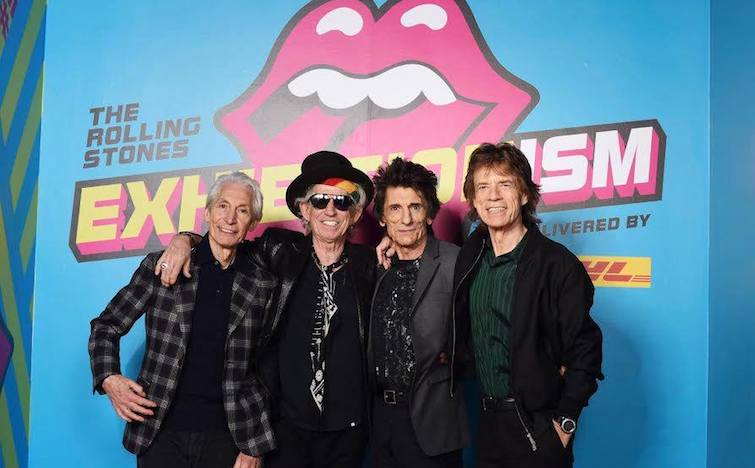
Every time you visit London you discover something new. The city is endless and has multiple facets, and one of these is musical. Indeed, the capital of Britain has also been that of pop and rock music practically since their inception. The first big rock’n’roll clubs emerged there and it was in that ambience of leather jackets and limitless hairpieces that The Rolling Stones came into being. Even today, the band still wears their crown as the kings of planetary rock. Homing in on this comprehensive retrospective, which has taken over the nine rooms in the Saatchi Gallery, My Vueling City has authored a review of The Stones’ London. “It’s only rock and roll but I like it!”
A Penchant for The Rolling Stones
Needless to say, The Rolling Stones are eternal. For most of us, they have always been there, periodically engaged in marathon tours and always releasing records with “made in Hollywood” premieres and no lack of pyrotechnics to boot. Much has been said about the longevity of the (now) quartet – whether they have had hemodialysis or made a pact with the devil. But, it matters little. What really matters is that they are undisputedly the most important band in the history of rock. That is why any event relating to them turns out to be a not-to-be-missed show. Which also applies to this exhibition, entitled Exhibitionism, which has been three years in the making and features over 500 artefacts associated with the group. It is a veritable mega-exhibition, closely meshed with the Rolling Stones’ geartrain and running on a heady budget – the whole setup has cost a trifling 5.7 million dollars!
Exhibitionism or Fetishism?
We’re not sure whether the title quite fits the nature of the exhibition. We were more forcefully struck by it fetishistic bent. At any rate, whether you’re a Stones fan or merely curious, the exhibition is well worth seeing. It is hosted in the Saatchi Gallery, a handsome mansion usually given over to modern art located in the illustrious district of Chelsea.
The exhibition traces the group’s career. In addition to artefacts, the various galleries also feature life-size replicas of the group’s dressing rooms, and even of the first flat they shared. There is also a reproduction of a recording studio from those times. You can live through a 3D experience of their concerts, too, based on a recording of the one they gave in Hyde Park in 2013. The exhibition layout adheres to the traditional museum plan, with countless objects – like old suits – of which the standout feature is the legendary white they wore at the Hyde Park concert held in July 1969 in memory of Brian Jones. And guitars, of course, are singled out as a special feature. Included is the hand-painted Gibson Les Paul which Richards played from 1966 to 1970. There are also films curated by Martin Scorsese, and unpublished recordings.
The Satanic Majesties’ London
While in London, we recommend you visit some of the group’s legendary venues. See how the band’s influence still resonates in the city.
1. The First Flat
Located in Chelsea itself, just a short walk from the Saatchi Gallery, is the first flat of the original core of The Rolling Stones, shared by Mick Jagger, Keith Richards and Brian Jones. In 1962, three boys who dreamed of being as great as The Beatles lived there, at 102 Edith Grove.
2. Pub Bricklayers
Located in Soho, the Bricklayer Arms was a pub that hosted performances every night. It was located at 7 Broadwick Street and it was there that good old Charlie Watts joined the group. The drummer, who would never leave the band, was much older than the rest of them and was a seasoned player on the jazz circuit. The pub is now the record shop, Sounds of the Universe.
3. The Ealing Jazz Club
Inaugurated in January 1969, it soon became the headquarters of the best blues ever heard in London. It was here that the cream of British rock took their first steps, encompassing a whole generation of such standout figures as Eric Clapton, Jimmy Page, Pete Townsend and Keith Moon. And it was here that Keith Richards and Mick Jagger first saw Brian Jones performing. That was a long time ago; specifically, on 7 April 1962. You will find it at 42A Ealing Broadway.
4. Regent Sounds and Legendary Denmark Street
Located in Soho, these legendary studios witnessed The Rolling Stones’ recording sessions in 1963, including the track, Not Fade Away, which catapulted them to fame in their early period. A stroll along Denmark Street is something of an experience. Nowadays you will come across countless musical instruments shops, on a street that dates from 1867 and still features some buildings from those times.
5. New Crawdaddy Club
The New Crawdaddy Club, in Richmond, opened in 1962. A year later, in February 1963, after their first concert, The Rolling Stones became the resident band, playing twice a week. It was at that time that they entered the hit parade in style with Come On, and the public response was so great that the bar had to move to larger premises. It is currently located on Harding Elms Road, Essex and, needless to say, still hosts good concerts.
6. Sticky Fingers
After the tough haul along the route studded with emblematic Stones venues, the time comes for building up one’s strength at an eatery which is practically a Rolling Stones museum. This is the Sticky Fingers Restaurant, owned by the former Stone, Bill Wyman, who was The Rolling Stones bassist from 1962 to 1993. We recommend the Bacon Burger: 170 g patty, Monterey Jack cheese, tomato, lettuce, red onion, pickles, bacon and pickled mayonnaise, bathed in BBQ sauce and served with a pasta and coleslaw salad, four cheeses and croutons.
Stones rock is still alive in London. Come and discover it – check out our flights here.
Text by Los Viajes de ISABELYLUIS
Images by Galería Saatchi, Restaurante Sticky Fingers, Visit Britain, Ealing Jazz Club
more info