Descubriendo la etapa coruñesa de Picasso
Picasso’s Corunnan period remains fairly unexplored, even though he himself considered it important to his development. On occasion, he even rated it above his Blue and Rose Periods. It all began in October 1891, when Pablo Ruiz Picasso was nine years old and, together with his sisters Conchita and Lola and his mother María, left his hometown of Málaga and moved to Galicia where his father, José Ruiz Blasco, took up a teaching post at the Provincial School of Fine Arts in A Coruña. The boy from Andalusia attended both the local secondary school and the aforementioned Fine Arts School for three years, embarking on his art studies at the latter.
During his sojourn in A Coruña, the young boy produced over 200 works, now housed in the world’s leading Picasso museums (Paris, Barcelona and Málaga) or in private collections, as is the case of Portrait of Modesto Castilla,which in 2012 was auctioned for 2.6 million euros, the highest price ever fetched by a painting executed by a boy – Picasso was 12 years old at the time.
So, on any trip to A Coruña, be sure to go on the following itinerary which will take you to the most significant landmarks during Picasso’s Corunnan period.
Picasso House Museum
The Ruiz Picasso family lived in Galicia on the second floor at 14 Calle Payo Gómez for five years. The building, its original structure still intact, features typical Galician architecture, including wooden galleries. The family’s living quarters include a re-creation of a 19th-century home, with a few reproductions of Picasso’s Corunnan work and that of his father, in addition to an engraving by the former which is contemporary with Guernica.
Instituto da Guarda
The Instituto Eusebio da Guarda, located in the Plaza de Pontevedra, is the secondary school and art school attended by Picasso. His school grades were very poor, but he excelled in his art exams. It was on the first floor that he received tuition from such artists as his father, in addition to Román Navarro, Isidoro Brocos and Amorós y Botella.
The Plaza de Pontevedra
This square, which at the time was still sand and stone, was where Picasso played at bulls and bullfighters with his friends, including Antonio Pardo Reguera, Constantino Sardina and Jesús Salgado. A drinking fountain used to stand in the square which the maid employed by the Ruiz Picasso family got drinking water from.
The Beaches of Riazor and Orzán
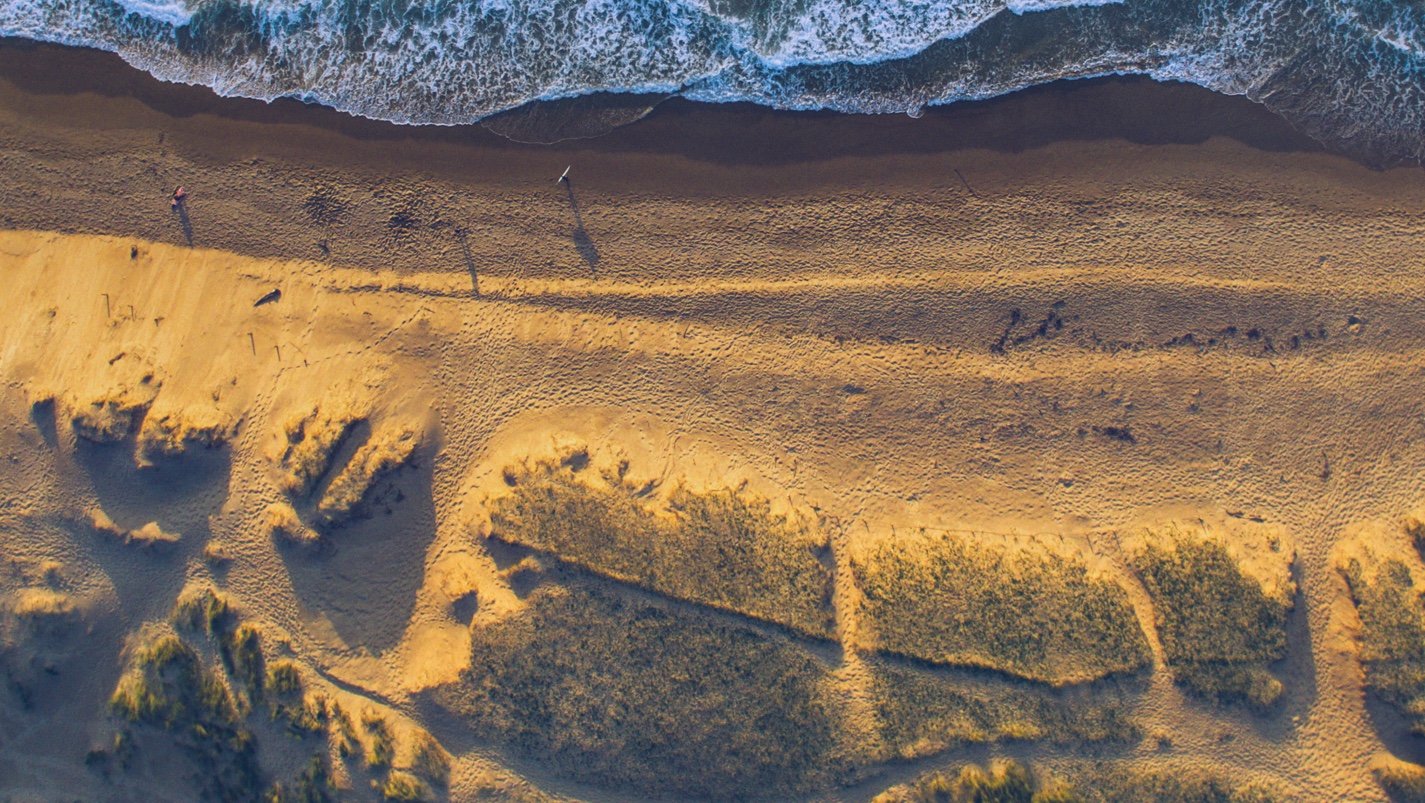
It is said that Picasso discovered the female nude for the first time in Riazor. This occurred while playing near the bathing boxes that used to be on the beach, which also had boats that Pablo drew. As for Orzán, he executed an oil on panel of that beach.
Chapel of San Andrés
The restored, Neo-Romanesque-style Chapel of San Andrés opened to the public in May 1890. Seven sculptures by Brocos, one of Pablo’s tutors at the School of Fine Arts, were put on display in its interior thereafter. A few metres from the chapel stands the Circo de Artesanos where Picasso attended dance classes.
The Calle Real
In February 1895, Picasso held his first exhibition at 20 Calle Real, in what was then a furniture store, which earned him two excellent press reviews. In March he staged his second exhibition in the same street – purportedly at number 54 – where he showed his Man in Cap, now housed in the Musée Picasso, Paris.
San Carlos Garden
In A Coruña, Picasso heard the story of Lady Hester Stanhope, the lover of Sir John Moore, who died in 1809 and was buried in this garden. He liked it so much that he vowed to travel to England to learn more about her. In fact, the first time he visited Paris, in 1900, he actually intended it to be a stopover on his way to London. Later, however, he changed his mind.
Escola de Artes e Superior de Deseño Pablo Picasso
This school, located at 2 Calle Pelamios, was where Picasso pursued his studies after leaving the Fine Arts School. Several of the chalk drawings he executed during the three years he studied in A Coruña are displayed in the school’s corridors, while photocopies of his school report are exhibited in the foyer.
San Amaro Cemetery
This is where Pablo’s younger sister, Conchita, was buried after her death from diphtheria on 10 January 1895. Costales, Brocos, Navarro and Gumersindo Pardo Reguera are also buried in this graveyard.
The Tower of Hercules
Picasso went on long strolls from his home to the Tower of Hercules, a lighthouse which was designated a World Heritage Site in 2009. Pablo did oil paintings of it and also drew it in both his Corunnan notebooks and one of his news sheets. In the latter he called it the “Tower of Candy”.
Text by Turismo A Coruña
more infoJohn Lennon statue
After more than four decades, the influence and sheer enormity of the Beatles is still present in many cities around the world , with streets, squares or monuments named after the Liverpudlian quartet that changed the history of rock for ever.
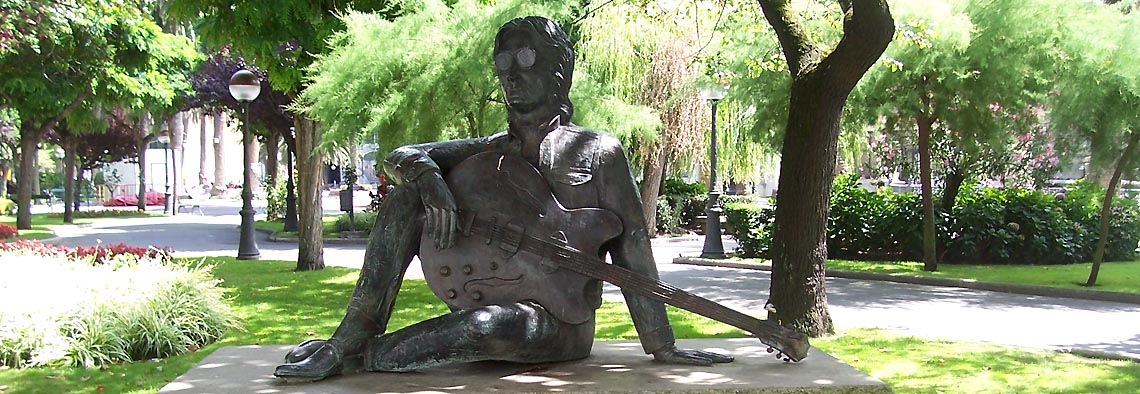
One of the most interesting tributes can be found in the Méndez Núñez Gardens in La Coruña and consists of a statue dedicated to John Lennon, who is depicted wearing his trademark glasses, grasping his guitar. An emotive memorial to the singer and composer who, together with Paul McCartney, wrote some of the most famous songs of all times and who now has a privileged place in this Galician city. It’s no surprise that every 8 December, the monument is covered in flowers to commemorate his death and to remember one of the most important artists of the 20th Century.
So why not pay it a visit? Check out our prices here!
more infoFestivities of María Pita
The María Pita festivities are a summer’s essential. It is when A Coruña dresses in their best clothes and offers a full program of free outdoor music, food, craft and book fairs,
Throughout the month of August, the city comes alive with activities all day and night spread throughout the city in a celebration that honours the figure of María Pita, the heroine who captained the defense of the city against the British Navy, led by the pirate Francis Drake in 1589.
The day 1 proclamation will mark the starting point of the holidays and this year Luz Casal will be responsible for putting the first chord in an open-air free concert.
The first Saturday of August takes place the traditional Pyrotechnics Naval Battle, a firework show illuminating the sky color of A Coruña that each year attracts thousands of people.
And for the young, the third of August there is an entire program of Maria Pitiña at the Explanada del Parrote with activities designed for them. A day that will turn around the circus, with shows, music, games and workshops.
And coinciding with the celebrations of María Pita, the Northwest Pop Rock festival is organized on the beach of Riazor. It is on Friday the 8th and Saturday 9th August, with a varied program.
Friday 8th of August
21:00 h La Senda de Afra | 22:00 h Misterioso Viaje Holanda, Facto Delafé y las Flores Azules and Love of Lesbian.
Saturday 9thof August
21:00 h Anima | 22:00 h Bourbon Queen Eskizo and Madness.
Picture by Carlos Fernández San Millán
Perfect plan to go with friends! Check our flights and sign up!
more infoDestinations for the November bank holiday weekend
There are lots of clichés about travelling in autumn: that it's low season, the weather's still mild, cities look nicer... But the truth is that it's an ideal time of year to take a break from your routine. Besides, there's a bank holiday weekend at the beginning of November, which means you can enjoy these wonderful places even more. Let us guide you with a few recommendations on places that are particularly charming at this time of year.
more info