

Oslo: Pure Life, Pure Trend
By Tensi Sánchez from actitudesmgz.com
The city of Oslo is located in the formation of one of the most beautiful fjords in Norway which is named the same way. Surrounded by more than 40 islands, lakes and woods, it´s one of the most amazing cities of Scandinavia.
It´s a great destination when we plan a trip thanks to the wide range of activities that the city offers. Nature and metropolitan trends are perfectly mixed, nowadays making the city an essential destination for every architecture, art, design and nature lover. Actually, Oslo is the only city in the world which offers access to sky slopes by metro, so that makes it appealing in every season of the year.
It´s development has been brutal over the last ten years, placing it as one of the highest living standard capital in the world. What is more, lately new museums have been opened in town and they have become the port in a hive of culture and leisure. That´s why Oslo is an attractive destination for tourists.
The best option to start moving around the city is to buy the Oslo Pass ticket which gives access to transport and museums.
The port located in Aker Brygge area, contains modern buildings, restaurants, museums, galleries and shops where you can easily get lost a whole day.
Following Aker Brygge, we walk through the zone of Tjuvholmen where the Astrup Fearnley Museum of modert art built in 2012 by the architect Renzo Piano, is placed. Its peculiar architecture and location make it Oslo’s most amazing museum among others. In the same zone the recently inaugurated The Thief is located: one of the city’s most impressive hotel. Its hall is a visit not to be missed.
From the same port and with the Oslo Pass card, you can take the ferry that transports you to the island of the museums situated in the area of Bygdoy. The most interesting ones are the Fram Museum, which hosts the breathtaking icebreaker and the Museum of the Vikings Boats. But there are plenty more. Back to the port you can have a drink in some of its boat-bar or restaurants, enjoying in the open air of one of the most beautiful views to the fjord. Among all the restaurants we highlight Lofoten and Onda Sea for its magnificent fish and fresh seafood.
Scandinavian design, in particular the Norwegian one is very precious. Its habitants can boast of being situated in a very good level and being well appreciated. The Norwegian style nowadays it’s on the rise and its fashion, design and decoration shop are a proof of it.
Among them we highlight: Balder Interior , Dapper, Moods of Norway, Pur-Norsk, Koma, Tulip & Tatamo Trikotasje, Norway Design; and last but not least House of Oslo: the first and only shopping mall of Norway specialized in design and Norwegian lifestyle, with more than 20 shops distributed over its four floors.
Sunday it´s the perfect day for visiting Blå market in the area of Grünerløkka which is placed on the other side of Akerselva River. A very trendy meeting point for eating or enjoying live local music. This market is very peculiar as you can discover marvelous vintage clothes, purses, books, records, accessories etc., in an unique atmosphere. In fact, it´s the area where cheapest beer and most amazing graffiti that you won´t stop admiring, are.
Grünerløkka zone is far from the noise of the tourists and getting lost through its streets and discovering its shops, restaurants and bars it´s very appealing.
Very close to Blå, in Vulkan, is located a building (inaugurated this year as well) with industrial appearance that places a gastronomic cultural center: Mathallen, where products from Norwegian manufacturers and imported products can be eaten and bought. It´s perfect for enjoying local food.
Around the building shops, bars and contemporary art galleries are being inaugurated, for example Vulkan Gallery. Without any doubt it will be a zone to take into account in the city.
Oslo is a city culturally alive; especially when the weather is good. That´s why we can´t miss festivals like Øya, which is the biggest open air pop- rock music festival in Norway.
If you are want to get to know more about Oslo check the webpage Visit Oslo and discover thousands of possibilities that the city and its surroundings offer you.
By Tensi Sánchez from actitudesmgz.com
Photo and video : Fernando Sanz
Perfect plan to go with frineds. Check out our flights!!!
more info

For Valentine, The Best Boulangeries in Paris
It’s hard, and maybe impossible, to find a bad bakery in Paris. Expert bakers using plenty of butter produce goods that rarely disappoint. But some are especially good. Every year the city honours one of them for making the city’s best baguette or rod-shaped loaf, and the winner gets to supply bread to the President of the Republic for a year. Past winners constitute a roll of honour, and a good indication that they’re worth a visit. Here are a few:
LE GRENIER A PAIN (Abbesses, 38)
Michel Galloyer has 30 branches in Paris and the provinces, but the original in Montmartre is the one awarded the 2010 Best Baguette prize. There’s no room to sample the fare in the shop, but the nearby stairway to the gleaming white Sacré Coeur Basilica is a good alternative, thanks to the incomparable view of the city. The bakery boasts a large variety of breads that are baked in sight of the customer, as well as sandwiches starting at 3€ pizza or a bit more than 2€, and wonderful fougasses (flat bread roll stuffed with savoury ingredients). The goat cheese and tomato version costs only 2.20€. The croissants are out of this world, as are the chausson aux pommes, or apple turnovers.
PAIN DE SUCRE (Rambuteau, 14)
The success of the boulangerie-patisserie that opened a decade ago in Le Marais necessitated the opening of additional premises almost next door, with two tables indoors and five outdoors for sampling the sweet pastries. The main shop sells bread, sweet and savoury pastries, quiches, pain roulé (bread stuffed with spinach, bacon and cheese, spicy sausage and plums, etc.), focaccias (special flat bred topped with herbs and other ingredients), homemade creamy soups (try the pumpkin and chestnut!), and other treats. The décor is avant-garde, the food itself is colourful (check out the marshmallows), and you can order coffee. It’s a bit pricy –like almost everything in Paris—but worth everysou. You should consider the roule au pistaches (breakfast snail with pistachios) and the pain au chocolat.
LEGAY CHOC (Ste. Croix de la Bretonnerie, 45)
Le Marais is one of the city’s most gay-friendly district and the owner of this little bakery is not only gay and proud, but his surname is Legay. And indeed, his shop is famed for its penis-shaped loaves and brioches (2.30€), but everything in the shop is of the highest quality, including the hot dogs, wraps, and pizza, as well as the bread, pastry, quiches, and small pies. There are no tables, so it’s a take-away, but not at all expensive.
MURCIANO (Rosiers, 14)
This is a charming traditional Jewish bakery in Le Marais, featuring a menorah (Hebrew candelabra) in the window. The speciality is apple and cinnamon strudel (2.80€ per portion), as good as it gets. There are also traditional Jewish bread like the braided challah eaten on the Sabbath and other holy days, or rogallah, a sort of croissant with chocolate edges.
This boulangerie now has about a hundred branches all over the world, thanks master baker Eric Kayser, whose latest honours are for “Best Croissant” and “Best Bread” in Tokyo. His first bakery stands on rue Monge, 6, near Notre Dame cathedral, and features a bar and outdoor table –all branches have some seating facilities. A 100% ecological branch now operates at number 14 of the same street. Aside from bread and pastries, there are sandwiches, salads, tarts,quiches, and various combination for the lunch menu.
POILÂNE (Cherche-Midi, 8)
There are often long queues outside this little bakery in Saint-Germain des Près, one of the most celebrated in all Paris. The bread is believed to taste exactly the same is it did when the shop was opened in 1932 by Pierre Poilâne. The recipe calls for sea salt from Guérande, stone-ground organic flour, and fresh yeast, and baking is done in a wood-fired oven. There are two more branches in Paris and two in London. Don’t fail to try the delicious nut and raisin bread!
DES PAIN ET DES IDEES (Yves Toudic, 34)
Paris’ most “hipster” bakery, near the Canal Saint Martin, has a one large wooden table for all in front of the shop. With a lovely interior and show windows filled with charming knick-knacks, the shop features baked goods made with top-quality organic ingredients, and the bread is called “des amis” (for friends), Though his background is in fashion, proprietor Christophe Vasseur was named Paris’ best boulanger by the prestigious guide Gault&Millau. He offers traditional product, but also likes to experiment, and he also sell croissants made with matcha tea, Mouna (brioche with orange blossom), and even escargot made with lemon and almond nougat.
Ready to try some of this? Check out our low fares here!
By Isabel Loscertales / Gastronomistas.com
more info

Ghosts Of London's Past
Por Michael Schuermann de Easy Hiker
London is a great city for hikers. For one because there are so many scenic trails and nature reserves near-by – the Ridgeway, the South Downs Way, the New Forest – and for another because they are all so easy and convenient to reach by what is probably the world’s best public transport system. (I know the London urban and suburban rail networks get a lot of stick, but I still have to find another city in the world where it is as easy to get around even if you have no car.)
We will spend more time in London in the near future and intend to explore the walking trails of the area in some detail, although the more serious hiking trips will have to wait until the spring.
For the time being, however, we will keep things simple and start you off this week with two short walksalong the Thames, one in the east and one in the west, each roughly two to three hours long, allowing you to set out late, after a leisurely breakfast on a weekend for example, and still be back in time “for tea” to watch the afternoon soccer game “on the telly”. Are you still with me, “guv”?
Ghosts of London Past
Wapping in the east of the city has always been my favourite part of “walking London”. I have done this walk several times over the past twenty years or so, but it was never the same walk – because the area has changed and still changes so quickly.
This stretch of London – between the Tower and Greenwich – was once the most important hub of global trade, the place where shiploads after shiploads of coffee, tobacco and sugar from the British colonies arrived on their way to the European consumers.
The London docks were abandoned in the 1960s, and the area lay fallow, a barren industrial wasteland, for twenty years before it was redeveloped in the 1980s. When I came here first, a little over twenty years ago, this process was still very much ongoing, and the “docklands” at the time were a surreal blend of derelict industrial buildings, waste dumps, modern office developments and handsome 19th century mansions.
Nowadays, the docklands are very trendy and chic, but they are still nothing like similarly trendy and chic areas of West London. They are, for one, much less lively. Wapping High Street is a residential area, but when we went there, on a Saturday around lunchtime, we were almost the only people in the street, give or take the odd jogger. Between old warehouses, centuries-old taverns and narrow stairways that lead down to the river, you feel that ghosts are walking with you every step of the way.
Our walk starts at St. Katharine Docks in the back of Tower Hill station. Walk down the stairs on your left hand side, turn left in front of the moat of the Tower of London and simply follow the signs.
The three basins of St. Katharine Docks were developed in the 1820s when one of the largest London slums – with over 10,000 inhabitants – was razed to the ground. (The rubble of the destroyed dwellings, ironically, was used to lay the foundations for one of London’s most luxurious property development projects in Belgravia.)
The St. Katharine Docks were never a great commercial success – the gates to the river Thames were too narrow, preventing larger ships from entering – and, having been heavily bombed in WWII, never fully rebuilt and gradually abandoned.
They became, however, also the first of the London docks to be redeveloped as a leisure-plus-retail facility and the blueprint for all such projects since, in the capital and all across Britain. They are a very pretty sight indeed, particularly on a sunny day. (Unfortunately, we were not quite so lucky on our walk.)
Leave St. Katharine Docks in the back of the Dickens Inn through Thomas More Street and turn left into Wapping High Street along the Thames. Look out for Wapping Pier Head, two early 19th century brick buildings that were erected right on the entrance to the docks to accommodate leading dock officials and their families …
… and, a few houses down the road, the ancient Town of Ramsgate pub. The Wapping Old Stairs beside the pub – they lead down to the river – are said to be haunted: for many men, convicts on their way to Australia and drunks who were imprisoned in the pub’s cellar before being “press-ganged” into the navy, these stairs would have been the last things they ever saw of England.
A little further on, in the garden next to the modern HQ of the London River Police, the City of London used to execute pirates – not removing their bodies before three high tides had washed over them, as a kind of deterrent presumably. The infamous Captain Kidd was hanged here in 1701, and a couple of blocks down, there is a pub that was named in his honour. (Go check it out. It has stunning views over the Thames.)
Continue past some more old warehouses before turning right into Wapping Wall – look for London’s oldest riverside pub, the Prospect of Whitby – and crossing the bridge into Shadwell. (Another modern development, called Shadwell Basin, appears on your left.)
Immediately after the bridge, turn right in the direction of King Edward VII Memorial Park, and continue by the bank of the river with some spectacular views of Canary Wharf in the distance.
Turn left into Spert Street for Limehouse Basin, where this walk ends. There is a DLR station on your left hand side from where the trains of the “Docklands Light Railway” take you back into the centre of London within a few minutes.
By Michael Schuermann de Easy Hiker
Does this make you want to go? Do it! Check out our prices here!
more info
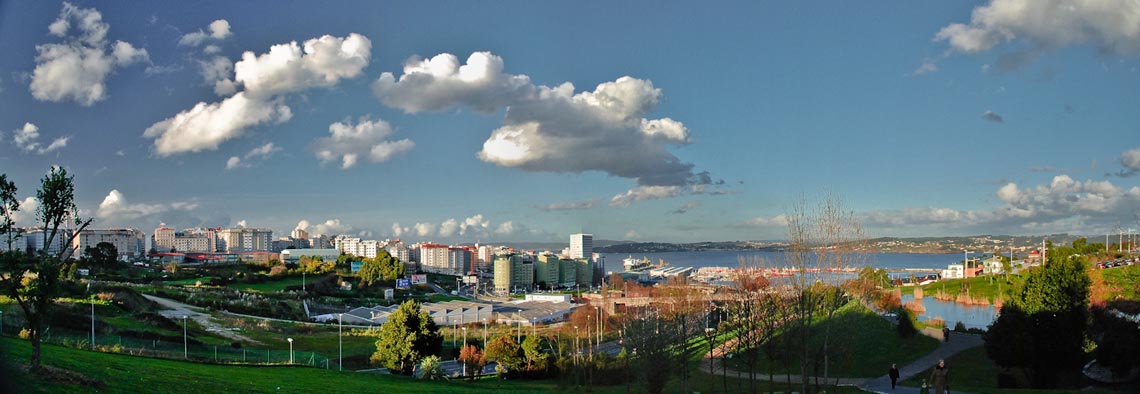
On a tour in A Coruña
A Coruña, the city where nobody is an outsider. You hear this a lot in La Coruña as it was the slogan used to promote the city and was eagerly adopted by the local people.
Tapas
One of my favourite places is a small yet typical old-man’s bar with the original decorations from the 1960s. It is called La Bombilla and they serve delicious tapas, empanadilla inflada, croquettes, tortilla, chorizo with potato and milanese-style chorizo at good prices in the city centre; 6 Calle de la Galera. Unmissable.
In the same area, theZona de Vinos, you’ll find a large number of tapas bars with good prices and quality. You could start at the legendary Taberna Olmos at 22 Calle Olmos and continue on down the length of Calle Barrena. The lively atmosphere lasts all night.
Drinks
On Calle Orillamar is one of my favourite bars; Maricastaña. The place offers free concerts by local artists, a relaxed atmosphere and a good time. It is open until 3 in the morning and also serves sandwiches at a good price.
For something a little different and alternative, you could try Puticlú (pronounced as it is spelt). Pop and colour in a mixed and highly entertaining atmosphere.
Mardigras is one of the most iconic music bars in A Coruña. Rock concerts, alternative music and a great time to be had.
Another of the liveliest places for a night out is Orzán, very close to Playa de Riazor and with numerous places to have fun.
Restaurants
I recommend two good restaurants; one with a traditional atmosphere and another more modern. Their traditional dish is the Pulpería A Nova Lanchiña. Great octopus at 30 Calle Capitán Juan Varela. The other, more innovative and stylish restaurant (but equally well priced) is close to the beach in the Riazor area: Utopia at 5 Avenida Buenos Aires.
Museums
Fundación Barrie de La Mazaand the Caixa Galicia Foundation are the two closest. They offer a good collection of resident art and other temporary exhibitions. The Centro de Bellas Artes is also worth a visit.
Walks
One of the unmissable and essential walks is to be enjoyed around La Torre de Hércules, the only oldest lighthouse in the world still working today. There are some wonderful views of the coast and it is very easy to get there because it stands within the city limits of La Coruña itself.
The recently-renovated Parque de San Pedro offers some great views of the city.
Finally, a walk around La Marina to the Castillo de San Antón is very pleasant. If the weather is kind to you, it is a delight to see the typical houses of A Coruña with their white galleries and enjoy a beer or two on a local terrace.
By Marcos La Federica
Makes you feel like going, right? Do it! Check out our prices here!
more info