

Festival of Lights in Leipzig
Leipzig is known as the capital of German music, classic music artists such as Strauss, Wagner or Bach were closely attached to the city. Nevertheless, is also known for being part of an important moment in history, playing a key role on the fall of the Berlin wall, reason why the city is considered as the birthplace for the Peaceful Revolution.
On October 9th 1989, 70.000 Leipzig citizens demonstrate carrying candles around the Leipziger Ring calling for freedom to the Federal Republic of Germany. Despite several threats by the police to open fire, the demonstrations were peaceful and became an important milestone on the way to the fall of the Berlin Wall and German reunification.
From that date, every October 9th the Festival of Lights is celebrated to remember that important date, taking history to reality by using audio, video and light. On 2014, the 25th anniversary for the Pacific Revolution is celebrated and, as every year, the Festival of Lights in Leipzig sets the start for a long weekend were many cultural organizations dedicate events, exhibitions and concerts to remember the events on 1989. On 2009, for the 20th anniversary, almost 150.000 people joined a great parade around the city centre and Leipzig became a sea of lights. For 2014, numerous activities are expected around the festival.
Furthermore, on October 9-13th, 2014, Leipzig will celebrate a long week of cultural events and, throughout the year, visitors can follow the steps of these historical events and visit places such as the museum and the bunker in Stasi or the exhibition “Freiheit! Einheit! Denkmal!” (Freedom, unity, monument) – from September 24th, 2014 to January 4th, 2015 – in the Leipzig City Museum, where the historical memory remains to debate the future monument to freedom and unity.
Under the slogan “Fall 89 – Democracy arrival” Leipzig will transform the streets one more year in a light show and cultural celebration that you shouldn’t miss if you’re planning to visit the city.
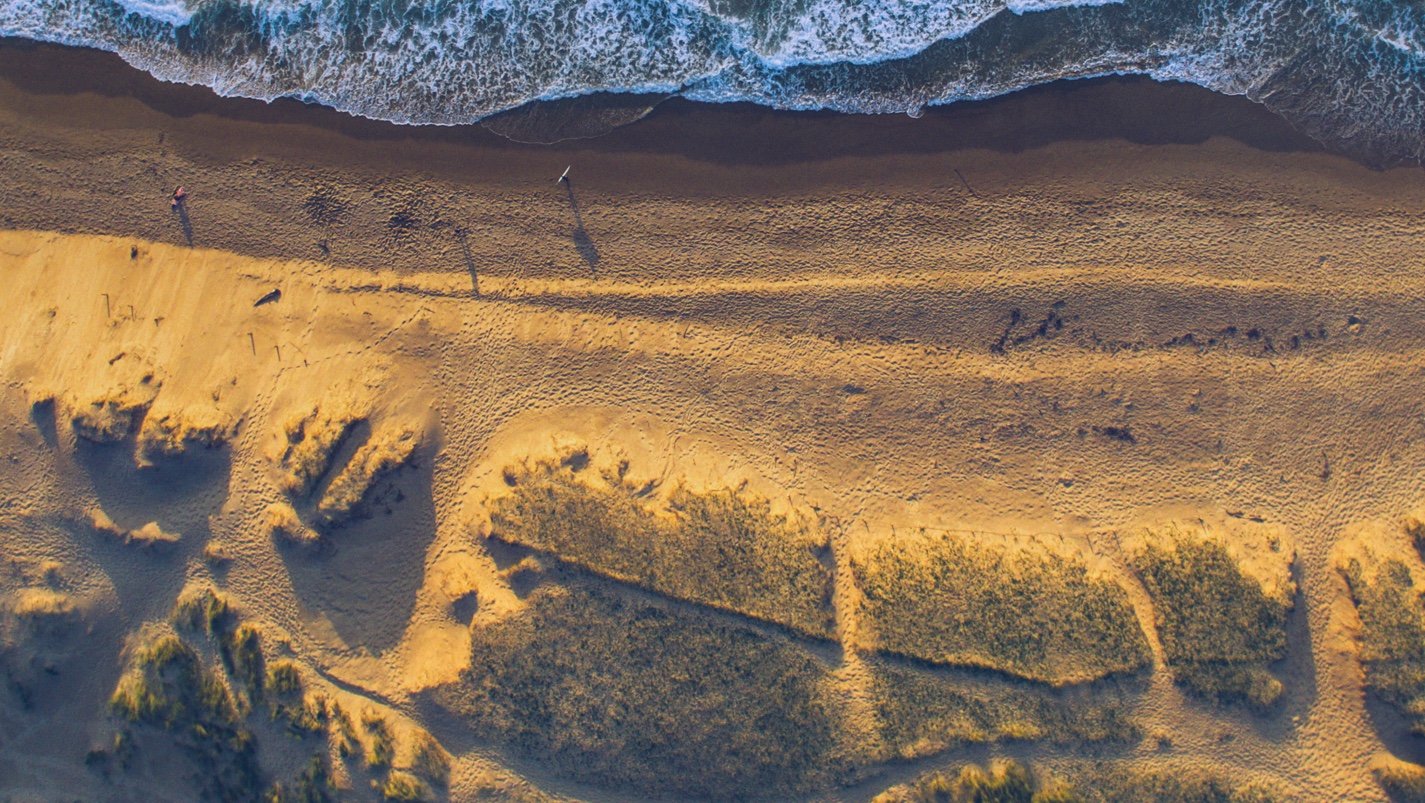
Image from Philipp
Perfect plan to go with friends! Check our flights and sign up!
more info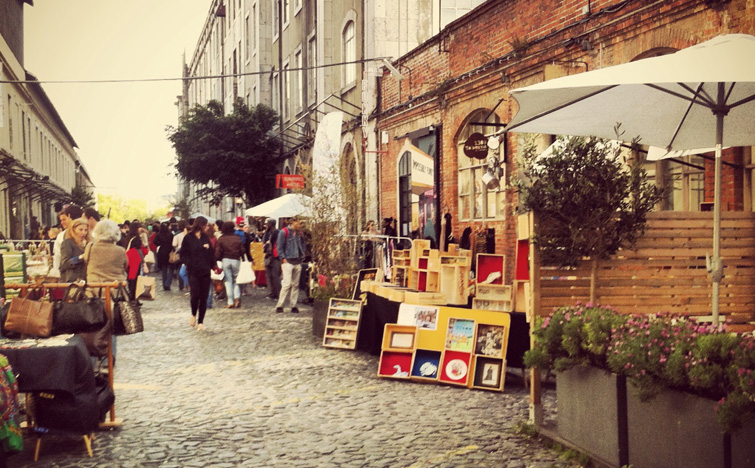
LX Factory: The new Lisbon
By Tensi Sánchez from actitudesmgz.com
Lisbon is changing. In it´s streets you can smell art and culture wherever you go. The new generations want to show to the rest of the world the greatness of the capital and the economical situation won´t be able to make the ilusion flater. LX Factory is the best example of how in times of crisis the best and most creative ideas can appear.
Alcantara was an industrial area in the XIX century located under the 25of April bridge, but nowadays this zone represents the hotest cultural area in the city. The 23.000 square meters space was meant to be demolished thanks to the Alcantara XXI project to turn it into a multipurpose area. But recession delayed the regeneration and Mainside agency took advantage of the decadent and industrial atmosphere, to rent corner for 12 euro the square meter for young artists and entrepeneurs.
The result? A huge space in which almost 80 companies related with culture, literature, art, fashion and design gather, to offer the most underground and Berlin style experience. The prizes are affordable and anybody can enjoy the hipster atmosphere.
The must places are the Cantina: an old workers dining room which incluyes food for vegetarians and or the breathtaking three floor Ler Devagar bookstore. In the night going to Lollipop disco it is a good option as long as you are included in the guests list. But there is always a chance to go to La Sala de las Columnas where different kinas of deejays will play music for a memorable night.
The Open day is an event which is held twice a year and organizates different workshops and expositions.
A different and magical place, that speaks for itself about a new Lisbon that is rosing form it´s ashes. A city that albergates the most contemporanean culture without leaving appart tradition.
By Tensi Sánchez from actitudesmgz.com
Photos by Ricardo Junqueira
Makes you want to go, right? Do it! Check out our prices here!
more info
Bologna Eating in the Cradle of Italian Cuisine
Tucked away between Venice and Florence, while not Italy’s most popular destination, it is certainly one of the cities that best distil the essence of the country. Bologna is nicknamed “the Learned One”, as its university is one of the oldest in Italy. It is also known as “the Red One” on account of the reddish hue of the city’s rooftops. But the most endearing epithet of the capital of Emilia-Romagna is “the Fat One”. In Bologna, gastronomy is a religion and it would be a sacrilege not to observe the ceremony involved in sitting down to table, while the traditional recipe for tortellini is jealously guarded in the city’s Chamber of Commerce vault. We ventured into the cradle of Italian cuisine and wandered through the streets of Il Quadrilatero, its historic centre (the second largest and best preserved in Italy), in search of the best restaurants, trattorie and osterie.
Mercato di Mezzo
In the heart of Il Quadrilatero, Bologna’s historic centre, stands the Mercato di Mezzo, one of the hotspots of any gastro route through the city. Its history goes back to the Middle Ages, a period when the shops and street stalls were divided up according to guilds. This state of affairs endured until the early 20th century, when the system was gradually disbanded. After being restored over the last few years, the Mercato di Mezzo, with its stalls selling fresh pasta, local wines, meats, fish, vegetables and cheeses has become the must-visit spot for all demanding foodies who happen to be in Bologna.
Osteria del Sole
You won’t see any sign or poster pointing you to what is one of the most emblematic establishments in town, so it is not easy to find. Located at Vicolo Ranocchi 1/d, between the Via degli Orefici and Via Pescherie Vecchie, you will come across something resembling a small rectangular opening in the wall. Don’t hesitate to go in, as this is the Osteria del Sole. It opened in 1465 and is Bologna’s oldest canteen. According to many in the know, in the whole of Italy as well. It breathes authenticity throughout. However, if you’re feeling peckish, this is not the place to still your hunger, as they only serve wine – and what wines, too! – beer and aperitifs like grappa or the local liqueur par excellence, Amaro Montenegro. They do let you take your own food, though, whether in a lunch box or from some nearby trattoria. Quite an experience!
Trattoria Tamburini
Trattoria Tamburini is one of those places where you would eat everything, including the tablecloth. Opened in 1932 on the premises of what was once one of the most popular butcheries in the city, Tamburini is the ideal choice for an aperitif. If your taste buds are up to having an orgasm, take up a seat on the terrace and taste their exquisite cheese and sausage boards, washed down with a fine lambrusco. They serve what are unquestionably the best mortadella and parmesan cheese in Bologna. If you feel like something heartier and more consistent, you can always go inside and wolf down some tortellini. You can’t go wrong with the ones they serve up at Tamburini.
Paolo Atti & Figli
Tortellini, zuppas, torta di riso, pane bolognese... the folks at Paolo Atti & Figli have been pasta artists since 1880. Their centuries-old workshop is located at Via Caprarie 7, while their other shop is at Via Drapperie 6. Go up close and watch how Elda, one of the most respected sfoglina (pasta makers) in Bologna, delicately and purposefully kneads the pasta based on eggs from hens who feed solely on corn and semolina brought especially from Altamura, in Puglia. They do not add any salt at Paolo Atti & Figli as they claim it kills the flavour.
Trattoria Gianni
Here is one of those secrets you’re reluctant to share with anyone, so that the next time you visit the city the restaurant is still frequented by mainly locals, with just a few stray tourists. Modest and inviting (these are definitely the ones to go for) and just a few steps away from the central Piazza Maggiore, Trattoria Gianni is the place to go all out on tagliatelle al ragú alla bolognese, tortellini in brodo (very similar to the Catalan “sopa de galets”), cotoletta (breaded veal cutlets) with baked potatoes… The premises are small, so you are advised to book in advance. Otherwise, you will have to wait a while, although the waiters will help you kill time by plying you with glasses of prosecco on the house.
Al Voltone
Their claim to fame is having been the first restaurant in Bologna to make their culinary creations using products sourced exclusively from the province of Emilia-Romagna. Popularly known as La Torinese 1988, Al Voltone focuses on simple cuisine with a steadfastly traditional essence. Or, twice good, to put it another way. Apart from the omnipresent, irresistible tagliatelle and tortellini, the menu at Al Voltone also features such culinary temptations as green lasagna a la bolognese. And, for dessert, you can’t possibly refuse to sink your spoon into their piccolo pecato with custard and chocolate.
The Grand Ambassador of Bologna
It is regarded as a lesser pleasure, but the genuine variety is exquisite and sublime. Mortadella – there are various theories about the origin of its name – is the grand ambassador of traditional Bolognese cuisine around the world. The story goes back to the Renaissance, when it is believed that Cristoforo da Messisbugo, carver to Cardinal Ippolito d’Este, devised the original recipe. Bologna mortadella is made exclusively of meticulously selected pork which is ground into a fine paste, to which are added nuggets of fat (never less than 15% or more than 28% of the total meat surface), endowing it with a characteristic flavour. It is then stuffed into a casing of natural or artificial gut. Eaten with a few slices of freshly baked bread and a piece of cheese is bliss on the palate.
Book your Vueling to Bologna and get ready to savour their excellent cuisine.
Text by Oriol Rodríguez
more info

15 food hot spots in Munich
By Laura Conde
You have three days off, and some money saved up. You’ve already visited the major European capitals and, although you would love to return to London or Paris, you just can’t afford to pay €4 for a cup of coffee right now. What to do then? Book a flight to Munich? We’re here to help and to answer your question. We took a flight to Munich to spend three days discovering the wonders of the third largest city in Germany after Berlin and Hamburg, the capital of Bavaria, where people say goodbye with a cheerful “ciao”, have beer and sausages for breakfast, and worship both Guardiola and Duke William IV, who back in 1516 passed a law that would change the course of German history – the so-called Purity Law – which established that only water, hops, yeast and malt could be used to make beer. Why did he do that? Apparently, William IV was losing many of his subjects because they were drinking lethal homemade beer that contained all kinds of preservatives.
Drinking beer, as we can see at Oktoberfest, has always been and always will be a deeply-rooted tradition in Munich, which is one of the cities where the popular biergarten (beer gardens) appeared: they are outdoor gardens with long tables to share, and Bavarian music playing in the background; places where you can bring food and spend all day drinking beer. When the weather is fine, the biergarten fill with locals and tourists, but they are usually closed in winter. Beer lovers must come to the city during the Starkbierfest, the so-called “strong beer festival”, from 21 March to 6 April. It’s a kind of Oktoberfest, not as busy but just as fun, when the locals take to the streets with the same purpose in mind: to drink lots of beer!
Another famous William in the history of Bavaria was William V of Wittelsbach, whose huge wedding celebration was unique in the city, and it led to the creation of one of Munich’s largest attractions: the famous Glockenspiel in the Town Hall, which can be seen twice a day and is a really interesting event. That festive spirit from 16th century Munich, where everyone stopped working in order to devote themselves to that wedding, is still pleasantly alive today, in a beautiful and surprisingly lively city, where the locals are kind and cheerful. We walked through the city’s historic quarter, the trendy neighbourhoods and those new districts that are enjoying a boom thanks to the gentrification that increasingly affects the outskirts of wealthy cities, and we found what we think are Munich’s 15 hot spots. And after this, you won’t need to think twice: You have to go!
THE TRENDY MUNICH
1. Brunch at Cotidiano
In Gärtnerplatz, the trendy area in Munich par excellence, and one of the most bustling areas in the city, we can find this busy place, which is ideal for Sundaybrunch or just to spend the afternoon enjoying a large mug of coffee (which is actually served in a bowl!), and taste one of the sandwiches, homemade cakes or salads. Other things not to be missed in the square include the range of salads and other dishes that are available, which look absolutely delicious. The large window that looks onto the street is delightful on sunny days, which are unfortunately not very common in winter. But that’s part of Munich’s charm. There is no Wi-Fi in the café.
Gärtnerplatz 6
2. A stop to shop for clothes at Kauf Dich Glücklich.
Very close to Cotidiano we find a very interesting shop selling men’s and women’s clothes. Inside there is a small bar where they serve coffee. Outside there is a sort of terrace with a few recycled tables and chairs, and this shop is the ideal place to stop and purchase sophisticated, urban, stylish and affordable clothes.
Oderberger Straße 44
3. XXL cake at Kochspielhaus.
The size of absolutely everything in this café in the centre is incredible. Their idea of a portion is nothing like ours, so tourists who like to eat well will not be disappointed. Kochspielhaus, however, is not one of those tacky places where they serve huge portions of food and people talk in a loud voice: it’s a beautiful café, with impeccable decor, similar to Cotidiano, with a bakery inside. It’s full of young professionals, many of them accompanied by their dogs (if there’s a city that’s dog friendly, it’s Munich), where everything is gorgeous as well as huge. When you walk in, you find a selection of large and delicious cakes, that you can combine with an enormous latte, or a gigantic glass of fruit juice. The café is covered in wood and is a must if you want to discover the coolest side of Munich.
Rumfordstraße 5
4. Italian dinner in Sarfati.
We weren’t sure about visiting an Italian restaurant because after all, we are in Munich, and here people have beer and sausages for breakfast (we’ve seen it with our own eyes), and when you’re really hungry you can have pork knuckles. But there is such a strong Italian influence in this Bavarian city that you wouldn’t think that this colourful restaurant, Sarfati, situated in the hipster part of Munich, is an international restaurant. Many people in Munich speak Italian and any restaurant in any neighbourhood includes Italian dishes on the menu – tiramisu, salads or pasta, for example. In this context we find this restaurant/wineshop that puts a lot of work into its pasta dishes: all the ingredients come from Italy (you should order “burrata” if it’s on the menu), the pasta is handmade with excellent raw materials, and there is an interesting selection of wines. The house wine, an Italian Asinoi, is delicious. And you can eat excellent food for €25 each.
Kazmairstraße 28
5. Any time of day at Café Marais.
This is probably our favourite restaurant in Munich, both for the quality of a simple and delicious menu that is available all day, and for the fairy-tale decor, in a small area surrounded by small and charming boutiques selling clothes by local designers. It’s not very far from Sarfati, and it’s a friendly café with large cakes and tables to share, full of vintage details and an authentic atmosphere between retro and naive. Looking out the window while it snows outside is an amazing experience. Bear in mind that there is no Wi-Fi here.
Parkstraße 2
6. Brenner, Germany’s largest indoor grill.
As we were saying, the Mediterranean influence in general, and Italian especially, is ever-present in Munich. We can see this in one of the fashionable restaurants in the city: Brenner. It’s a large and busy restaurant situated in an old stable, and the average price on the menu is less than €25, while it is sophisticated and stylish. Mediterranean-style cuisine with a clear Italian influence and interpretations of traditional German dishes is what we find in a restaurant where you have to order meat, which is served with vegetables, and is cooked instantly on the largest indoor grill in Germany. They offer a wide selection of cakes, perfect for the sweet-toothed. There is no Wi-Fi, either.
Maximilianstraße 15
7. A coffee with the children at San Francisco Coffee Company.
It’s a very pleasant café chain, and we chose the one that is next to the amazing Verkehrszentrum, the transport museum, to stop for a drink, and at last! – we were able to use their Wi-Fi and boast a bit about our trip on Instagram (there aren’t many restaurants with Wi-Fi in Munich). Delicious coffee and cakes in a modern, attractive and child-friendly place – it was full of families with children, and there was even a play area.
Check where the cafés are at: www.sfcc.de
THE TRADITIONAL MUNICH
8. A litre of beer at Hofbräuhaus
This is a very interesting place: Hofbräuhaus. Don’t leave the city without coming here. It’s a large brewery, established in 1589 by… guess who? Yes, William V, the same man whose wedding lasted one whole week and produced the Glockenspiel in the Town Hall. This place is a paradise for tourists, a large temple of beer, served by the litre and drunk like water, while eating an XXL pork knuckle with potato dumpling at 5 pm. Hofbräuhaus is like Munich’s version of “Cheers”. It’s a place full of interesting characters, ranging from large blond men with bushy moustaches, wearing the typical Bavarian costume, to waitresses wearing the same traditional costumes. Look out for one thing: the knot on their dresses. If it’s on the right, they are married; if it’s on the left, they are single; and if it’s at the back, they are widows.
Platzl 9
9. Bavarian dinner at Augustiner.
One of the most popular beers in Munich, also known as the champagne of beers, has been brewed since the 14th century in a monastery in the city centre. It has an amazing restaurant where you can taste high quality Bavarian food for dinner, in an equally traditional setting, but less informal than the previous brewery and also less touristy. Although they serve a large range of Bavarian dishes, we also find international cuisine.
Neuhaustraße 27
10. Wasabi cheese (and more) at the Viktualienmarkt biergarten.
The Viktualienmarkt is one of Munich’s hot spots and it is worth flying to the city just to see this place. It’s an enormous outdoor market selling fresh produce and top quality food, and in summer a biergarten is set up here, which is very popular with the locals, who usually buy food at the market and eat it at the biergarten, washed down with a large beer. Although the biergarten is only set up in summer, the market is open all year round. As well as the outdoor market, the Viktualienmarkt has a large indoor area full of fresh produce where we can find many shops and food stalls.
Viktualienmarkt 3
11.Souvenirs from the Milka shop.
In the indoor market – where we don’t recommend stopping to eat, although everything there looks delicious, we can guarantee – we find one of the most popular souvenir shops in the city: the Milka shop. When we got to the till, a friendly shop assistant, in perfect Italian, convinced us to leave behind some badges we were going to buy, telling us they were too expensive and that why would you spend all that money on them (“troppo caro, amici”). It was probably just then, or maybe just before, that we fell in love with this place full of all kinds of interesting objects, from Milka-purple Bavarian dresses to slippers, chocolates, or one of our favourites: a 4.5 kg Toblerone!
Viktualienmarkt 15.
12. Beer by the litre at Oktoberfest.
It happens once a year but you remember it for the next eleven months. Marquees are erected next to the river, offering many places to enjoy beer exclusively, which is apparently drunk by the litre. Everyone in Munich, together with a large amount of visitors, takes to the streets to enjoy the pleasure of drinking beer: families with children, elderly couples, groups of students, businessmen, etc. It starts off early in the morning, so by midday the merriment is at its height in every corner of the city, the shy become bold and people strike up friendships that will last at least until the end of Oktoberfest.
13. The spring Oktoberfest: Starkbierfest.
Two weeks to celebrate strong beer, in several places in Munich, which locals usually call “Oktoberfest with no tourists”. The main venue for the festival, boasting plenty of beer and Bavarian music, is Paulaner, a brewery in Nockherberg, where apparently the first starkbier (strong beer) was made, called Salvator, which helped monks to endure their partial fast during Lent.
ART & SNACKS
14. Ella.
In the modern art museum, the Lenbachhaus, situated in the so-called “art district” with all the most important museums, we find a beautiful café with large windows that serves international food, especially Italian. It’s worth visiting just to take a photo next to its attractive seventies-style sign, although we do recommend visiting its collection of paintings by 18th and 19th century Munich-born artists, too. There’s more to it than just food!
Luisenstraße 33
WITH A MICHELIN
15. Star-quality traditional dinner at Pfistermühle.
Munich has several restaurants with a Michelin star. Some of them serve international cuisine, like the interesting and prestigious Japanese restaurant, Toshi, but we decided to stop at Pfistermühle, situated in an old 16th century ducal mill, to taste star-quality food, for less than €60. It’s right in the city centre and in fairy-tale surroundings, and especially offers interpretations of Bavarian specialities.
Pfisterstraße 4
AND MORE
Staying at the Schiller 5.
We chose this 4-star hotel in the centre for several reasons: it’s close to the station, which makes it easier to get to the airport; five minutes from the Marienplatz square, also in the centre; and in an area full of hotels, so there were restaurants open all the time, and all kinds of services in general. The hotel is sober, modern and comfortable, with a kitchen in the room, and the owner, a friendly elderly gentleman, goes round the tables at breakfast to ask guests if they are happy at his hotel.
Schillerstraße 5
A must (especially with the children): Deutsches Museum
Apart from all our food recommendations, we advise you to visit the most popular museum in Germany. The best way to get there is by walking along the river, which has a good place for swimming, very busy in the summer. It’s one of the most important science and technology museums in Europe, and has a section on transport (ships, aeroplanes and all kinds of motorised contraptions), space, musical instruments, ceramics, pharmacy, metal, physics, etc. We would need about eight days to visit it all! A good place to have a cup of coffee is the café inside the shop.
Museumsinsel 1
Makes you want to go, right? Do it! Check out our prices here!
more info