
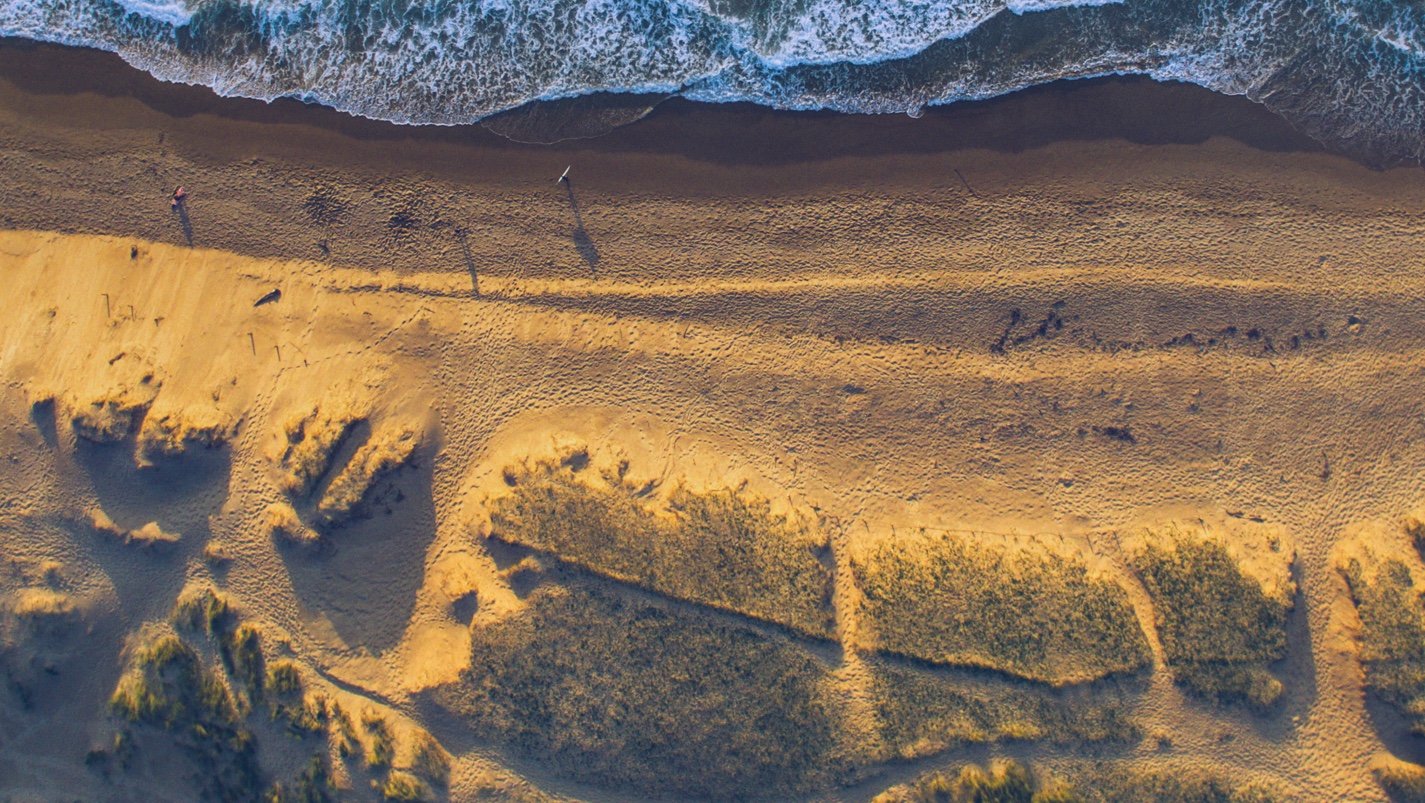

Orán: la perla oculta del Mediterráneo
Oran is still off the beaten tourist track, which makes it all the more appealing when it comes to planning a trip which avoids scheduled routines and well-worn tourist prototypes. During the French colonial period it was the capital of the Oran Department, and it is currently an important port city and commercial hub and boasts one of the leading universities in North Africa. Sunni Islam is the official State religion, although there are Christian and Jewish minority communities. A visa is required when travelling there.
The Spain Brand in Oran
The capital of western Algeria, Oran occupies a privileged, strategic location in the Mediterranean basin. It is regarded by Spaniards as the most Spanish city in Africa, given the wealth of Spanish vestiges still present right across the region. Indeed, traces of Spain linger in local culture, language and gastronomy. The Oranians eat cocas, a sausage similar to Spanish sobrasada, and claim to have invented the paella, a word derived from the Arabic baiya, consisting of rice and seafood. The city also sports a bullring – now in disuse – which was inaugurated in 1954.
In geographical terms, Oran is the point in Algeria closest to the Iberian peninsula and indeed, on a clear day, the city of Almería can be seen from Oran, or vice versa. Its privileged position has enabled it to build up all manner of land and maritime connections. Its bay opens to the north-east, while the western flank is dominated by the steep Aïdour mountain. The city lies sheltered between the old colonial city and the new developments, which lend it a more modern air. Not to be missed is a stroll down the seafront promenade with its delightful panoramic view of the harbour and the old city. From here you can walk to the interesting Pacha Mosque.
You should not pass over the occasion to visit the famous Santa Cruz Fort. Built atop a mountain adjacent to the city, where it has served as a faithful lookout for over four centuries, this is undoubtedly the masterpiece of Spanish military architecture in the city, and also houses the well-worth-seeing Chapel of the Virgin.
The Place de la Perle (or Plaza de Armas), once the centre of Oran, while the city was under Spanish rule, is another of the prime sightseeing spots. Together with the Spanish Gate, the Casbah, the Porte de Santon, the St Philip Garrison and the Tambour de San José, it is one of the best preserved places from that period, from the 16th to the 18th century. Most striking is this latter monument, due to its important role in the Spanish history of Oran. Radiating from there was a network of underground galleries which ran underneath the old citadel and connected the Qasr el-Bey (Bey Castle) to the Santa Cruz Fort.
Historical District
The old town features an alcazaba (citadel), a fortified urban enclosure built to house the governor’s residence, to defend a specific area and its surroundings and to garrison troops, making up a small military precinct. The cluster of buildings forming this citadel includes an 18th-century mosque.
The district of Sidi El Houari, the patron saint of the city, is the oldest in Oran. There are guided tours of the walls and tunnels dating from the Spanish period, the Spanish Gate, the Madrid Ramp, la Blanca, la Escalera, the Casbah, etc. In this historical district you can also see the old Saint-Louis school, and the Pacha Mosque, built during the 17th century. Before leaving Oran, make sure you visit the marabout or Moorish shrine of the city’s patron saint, Sidi El Houari and make a wish, as tradition dictates.
This district also houses some of the city’s most important museums. The Ahmed Zabana Museum, formerly known as the Demaeght Museum, has archaeological, ethnological and natural history collections from the Maghreb on display, as well as an exhibition area devoted to Oran. In the archaeology section, the Carthaginian and Roman collections take pride of place. The buildings date from 1933, while in 1986 the museum was taken over by the Ministry of Culture and renamed. It comprises seven sections focusing on Oran and its surrounding region – fine art, the Moudjahid, numismatics, pre-history, old Oran, ethnography and natural history. Another prominent museum is the Moudjahid, located in the USTO district, which is dedicated as a memorial to the struggle for independence during the Algerian War.
Discover one of the best kept secrets of the Mediterranean! Check out our prices here.
Text by ISABELYLUIS Comunicación
Photos by Algerian Embassy
more info
A Route Through the Seville of Don Juan Tenorio
There is one night in the year inevitably associated with witches, horror stories, pumpkins, bonfires and disguises and that it is 31 October, the eve of All Saints. One of the many traditions alive in Spain is the stage performance of Don Juan Tenorio, by the poet, José Zorrilla. The ritual has been performed continuously ever since it made its debut around 1844. While at first glance a romantic drama might seem out of place on a night more suited to The Munsters, there is a reason for it – much of the second act in the play takes place in a cemetery, and many of the protagonists are dead souls who come alive and interact with the lead figure. Chilling, isn’t it?
Don Juan Tenorio’s Seville
Having solved the first mystery, a second issue arises. What connection is there between one of the most popular Juanes in literature and the city of Seville? First, it was here in Seville that José Zorrilla wrote his stage play and where the story is set. Granted, Zorrilla was actually inspired by Tirso de Molina’s The Trickster of Seville and the Stone Guest, written in 1630, which is where the myth of Don Juan stems from. The work ended up seducing such artists as Molière, Mozart, Lord Byron and Espronceda, among others.
A different, entertaining way of touring Seville is to stroll along its streets in search of possible sites featured in that drama, and the spots where tributes to the work are located. Here are some of them:
The Hostería del Laurel (Plaza Venerables 5) is located in the heart of Santa Cruz, one of the most popular districts in Seville. This former boarding house is where José Zorrilla lodged when he wrote Don Juan Tenorio. This, the birthplace of the literary classic, also acted as a source of inspiration for some scenes. Despite the passage of time, it is still worth venturing inside, where some of its historical essence has survived intact.
A few yards from the Hostería del Laurel lies the Plaza de la Alianza, site of the home of Doña Ana de Pantoja, the future wife of Don Luis Mejía, who rivalled Don Juan Tenorio when it came to causing mischief. There is actually a scene in this square where Don Juan tries to wrest his beloved from the grasp of Don Luis.
It is more difficult to find the convent where Doña Inés – one of the main characters in this romantic drama – was confined. The convent belonged to the Order of Calatrava, which is why the habits she wears bear the emblematic red cross of Calatrava. Indeed, a convent once stood in the Calle de Calatrava, which was re-christened thus in honour of the literary work. Following the disentailment it was subsequently demolished, the sole surviving vestige being a chapel which was eventually turned into a warehouse. Easier to locate is the Plaza de Santa Marta, which everyone agrees was the spot where Doña Inés was abducted by our hero.
Still in the beautiful Santa Cruz quarter, we find the Plaza de Doña Elvira, site of the home of Don Gonzalo de Ulloa, the father of Doña Inés, who was staunchly against her alliance with Don Juan.
Concerning the location of Don Juan Tenorio’s house, literary sources cite it as being on the banks of the river Guadalquivir, where he ended up fleeing, although the exact spot is unknown. There is also the real site because, if you’ve done some reading on the subject, the Tenorio family actually existed and tradition places them in the Convent of San Leandro, situated in the square of the same name.
The scene of the final duel, in which Captain Centella kills Don Juan Tenorio, takes place in the present-day Calle Génova, now re-christened the Avenida de la Constitución.
To wind up this tour commemorating the literary classic, you can visit the Plaza de los Refinadores where a statue to Don Juan Tenorio, sculpted by Nicomedes Díaz Piquero, was erected in 1975.
By the way – if you’re in Seville any weekend from 31 October to 15 November, we recommend visiting the San Fernando Cemeterywhere Engranajes Culturales is staging a dramatised visit and performance of the third act of Don Juan Tenorio.
Ready to be a Don Juan in Seville? Secure your Vueling ticket here.
Text by ISABELYLUIS Comunicación
Images by Víctor Fernández Salinas, Consuelo Ternero, Sandra Vallaure
more info
Alternative Jerusalem
Jerusalem is a fascinating place. Strolling through its Old City – the cradle of Jewish, Christian and Muslim culture – is like walking across a set in some Hollywood blockbuster directed by Cecile B. Demille. This enclave breathes history in every stone holding up its temples and other buildings although, when it comes to travels, the capital of Israel has long been classed as a religious destination. Indeed, any pilgrimage to the Holy Land should include a fascinating tour of the city’s catacombs. In the following we reveal the most interesting spots in an alternative Jerusalem, pinpointing the bars and clubs in the renovated Mahane Yehuda market.
Adraba Books
A meeting point for the city’s literary community, Adraba Books is Jerusalem’s bookstore for anyone seeking stories that go beyond official accounts. Over and above its café – worth commending in a country which does not stand out for its espressos, macchiatos and cappuccinos – it is noteworthy for its section of art volumes and its stock of titles in foreign languages, particularly English. Sderot Ben Maimon 5
Casino De Paris
Located in the heart of Mahane Yehuda – a refurbished market filled with colourful food stalls by day, many of which become bars and clubs with live music by night – stands the Casino de Paris, formerly one of the most popular clubs among British officers stationed in Jerusalem during the nineteen twenties. A century later it is now reliving its days of glory, and can count among its die-hards a large, motley crew of night revellers. The revival is largely the brainchild of Sha’anan Streett, the vocalist of Hadag Nahash, one of Israel’s most widely acclaimed hip-hop bands, and Eli Mizrahi, the owner of the nearby Machneyuda, possibly the best restaurant in the city. 3 Mahane Yehuda Street
Gatsby
Next door to a fast-food eatery, Gatsby is half-concealed behind a drab black steel gate, lacking any sign that might denote its presence. Despite its brief history (it opened just over a year ago), it is actually Jerusalem’s first cocktail lounge to re-create the ambience of an American speakeasy from the Prohibition era. It is stunning to see their barwoman wielding the cocktail shaker. As in other locales of this kind, you can only gain access if you know the secret code of the day, or else pretend to be a strayguiri– it worked with me. 18 Hillel Street
Lev Smadar
Lev Smadar opened in 1921 and is one of the most emblematic cinemas in Jerusalem. Hidden in an alleyway in the German quarter, it is honestly more difficult to find than Wally without his striped shirt. It features American, European and Israeli independent cinema and is frequented by the city’s arty crowd. All the movies are screened in their original version and local films are in Hebrew with English subtitles. 4 Lloyd George Street
Razzouk Tattoo Studio
Lost among the winding streets skirting the Jaffa Gate lies Razzouk Tattoo, the first and only tattoo parlour in Jerusalem’s Old City. Like almost everything here, the story of Razzouk Tattoo is fascinating. The Razzouks, a family of Egyptian origin, have been tattooing since the 14th century. In those times Copts would have a small cross etched on the inside of their wrist to gain entry to churches. After settling in Jerusalem, the grandfather, Yacoub Razzouk, opened his studio in the mid-20th century. The family tradition is now furthered by his grandson, Wassim Razzouk. 31 St. George Street
Uganda
This club is ideal for dropping in on the night scene on weekdays. It has been operating for the last ten years and is one of the favourite sanctuaries of DJs involved in Israel’s electronic underground. It is also a place to feed on vinyls, graphic novels and other Israeli counter-culture publicity. It is also one of the few clubs in town where you can quaff on a pint of Taybeh, a Palestinian beer which is up there with the best German or Belgian barley beverages. 4 Aristobolos Street
Videopub
This is the only openly gay bar in Jerusalem and a winner if you want to have a memorable night in the city. If you strike it lucky, you will happen upon one of their popular thematic parties from the 80s and 90s, soirées where the punchiest hits from those two decades will sound out one after the other. And, if you get too heavily involved in the revelry, don’t be surprised if you get carried off by one of the drag queens, who will lead you onto the dance floor. You’ve been warned! 1 Horkanus Street
Yellow Submarine
Open since 1991, the Yellow Submarine is Jerusalem’s most emblematic concert hall, the venue where both good – and the best – stars (albeit, unknown here) of the eminently interesting Israel music scene have performed, as well as some of the leading international figures that have visited the country. In addition to their daily bowling schedule, this booster of local talent also hosts conferences and exhibitions, as well as being hired out for rehearsals and recording sessions. 13 Ha-Rechevim Street
Come and discover Jerusalem’s alternative scene – book your Vueling here!
Text by Oriol Rodríguez for Los Viajes de ISABELYLUIS
Photos by Oriol Rodríguez, Cine Lev Smadar (© Alex Jilitsky), Uganda (© Udim), Yellow Submarine (© Uri Leshem)
more info
What to do for a weekend in Bologna?
If you are just about to land in Bologna, and you wonder what to do in this medieval city in northern Italy, capital of Emilia-Romagna region and home to the oldest university in Europe, you just hit the mark: following we suggest some of the amazing experiences you can have in this lovely land known as La Rossa, due to the red facades of their buildings:
1.-Take a walk around Portico di San Luca, the longest in the world
In Bologna is easy to meet with History in every corner. Take a walk down to its famous porch leading fromPorta Saragozza, crossing Arco del Meloncello, to Sanctuary de la Madonna di San Luca. It is a tradition between locals and pilgrims and you may admire this spectacular renaissance architecture whose length is 3.8 km and 666 arcs. Once at the top of the hill where this iconic and majestic sanctuary stands, you may enjoy from its stunning views to the city and to the Apennines. The most athletic ones can do this tour running or biking along the rails ouside of the porch.
2.- Discover historic center in Bologna
If you go deep into the historic center, you will know the real paradigm for Bolognese life. You should begin by Piazza Maggiore and Piazza Neptune, where there stands many monuments as the Basilica di San Petronio and you will come across different palaces, crossing Piazza San Stefano with its respective church and ending at Piazza di Porta Ravegnana, where you will find Le Due Torri, the iconic towersGarisenda and Asinelli. You can go up this latter for an old city’s panoramic view until five in the afternoon. The best pizzeria in town, Due Torri, is at its feet where it is usual to ask for take-away portions for only 2 euros each and quietly eat at Piazza Verdi, where most people get together while gazing at the Teatro Comunale.
3.- Move to the Bolognese Night’s rhythm
Bologna is a youth-oriented city. Proof of this is the great university atmosphere there and the best way to live it is by going to Via del Pratello or to La Scuderia in Piazza Verdi to get ready with the typical ” aperitivi ” based on some snacks, pizza and spritz before going party.. There are plenty of bars and music pubs on this street where sure the fun begins. In Via Broccaindosso there is a curious medical students association with such a great atmosphere and live concerts . This is a small and bizarre venue you get down by a staircase , from which you can enjoy live gigs while browsing the medical books from their shelves . The most odd combination, the most entertaining it is. Bring your own drinks is allowed. Finally , we should mention one of the best electronic music club in Bologna , disco Link, located on the outskirts of the city.
4.- Give Yourself A Treat
Via della Independenzia is the center for Bologna’s comerce. Also, you can go to Montagnola‘s market tracking its many stalls because surely you will end up with some wonderful piece. If you prefer more traditional and chic shopping, you’d better go to the city center, where you will find all kinds of boutiques and a wide range of well known brands.
5.- Try the best of its cuisine
To feel like a true bolognese, enter a “salumerie” or deli and take one mortadella di Bologna or tortellini, region’s typical food . You can not say goodbye to this wonderful city without tasting the wonderful “taggliatelle Ragu-style accompanied by a good wine”. La Trattoria del Rosso is a perfect place for this. To taste local products, Tamburini is a classic, having a shop to purchase a variety of delicatessen. They serve tables of meats and cheeses, oils and local wines. Il Veliero is the ideal restaurant for fish lovers, whose specialty is “risotto ai frutti di mare”. Finally, icecreams at Gelateria Gianni or La Sorbetteria are a must.
Picture by Szs
By Blanca Frontera
Why not take a trip to Bologna? Have a look at our flights here!
more info