
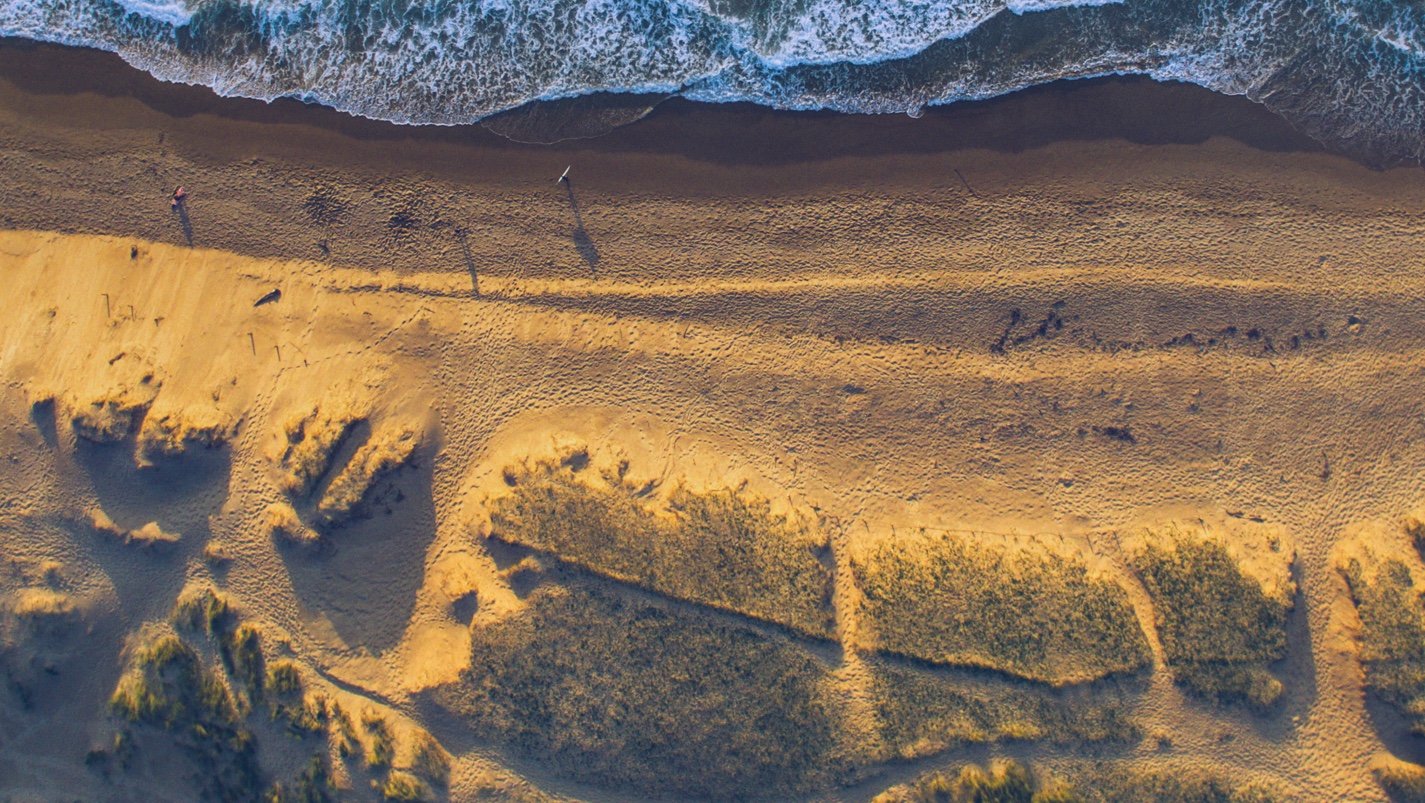

2 days in Santiago de Compostela
Culture, architecture, art, tales of brave pilgrims reaching their final destination, tapas, wine, merriment and much more. Two days in Santiago de Compostela is like two days in paradise. Shall we?
more info
Five destinations to ski and do some sightseeing as well
Escape for a few days to the best ski resorts in Europe and discover some new places while you're there. There's time for everything!
more info
Experience the Wild
Cantabria’s mining past remains alive in the 750 hectares of reddish landscape which is home to the Cabárceno Nature Park. Situated just 15 kilometres from Santander, its proximity is inversely proportional to the feeling of being in a wholly different part of the planet. Here, around one hundred animal species from the five continents roam in semi-freedom, including African elephants, gorillas, the ankole-watusi, the addax, llamas and sea lions.
The open-air tracts of land are spacious and immensely beautiful. The flora lives out its natural cycle during the four annual seasons, so you see a different park in the spring, summer, autumn and winter. The structures left behind from the area’s mining past have been re-used to appoint the various enclosures in Cabárceno. Animals are kept on land which resembles their natural habitat as closely as possible, as here the terrain is accommodating. A number of lookouts bring home the immensity of the panoramic landscape and allow visitors to spot herds of Somali asses, water buffalo, Grevi zebra and ostriches. The karst relief characterised by water’s fickle erosive force makes for fascinating observation and enhances the act of animal spotting.
Nature is allowed to run its course in the park. There are fights between members of the same species, the rutting season unfolds and dominant males abound. Man only intervenes in the event of illness, wounds, a life-threatening situation for some specimen and to feed the animals. That is when the park provides its Wildlife Visit. From 10 in the morning to 5 in the afternoon, a single vehicle seating 4 occupants drives through various areas inhabited by rhino, bears and giraffes. The tour costs €400, which includes a brunch in the park restaurant. Escorted by a ranger, visitors can get to see certain animals close up, as well as touch and feed them. This contact enables them to learn the traits and curiosities of each animal or species.
That is how you discover the three elegant giraffes that come running up to you because they see you arriving with a bag of carrots. All three are male and they get along well precisely because there are no females. Or you learn the amazing story of Jums, a 39-year-old African elephant that came from England and recognised one of its offspring that had been living in Cabárceno.
During the Wildlife Visit, guests are told about the rituals and training sessions conducted with some of the animals to get them accustomed to the presence of people for the sole purpose of enabling a vet to treat a wound or give them a medical check-up whenever necessary. This is a difficult task as wild animals retain their survival instinct and are thus wary of people, but it is gratifying to see how the staff’s daily work and their affection for the animals can work a miracle, as can an apple or a carrot!
The animals’ daily routine is not affected by the fortunate participants in the Wildlife Visit – book ahead, as there is a waiting list – and regular feeding times are strictly adhered to. The only enclosure where visitors are not allowed to get out of the car is that of the brown bears. However, a group of bears can be comfortably observed munching on a piece of bread or chicken through the car window just a few metres away. There are around 70 specimens in a 35-hectare space, which gives you some idea of how big the park is.
The Cabárceno Nature Park is dotted with natural lakes, and the 14 resident elephants relish bathing in waters up to 8 metres deep. The hippo enclosure here, rumoured to be the best in the world, is sited in the Lago Sexta, and a cableway is slated to run above this lake as of March 2016.
A one-day admission ticket to the Cabárceno Nature Park costs €25, and €15 for small children. However, we recommend you check out all the various types of admission, as there are discounts for families and “friends of Cabárceno”. Your ticket allows you to drive around the 20 kilometres of tracks in your own vehicle through all the areas. But, you are urged to observe the speed limit and safety precautions. Unfortunately, this unaccompanied drive-through does not allow you to touch or feed the animals; firstly, for safety reasons, as you will not be escorted by a ranger to guide you and, secondly, as each species has a specific diet at regular hours. A map is given to visitors at the entrance – the routes are clearly marked and you can download a mobile app which provides information on what you are seeing at all times. Park facilities include picnic areas for you to have a packed lunch at your leisure, and there are also cafés, restaurants and gift shops. Your ticket permits you to leave the park and re-enter later on. You are also allowed to make the tour in a camper van.
Your day trip will fly past as you observe the antics of fallow deer, red deer, gorillas, camels, displays of birds of prey and their types of flight, and sea lions cavorting about. (Don’t let them catch you calling them seals with ears – they don’t take kindly to being confused!) Whatever your age; if you like animals, this is where you will have a whale of a time!
Make haste to discover all this wildlife. Check out our flights to Santander here.
Text and images by Planeta Dunia
more info
Three Essential Hiking Trails on La Palma
La Palma is one of the most beautiful islands in the Atlantic. Unlike its sisters in the Canary Island archipelago, it is blessed with a highly fertile ecosystem endowed with outstanding natural traits, making this an idyllic island. Indigenous fauna and flora are an integral part of its spectacular scenery. Its well-kept natural environment is ideal for enjoying an alternative, exciting holiday, doing all kinds of sports and indulging in activities close to nature.
This authentic Eden for ramblers offers a host of options for hikers. Before setting out, you are advised to check the weather forecast and to avoid walking alone. Let someone know what route you are taking and the time you are due to return. You need to take a small back-pack with a warm jacket, a raincoat, food and plenty of water and don’t forget essentials such as a hat, sunblock and sunglasses, as well as a mobile phone with the battery charged, a map and, if possible, a compass. Observe the signposting along the route and keep to the track and, above all, make sure you wear proper hiking boots. You are also advised to check the gradient, walking distance and duration of the hike on the website, www.senderosdelapalma.com. Of all the various routes, we have made a selection of three, with different difficulty ratings, which will allow you to admire the aforementioned scenic diversity of "The Beautiful Island":
Puerto de Tazacorte – Roque de Los Muchachos
This itinerary has a high difficulty rating and is intended for experienced sportspeople. The main difficulty lies in the pronounced gradient. You are urged to avoid the hike in summer or on particularly hot days, while in winter, take into account that it rises to high altitudes and you may even encounter snow and ice on the Roque de los Muchachos. The route covers a distance of 17.16 kilometres, with an accumulated slope of 2,600 m. The route starts at Puerto de Tazacorte, at sea level. From there, it rises steadily for 3.8 kilometres as far as El Time. It then runs past Hoya Grande and Risco de las Pareditas, where it is wise to stop to regain your strength and take in the marvellous scenery at an altitude of 1,500 metres. There are still nearly 7 kilometres to go before reaching the end of the route, after passing through Hoya del Estrabito, Pinos Gachos and Degollada de Las Palomas, where the slope is gentler up to the finish. The high points of this route are the stunning views of the Barranco de las Angustias gorge and those of the Caldera de Taburiente from the Roque de los Muchachos.
Cubo de la Galga
This trail has a low difficulty rating and is therefore suitable for taking children along. Signposted as the GR 130, it starts and finishes at La Galga, Puntallana, at the intersection with the GR 130. The overall walking distance is 12.4 km, with an accumulated slope of 750 metres, and the estimated walking time is 3 hours 45 minutes. The route takes you through the Parque Natural de Las Nieves, a protected nature reserve so spectacular you are unlikely to switch off your camera. The trail is negotiated in two sections – one is a circular itinerary, which takes you through the most interesting area, the Cubo de la Galga temperate laurel forest, a warm, humid forest with some frost, featuring huge trees,guaco and lianas, with leaves similar to those of the laurel, hence the name. The other section connects this route to the main road orguagua, as well as to La Galga mountain, where you simply must stop off at the Somada Alta viewpoint, and the GR 130, with the option to continue on to Puntallana or Los Sauces. You can also continue down the PRLP5 footpath to the district of El Pósito, on the main road.
Valencia – Pico Bejenado – Valencia
This is ideal for visitors hiking with the family. The route is circular and, if you complete it, covers a total of 10 km, rising from 1,100 to 1,800 metres. The estimated walking time for the circuit is three hours and the whole trail is confined to the limits of La Caldera de Taburiente National Park. You can drive up to the end of the dirt road in the Valencia district. From there, you set out on foot along the PRLP 13.3 footpath as far as El Bejenado. The ascent to the summit of this mountain follows a winding trail through pine forest and takes an hour and a half. The route affords some superb views, both of the interior of La Caldera de Taburiente and towards the Route of the Volcanoes and the whole of the Aridane Valley. Also, don’t forget to sign the visitors’ book when you get there.
The above are but three of the multiple routes possible, each with a different difficulty rating, designed to take in a maximum of the island’s scenic diversity and lead us past the most emblematic spots – Pinar, Parque Nacional, Angustias, Laurisilva, Puerto Tazacorte, volcanoes, dragon trees, village where time stands still almond trees in blossom, coastal cliffs, etc. For further information, see the Patronato de Turismo de La Palma.
Don’t wait to discover La Palma – the Beautiful Island! Check out our flights here.
Text and photos by Patronato de Turismo de La Palma
more info