

Your Best Getaway Ever In 4 Days
Now that the end of the year draws near, you are bound to have a few spare days. Here’s a great recommendation for spending a delightful long weekend in Gran Canaria. As you will see, it is time enough to get a good taste of one of the pearls of the Atlantic. Why wait to discover it? Four days on the island will yield any number of plans to take a well-earned break from your routine. Here, then, is a compendium of practical tips for making the most of your stay on the island.
Thursday
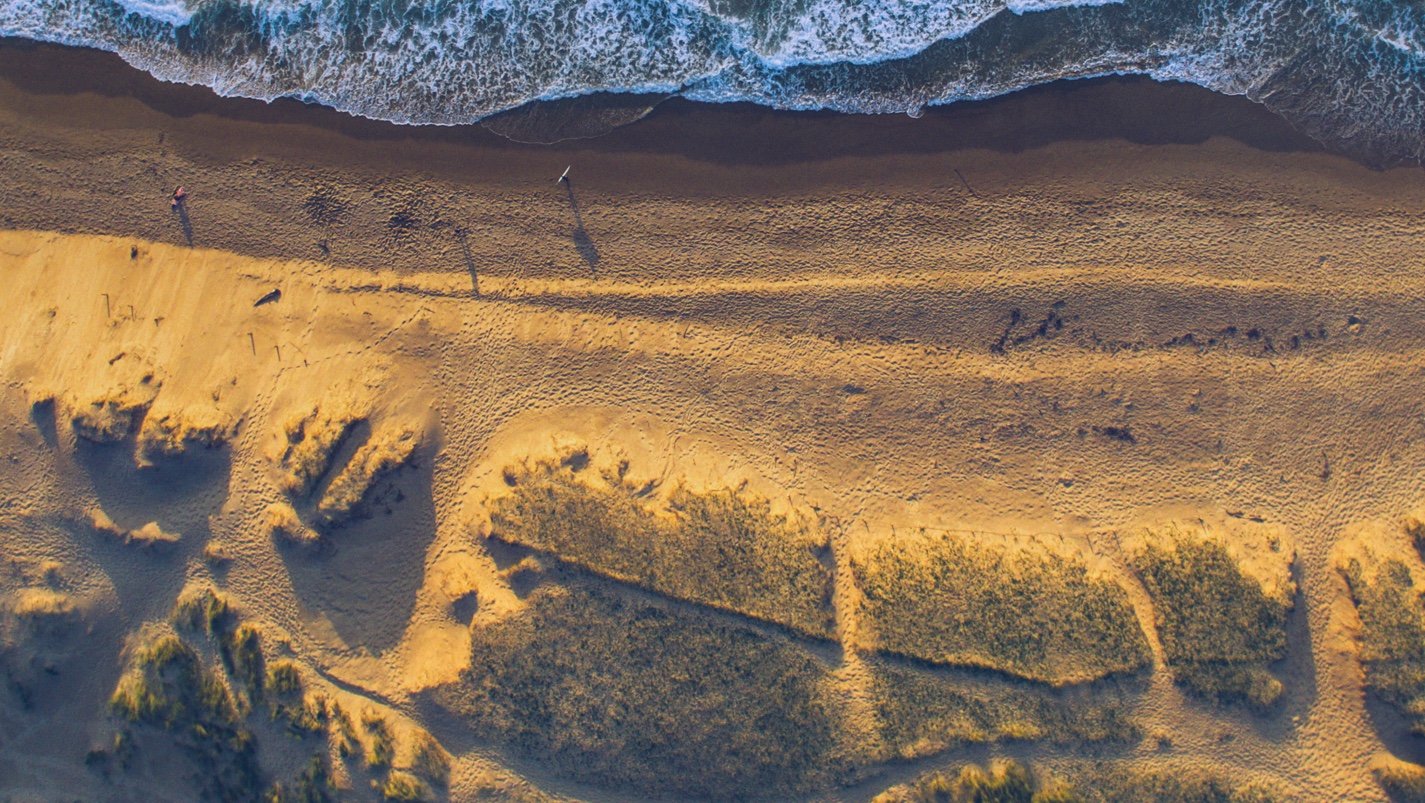
As soon as you leave the airport, your best bet is to head south and have your first weekend splash in the ocean. Maspalomas and Playa del Inglés await you with their large tracts of pale yellow sand where you can sunbathe safely all year around. If you’re looking to switch off real quick, take an adventurous stroll in the heart of the sand dunes or play golf on one of the quiet courses in the area.
Be sure to visit charming Puerto de Mogán, the ideal spot for promenading and savouring fresh fish in any of the restaurants at the seaside.
Friday
Begin the day by taking a route across the north of the island. And where better than to aim for the town of Arucas, where homes are harmoniously interspersed with banana plantations? Its most striking landmark is the Neogothic Church of San Juan Bautista, built with stone quarried in the municipality itself. Another highlight of your itinerary is the Arehucas rum factory, where the celebrated beverage is made in the oldest and largest rum distillery in Europe.
On the way to the north-western triangle of Gran Canaria, make a point of visiting the Gáldar Painted Cave, a museum and archaeological park based on a large native deposit. If you then press on towards the picturesque village of Agaete, you will marvel at the rugged rock formations adorning the coastline. Enjoy a sunset there and take time to upload to your social networks some stunning panoramas. Your main subject is likely to be the striking dragon’s tail plotted by the cliff faces which the ocean has eroded over millions of years.
Saturday
Time to discover Las Palmas de Gran Canaria, a modern, cosmopolitan capital city. Have a walk through Vegueta, the historic old town and stop over at the Christopher Columbus House Museum which boasts a valuable cultural legacy encapsulating the relationship which the island has maintained with the Americas for five centuries. The Calle Mayor de Triana has all you need for a busy shopping day, as it is lined with shops stocking both local brands and international labels.
The Pérez Galdós House Museum, where the universally acclaimed Canary Island writer was born, is another point of interest before heading to Las Canteras, one of the finest urban beaches in Spain. Open-air concerts are held there as part of the “Ruta Playa Viva” (Living Beach Route), one of the most attractive leisure proposals in the city.
Sunday
The rich natural heritage of Gran Canaria reaches its climax in the island’s interior. On Sunday you can drop in on the street markets to taste the best of local cuisine and choose a souvenir from among their regional craftwork. Devotion in Teror involves pampering the “Virgen del Pino” (Virgin of the Pine), the patron saint of the Canary Island diocese. This is where you start a climb up to Tejeda and Artenara.
A phenomenon known as the “sea of clouds” spreads out at your feet, in a breathtaking landscape which Miguel de Unamuno described as a “petrified storm”. Look out over the Roque Nublo and Roque Bentayga outcrops; then close your eyes and engrave that stunning picture in your mind’s eye forever. Why wait to experience it for yourself? Check out our flights here.
Images by the Patronato Turismo Gran Canaria
more info
Quest For the Best Bubbles in the Penedès
Half an hour south of Barcelona lies the Penedès DO wine region, primarily noted for being a leading producing centre of cava, one of Spain’s most celebrated sparkling wines. A mainstay of all major celebrations in the country, the origins of this “Catalan champagne” go back to the mid-19th century. French champagne arrived in the area around 1820 and a certain Luis Justo Villanueva of the Instituto Agrícola Catalán de San Isidro was one of the first vintners to try out and advocate the traditional champenoise method required to produce this innovative product. However, it was the Reus-based firm Soberano & Cía, run by Domènec Soberano i Mestres and Francesc Gil i Borràs, that first marketed the product, presenting it at the Paris World Fair of 1868.
Initially, the same grape variety was used as in champagne, but, owing to the phylloxera epidemic of 1887 which ravaged the local vines, the use of indigenous grape varieties was introduced, endowing the cava we know today with its distinctive personality. The main varieties are macabeo, parellada and xarel·lo.
It was originally known as champagne but, as a result of French champagne being awarded “protected geographical status” in 1972, the Catalan variety began to be called cava, named after the cellars (cavas) where the wine reposes during its production.
Well, what’s in it for anyone wishing to set out in search of those delicious bubbles? For starters, there is the product itself, a worthy equal to its French counterpart in terms of quality. And, those who are not particularly fond of sparkling beverages can always embark on tasting sessions of the region’s other wines, which deserve a section of their own. Then there is the scenery, characterised by vineyards stretching across the land and the proximity of the Mediterranean, in addition to the villages where the wine cellars are located. And, if you’re eager for still more, you can explore the region’s culinary offerings and the enotourism activities hosted there, noteworthy being the Wine and Cava Routes, a set of ten trails taking you through the different vineyards. What more could you ask for?
The town of Sant Sandurní d’Anoia is regarded as the “cava capital” of the DO Penedès wine region as 75% of the area’s production is concentrated here. It is thus a fitting point of departure for embarking on any route associated with this fine sparkling wine. You could make an initial stop at the Cava Interpretation Centre, a 1,200-square-metre space where you can learn about cava production, as well as its history, origins and other details.
Before or after visiting some of the wine cellars, we recommend taking a stroll in the town centre as a number of interesting Modernist buildings are located there. Noteworthy examples of such Art Nouveau edifices include the Lluís Mestres House, Cal Rigol, the Escoles Noves building and the headquarters of the Ateneu Agrícola.
Then comes the time for venturing into some of the myriad wineries in the town. Among the most popular is Cava Codorniu, which dates back to 1872. Apart from its cava, one of its standout features is the building itself, designed by the Modernist architect, Puig i Cadafalch. A curiosity you will discover on a visit to this winery are its 26 kilometres of underground cellars. The other great winery, of international fame, is Cava Freixenet, which first opened in 1861. The building, in Noucentista style with Modernist touches, is one of the leading works of the architect, Josep Ros Ros.
The following list features all the wineries and cavas making up the DO Penedès, showing their location and contact details, to help you plan a trip through the region and visit your favourites.
Make a point of striking a trail through the DO Penedès in search of its main cavas and wineries – book your Vueling to Barcelona here.
Text by Los Viajes de ISABELYLUIS
Images by Angela Llop, MARIA ROSA FERRE
more info

A Gypsy Route Through Paris
Jazz was of course born in the United States. However, if you care to read the finer print, you will discover that something happened in the 1930s in Europe which was to revolutionise American jazz. In the gypsy camps on the outskirts of Paris – now the city’s 18th arrondissement – the young Django Reinhardt improvised a fusion of swing and traditional Eastern European music on his banjo. He taught himself, paying special attention to finger position, and inadvertently invented jazz manouche or gypsy jazz, a genre which elicits virtuosity in the playing and is pleasant on the ear.
Django lost two fingers on his left hand when his caravan caught fire, prompting him to develop an unusual way of playing the guitar. His original style, agility and speed at producing notes earned him the epithet of “father of gypsy jazz”. Together with the violinist, Stéphane Grappelli, he created the legendary Quintette du Hot Club de France, the first gypsy jazz club.
The Festival Django Reinhardt was first inaugurated a few years after his death. It was held at Samois-sur-Seine, 50 kilometres south of Paris, where he spent his final years and where he is buried. The 38th edition of the festival will be held from 6 to 9 July 2017 and, although last year it had to be moved to the Fontainebleau Chateau gardens – 50 kilometres from Paris and well connected by public transport – the original essence of the festival has survived intact. The venue is a place of pilgrimage for Django devotees and the world’s hub of gypsy jazz. This year’s lineup will see the likes of bassist Avishai Cohen, Cuban pianist Roberto Fonseca, the guitar virtuoso trio of Jean-Luc Ponty, Biréli Lagrène and Kyle Eastwood, Woody Allen’s pet gypsy jazz favourite, Stephane Wrembel and the Django Memories Project, made up of the prestigious musicians who produced the soundtrack of the recently premiered film, Django. But, at this festival the music overspills the stage – artists and devotees from across the globe hold jam sessions all over the fair grounds, beating out gypsy rhythms and reliving Django Reinhardt’s musicality.
If after that “authentic gypsy encampment” you are game for more, we have made the following selection from among the many gypsy jazz clubs Paris has to offer.
This is unquestionably the temple of Django Reinhardt in Paris. The resident guitarist, Ninine Garcia, who hails from one of the top Parisian manouche families, leads the jam session every weekend from 12.30 a.m. to 7 p.m. Located in the Marché aux Puces, guests share a table – to taste traditional French cuisine – in a very squashed vital space, among guitars, violins and photos hanging on the walls recalling the master. Tucked away in the back room is a guitar workshop and a manouche jazz school. A venue that oozes genuine charm! 122 rue des Rosiers, Saint-Ouen
Located in the heart of the Latin Quarter, MONK is a bar devoted to the world of beer. It boasts over 50 types of bottled beer, and 10 types of draught. But La Taverne de Cluny is also a jazz club. Every Thursday and Sunday, the small stage in this typically French bar, with upholstered little tables and chairs, fills up to the sound of top-notch gypsy jazz produced by such reputable artists as Christophe Brunard, Sébastien Giniaux and Samy Daussat, among others. A must-visit spot! 51, rue de la Harpe
This small, cosy musical café located just a few metres from the Canal Saint-Martinin the 10th arrondissement provides live music from Wednesday to Saturday. Over the last four years, the programme has been featuring gypsy jazz concerts from 8.30 p.m. on Fridays. L’Apostrophe has been graced by all the leading lights of the Parisian manouche scene, as well as gypsy jazz guitarists from the United States, Britain and Brazil, among others. Albert Bello, Spain’s top gypsy jazz exponent and the director of Festival Django L’H, the only festival in Spain dedicated to Django Reinhardt, has also performed there. And, the first Thursday of each month sees a jazz jam with the vocals supplied by Barbie Camion. 23 rue de la Grange aux Belles
Aux Petits Joueurs is a restaurant in the 19th arrondissement, a bistro in the purest French style where you can taste salads with hot goat’s-milk cheese, cheese boards, duck confit, tarte tatin and crepes, to name just the ABC of French cuisine. The restaurant features a jazz concert, ranging from Latin music to gypsy jazz, each day of the week except Mondays – when it is closed. The venue has seen performances by the leading figures of this genre, notably Adrien Moignard, Sébastien Giniaux and Pierre Manetti, among many others. Tuesdays and Wednesdays feature jam sessions at which some artists invite others, and it all ends up in a full-blown manouche festival. 59 rue Mouzaïa
A highly popular micro-bar, among other reasons for their reasonable prices – quite a feat in Paris – and their homemade meals. Located on the Boulevard de Ménilmontant, it is a favourite haunt amongbobos(from “bourgeois, bohemian”). A young, relaxed atmosphere frequented by veritable hordes of guests. The limited capacity does not deter them from hosting jazz sessions, led by guitarist Michael Gimenez and with the participation of various gypsy jazz artists, in a corner of the bar each Monday from 9 p.m. to 11.30 p.m. 115 boulevard de Ménilmontant
Book your Vueling to Paris and get into the swing of the gypsy jazz featured across the city.
Text by Teresa Vallbona
more info
Pompeii and Herculaneum
The beautiful region of Campania in southern Italy features two gems that enable us to spotlight daily life during the Roman period – Pompeii and Herculaneum. The fact that these archaeological sites are so well preserved – possibly more so than any other in Europe – on account of a natural disaster has a horrific, spine-chilling side to it. This somehow magnanimous tragedy was caused by the eruption of Mt Vesuvius on 24 August in AD 79, which buried in lava and ashes these two localities, which became frozen in time forever, or at least for many centuries. Nowadays both sites are places of pilgrimage for tourists, bystanders and scholars eager to find out more about Rome’s past.
Pompeii
Prior to forming part of the Roman Empire, Pompeii (Pompei, in Italian) was a Greek and Samnite settlement. In AD 62 it was struck by a terrible earthquake, which left part of the city in ruins. Interestingly enough, some remains from that time reveal Pompeii in the throes of reconstruction, as evinced in the Temple of Jupiter, or the plaques on some buildings featuring the names of benefactors who had helped fund the repair work. Unfortunately, their efforts were in vain, as the eruption of Vesuvius led it all to be smothered in lapilli, causing the death of the entire population and rendering Pompeii uninhabitable.
The city fell into oblivion until it was rediscovered and excavated in 1748 under Charles III of Spain, also known as Charles VII of Naples. Initially, the excavations were only intended to salvage valuable objects, which were then incorporated into the royal collection. Over time, however, the endeavours took on a more professional guise and archaeological work on the site continues even today. Stories from the past are still being unearthed, while work to preserve the ruins is ongoing.
A tour of Pompeii should be taken calmly. The itinerary usually takes about 3 to 4 hours and our first recommendation is to wear sturdy footwear and, should you visit the site in summer, to avoid the peak sunlight hours and wear sun protection. And, of course, to get the most out of your visit, it is advisable to secure a guide, who will orientate you and point out the various areas, or at least an audio guide. But, it is well worth the effort, as the itinerary is full of stories, anecdotes and a number of surprises. One such titbit is The House of the Tragic Poet, where in the vestibule you can see a mosaic with the inscription, Cave Canem (Beware of the Dog)! Or the risque frescoes in the changing rooms of the Underground Thermae, with sexually explicit scenes. Other thermae, known as the Stabian Baths, reveal a sophisticated system of heating using hot air, which circulated between the walls under the floor.
Be sure to visit the Villa dei Misteri, one of the most important buildings in the whole complex. A noteworthy feature of the interior is the stunning Dionysiac frieze, a series of frescoes depicting the rituals of initiation into the “bridal mysteries”. Another house, the House of the Vettii, one of the most luxurious in the city, boasts some excellent frescoes, some of which depict trompe l'oeil views of architecture.
Herculaneum
While Pompeii is more popular among visitors and covers a larger area, the best preserved ruins are to be found in Herculaneum (Ercolano, in Italian). This is true of the houses which in some cases are two-storeys buildings. In this instance the houses were both buried by and preserved for posterity by the pyroclastic flow of the eruption. Excavations got under way in 1738 and the finds unearthed here exerted a marked influence on Neoclassicism. Among the many that came to light in 1980 in the rooms or fornici were over 200 skeletons of people of all ages and social status huddled under archways who were burned by the heat given out by the volcano. Interestingly, they had taken refuge from the disaster with their most valuable belongings in harbour warehouses.
Herculaneum was smaller in size than Pompeii and excavations have revealed mainly houses, most of them with magnificent mosaics, as in the House of the Mosaic Atrium, the House of Neptune and Amphitrite and the House of the Skeleton. Other landmarks include the male and female bath houses which have yielded considerable details about life during those times.
National Archaeological Museum
We recommend rounding off your tour of those sites by a visit to the National Archaeological Museum in Naples, which houses a large part of the objects, frescoes and mosaics excavated at both Pompeii and Herculaneum.
Treat yourself to a getaway to Naples and travel back in time to Pompeii and Herculaneum.
Text by Los Viajes de ISABELYLUIS
Images by Pablo Cabezos, Andy Hay, Carlo Mirante, momo, Citi-zen, Aleksandr Zykov, Rachel Bickley, Amphipolis
more info