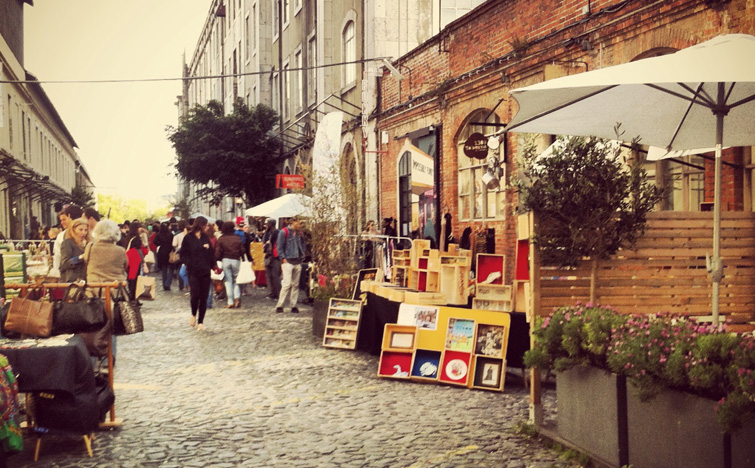
If you love healthy food, then Tel Aviv is your city
We bring you seven restaurants and bars for delicious healthy dining in Tel Aviv, from typical Israeli dishes to international eateries. Treat yourself to a superb gastronomic tour while exploring one of the most fashionable cities of the moment. Tel Aviv is a modern, cosmopoli-tan and vibrant city with excellent cultural and leisure options, good weather, lovely beaches and numerous great value-for-money restaurants where you can eat delicious healthy food.
more infoDublin to the Beat of U2
In effect, Dublin is an integral part of U2’s makeup. Just a few months back they released Songs of Innocence, which Bono describes as the most personal album they have ever recorded. This, the thirteenth studio production of the Irish band, is a journey to their beginnings, to their infancy and youth. It is a period of dreams waiting to come true, with The Ramones or The Clash as the soundtrack, and Dublin as the eternal, vital backdrop. Now is undoubtedly the best time ever to visit the Irish capital – even more so if we are grooved by the beat of these innocent songs – and stroll along the streets that have witnessed the evolution of one of the foremost bands in the history of rock.
Mount Temple Comprehensive School
This was where it all started. Larry Mullen Jr. put up a sign on the school noticeboard looking for musicians to form a rock group. The call was heeded by Bono, The Edge and his brother, Dick Evans (who would be replaced soon after by Adam Clayton). Thus was Feedback born, later becoming The Hype and, finally, U2. Malahide Road.
Bonavox
Paul David Hewson did not become Bono until his childhood friend, Derek “Guggi” Rowan, happened to give him that nickname. It comes from Bonavox (or “good voice”), the name of a business dealing in… hearing aids! Whether you are music lovers or merely wish to check your aural capacity, the fact is the shop is still open at 9 North Earl Street.
The Projects Arts Centre
In their early years, U2 used to perform in one of the auditoriums here. And, it was at one of these concerts that they met Paul McGuinness, the group’s manager until 2013 and a crucial figure in the quartet’s career. The Project Arts Centre now operates as an art exhibition gallery, and also hosts some of the city’s major festivals, including the Dublin Writers’ Festival, Dublin Theatre Festival, Dublin Fringe Festival and Dublin Dance Festival. 39 East Essex Street.
Windmill Lane Studios
Understandably also known as the “U2 Studios”, as it was here they recorded their first EP,Three(1979) and the subsequent albums, Boy (1980), October (1981), War (1983), The Unforgettable Fire (1984) and The Joshua Tree (1987). The studios are located at 4 Windmill Lane, a street full of graffiti originally linked to the group; so much so that it is known as the U2 Graffiti Wall. It now features all kinds of street art. 4 Windmill Lane, Dublin 2.
Grand Canal Docks
Dublin’s dockside is one of the city’s enclaves most closely related to U2 iconography. The setting, highly representative of the spirit of Dublin, has been used by the quartet throughout their career as a backdrop for their record covers (October), videos (Gloria) and photographic sessions (like one they had in 2000 with the Dutch photographer, Anton Corbijn. Hanover Quay.
The Clarence Hotel
In 1992, Bono and The Edge purchased The Clarence. Built in 1852, the originally 2-star hotel was revamped under their supervision, becoming one of the city’s most luxurious hotels. And, as the Irish singer asserts, “For The Edge to have somewhere to stay until later”, they turned the basement into The Kitchen, a disco which the leading lights of electronic music have made their port of call. 6-8 Wellington Quay.
Fitzwilliam Place
Bono once forgot Ali’s birthday. His wife was so upset she was on the verge of throwing him out. The singer made his apologies in the form of a song – The Sweetest Thing. Originally released as a B-side on the single, Where the Streets Have No Name, it later became the first single on the compilation album, The Best of 1980-1990. Recorded on 20 September 1998, the video moves along this central street of Dublin. The videos Sometimes You Can’t Make It On Your Own and Pride (In the Name of Love) are also set in Dublin. Fitzwilliam Place.
Hanover Quay
After leaving Windmill Lane Studios, U2 set up their studios in Hanover Quay. Located in the harbour area, the complex comprises two buildings – one acts as a rehearsal space; the other, a recording studio and editing room. It was there that U2 developed their discs, Pop (1997), All That You Can’t Leave Behind (2000), How to Dismantle An Atomic Bomb (2004) and No Line On The Horizon (2009). Interestingly enough, the Kilsaran Concrete cement factory located opposite the studios had a bench installed in their foyer for followers of the group to wait in comfort for their idols to appear. 18 Hanover Quay, Dublin 2.
Finnegan’s of Dalkey
Celebrated for its culinary offerings, Finnegan’s of Dalkey is Bono’s favourite pub. He is so fond of it that, whenever he gets a visit from a celebrity friend (Michelle Obama, Penélope Cruz, Javier Bardem, Salman Rushdie…), he takes them to this typical Irish pub for a pint of Guinness. It was opened by Dan Finnegan, one of whose seven sons, Peter Finnegan, emigrated to Valencia where, in the central Plaza de la Reina, he opened a twin Finnegan’s Of Dublin pub. 2 Sorrento Road.
St. Stephen’s Green
In 2000, Bono and The Edge were awarded the title, “Freeman of the City of Dublin”. Among the privileges that go with this honour, they were authorised to graze sheep on St. Stephen’s Green – no mean feat! The day after receiving the award, the singer and guitarist made an appearance in this popular park in the city centre flanked by two sheep, which they christened “My Little Lamb” and “Michael Jackson”. St. Stephen’s Green.
Wall Of Fame
The Wall Of Fame, a tribute to the leading names in Irish music, stands at 20 Temple Lane Street, one of the liveliest and most crowded streets in Dublin. The wall displays photos of Van Morrison, Sinéad O’Connor, Thin Lizzy, Rory Gallagher, The Undertones, Bob Geldof, Boyzone… However, one shot which stands out above all of them and effectively steals the limelight shows the very young U2 band members on the beach at Sandymount Strand, another of their favourite spots. And, while you’re there, make sure you drop in at the historic Temple Bar with their live music every night and some delicious oysters. 20 Temple Lane South.
The Little Museum Of Dublin
Opposite St. Stephen’s Green and hard by Grafton Street stands The Little Museum Of Dublin, an art gallery which showcases Dublin’s modern history. Prominent among their permanent exhibitions is “U2 Made In Dublin”. Ranging from original posters from their earliest concerts, to a Trabant from the Zoo TV Tour era, this is one of the largest and best collections of objects related to the band, all of them gifted by the quartet’s fans. 15 St Stephen’s Green.
The company, Dublin Differently, offers guided tours of the most celebrated settings in the city, retracing U2’s career, from their studios to The Clarence Hotel. So, make haste! Come and discover a bit more about one of the best rock bands of all time. Check out our flights to Dublin here.
Text by Oriol Rodríguez for ISABELYLUIS Comunicación
Images by Matt McGee, Phil Romans, William Murphy, dronepicr
more infoVappu
By Marc and Jordi from www.barcelonahelsinki.blogspot.com
Vappu is a traditional festival held on 1 May in Finland – and it’s a day of celebration! It’s also the time when the people of Finland leave the long and harsh winter behind and enthusiastically welcome spring, longer hours of daylight, and their beloved green fields and forests.
But the festival is much more than just that day – it starts the day before, on 30 April. Traditionally, students always take part in this spring festival too by turning it into a very popular carnival (kevään karnevaali, or spring carnival). A usually calm and reserved country fills with people dressing up as different creatures, with drinks in their hands, sharing them with everyone. And the party lasts until the early hours of the morning!
One of the main events, and one of the most crowded and important, takes place on 30 April, around 6 pm, round the statue of Havis Amanda (which symbolises the city of Helsinki emerging from the sea), situated at the entrance to the Esplanadi park and Kauppatori (market square), in the port, in front of the City Hall. A large crowd of students wearing overalls of different colours, representing those of their faculties, wash Havis Amanda and place a large cap on her head.
The cap is the same one that all the students, ylioppislakki, wear when they graduate. They must keep it safe always, because they only get one. Some people even say that it must never be washed. Vappu is one of the times when people of all ages wear their graduation caps.
Vappu is, therefore, a national holiday, when people take to the streets all over the country, where there is music, demonstrations, different celebrations, etc. On 1 May in Helsinki, family and friends get together to have picnics and brunch all over the city, but especially in the Ullanlinnanmäki and Kaivopuisto parks, in the southern part of the city, next to the Baltic Sea.
The typical specialities of Vappu are tippaleipä, a kind of fritter, served with a type of mead, sima. Another tasty speciality is munkki, a kind of doughnut.
Perfect plan to go with friends! Check our flights and sign up!
By Marc and Jordi from www.barcelonahelsinki.blogspot.com
more infoA Gypsy Route Through Paris
Jazz was of course born in the United States. However, if you care to read the finer print, you will discover that something happened in the 1930s in Europe which was to revolutionise American jazz. In the gypsy camps on the outskirts of Paris – now the city’s 18th arrondissement – the young Django Reinhardt improvised a fusion of swing and traditional Eastern European music on his banjo. He taught himself, paying special attention to finger position, and inadvertently invented jazz manouche or gypsy jazz, a genre which elicits virtuosity in the playing and is pleasant on the ear.
Django lost two fingers on his left hand when his caravan caught fire, prompting him to develop an unusual way of playing the guitar. His original style, agility and speed at producing notes earned him the epithet of “father of gypsy jazz”. Together with the violinist, Stéphane Grappelli, he created the legendary Quintette du Hot Club de France, the first gypsy jazz club.
The Festival Django Reinhardt was first inaugurated a few years after his death. It was held at Samois-sur-Seine, 50 kilometres south of Paris, where he spent his final years and where he is buried. The 38th edition of the festival will be held from 6 to 9 July 2017 and, although last year it had to be moved to the Fontainebleau Chateau gardens – 50 kilometres from Paris and well connected by public transport – the original essence of the festival has survived intact. The venue is a place of pilgrimage for Django devotees and the world’s hub of gypsy jazz. This year’s lineup will see the likes of bassist Avishai Cohen, Cuban pianist Roberto Fonseca, the guitar virtuoso trio of Jean-Luc Ponty, Biréli Lagrène and Kyle Eastwood, Woody Allen’s pet gypsy jazz favourite, Stephane Wrembel and the Django Memories Project, made up of the prestigious musicians who produced the soundtrack of the recently premiered film, Django. But, at this festival the music overspills the stage – artists and devotees from across the globe hold jam sessions all over the fair grounds, beating out gypsy rhythms and reliving Django Reinhardt’s musicality.
If after that “authentic gypsy encampment” you are game for more, we have made the following selection from among the many gypsy jazz clubs Paris has to offer.
This is unquestionably the temple of Django Reinhardt in Paris. The resident guitarist, Ninine Garcia, who hails from one of the top Parisian manouche families, leads the jam session every weekend from 12.30 a.m. to 7 p.m. Located in the Marché aux Puces, guests share a table – to taste traditional French cuisine – in a very squashed vital space, among guitars, violins and photos hanging on the walls recalling the master. Tucked away in the back room is a guitar workshop and a manouche jazz school. A venue that oozes genuine charm! 122 rue des Rosiers, Saint-Ouen
Located in the heart of the Latin Quarter, MONK is a bar devoted to the world of beer. It boasts over 50 types of bottled beer, and 10 types of draught. But La Taverne de Cluny is also a jazz club. Every Thursday and Sunday, the small stage in this typically French bar, with upholstered little tables and chairs, fills up to the sound of top-notch gypsy jazz produced by such reputable artists as Christophe Brunard, Sébastien Giniaux and Samy Daussat, among others. A must-visit spot! 51, rue de la Harpe
This small, cosy musical café located just a few metres from the Canal Saint-Martinin the 10th arrondissement provides live music from Wednesday to Saturday. Over the last four years, the programme has been featuring gypsy jazz concerts from 8.30 p.m. on Fridays. L’Apostrophe has been graced by all the leading lights of the Parisian manouche scene, as well as gypsy jazz guitarists from the United States, Britain and Brazil, among others. Albert Bello, Spain’s top gypsy jazz exponent and the director of Festival Django L’H, the only festival in Spain dedicated to Django Reinhardt, has also performed there. And, the first Thursday of each month sees a jazz jam with the vocals supplied by Barbie Camion. 23 rue de la Grange aux Belles
Aux Petits Joueurs is a restaurant in the 19th arrondissement, a bistro in the purest French style where you can taste salads with hot goat’s-milk cheese, cheese boards, duck confit, tarte tatin and crepes, to name just the ABC of French cuisine. The restaurant features a jazz concert, ranging from Latin music to gypsy jazz, each day of the week except Mondays – when it is closed. The venue has seen performances by the leading figures of this genre, notably Adrien Moignard, Sébastien Giniaux and Pierre Manetti, among many others. Tuesdays and Wednesdays feature jam sessions at which some artists invite others, and it all ends up in a full-blown manouche festival. 59 rue Mouzaïa
A highly popular micro-bar, among other reasons for their reasonable prices – quite a feat in Paris – and their homemade meals. Located on the Boulevard de Ménilmontant, it is a favourite haunt amongbobos(from “bourgeois, bohemian”). A young, relaxed atmosphere frequented by veritable hordes of guests. The limited capacity does not deter them from hosting jazz sessions, led by guitarist Michael Gimenez and with the participation of various gypsy jazz artists, in a corner of the bar each Monday from 9 p.m. to 11.30 p.m. 115 boulevard de Ménilmontant
Book your Vueling to Paris and get into the swing of the gypsy jazz featured across the city.
Text by Teresa Vallbona
more info