

Six Activities with Children in Brindisi
Brindisi, with a population of nearly 90,000 inhabitants, is a surprisingly calm and highly relaxing destination. The city has a glorious past, as evinced in the large number of vestiges still to be seen. Indeed, since ancient times Brindisi was known as the “Gateway to the East”, on account of its geographical location. This led it to become the perfect harbour for Roman vessels to dock at before sailing for the Near East. It was subsequently pilgrims, crusaders and merchants that set out from these shores, and the city also marked the end of the Roman road known as the Via Appia or Appian Way. Here at Vueling City we have prepared six family activities for your stay in this resort, which is also ideal for indulging in “slow tourism”.
Strolling Through the City
The city of Brindisi, on the Adriatic Sea, is situated between two deep bays and connected to the open sea via a deep, narrow channel overlooked by the Castello Rosso (Red Castle), so called for the colour of the stone used in its construction. This provides an exceptional starting point for a tour of the city. Another ideal start is the Castello Svevo or Swabian Castle, which overlooks the harbour’s western channel. The fortress is trapezoidal in shape, although it was remodelled many times over after the arrival of the Aragonese. Your itinerary might then take you to San Giovanni al Sepolcro (the Church of Saint John Sepulchre), which features a splendid, finely decorated marble portal. From there you can head for the Piazza del Duomo and visit the Cathedral. Next, go down the Via Colonne and stop at the foot of the Colonna Romana (Roman Column), originally flanked by another, identical column which is currently located in Lecce. The best way to round off the tour is to approach the Corso Garibaldi, a palm-tree-lined avenue which connects the harbour to the esplanade and train station.
Italy’s Largest Safari Park with Wild Animals
An outing likely to be hugely popular with the kids is a visit to the safari park with the largest number of wild animals in Italy, situated a few kilometres from Fasano. At Fasanolandia, lions, tigers, bears, elephants, antelope, giraffe, bison, deer, zebras and camels roam free among the park’s lush Mediterranean vegetation. The circuit is negotiated by car and there are several routes to choose from. The park also boasts an ornithological exhibit, a tropical room, a zoo and an oceanarium, each with its own variety of wild species – macaws, zebra finches, alligators, snakes, bears, hippos, dolphins and penguins, among others. There is also a Zoo Safari and a large Theme Park.
Total Relax
Another great place to chill out, as well as to enjoy healing therapies and personal care treatment are the Torre Canne Thermal Baths, set amid a lovely fir-tree park which includes a small lake fed by underground streams renowned for their therapeutic properties. This is a spot for the whole family to enjoy water in a different way.
Enjoy Nature
The Torre Guaceto Nature Reserve, a veritable oasis run by the WWF (World Wildlife Fund for Nature), is undoubtedly the most spectacular nature park in the area. If offers a wealth of possibilities, criss-crossed by footpaths and trails that are ideal for long, relaxed hikes or bicycle outings with the children. If you haven’t brought the children along, you could do some yoga, a popular activity here in the heart of this splendid nature reserve.
A Tranquil Sea
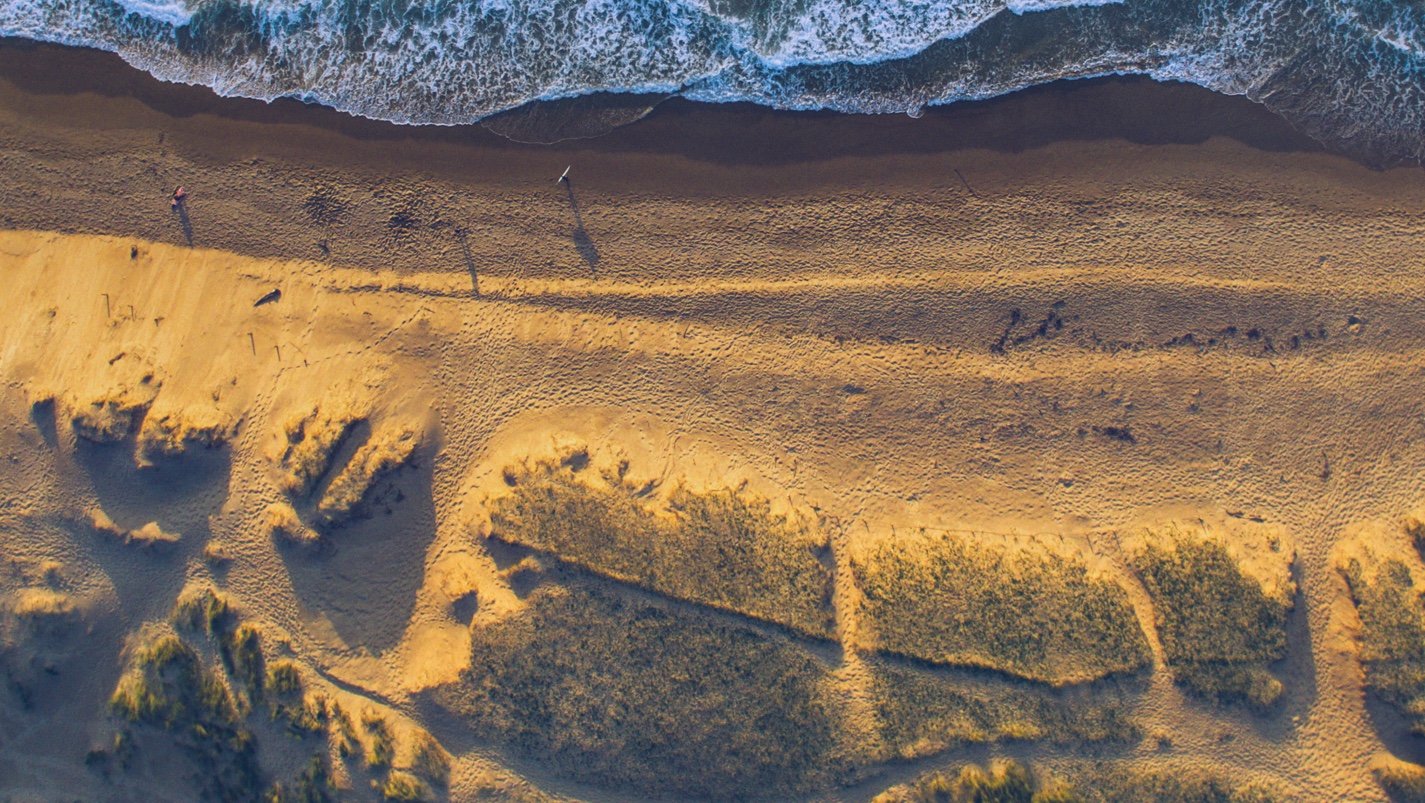
If there is a place all children root for, it has to be the seaside. The Brindisi coastline is flat and sandy throughout. It is blessed with a longer-than-usual holiday season thanks to its mild climate, which spills over into the autumn. The crystal-clear emerald-green and deep, sea-blue sea is ideal for diving, revealing stunningly rich Mediterranean flora and a seabed where the plant-carpeted depths are interspersed with rocky and sandy sea floors. This is the perfect habitat for the common snipe, ducks, nightingales and various kinds of amphibians. It is also the domain of a wealth of marine plant species, including undersea meadows of seagrass (Posidonia oceanica), sea fans or gorgonians and coral.
Back to the Past
In mid-August,Ostuni,a half-hour’s drive north of Brindisi, hosts the traditional Sagra Vecchi Tempi festivity, packed with musical and folk events, a cult festival that pays homage to the past. Take a stroll through the town’s alleyways and steep yourself in quaint scenes of country life set in accurately reconstructed craft workshops, where you can also taste delicious snacks of traditional local cuisine. At the forefront are the cheeses, both fresh and cured, made on local livestock farms and featuring ricotta, cacioricotta and pecorino, a sheep’s-milk cheese. And, true to local tradition, you can also find a variety of breads – focacce, frise and taralli. A special treat is to be had in the form of typical confectionery, notably the mandorla riccia or “curled almond” and cegliese,a biscuit containing roast almonds, cherry preserve and lemon.
Don’t think twice – if you’re seeking a calm yet entertaining holiday with the children, check out our flights here!
Text by ISABELYLUIS Comunicación
Images by Fototeca ENIT-Turismo Italiano, Freshcreator
more info
Düsseldorf – the Cradle of Modern Electronic Music
Düsseldorf is the capital of North Rhine-Westphalia. In the mid-19th century it experienced economic growth fuelled by the Industrial Revolution. During the Second World War, the city was practically reduced to rubble but, thanks to the German miracle, it soon became one of the economic powerhouses of the Federal Republic of Germany.
Düsseldorf – Centre of the Avant-Garde Universe
Brian Eno once said that the Neu! experimental rock band from Düsseldorf was one of the three most inventive beats of the sixties, together with Fela Kuti’s afrobeat and James Brown’s funk. In the late sixties and early seventies, a characteristic Düsseldorf sound started to take shape, based on elements of early rock combined with those of experimental rock. Michael Rother and Klaus Dinger were the pioneers and both of them were members of Neu!, a reference model in the development of the endless machine beat typical of krautrock and, subsequently, in the early creation of Kraftwerk, the primogenitors of modern electronic music. Dinger is also credited with being the originator of themotorik beat, a rhythmic pattern based on a regular, mechanical and repetitive beat. Rother, for his part, also worked with Dieter Moebius and Hans-Joachim Roedelius, members of Cluster; they later teamed up to found Harmonia.
Kling Klang Studio
Ralf Hütter of Kraftwerk once said that the synthesizer is a psychoanalytic machine. Indeed, synths were the instruments that nourished the music of this German band, who also happened to design the world’s most modern studio in a flash. They called it the Kling Klang Studio, sited in the centre of Düsseldorf. The project was started by Ralf Hütter and Florian Schneider in 1970, but was not finished until 1975, an event marked by the release of the record, “Radio-Activity”. During the eighties, the studio was refurbished according to a modular rack design, with a view to being taken along on their forthcoming tour. It was originally sited at 16 Mintropstrasse, but in 2009 it was relocated to Meerbusch-Osterath, some 10 kilometres from Düsseldorf. This move has enabled the studio and office to be located on the same premises. The new Kling Klang includes a rehearsal room for preparing concerts.
Kunstsammlung NRW
This is where, in 2013, Kraftwerk embarked on their current 3D tour which is taking them to emblematic places across the globe to present their daring visual show, during which the audience require 3D glasses to get a much more intense sensorial experience. At Kunstsammlung, art is the central focus. The backbone of the collection is made up of 88 works by Paul Klee, while the rest are highly valuable contemporary artworks.
The Düsseldorf Scene Today
The electronic scene is currently not as solid as it was a few years ago. Loco Dice is a local artist with some international acclaim within the minimal scene headquartered here – the Desolat label. Another label based in the city is Themes for Great Cities, the home of Wolf Müller, a project by Jan Schulte, one of the most restless souls on the local electronic scene at the moment and a direct heir to the Düsseldorf sound.
Salon Des Amateurs is undoubtedly one of the most interesting clubs in the city. It is located in the heart of the art community, namely the Kunshalle, an exhibition space specialising in contemporary art. When entering the premises, one is struck by the Max Ernst sculpture. Here, the kraut tradition blends with the most select electronic avant-garde. At “The Salon”, as it is known here, the whole liturgy of dance takes place. Two of the resident DJs are Jan Schulte and Detlef Weinrich, from the legendary elektronische musik group Kreidler, who pioneered a fusion of ambient, post rock and IDM in the nineties, although their sessions are characterised by a mix of krautrock, African percussion and cosmic jazz. The name is drawn from the Salon organised by the Société Des Artistes Français, an association of French painters and sculptors who held annual events featuring the work of non-professional artists. This was the spirit of the venue in its early years, marked by a certain degree of anarchy, as reflected in the type of audience that frequented the event, from professors in their sixties to teenage skaters. Loco Dice’s Desolat label is headquartered here and makes the club the cradle of the city’s techno once again. The mission of Salon Des Amateursis to take up where Creamcheese left off as a progressive music disco, heir to the non-objective art movement that set in during the late sixties and turned out to be essential to the birth and development of the krautrock style. Then there is Ratinger Hof, a refurbished pub near the Kunstakademie, which became the epicentre of the punk movement in the seventies and eighties, and was graced by bands of the stature of Kraftwerk, Neu! and DAF.It now operates more as a club and the audience is mostly young. Speaking of clubs, most of the ones that hosted electronic underground have now closed down. Only the 102, known as Kiesgrube during the summer season, is still going strong.
Come and experience the effervescent music scene in Düsseldorf. Check out our flights here.
Text by ISABELYLUIS Comunicación
Images by Kraftwerk, Kunstsammlung, Salon Des Amateurs
more info
A Journey Through the Chianti Hills
The region of Chianti stretches between Arezzo and the Colline Pisane. Regarded as the heart of Tuscany since time immemorial, it is made up of a number of grand landscapes dotted with vineyards, chestnut and holm oak forests, evocative medieval villages, romantic castles and fascinating colonial-style palaces. To crown it all, this is also the land that produces one of the finest wines in the world – Chianti.
A Route Through Chianti
Arriving from Florence, the customary approach road through this wine country takes visitors to the pretty town of Impruneta – in all, a 40-minute car ride. We were captivated by Impruneta on account of its numerous monuments, notably the crenellated belltower from the 13th century and the Basilica of Santa Maria with its Treasure Museum in the annex. Two events of international acclaim are held in these surroundings – the Fiera di San Luca (St Luke’s Fair) and the Festa dell'Uva (Grape Festival) with a traditional parade of allegorical floats. Both festivals are held in autumn.
While heading for Siena we stopped at the old medieval town of Greve in Chianti, which features a triangular public square. It is fringed by buildings and loggias which led us willy-nilly to the Church of Santa Croce. The most important wine fair in all Chianti is held precisely in this square. We then went for a stroll through the upper part of Greve, home to Montefioralle Castle which forms part of the old fortified town.
After passing briefly through the medieval village of Volpaia, we found ourselves in Radda. There we visited the 14th-century Church of San Niccolò and the majestic Palazzo Pretorio (dating from circa 1415). We then made for the parish Church of San Giusto in Salcio, located in a luxuriant hollow set between vineyards, and that of Santa Maria Novella with its characteristic Romanesque facade. As soon as we left, we went straight to the Consorzio Vino Chianti Classico (Consortium of Classic Chianti Wine) which includes the Chiantigiano Study Centre.
Our journey continued across the Chianti hills where we came across panoramas that would take Instagram by storm. We passed through Gaiole, halfway between Florence and Siena and, as we were leaving the town, we stumbled upon some spectacular scenery of vineyards and castles, like those in San Leonino and Fonterutoli.
After leaving the Sienese town we approached Castellina, a stronghold of Etruscan origin with its beautiful central square traversed by the medieval Via delle Volte. From there we went to Monteriggione, a twenty-minute car ride away, built on a hillside and endowed with a compact, walled fortification.
Lastly, we stopped off at the splendid Poggibonsi, a town which holds its grape-treading festival in October.
The Wine
There is a large variety of Chianti wines on account of the peculiarities of local soils and the different production methods in each area or winery. Varying percentages of the same grape yield the leading names – Sangiovese (75-90%), Canaiolo (5-10%) and Malvasia (5-10%), the perfect composition hit upon by Baron Ricasoli in the 19th century to which Tuscan Trebbiano was subsequently added. Here the tradition is so deeply rooted that one can pick out the croplands planted with the different grape varieties.
The method of cultivation, known as L'Arco Toscana, takes place on clayey galestro soil which is porous and permeable and prevents water from collecting around the roots. A characteristic of the post-harvest period is that the grape clusters on some vines appear to have been overlooked, although this is actually part of a centuries-old “control” method. It consists of adding fresh raisin must to fermented wine to induce refermenting, by which all the sugar is converted into alcohol, yielding a particularly dry, stable wine.
After fermenting, the wines continue to be refined until March in steel casks or cement and, once bottled, are ready to be marketed.
Chianti has a characteristic fiery, ruby-red colour. The aroma is intense, with dominant violet, iris and vanilla, while the bouquet is harmonious and dry, with reminiscences of vanilla and almond. The experts claim it ages into a smoother, more velvety wine.
Chianti is a prefect table wine – the aged varieties and reserves pair with red meat, game and spicy cheeses. It is served at room temperature. As for local cuisine, typical Tuscan dishes include ribollita, its main ingredients being cooked vegetables left over from previous meals which are reboiled, augmented with dry bread and dressed with extra virgin olive oil. Another classic in the region are the antipasti such as chicken liver crostini, tomato bruschetta and Sienese capocollo,known locally as finocchiata.
more info

10 Reasons to Fall in Love with the Island
Here are the ten main reasons why anyone will fall hopelessly in love with this marvellous island.
1. The Weather As One’s Ally
Gran Canaria is blessed with a privileged climate, on account of its geographical location and the generous contribution of the trade winds. These are some of the contributing factors to the mean annual temperature of 24°C. The island’s landscape ensures a mild atmosphere, which tempers the four seasons of the year.
2. A Spectacular Natural Setting
Concerted endeavours to preserve its natural heritage have made Gran Canaria a place where time seems to stand still. Virtually half of its surface area is protected, an ongoing legacy which ensures the exceptional purity of the environment here. And, best of all is that its whole area is accessible to visitors. The most striking feature of this magnificent natural setting is its volcanic origins.
3. The Beaches are the Island’s DNA
Gran Canaria boasts 60 kilometres of beaches on a coastline stretching for 236 kilometres. Its seaboard has been the leisure resort of choice for generations of islanders who are only too happy to share it with visitors. The variety is endless and there is something for all tastes, from the vast carpets of golden sand in the south to the secluded coves in the north. One of the advantages of Gran Canaria is that its beaches can be enjoyed most of the year around.
4. A Sporting Paradise
One of the pluses of having such a mild climate all year around, and a privileged natural setting, is that Gran Canaria is an ideal enclave for doing open-air sports. Hiking enthusiasts are pampered by a network of trails that cover the whole island, and it is also a paradise for lovers of cycling, which is undoubtedly one of the best ways to enjoy the island’s scenery. Those who prefer the sea can choose from a broad selection of activities. Surfing, windsurfing and kite-surfing, if what you’re after is an adrenalin rush, and sports fishing or diving if you’re eager to explore the sea floor.
5. A Place for All the Family
Gran Canaria is the ideal destination for family tourism. Either for couples or families with children, the island offers all types of attractions which will make your stay an unforgettable experience.
6. A Land of History, Culture and Leisure
The pre-Hispanic history of Gran Canaria still pervades the island, six centuries after the Castilian conquest. Its aboriginal past is jealously guarded in archaeological parks and museums, which also mirror the cultural fusion that characterises the local population. Christopher Columbus stopped over at Gran Canaria on his way to the New World, bequeathing a legacy of which vestiges still survive. As for leisure and culture, the island’s Carnival is one of its landmark festivals, which brings out the affable, playful side of the islanders.
7. An Exquisite Sea of Flavours
Every corner of Gran Canaria offers delicious flavours, many of them part of a rich, heterogeneous culinary tradition. The island boasts the only coffee plantations in Europe, and it is also proud of its orchards and market gardens, its juicy confectionery and its iconic rum, distilled in the oldest cellar on the continent.
8. Take a Well Earned Break
Gran Canaria is the perfect destination for relaxing and breaking with your daily routine and the stress of work. Taking care of ourselves is one of our priorities and you will come across many a spa resort and wellness centre on Gran Canaria.
9. An Open, Modern Capital
The historic centre of Las Palmas de Gran Canaria, based in the districts of Vegueta and Triana, is well worth touring leisurely to see its colonial-style buildings. Puerto de la Luz is one of its major hubs of trade activity and, a short distance away, on the far side of La Isleta isthmus, a prominent meeting point is Las Canteras, one of the finest urban beaches in the world. There is a lot of entertainment on offer in the capital, the product of its modern, cosmopolitan essence.
10. Villages with Charm
Agaete, Mogán, Teror and Tejeda are but a few of the enclaves worth exploring to discover the spirit of the island. Its friendly people and rich traditions make visitors feel at home. Whether on the heights, the midlands or the coast, each locality makes its harmonious contribution in the projection of our identity traits.
Hurry and discover the charms of this idyllic island. Check out our flights here.
Images by Patronato Turismo Gran Canaria
more info