

Bowie & Sónar 2017
Apart from this conjunction in location and time, can an event like Sónar 2017, with the most advanced music proposals, be related to a figure who was able to capture and assimilate the essence of upcoming trends for nearly half a century like David Bowie. We believe that it can indeed. At My Vueling City we lay several bridges between the two and single out items in this year’s Sónar programme which embody the ever-restless spirit of “The Thin White Duke”.
Rebel Rebel
Bowie’s demeanour was always tinged with a heady potion of defiance against established values. He never settled in to any set aesthetic, as evinced in his constant regeneration – at every new release, he rebelled against the previous one, which accounts for his endless change of image.
The exhibition, David Bowie Is, opens at the Museu del Disseny de Barcelona on 25 May 2017. Produced by London’s Victoria and Albert Museum, it has already attracted over one and a half million visitors in the eight cities where it has been hosted so far, including London, Berlin, Paris and Chicago, making it the most visited exhibition in the 164 years since the inception of the V&A.
On display at the exhibition are over 300 objects, including photographs, record covers, handwritten letters, original costumes, stage designs and hitherto unseen material from Bowie’s concerts over the last five decades, on loan from the David Bowie Archive. David Bowie Is takes an in-depth look at the way David Bowie’s music and radical individualism have inspired others by defying conventions and seeking freedom of expression.
The Impact of Sound, and Sight Too
This year Barcelona is hosting two events related to music, and also to advanced thinking and the creative avant-garde. On the one hand, the largest exhibition ever dedicated to Bowie and, on the other, the world’s largest electronic music festival. We all know Bowie’s prowess in the musical sphere, in terms of his great ability to assimilate styles and his insatiable effervescence, which kept him constantly in touch with the latest trends until the end of his life. Indeed, the standard bearer of glam rock also flirted with more advanced genres, notably ambient music and drum and bass. Here then are some of the proposals in this year’s Sónar programme which we feel are imbued with Bowie’s spirit through and through.
Arca
Arca undoubtedly condenses the cryptic essence of Bowie’s final studio album.Blackstar and Arca speak the same language – both are solemn; both seem to know the afterlife. Of all the world’s festivals, Sónar was singled out by Arca, the unclassifiable musician and producer, for a live presentation of his newly released work which redefines him as an even more complex and evolved figure. This show will also feature the presence of and visuals by Jesse Kanda.
Moderat
Bowie moved to Berlin in the second half of the 1970s and there he became steeped in the high-calibre art and music scene. Those were the years of his collaboration with Brian Eno, during which he released the trilogy of Low, Heroes and Lodger. Moderat clearly dovetails to perfection into this pure Berlinese tradition – pop and electronic music with tunes in black and white. Moderat started out as a collaborative project between Gernot Bronsert and Sebastian Szary (Modeselektor) on the one hand, and Sacha Ring (Apparat) on the other. The idea was to work together whenever their respective projects left them enough spare time.
Nicolas Jaar
Bowie incorporated the new dance and experimental music trends in the 1990s, as evinced in such albums as Earthling and Outside, with a nod to drum and bass, electronic metal and even avant-garde jazz. Nicolas Jaar is a musician who merges seamlessly into that philosophy of musical defiance which cannot be stuffed into any specific stylistic straitjacket and also imparts a political or poetic message to his creations.
Phosphereby Daito Manabe
Music was Bowie’s great passion throughout his long career. He collaborated with the great stars of pop and rock, notably Queen, Lou Reed and Mick Jagger, and those of contemporary music such as Philip Glass, but that was not the only discipline he excelled at. He also collaborated with such top-notch artists as Tony Oursler. So, it can’t be ruled out that Bowie might have authored the background music to Phonosphere, by Daito Manabe, one of the most acclaimed digital artists in the world. This installation is an important step forward in new kinds of immersive creation and will be one of the highlights of Sónar+D 2017. This monumental structure is a robotic hybrid architecture in which synchronized mirrors, smoke machines, beams of light and up to 24 video projectors combine to create an unprecedented spatial experience, drawing from the world of new contemporary dance music, as well as the vocabulary of projection mapping.
Boris Chimp 504
Space Oddity was Bowie’s first big hit. The single was released at a time when humanity was in the grips of space exploration in the guise of journeys beyond the stratosphere. With his Multiverse, Boris Chimp 504 takes us back to that period. This audiovisual, real-time performance emphasises the relationship between audio synthesis and graphical language, with the story of the first ape to be sent to the moon in 1969 as the point of departure.
Book your Vueling to Barcelona and score a luxury double in its most highly evolved aspect – Sónar – while looking back to the figure of The Thin White Duke at the exhibition, David Bowie Is.
Text by Los Viajes de ISABELYLUIS
more info

In Summer – A Beach in Brussels
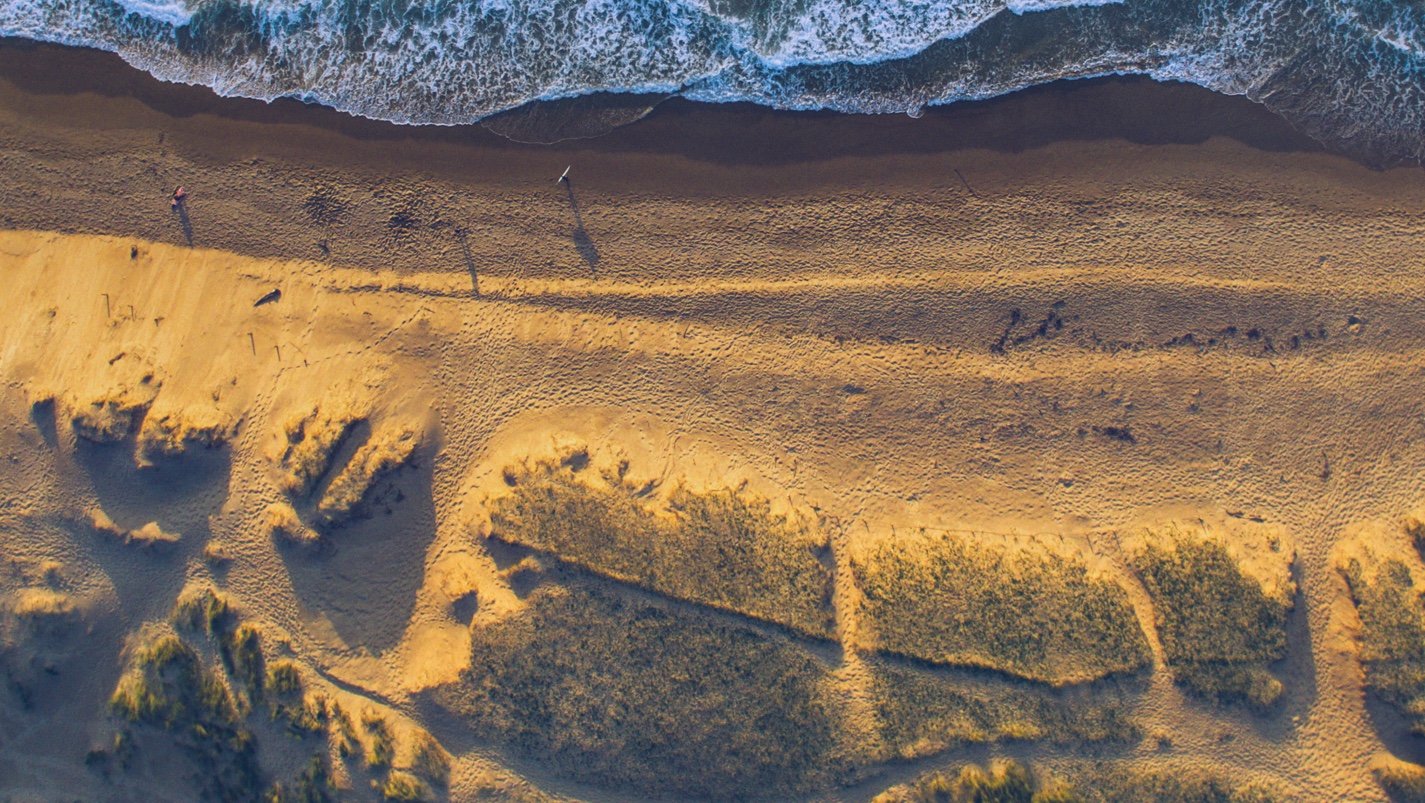
The idea is not new. For some years now, these artificial urban beaches have popped up each summer in Berlin, Hamburg and under the bridges of the river Seine in Paris. You won’t have to cram the whole family into your car, or embark on a long, hot journey to feel the sand under your feet and freshen up in the water. In Brussels, this tropical paradise is known as Les Bains de Bruxelles and it lasts for five weeks on the Quai des Péniches, along the Brussels Canal. It opens from 11 a.m. to 10 p.m. on Tuesdays, Wednesdays, Thursdays and Sundays, and from 11 a.m. to 11 p.m. on Fridays and Saturdays.
True, there aren’t many waves, but some ingenuity has been applied to making the beach as attractive as possible; indeed, it draws an extremely diverse crowd of beach-goers. The 6,000 m² of sand are dotted with deck-chairs, palm trees and coconut palms, striped sunshades and beach bars serving vividly coloured cold beverages. The atmosphere is a family one during the day and sports activities include beach football, volleyball, boule and ping-pong, as well as games for young children. Pedalos and kayaks can be hired at reasonable prices on Sundays. You can also go for a ride along the canal on board the Bruxelles les Bains, which offers various tours – the short one takes 55 minutes; the longest one is a 2-hour cruise, and there is also a “cocktail cruise”, by night – while the harbour’s history and geography is expounded on by a guide.
This chill-out on the beach is accompanied by the Let It Beach festival, now in its third year. A variety of concerts liven up the evening on weekends, while on Fridays the music turns to folk, rock, pop and hip-hop. Jazz and world music take centre stage on Saturdays. The Sunday programmes target the younger set, with workshops, dances and, of course, more concerts. Night reverie is bolstered by free sessions of Croisetteke, every day from 6 p.m. on, in addition to theBoat Club,an exclusive floating club which hosts the liveliest parties in Brussels.
Not Without My Ice-cream!
When the thermometer seems to be driving endlessly upwards, another delicious way of keeping cool is to have an ice-cream. And, for those who can’t contemplate a day at the seaside without ice-cream, here are some of the best parlours in town:
Comus & Gasterea (Quai aux Briques, 86)
A place for trying the newest and most unusual flavours. It features some of the strangest ice-creams in the world, with such flavours as caviar, olive oil, Roquefort, lichi, wasabi aubergine and basil, home-made and free of additives or colouring agents. All you need is to be patient, as queues can sometimes build up outside its doors.
Capoue (Rue de Wand, 112)
Chez Capoue is one of the oldest ice-cream parlours in Brussels and, while at Comus & Gasterea you find the most unusual flavours, in Capoue they make the most daring combinations, notably bounty, blood orange and spiced bread. They are also have them sugar-free for diabetics, or lactose-free for those allergic to dairy.
Il Monello (Chaussée de Charleroi, 31 -33)
While Il Monello opened only recently, it has already made a name for itself in the city for its traditional pastries and homemade ice-creams. They also serve the latter atop a waffle for those seeking consistency (or calories).
Zizi (Rue de la Mutualité, 57A)
Zizi, a veritable institution in Brussels, is the city’s best-known ice-cream parlour. In the sixty years they have been open, they have never altered their manufacturing process. The flavours are natural and free of colouring agents.
Brussels Rules!
Brussels is a refreshing destination this summer, but not only because of its urban beach. Throughout the summer, every Friday from 5 p.m. to 11.30 p.m., the Apéros Urbains or animated afterworks are held in some of the most attractive spots in the city. Also featured is the Midis Minimes classical music festival, with daily concerts lasting 35 minutes from 12.15 p.m. (until 28 August), held in the Church of Saint-Jean et Etienne aux Minimes and in the Conservatorio Real.
Come and experience it for yourself. Come on! Pick up your towel and check out the flights to… Brussels!
Text by Scanner FM
Images by Eric Danhier
more info
Ten Must-Sees in Jerusalem
Realising that you are walking in one of the oldest cities on earth is awe-inspiring. Here are ten pointers to understanding and enjoying this fascinating yet complex city, bearing in mind that biblical, epic and historical landmarks are a constant in this metropolis, where religion has pulsated since time immemorial.
1. To get a feel for the size and layout of Jerusalem, we shall start our tour on the Mount of Olives, affording one of the best panoramic views of the city – the old city, the new city, the walls, tombs… thousands of years of history at a simple glance.
2. On the way down, stop off at Gethsemane and stroll through the groves of millennial olive trees. Then, visit the Church of All Nations, built on the rock where Jesus prayed before being arrested.
3. To come to grips with Jerusalem, it is essential to understand it is “thrice-holy”; that is, sacred to the three great monotheistic religions. Judaism, Christianity and Islam have part of their roots in these backstreets. The Wailing Wall, the Al-Aqsa mosque and the Holy Sepulchre are three landmarks you should not fail to visit, whatever your beliefs. Let’s start with the Wailing Wall or Western Wall, the only remaining vestige of Jerusalem’s Second Temple, the holiest of Jewish places, which was destroyed by the Romans in AD 70. You have to pass through several security checks on the way in. Once inside, men on one side and women on the other. Men must also cover their heads with a Jewish kippah or skullcap.
You are met by a unique, striking setting – hundreds of people facing the wall and rocking to and fro as they pray. If you look up, you see the Esplanade of the Mosques, another privileged vantage point with Jerusalem at your feet. Here, the two striking landmarks are the Al-Aqsa Mosque and the Dome of the Rock, the latter built on the spot where it is believed that Muhammad rose into paradise. Its crowning gold dome has become a veritable symbol. The esplanade is also a reference point for both Jews and Christians as it was here that Abraham was about to sacrifice his son, Isaac. For Christians the holiest place is the Church of the Holy Sepulchre. Built on Mount Golgotha (Calvary), this is the spot where Jesus died on the Cross. It is also the site of his sepulchre or burial place, where he was resurrected on the third day. Also preserved is the Stone of Anointing, where Christ’s lifeless body rested. Many landmarks and endless queues; you need to be patient.
4. But, not everything is religion. Jerusalem also features examples of the avant-garde and some upmarket shopping precincts. If you walk along Mamilla Mall, judging by the brands on display there, you could easily be in London or Paris. Access to the mall is via the Jaffa Gate – have your visa ready!
5. The Mamilla is also Jerusalem’s first designer hotel, and a sanctuary for sybarites who relish sleeping against the backdrop of the old city walls and David’s Tower. Mamilla Hotel is a blend of the eternal and the avant-garde – millennial stone walls and metal headboards and, as a plus, a miraculous spa and a gourmet restaurant with privileged views.
6. Those with classical taste will perhaps prefer the King David, the epitome of a grand hotel. Once the headquarters of the British Mandate, the hotel now excels as a luxury establishment which has seen such illustrious overnighters as King Felipe and Queen Letizia, the Prince of Wales, Barack Obama, Nicolas Sarkozy and Margaret Thatcher and, from the world of celebrity fame, Elizabeth Taylor and Richard Burton, Richard Gere and Madonna. The sober exterior of the hotel contrasts with the elegant, modern interior and the comfortable rooms. Prices are in keeping with the standing of its prestigious customers.
7. We head back to the old city to tour the Jewish, Christian, Muslim and Armenian quarters. In all these precincts the shops are well-stocked – food, a variety of souvenirs, perfumes, confectionery, religious objects, T-shirts and antiquities worth thousands of euros, including Roman coins, vessels from Christ’s time… If you can’t afford them, that shouldn’t put you off soaking up the charm of these alleyways and their people from all religions, races and cultures. Jerusalem’s old city is a melting pot thronging with Orthodox and non-Orthodox Jews, Arabs, Christians, Westerners, Asians… Where bells chime and muezzins call to prayer.
8. A colourful and more affordable alternative is the local Mahane Yehuda market but, be warned – don’t go there on Shabbat (the Sabbath) as it is the Jewish holy day. The city comes to a standstill at sunset on Friday until sunset on Saturday, an important detail to remember when planning your trip.
9. Before leaving Jerusalem, make sure you visit at least two of its museums. Yad Vashem is the Holocaust memorial, a world centre of documentation, research, education and commemoration, while the Israel Museum is where the Dead Sea Scrolls are on display, the oldest biblical manuscript in the world, as is an amazing mock-up of historical Jerusalem, which will help you understand the city.
10. To round off your trip, make your farewell from Mount Scopus where, in addition to viewing the skyline of the old city, you will also see the waters of the Dead Sea, another of those places worth visiting at least once in a lifetime.
What more could you ask for? Check out our flights here.
Text and images by Nani Arenas
more info
Berlin on Gallery Weekend from East to West
Berlin is synonymous with art. You don’t need to go much further to bump into someone who, after the fall of the Berlin Wall, has journeyed to the capital of Germany in search of an opportunity. With almost 450 galleries, 20,000 artists and over 3,000 exhibitions yearly, Berlin is experiencing an art boom. It heads the European art scene by a mile.
Gossip has it that over the last 20 years a new art gallery has been opened every week. Faced with that trend, no wonder that, over the last 12 years, Berlin’s galleries have joined forces to launch the Berlin Gallery Weekend (from 29 April to 1 May 2016) – the first of its kind – subsequently replicated in Paris, Vienna and Barcelona. We visited the city to see it for ourselves and spent three days packed with inaugurations, talks, parties and social events at special times to showcase the latest productions. This, just when spring is descending on the city and its streets start casting their gaze outwards.
Zero budget: admission to the galleries and other areas is free-of-charge.
Recommendation: hire a bicycle – distances become shorter when negotiated on two wheels. The city is big and the galleries string out from east to west, although centred mainly on Berlin Mitte, Kreuzberg and Potsdamer Straße. We began our tour – map in hand!
Berlin’s Epicentre – Auguststraße in Mitte
Auguststraße is lined with trendy restaurants and art galleries. This is the historic centre of Berlin; hence its name – Mitte, meaning middle. There we came across the KW Institute for Contemporary Art, a former margarine factory repurposed as an emerging art lab for mapping the latest trends. Right next door, the collector, Thomas Olbricht, presents his private collection, me Collectors Room, an area of 1,300m2 with exhibits ranging from works by Cindy Sherman to exotic objects worthy of a curio cabinet. Long-standing venues, including the widely acclaimed Eigen + Art, blend in with the newcomers, like Kicken Berlin and neugerriemschneider, and the elegant building of Sprüth Magers on Oranienburger Straße, bringing a breath of fresh air to the local scene.
One of the latest venues to burst in on the scene, which features the epitome of a fusion between art and gastronomy, is the Jüdische Mädchenschule (Jewish Girls’ School). Housed in this building – which reopened in 2012 after falling into disuse – is theMichael Fuchs Galerieand a number of restaurants which form a nexus between the past and present. Among these isThe Kosher Class Room,which offers traditional Sabbath dishes on the menu, andMogg Deli,the best place for indulging in a good pastrami sandwich.
Before leaving the centre and heading for Kreuzberg, we made a compulsory stop at Clärchens Ballhaus. Opened in 1913, this dance hall is a veritable Berlinese legend which survived two World Wars and numerous Nazi clampdowns. Young and old, tourists, locals, good and bad dancers – there is something infectious about Clärchens which makes you feel at home there!
Around Checkpoint Charlie
Near the Berlin Wall’s most famous checkpoint and also the Jüdisches Museum (Jewish Museum) and halfway between Kreuzberg and Mitte, lies the Galerienhaus. This former Lufthansa headquarters which became a centre for political asylum-seekers in the nineties, houses 11 contemporary art galleries on its various levels. If you chance to go there, be sure to see the Gallerie Nordenhake, the Gallerie ŻAK | BRANICKA and the historic Konrad Fischer Gallery. Although initially founded in Düsseldorf, like so many other galleries in the Rhinelands, it ended up moving to the capital.
A few minutes away in the Mitte direction lies one of the trendiest venues in the area, the VeneKlasen/Werner Gallery, founded by the New Yorker, Michael Werner, who brought a piece of the Chelsea scene to Berlin, making it more spacious, more professional and… more expensive.
Before leaving Kreuzberg, we visited the Church of St Agnes which now houses the König Galerie. Built in the Brutalist style, it was acquired by Johann König and opened to the public as an art gallery in 2015. Here, in what appears to be the end of the white cube, a good itinerary is guaranteed.
Potsdamer Straße – A Trendy Art Boom
We came to Schöneberg, on the old west side, where for many years galleries and creative projects have been mushrooming, taking up every available square metre. The fact is it seems to be a surefire win-win formula – the venues are mutually beneficial in that their accretion and synched opening and inauguration times draw ever more visitors. Among the galleries you simply cannot pass up are the Supportico Lopez and Esther Schipper. However, if time is at a premium and you need to make a choice, head straight for the Isabella Bortolozzi Galerie. The Italian artist opened her gallery in 2008 in the former apartment where the actor and singer Hans Albers lived from 1946 to 1948. The premises have been preserved virtually intact. The walls are lined with wood panelling and secret recesses, which act as a backdrop.
Art galleries housed on a fifth floor without a lift in reclaimed buildings; exhibitions which can only be reached by crossing two patios and three doors… the list goes on and on. If you’re planning to visit the city within the prescribed timeframe, check out the full programme and our daily flights to Berlin. Happy Gallery Weekend!
Text by Núria Gurina for Los Viajes de ISABELYLUIS
Photos by Marco Funke, Genial23, Axel Schneider, Wolfgang Staudt
more info