
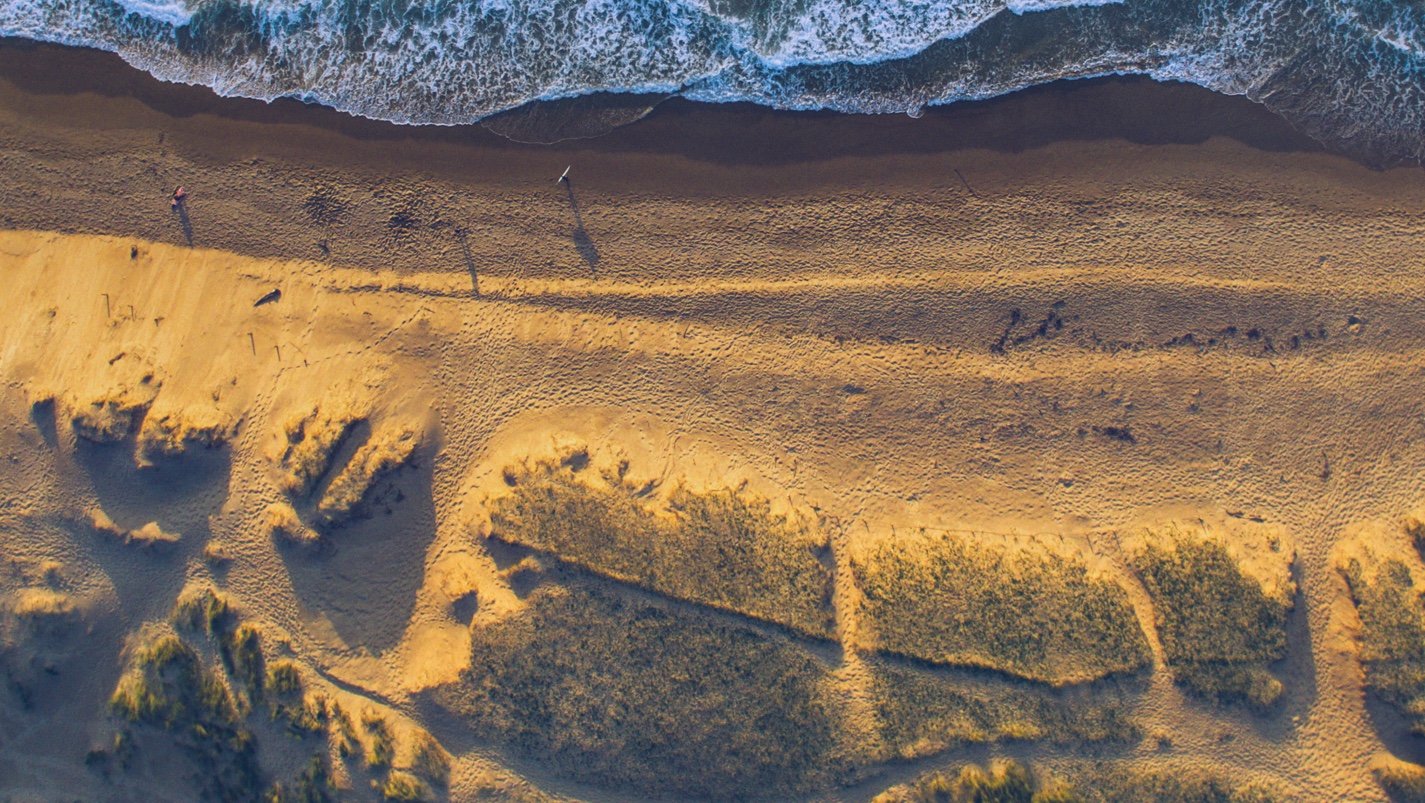

Les Calanques A Jewel on the Cusp of Marseille
The Marseillais are fortunate. Although they inhabit the second most populated city in France – after Paris – with all that entails, right on their doorstep they have a haven of peace in the form of a nature reserve which can be negotiated on foot or by kayak, and where they can swim and splash about in summer. Living with the Mediterranean lapping at your feet does have its advantages.
The spot we are referring to and which we recommend touring and experiencing first-hand is the magnificent Parc national des Calanques. This nature reserve starts at the port of Pointe Rouge, south of Marseille, and stretches for 20 kilometres along the Mediterranean coast, up to the small fishing port of Cassis. But, what secret does this area hold in store?
Les Calanques is an area of granite and limestone buttresses jutting into the sea and forming a winding coastline with deep inlets and numerous cliffs, between which nestle various coves or calanques, which the reserve takes its name from. Some of these coves can only be reached by sea. The turquoise blue of the sea strikes a marked contrast with the arid terrain, with little (stunted) or no vegetation, the result of the warm Mediterranean climate and the properties of the local soil.
Visitors to Les Calanques will enter a magnificent area, conducive to hiking in search of the picturesque coves. They will also find the perfect spot for rock climbing as it is teeming with cliff faces where the more adventurous can try out their skills on the sheer walls.
Things get even more interesting, as this nature reserve also extends out to sea, where the biodiversity lies in its waters, featuring a large number of different species. It is thus a very attractive destination for divers, too.
What to Bear In Mind When Visiting
When planning an excursion to Les Calanques, take into consideration that the area is protected, which means access is limited at different stages in the year. Summer is when it is at its most vulnerable, owing to fire hazards, so that motor vehicles are banned from the area in this season and even access on foot is controlled. So, if you are unable to visit the park in spring or autumn, the best time of year to venture into it, take into account that you have to pay to park your car and then walk in the summer sun. Remember to use sturdy footwear and to take a hat and a good water supply.
Of the many coves you will come across in this stretch of coastline, the most popular ones are Calanque de Port-Miou, Port-Pin, the Calanque d’En-Vau and Morgiou. These are closest to the town of Cassis and can be reached in the course of a pleasant walk along the coast. The larger Calanque de Sormiou is also among the most popular coves.
Be sure to also make a point of visiting Cassis and its picturesque harbour, characterised by its fishing boats and colourful houses. Painters of the calibre of Signac and Derain were understandably captivated by the light and colour of this town.
Don’t miss your own adventure to this magnificent corner of the Mediterranean – book your Vueling to Marseille here.
Text by Los Viajes de ISABELYLUIS
Images by Frédérique Voisin-Demery, Amanda Snyder, Thomas Barthelet, maarjaara
more info
LouvainYoungFlemish
Louvain, regarded as the Flemish Salamanca for its large student population during the academic year, is the ideal destination to head for on a getaway to Brussels as it is less than half an hour’s train ride away.
Louvain and its University
The university is a major feature of Louvain (Leuven, in Flemish). Not only is it a historic institution – it was founded in 1425 – but an international student magnet as it attracts large numbers of foreign Erasmus scholarship holders each year. Many of these will be unaware that Erasmus of Rotterdam, after whom the exchange programme of almost thirty years’ standing is named, actually used to lecture at Louvain University.
No wonder, then, that the population of this Flemish city increases by around 20,000 youngsters at the start of each academic year. They study during the day and hit the town by night, turning Louvain into one of the most fun spots in Europe. Come heat or cold, many of these students congregate in the Oude Markt, a square packed with cafés, pubs and restaurants, compounding what is considered to be Europe’s longest bar counter.
In the morning, many of these students make up for the previous night’s debauchery in the library, located in the Monseigneur Ladeuzeplein square. The library building, formerly sited on the Naamsestraat, was destroyed in World War I and rebuilt with Belgian and American funding. The square is embellished by a striking landmark – a beetle pierced by a huge, three-meter-high needle. It was unveiled in 2005 to mark the 575th anniversary of the University.
Louvain’s Historic City Centre
Some of the most emblematic buildings in Louvain, the capital of Flemish-Brabant province, are located in the Grote Markt or Main Square. The most remarkable landmark is the City Hall, an example of the mid-15th-century Brabantine Gothic, with over 230 small sculptures adorning the facade. Noteworthy, too, is St Peter’s Church with its unfinished, low belltower and the Neoclassical building known as the Round Table (Tafelrond), currently the site of the National Bank. Starting from the Grote Markt, if you head along Bondgenotenlaan street, you come to Martelarenplein (Martyrs’ Square) with its marked Spanish air, redesigned as it was by the architect, Manuel de Solà-Morales, between 1998 and 2004.
Like the city of Mechelen, Louvain has a magnificent, 12th-century Grand Béguinage. This secluded precinct is just a fifteen minute walk from the centre and once housed the Beguines, a female religious community that led an austere life. Covering an area of six hectares, the Grand Béguinage is now the residence of many exchange professors and Erasmus students. Bear in mind that Flemish beguinages are listed as World Heritage Sites by UNESCO.
Other places of interest include St Gertrude’s Abbey, the Church of St Michael – a masterpiece of the Flemish Baroque – and the statue of Fons Sapientiae (Source of Wisdom), by the Belgian artist, Jef Claerhout, which is decked out in different costumes at various times of the year.
Gastronomy and Beer in Louvain
Beer is a must in Louvain, and several beer routes have been set up, including a tour of the Domus brewery and that of Stella Artois, the best known brand in the city. Several restaurants in town offer menus paired with local beer, notably Zarza and EssenCiel, the latter situated on the crowded Muntstraat.
Now that you know how to find your way around Louvain, get your Vueling to Brussels and enjoy the university city!
Text by María Jesús Torné from tusdestinos.net
Images by Toerisme Leuven, Frédéric Van Hoof, milo-profi.be
more info
Tracking Down Banksy in Calais
A few days ago, after Banksy had updated his website, we noticed that his work is now displayed at various points in “The Jungle” refugee camp in Calais, one of the largest camps in western Europe. Despite his identity still being cloaked in anonymity, Banksy is currently one of the most highly valued artists around. His sharp, critical wit is undoubtedly the hallmark of his work.
Noteworthy among the four new artworks he posted is the one showing Steve Jobs carrying an early-eighties Macintosh, with a sack slung over his shoulder, reminiscent of the bags the forced migrants often take with them on their harsh journey. This is clearly a reference to the whole migratory movement being enacted from Syria to Europe. Jobs was, of course, the son of a Muslim Syrian immigrant and was adopted by a middle-class family of Armenian origin. That is the conceptual link Banksy draws between Steve Jobs and the Syrian diaspora.
Another Banksy offering in the same area makes reference to a famous work by Théodore Géricault, The Raft of the Medusa, painted between 1818 and 1819, depicting a group of castaways in danger, packed onto a drifting raft. This alludes to the dangerous voyage embarked on by many of these refugees who risk their lives crossing the Mediterranean on flimsy rafts. In this version, the castaways are crying out for help to a modern cruise ship speeding past near the horizon. The artist had previously drawn attention to the issues surrounding the refugee crisis in a work entitled, Dismaland.
In addition to these artworks, members of Banksy’s team set up 12 permanent installations in Calais, and a makeshift children’s playground in the camp precinct. The materials used were either sourced locally or were remnants of the Dismaland project brought here for the purpose. This new project is known as Dismal Aid.
A Much Frequented But Little Visited City
Calais is primarily a city of passage. Some 15 million people are estimated to pass through it each year as it is a compulsory way station for access between France and England. In contrast, comparatively few people actually spend some time visiting the city. However, we can wholeheartedly recommend this city in the north of France, with little over 75,000 inhabitants and just 34 km from Dover, as a tourist destination. Its charm lies not in its architecture or monuments but in its privileged siting on the seaboard and the majestic Côte d’Opale.
The city is not celebrated for its grand monuments or buildings, but it does have such landmarks as the Musée Mémoire 1939-1945, dedicated to the Second World War and housed in a bunker, a sculptural group by Rodin known as The Burghers of Calais, located opposite the City Hall, and the Cité Internationale de la Dentelle et de la Mode, the city’s Lace Museum. On display is a century-old mechanical loom with 3,500 vertical threads and 11,000 horizontal ones. Calais’ genuine heritage lies in its natural surroundings and local scenery is stunning. Come armed with your camera as the views are breathtaking. The attractive seafront is dotted with striped changing booths which take you back to the early 20th century. The sands stretch westwards for 8 km along the dune-filled Blériot beach, so named as it was here that the pioneer aviatorLouis Blériottook off on the first ever solo flight over the English Channel in 1909.
By the way, when you feel like having lunch or dinner, be sure to head for the Histoire Ancienne, a bistro specialising in regional and French dishes, some cooked on an open wood fire. This very pleasant, Parisian-style restaurant was opened in the 1930s. Prices are affordable, with dinner ranging from 19 to 28 euros.
Don’t miss your getaway to Calais – check out our flights to Lille here.
Text by ISABELYLUIS Comunicación
Images by Rob Sinclair, Carawah, Olivier Duquesne
more info
Vintage Trip To Aranjuez
Among the host of outings to go on in Madrid’s outlying area is one to Aranjuez, with its panoply of artistic, cultural and ecological heritage sites. Not for nothing was it listed by UNESCO as a World Cultural Landscape in 2001.
The Strawberry Train – Experiencing a Bygone Age
For enthusiasts of both old times and new experiences, there is an alternative and highly original way of travelling from Madrid to Aranjuez, which is by taking the Strawberry Train. But, what makes this means of transport so different from the others? First, it runs on the second railway line to be built in Spain, inaugurated on 9 February 1851. The first line to come into operation was the Barcelona–Mataró line, opened in 1948. The aim of the second route was to connect Madrid to the coast, with Alicante as the final destination. In its early days, its importance lay in the produce it transported to Madrid from the market gardens in Aranjuez, prompting it to be known as the Strawberry Train.
Its other big draw is that the train operating this line was built in the early 20th century. Having been restored, it gives you the feel of what train travel was like in bygone days. It has a rakish engine with wooden carriages. And, during the journey, passengers are offered strawberries from Aranjuez by hostesses dressed in period costume. The Strawberry Train runs at weekends in May, June, September and October and leaves from the Railway Museum or Museo del Ferrocarril. The timetable is posted here.
Aranjuez, An Area of Courtly Recreation
Aranjuez’s fortunes changed when Philip II awarded it the title of Royal Site. It was turned into the Spanish monarch’s country residence, thus becoming a royal precinct, particularly during the reigns of Philip V (17th-18th century) and Charles III (18th century). It was precisely these kings who commissioned the creation of the areas which are now the city’s must-see sights. In line with prevailing tastes during the Enlightenment, the inner city was designed in a reticular layout which has survived to the present and never fails to surprise visitors.
Among the standout monuments is the Royal Palace, designed by the architects, Juan Bautista de Toledo and Juan de Herrera. It also features a later extension, including the wings added in 1775. The interior houses such curiosities as the Porcelain Study – the capital work of the Royal Porcelain Factory in Madrid’s Buen Retiro – and the Arab Study, inspired by the Hall of the Two Sisters in the Alhambra of Granada.
Also worth visiting is the Real Casa del Labrador (Farmer’s Lodge), set in the so-called Prince’s Garden, the work of Juan Villanueva and Isidro González Velázquez. Lastly, another notable landmark is the Church of San Antonio, commissioned by Ferdinand VI in honour of St Anthony of Padua.
Another standout feature of Aranjuez is its Royal Gardens. There are four in all, namely the Parterre, the King’s Garden,the Island Garden and the Prince’s Garden, situated on the Tagus riverbank and within the Royal Palace precinct. They were all designed as recreational areas for the Court and attest to a blend of French taste acquired from the Bourbons and Italian influences, yielding a stunning result which is worth strolling around and enjoying.
Wait – There’s More!
For those who aren’t satiated by monuments and gardens, another feature of Aranjuez is its huerta or market gardens, among the most important in Spain. Situated between the Tagus and Jarama rivers, the fertile soil produces such crops as asparagus – here known as pericos– and strawberries, introduced by the French Bourbons. The latter also patronised farming research and experimentation on this land, as evinced in the surviving Renaissance layout of the allotments.
Don’t fail to make a gastronomic stopover to savour the fruit of this land. A classical option is Casa José, one of the most celebrated restaurants in the Madrid Community.
Ready for a getaway with a period twist? Check out our flights here.
Text by ISABELYLUIS Comunicación
Images by Eric Titcombe, M a n u e l, Andrés Gómez - Club Ferroviario 241
more info