
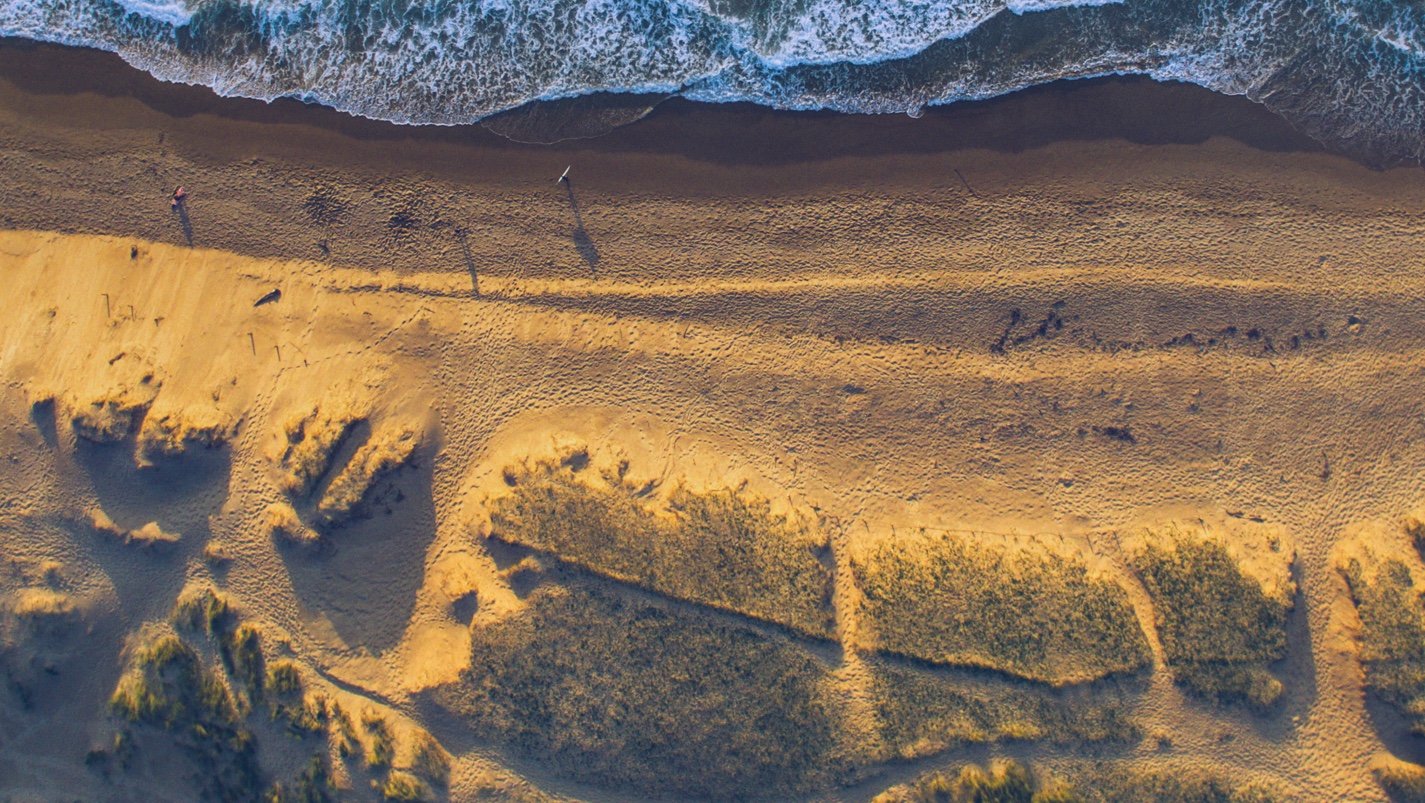

Formentera in Five Bites
It might seem small, but you won’t get through Formentera in a couple of days. Or even in four or five. A sideline for some, and an essential destination for many, Formentera has a really big variety of quality culinary offerings, as well as being an idyllic spot for ambling around, and where you can literally lose track of time. In short, the island can be enjoyed in bites – varied, enticing and affordable. Here, then, are some proposals to satisfy your appetite via a range of different culinary offerings.
Ensalada Payesa
This is the island’s most emblematic dish. A simple, light and tasty salad, it includes fish dried in the island’s sun and sea breeze. Ideal for wetting your appetite. Served in an earthenware bowl at Can Forn, a benchmark restaurant for the finest traditional cuisine. For the best home-fried fish at the seaside, you can’t go wrong at Vogamarí, which also serve great croquettes and calamares a la bruta (calamari in their ink).
Rice
This is probably the food featured most on menus at virtually all restaurants on the island. Among the finest there is black rice and soupy rice with lobster at Can Rafalet, a classic on the up and up at Es Caló de Sant Agustí. Its terraces is among the most coveted in town, on account of the spectacular views. For multiple-customer paellas at knockdown prices, head for the Pelayo beach bar, one of the most alternative spots on the island, on Migjorn beach.
Snacks
Nothing better than a good yango, with your feet in the sand, as you wait for the sun to set on the beach at Ses Illetes. The best option, however, is to hop on board Sa Barca de Formentera, sail around the north as far as S’Espalmador, have a nice swim and, on the return trip, stop off alongside the vessel at the Beso Beach Club, a beach bar offering market cuisine and exotic sandwiches crafted by their chef, Carles Abellán.
Pizzas
If you’re surrounded by Italians and still fancy a pizza, the best are to be had at Macondo, in the town of Sant Ferran. Their variety is endless and you are advised to work up an appetite before you go, as the size of their pizzas and other dishes – like pasta – is considerable. Allow yourself to be pleasantly surprised by Macondo and go for the desserts, too, as they are home made. For afters, drop in on the adjacent Fonda Pepe, the centre of the island’s hippy movement, to order a mitjanet (chaser) of gin tonic or pomada.
Fish and Seafood
You will grow weary of seeing places offering seafood and fresh fish. The most select ones are in the area of Ses Illetes but, if you prefer something quieter and more genuine, try the day’s grilled fresh fish at Conxita i Xicu, on La Mola (Avinguda la Mola 36), a former pastry shop. Do have one of their pastries! You could also opt for lobster and fried eggs at the restaurant, Des Arenals, on the beach of the same name. You won’t be disappointed. And, speaking of eggs, neither can you go wrong with the free-range ones at Can Dani, the only Michelin star on the island.
If you can fit a good swig of wine in between so many snacks, the local fare at the Terramoll winery is highly recommended, as is a dusk cocktail at Piratabus.
Where to Sleep
The quaint Hotel Maisy, on Des Arenals beach, is known for its impeccable, family-style service and for its location next to Migjorn beach and the Caló des Mort. Its rooms with a view have been recently refurbished, as have the surroundings of their outside pool. It also has a restaurant and a bicycle hire service to move around the area.
Move it! Make haste and book your flight with Vueling to this wonderful island.
Text by Belén Parra of Gastronomistas
more info
Toulouse In 8 Discoveries
First Discovery – The Pink City
It was in Toulouse I discovered that dusk can be pink, particularly if you watch it from the banks of the river Garonne. The light can be rather fickle, especially when it strikes from a high or low angle on the marble of the grand edifices which bedeck the city’s historic centre. The Place du Capitole, its daytime beauty matched at night by a lighting display, is the point of departure for any route through this city in the new Languedoc-Roussillon Midi-Pyrénées region. This is where the Capitole building stands, now home to the City Hall and National Theatre. Its eight pink marble columns symbolise the power of the eight districts that made up Toulouse in the 18th century. The square also has some hidden treasures, like the paintings under its colonnade where the city’s history is recounted.
Second Discovery – Home to Carlos Gardel and the Inquisition
In Toulouse I learned that Carlos Gardel was born in France, despite the Uruguayans claiming the king of tango as a fellow countryman, as I did that Antoine de Saint-Exupéry, author of The Little Prince, had stayed at the Hotel Le Grand Balcon, like all the pilots in the Compagnie Générale Aéropostale. Toulouse is also the birthplace of institutions, as antagonistic as they are important, like the Inquisition – founded to combat the Cathars – the Jeux Floraux, and the Gay Science, dating from the 14th century.
Third Discovery – A Vast Heritage
Toulouse is the site of the largest Romanesque church in the West, the Basilica of Saint-Sernin, also one of the major stopovers on the Road to Santiago on its passage through France. Close by stands the Convent of the Jacobins, a magnificent example of monastic construction and, further along the Garonne, we come across the Basilica of Notre-Dame de la Daurade, consecrated to the Black Madonna, draped in mantles made by great dressmakers.
Fourth Discovery – Pablo Picasso
It was in this city that I realised how passionate Toulousians are about Pablo Picasso. Les Abattoirs Museum, regarded as one of the leading cultural centres in Toulouse, features as an exhibit The Remains of the Minotaur in a Harlequin Costume, the work of the universal artist from Málaga.
Fifth Discovery – Aeroscopia
Toulouse is France’s aerospace capital – the Airbus factory is located at Blagnac – particularly after the inauguration of the Aeroscopia Museum which, covering an area of 7,000 square metres, houses such legendary aeroplanes as the Concorde and the Super Guppy, the forerunner of the celebrated Beluga.
Sixth Discovery – Its Markets
In Toulouse I discovered that markets have a life of their own in France and that, apart from being venues for shopping, their restaurants attract a host of customers. The Victor Hugo Food Market, the Marché Cristal – where fruit and vegetables are sold in the open air – and the Marché des Carmes are some of the best known ones.
Seventh Discovery – N5 Wine Bar
Here, as in the rest of the country, the wine bar concept is very much in vogue. A fine example of this is the N5 Wine Bar, where you order wine by the glass (choosing both the type and the amount) and your order gets chalked up on a card which keeps track of your consumption. Be sure to try their tapas, such as the culatello di Brozzi, foie gras or Bronat cheeses.
Eighth Discovery – Toulouse Nightlife
Lastly, Toulouse is the French city with the most pronounced Spanish influence. You can tell as soon as you arrive when you start chatting to locals or when you give yourself over to the Toulousian night. In France’s fourth largest city, the people go out onto the street, regardless of the cold, and live it up for as long as they can hold out. Toulouse nightlife draws droves of locals and foreigners, many of them students, who gather at the nightspots on the Rue des Filatiers and the Carmes, Trinité, Wilson and Victor Hugo squares.
Toulouse is the perfect destination for a weekend getaway. Check out your Vueling here.
Text by Tusdestinos.net
Photos by Toulouse Tourism
more info

Cracovia. Pasado y presente.
Krakow is the most touristic and historic city in Poland. In fact, the historic centre was declared UNESCO World Heritage Site because even the city was destroyed by the German army during the World War II, since the reconstruction of the historic quarter -known as Stare Miaso – started in 1950, trying to reconstruct it as close as possible to what it was originally.
The hearth of the city is Rynek Glówny, one of the biggest squares in Europe, always cheerful because of the street musicians and the tourists. By night, the gas lamps still light this place, projecting shadows on the walls of the buildings surrounding the square, from 14th and 15th century, giving this location an atmosphere both gloomy and romantic.
Nowadays, Krakow is a great destination for tourists but still remains all its past in order to have a promising future.
The old Jewish ghetto
It was not located in the current Jewish quarter, Kazimierz, but a bit further, in the Podgórze district. From the original, only parts of the wall remain, some of the streets and a memorial square to the heroes of the ghetto (Plac Bohaterów Getta) with big metal chairs that represent their stolen belongings when they arrived to the ghetto.
Krakow’s ghetto was founded in 1941 and as the Nazi genocide intensified, it began to be overpopulated and people died of hunger or diseases or, even worst, they were killed in the streets.
Aguila pharmacy
Nevertheless, stores were allowed to remain operative. Tadeusz Pankiewicz, the owner of the pharmacy Aquila (Apteka pod Orlem), had a significant role for the Jewish. The pharmacy was a valuable meeting point to smuggle with food, medicines and other valuable objects.
Because of that, Tadeusz Pankiewicz received a honourable mention from the state of Israel. In 2004, Roman Polanski and Steven Spielberg managed the restoration of the pharmacy, which is now part of the city History Museum, showing the murder of Jewish in the ghetto and what an important role the pharmacy had. Polanski, who escaped from the ghetto when he was a child, dedicated his Oscar award for The Pianist to Pankiewicz.
Schindler factory
Another awarded movie made a factory near the ghetto very famous. The history of Oscar Schindler’s factory – which is now also a museum – appeared in the known movie by Steven Spielberg.
The exhibition at this factory, titled “Nazi occupation (1939-1945)” includes an exhibition, reconstructions, images, objects from that period and sounds that make the visit a vivid experience, experiencing what Polish experienced during the Nazi occupation.
Krakow Jewish neighbourhood
The Jewish neighbourhood Kazimierz, formed by one of the biggest Jewish communities in Europe before the World War II, is nowadays a charming and bohemian neighbourhood, with cheerful streets, odd stores and craft workshops, also with a great variety of restaurants serving Hebrew cuisine.
Here you can visit the Old Synagogue (the oldest in Poland), the Remuh Synagogue, next to the Jewish cemetery, or the spectacular Catholic churches of Saint Catherine or the c he Crypt at Skałka. As a curiosity, you should know that this is the place where Spielberg filmed his movie Schindler's List.
Auschwitz-Birkenau
About 60 kilometres away of Krakow there is the sadly famous concentration camps Auschwitz I – first to be built - and Auschwitz II (or Birkenau), built after as an extermination camp.
You can get here easily by train or bus, leaving from the central station for trains and buses at Kraków Główny, it takes about one hour and a half to get there.
The shameful significance of this place is because it is the largest concentration camp built during the Nazi regime and the largest extermination in history, over one million people where killed here. Nowadays, it remains as a memorial to prevent this atrocities to happen again and to not forget the atrocities that took place here.
Cracovia by FotoCavallo | Auschwitz by Gigatel Cyf Ltd. | Fábrica de Schindler by Noa Cafri | Barrio judio de Cracovia by Jakub Hałun
A place well worth discovering! Check out our flights here.
more info

Carcassonne Medieval Inspiration
Set in the middle of a triangle comprising the cities of Toulouse, Montpellier and Barcelona is this spectacular walled city, a captivating sight for all who visit it. Fittingly, it was designated a World Heritage Site by UNESCO in 1997. It is one of the leading tourist magnets in the Languedoc region and the whole of France, attracting around 4 million visitors each year. Here are the reasons why Carcassonne has become a must-visit destination.
Important Strategic Enclave
The city’s strategic location, set as it is on a hillside overlooking the Aude river valley, made it the perfect vantage point for surveilling such important routes as the one linking the Iberian Peninsula to the rest of Europe, and the Atlantic to the Mediterranean. Thus, Carcassonne became a key city for centuries. In Roman times it was already an important trading post and was coveted by Gauls, Romans – who built the first walled fortifications – Visigoths and Moors, until it ended up becoming a French royal army garrison.
A Walk Through the Cité
Vestiges of that illustrious past as a strategic bulwark can be seen in the upper city of Carcassonne, now known as the Cité, site of the old walled fortifications. Sightseers touring the interior of this huge walled precinct are immediately transported to a bygone era. The Cité is fortified by two concentric walls – the innermost ring was erected in the times of the Gauls, Romans and Visigoths, while the outer, far sturdier ring with four towers was added from the 13th century onwards. Once inside, visitors are encouraged to stroll through the city streets and soak up the medieval atmosphere that pervades the complex. The major landmarks here are the Château Comtal (Castle of the Counts), in the west of the fortified city and attached to the wall, and the Romanesque Basilica of Saint-Nazaire. Be sure to also visit the Pont Vieux (Old Bridge) which crosses the Canal du Midi and links the Cité to the lower part of Carcassonne.
Some Extras On the Way
The counterpoint to this journey into the past, which takes you through the streets of medieval Carcassonne, finds its ideal complement in a culinary break in one of the restaurants you will come across on your tour. Treat yourself to a good glass of wine, preferably Corbieres, the local Designation of Origin, accompanied by duck confit or cassoulet (a local bean stew). The best way to round off your visit to this city.
Viollet-le-Duc – The Other Great Protagonist of Carcassonne
Much of Carcassonne’s appeal revolves around the figure of French architect, archaeologist and writer, Viollet-le-Duc and the “restoration”, as unique as it was controversial, which he carried out on the Cité in the mid-19th century. The fact is that, following the Treaty of the Pyrenees in 1659, the fortified precinct of Carcassonne was abandoned altogether and gradually deteriorated with the implacable passage of time. Indeed, it was so derelict that some voices called for its wholesale destruction. However, by popular request, it was earmarked for refurbishment, a task which was commissioned to one of the leading figures of the moment, Viollet-le-Duc.
Rather than what would now be considered a refurbishment, visitors currently find themselves before a full-blown reconstruction of the old city, including the odd flourish of a Romantic bent added by Viollet-le-Duc himself. He actually applied what was very much in vogue in restoration work at the time, although his endeavours have subsequently drawn considerable criticism from the experts. However, the result admittedly hangs together rather well and achieves the effect of immersing the visitor in a medieval past which the architect purposely set out to reinterpret.
Book your Vueling to Toulouse, which lies less than 100 kilometres from Carcassonne, and travel back in time behind the walls of that wonderful fortified precinct in Languedoc.
Text by Los Viajes de ISABELYLUIS
Images by Tournasol7
more info