
A Holiday at Sea – Sighting Killer Whales off Tarifa
From mid-July to mid-September, around 50 killer whales grouped into five families can be sighted in the Strait of Gibraltar off Tarifa. And, if you’re a lover of these giant mammals, what an adventure you can have watching whales, dolphins and killer whales in their natural environment, toying with vessels and swimming to-and-fro through this sheet of water that joins the Mediterranean to the Atlantic Ocean.
CIRCE (Conservation, Information and Research on Cetaceans) estimates that the striped, bottlenose, and common dolphin, and the short-finned pilot whale have their habitat in this Strait separating Europe and Africa. However, in mid-spring there are also sporadic sightings of sperm whales and such stunning mammals as the finback whale, measuring 20 metres long and weighing over 80 tons – one of the largest animals on the planet.
Killer whales are more on show in summer as they chase the tuna fish that head across the Strait of Gibraltar to the Atlantic at that time of year.
Tarifa is the Spot
But, the fun doesn’t stop there. Tarifa has a lot more to offer as it is one of Europe’s most attractive and cosmopolitan towns. It is a meeting point for young people from all over the world, drawn by the spectacular beaches and by the windsurfing and kitesurfing. If to that you add the entertainment provided by nature itself, the fun is guaranteed!
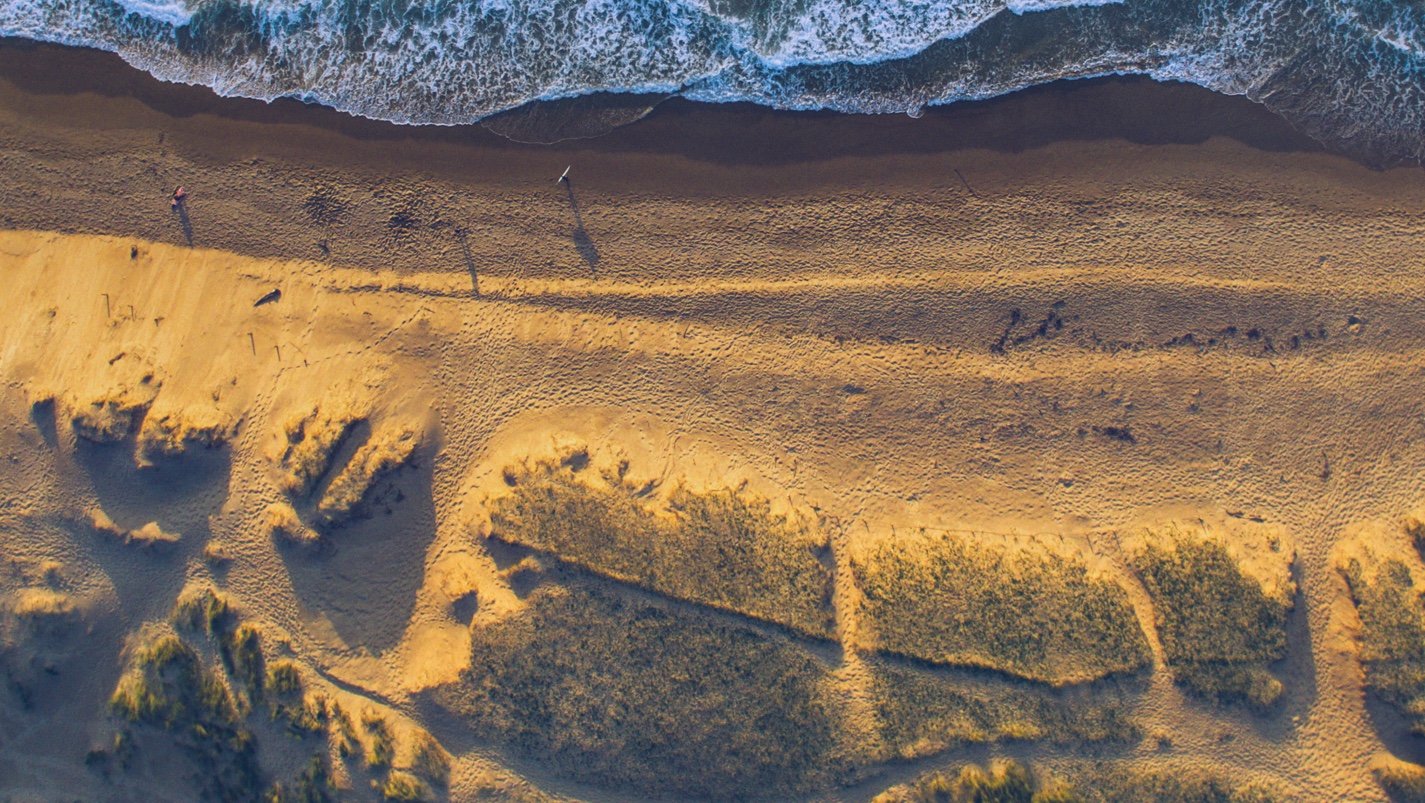
For those of you who prefer to be onterra firma,you can go for other activities you are sure to relish. In Tarifa, you can visit the beaches of Valdevaqueros and Bolonia, with their massive dunes which on clear days afford views of North Africa. Another essential enclave is Baelo Claudia, one of the major archaeological sites on the Peninsula. It is ideal for gauging what a typical Roman settlement would have been like, with its amphitheatre, roads, fish factories and walls. This was an important Roman settlement as it was here that the famous garum sauce was made and exported to Rome. The fish sauce was made of fermented entrails and regarded by Romans as an aphrodisiac.
Another of Tarifa’s emblematic monuments is the Castle of Guzmán El Bueno whose claim to fame is provided by the chilling tale of his preferring to hand over his son to the invaders than surrender the stronghold of Tarifa.
Make sure you don’t leave Tarifa without first trying their fresh fish, either in the bars or the beach stalls known as chiringuitos,or without tasting the delicious pastries with their long, Arab tradition in the town centre’s pastry shops.
Here you will be treated to a host of options, each with their own charm. So, take up your backpack, Vueling and fly to Jerez to enjoy one of southern Europe’s most powerful natural spots.
Text by Amparo Ortega and María del Águila Heras (Patronato Turismo de Cádiz)
Images by Patronato Turismo de Cádiz
more infoCoruña Submits to St John
Greeting the arrival of summer is taken very seriously by the people of A Coruña. Indeed, the festivity of the Night of St John (San Xoán, in Galician) is celebrated extravagantly, with fire playing a major role in the form of myriad bonfires taking over the beaches, and magic rituals unfolding all over the city. The fiesta has grown ever more popular in recent years and in 2015 was designated an international Tourist Interest event. It is the perfect excuse for a getaway to A Coruña to spend a very special feast of St John.
While the big night is that of 23 June, the preceding week sees the city splashing out on a plethora of concerts, gastro events and children’s activities, although at the back of people’s minds is the Eve of St John on the 23rd, when the ancestral sun worship rituals take place.
“Sardiñadas”
The “sardiñadas” or sardine festival provides the centrepiece of the Festa de San Xoán. The city is impregnated with the characteristic smell at dinner time, what with sardine cook-offs organised by grass-root associations studding the streets and spilling over into the bars. The grilled sardines are usually eaten with broa (corn bread), which you should make a point of tasting. To round off the experience, be sure to have the local punch known as queimada to set you well on your way in this long, grand festival night.
Beach Bonfires
Fire is unquestionably the highlight of the Night of St John, and the beaches, where most of the celebrations are concentrated, become filled with light and charm. So, be sure to head for any of the beaches as night falls and set up your own bonfire, or else tag along with any of the numerous groups you will encounter on your way – they are certain to welcome you into the fold. You could always head for either Orzán or Riazor, where most people congregate or, if you are the sort that tends to avoid large crowds, we suggest you choose a smaller beach, like San Amaro or Las Lapas, or the tiny coves of Adormideras. The idea is to pick your perfect spot for spending the shortest night in the year.
The moment of maximum splendour is midnight, when the main effigy or Falla is lit on the beach of Riazor. This is preceded by fireworks which, together with the bonfires, fill the calm waters fringing the seaside promenade with light. Then starts a fiesta which is sure to see you through to daybreak, and the nocturnal events will be redolent with a host of purification rituals. The idea is to put all the bad things from the previous year behind you, in order to start afresh, or to simply have a great time on such a special night.
TExt by Turismo A Coruña
more infoThe charm of fishing villages
Even the towns at the interior of Mallorca, like Valldemossa, Fonalutx or Biniaraix, are under the shelter of Tramuntana mountain range, are those which kept better the interesting traditions and costumes, by the shore there are little places that survived the urban growth.
Therefore, idyllic images of Mediterranean fishing villages have gradually disappeared as tourists arrived massively. However, there are still charming spots in Mallorca bays, keeping the essence. Visiting them is necessary in order to understand the cultural heritage of the island.
Es Jonquet
Next to Santa Catalina quarter, in Palma, and enclosed by Sant Matgí street, the border between both areas, there is Es Jonguet, one of the oldest neighborhoods in the city, which has conserved all the charm of a fishing quarter. This is a humble neighbourhood, with low-lying houses and irregular streets, rising proud under the mills (old flour mills) that welcome travellers arriving from the sea.
S'Estaca
Do not confuse this old fishing village, near Valldemossa, with the huge mansion that actor Michael Douglas owns in this area and is named the same. The village has about twenty old fishermen shelters where it seems that time has stopped. A magic place between Sa Foradada and Port de Valldemossa.
Porto Petro
Porto Petro is at the town of Santanyí, southeast of Mallorca. Even it’s not a fishermen port as it used to be, it has respected, surprisingly, all its original essence. There are not huge residential areas; only little stores and familiar houses. This is a place for people who want to relax in the nature, with many coves nearby. Closely, however, there are the real tourist areas, like the cove of Mondragó or Cala d'Or, which have a lively activity on summer nights.
Port des Canonge
Passing by Banyalbufar, southwest of Tramutana, the mountain range gets to the sea at Port des Canonge. To get here you have to follow a windy road to discover, at the end, the old houses that fishermen used as shelter and now are a little residential area, with the beauty intact. The quay and a nice beach made of gravel and boulders, make this spot a very quiet place.
Closely, you will find little coves or walk through pine forests following "Volta des General", a nice route that goes from Banyalbufar to Port de Canonge.
Porto Petro by Magnus Manske | Es Joquen by Chixoy | Port des Canonge by mallorcaesasitambien
Makes you want to go, right? Do it! Check out our prices here!
more infoAi Weiwei Lands In Vienna
Ai Weiwei is a controversial figure wherever he goes. While his activist streak has earned him more than one headline in the media, particularly in connection with the problems he has with the regime in his native China, his artistic facet has also put him under the spotlight in all the exhibitions he unveils, given the political denunciation behind his work. Last year it was the Royal Academy of London that enshrined him as the great international artist he is. Now it is Vienna’s turn as it hosts an exhibition, running until 20 November, of his latest works. This is the largest display of Ai Weiwei’s work so far in Austria.
A Temple in the Museum
Under the title, Translocation – Transformation, referring to the metamorphosis which people and objects undergo after a deliberate relocation, migration or expulsion, the event features several installations by Ai Weiwei distributed over different spaces in the Belvedere Gardens. The main feature of the exhibition, curated by Alfred Weidinger, is located in the former Austrian pavilion for the 1958 World Expo, currently used as a platform for promoting contemporary art under the name 21er Haus. Displayed in the interior is the Wang Family Ancestral Hall, an installation which is unlikely to leave the viewer unmoved. This 14-metre-high exhibit made up of 1,300 separate pieces is an ancestral temple from the Ming Dynasty. The temple, which belonged to the Wang family, a clan of tea merchants who were expelled from China during the Cultural Revolution, was thus abandoned. Ai Weiwei acquired it from an investor some time ago and transformed it into what we see today, a decontextualised work which coexists and communicates with other architectural environments.
Another exhibition site, the Upper Belvedere pond, showcases the installation, F Lotus, where the artist elicits a reflection on subjects unfortunately in the limelight in recent years, notably the refugee crisis besetting Europe. The work comprises 1,005 discarded life vests picked up on the beaches of Lesbos after being used by Syrian refugees on their sea crossing to Europe. They are set in a total of 201 rings linked to resemble the lotus flower, the overall structure forming a hugefin the water.
Another work displayed in the Upper Belvedere pond is the Circle of Animals/Zodiac Heads, a veritable classic of Ai Weiwei’s oeuvre. Composed of twelve bronze heads standing for the signs of the zodiac in the Chinese horoscope, they are inspired by the fountain-clock at the summer palace of Yuanming Yuan which was ransacked by French and British troops during the Second Opium War in 1860. The treasures – including the heads – were looted and have never been returned since.
Eager to see the work of Ai Weiwei first-hand? Be sure to make a getaway to Vienna – book your Vueling here.
Text by Los Viajes de ISABELYLUIS
more info