
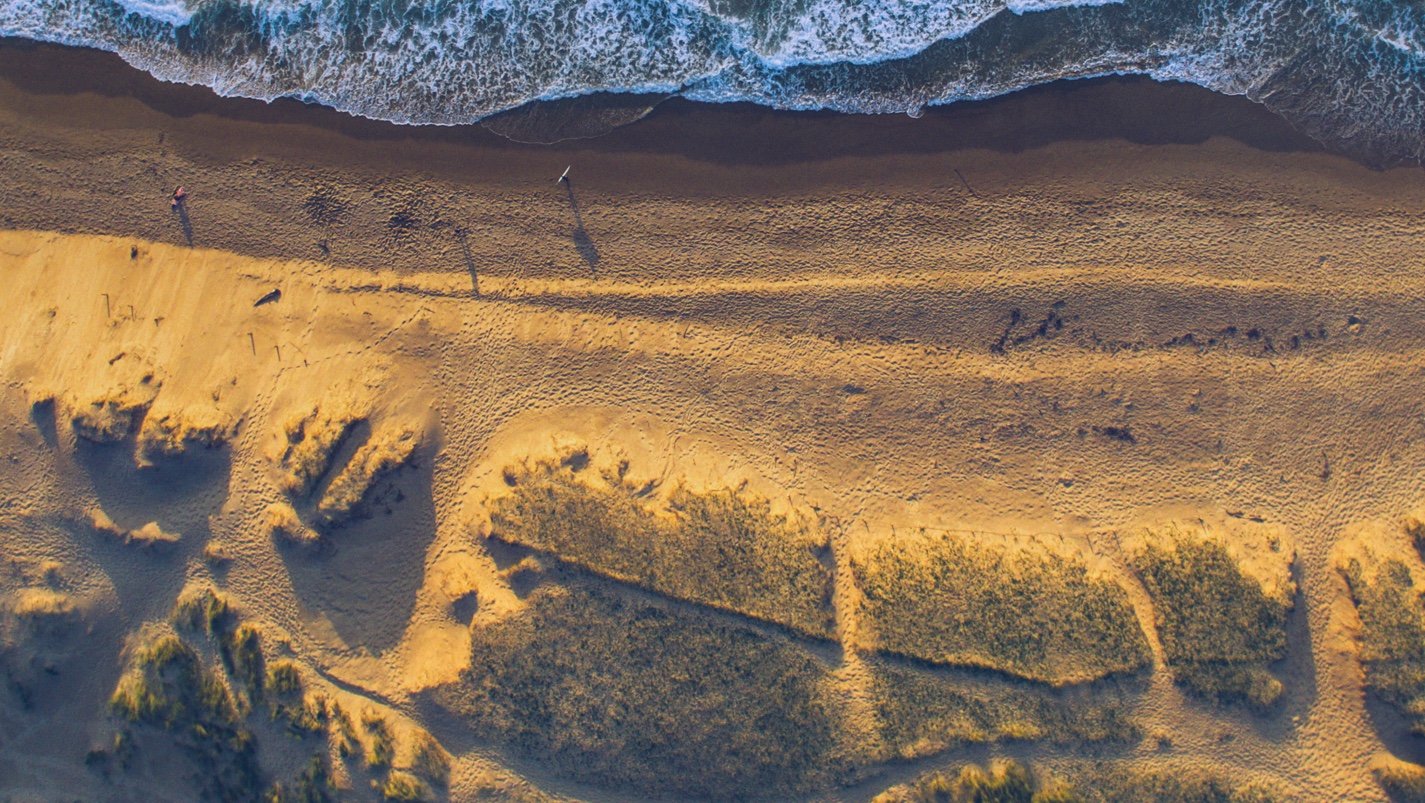

5 best restaurants to rediscover A Coruña
A Coruña is a showcase for the new Galician cuisine. These 5 best restaurants prove it. Atlantic products on the table and young talent in the kitchen. In these establishments you're going to find shellfish, the meat of Galician blonde cows and tetilla cheese, but with a whole new taste.
more info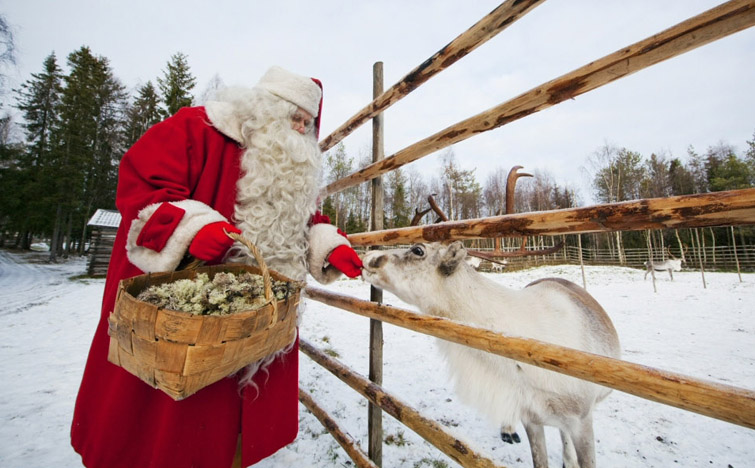
A family trip to Lapland to visit Father Christmas (and more)
Do your little ones dream of meeting Father Christmas? Head to Rovaniemi, Father Christmas' home town, with your family. You will also be amazed about just how many things there are to see and do in Lapland (Finland)!
more infoDestination: Gambia. The Gateway to Africa
By Clara Arnedo
I’ve just got back from Gambia and some of the sights still linger in my mind: the rainbow that appears onTanji beach every day at sunset, when fishing boats laden with fish come back to the port, and the whole town takes part in collecting and selling the fresh fish. These are just a few of the memories that this small but perfect country leaves with you, to help you get an idea of what Africa is really like. Now Vueling makes it easier for us to travel to the Gambia, with a new route connecting Barcelona and Banjul, the capital of the country.
The journey starts in the capital, Banjul, a city that is small and pleasant. And so is the country, with a population of 1.6 million. Banjul is a relatively safe and peaceful city, where it is worth exploring the crowded colourful markets selling all kinds of wares. The most outstanding is Albert Market, a large typically African market mainly selling fruit, vegetables and fish. When sellers and customers see us they are reluctant at first and quickly avoid our cameras. But after a while they gradually become more open and available. All they need is a little time.
Another attraction in the city is Arch 22, in honour of the president, the bodyguard of the former president, who took his position on 22 June 1994. Since then he has been the great protagonist of the Gambia: we see Yahya Jammeh everywhere – on posters stuck on walls and lampposts in every village and every town.
But the Gambia is especially a country with a coast that opens out to the Atlantic Ocean; a wedge-shaped country that cuts into Senegal and is divided in two by the river that gives the country its name – the Gambia.
First we go to the coast to discover the long, fine sand beaches of Banjul. There are hotels on the seafront, affording a spectacular view of the ocean. But the most memorable fishing scene has got to be Tanji, where you can find a flurry of colours and life every evening on the shore when the fish is brought in. It seems like chaos but there is actually an internal organisation and hierarchy, and laws that enable the same spectacle to happen every day at sunset. The men are strong and muscular and are in charge of carrying tons of fish from the boats to the beach, balancing the baskets on their heads. Once they are on the shore, the women collect the treasure to wash it and prepare it to be sold… young men run further to look for spots to set up and sell the fish. The children often follow, running fast at their heels, hoping to catch a bit of fish that might fall on the way. This makeshift fish market on the sand is the tip of the iceberg of this small country that is bursting with life. In the morning, in that same spot, a colourful fruit and vegetable market materialises, dominated by women buying and selling food. One of these women is Ida Cham Njai, a beautiful and energetic chef who offers the unique experience of accompanying her to shop in the market, and then spending a pleasant day cooking local produce with her at her home. The gastronomy and local produce are the best ways to learn a bit more about this pleasant destination.
A British redoubt in colonial times, it is now one of the smallest countries in West Africa. It also has one of the highest birth rates. The Gambia is full of children, and mothers who wrap them to their hips: it is a beautiful and typical scene of the country. The rest of the country is made up of the jungle, nature and many animals: monkeys, birds and even hippos. The further upstream you go, the wilder nature is, and the more rural the population is… it is a wild adventure to go up the river towards the town of Georgetown, because there are not many places for accommodation. Tourism is not widely developed in the Gambia, and that is part of its charm. In any case, you don’t have to travel very far from Banjul to discover the wild. NearSerrekunda, the largest and busiest city in the country, we find Bijilo National Park, or Monkey Park, which includes easy paths to walk around. In this area you can also visit a crocodile pond, and you can even touch one of the crocodiles! This is the other side of the Gambia, with its river and mangrove swamps; the more authentic Gambia, one of the least developed countries on earth, with a life expectancy of 54 years and a literacy rate of 40%.
But this is not the end of the journey, and the Gambia, despite being a small country, still has a few surprises in store for us. Can you imagine remote African villages invaded by Street Art and graffiti? Well, this is what you can find in the Gambia. Specifically in Bafuloto and Makumbaya – two names that are hard to remember, two villages with small and simple houses, streets made of sand and dirt, where children play under the sun. And on the walls of these huts is where the Wide Open Walls movement found one of its favourite canvases. Pictures that depict nature, with animals from the area and other motifs that fill these places with colour.
A great way of discovering the Gambia from different perspective. Another way of penetrating Africa through this small gateway.
By Clara Arnedo
Makes you want to go, right? Do it! Check out our prices here!
more info

Sankt Pauli A Highly Tempting Quarter
Despite its location on the shores of the icy North Sea, Hamburg is an ebullient city – and Germany’s second largest – while St. Pauli is its hottest quarter. It is articulated around a main avenue, the Reeperbahn, a risque, bacchanalian precinct, site of the red light district and a trove of highly recommendable temptations. From the iconic Schmidt Tivoli theatre to the Millerntor-Stadion, home to the endearing FC St. Pauli, we lift the veil on all the allurements of Sankt Pauli.
Angie’s Nightclub
Located on the upper floor of the Schmidt Tivoli is Angie’s Nightclub, one of the most popular clubs of Sankt Pauli’s night scene. Founded by the soul singer Angie Stardust in the 90s, the resident band features a different guest vocalist every night, often a leading figure in Germany’s music scene or on the international arena. Next you may proceed to Mojo Club, a live music venue tucked away amid the underground of Sankt Pauli’s iconic Dancing Towers, or to either the Klubhaus or Golem, two multi-space locales with an invariably interesting entertainment schedule crammed with concerts, movies and theatre plays. To round off your evening, you could head for the Golden Pudel Club (currently undergoing repair work after being ravaged by fire). Set on the banks of the Elbe, not far from the Fischmarkt, on the outside it looks like some unassuming fairy-tale house but it is actually the temple of electronic music where the dancing goes on until dawn.
Davidwache
At the intersection of the Spielbudenplatz and Davidstraße, hard by the Reeperbahn, stands Davidwache, probably the best known police station in Europe, with its own fan club! And, for its location, one of the busiest in Europe, too. Dating from 1840, the building has appeared in countless films and television series, while its cells have seen both small-time crooks and celebrities of the calibre of Paul McCartney and Pete Best held in custody.
Landungsbrücken
The Landungsbrücken, also known as theSt. Pauli Piers, is Hamburg’s old harbour terminal, situated on the banks of the river Elbe. It was once northern Europe’s port of departure to the New World and some five million people are estimated to have set sail from here, bound for a new life in America. Not far from here stands the Fischmarkt or fish market. In winter, it opens at 7 a.m. and in summer at 5 a.m. and immediately fills up with locals, tourists and hawkers as the fish auction gets under way. The brunch served on Sundays at various restaurants in the Fischmarkt is simply wonderful.
Millerntor-Stadion
The modest yet great FC St. Pauli is a reflection of the neighbourhood spirit and a last refuge of grass-roots football. Their principles advocate against xenophobia, fascism and sexism and the team is a favourite among both Germans and all over the world. They come out onto the pitch brandishing the Jolly Roger as their banner, with Hells Bells by AC/DC played over the PA system, while Song 2 by Blur sounds out whenever the side scores. Watching a match at the Millerntor-Stadion is truly an experience that goes beyond that of just a sporting event.
Reeperbahn
This is the main thoroughfare running through Sankt Pauli and one of the most ribald avenues in the world. Like Dr. Jekyll and Mr. Hyde, it has two faces. By day, crowds jostle about doing their shopping or going out for a coffee. By night, the neon signs of the discos, night clubs, cabarets and sex shops light up. Mid-way between Barcelona’s Las Ramblas of the 1980s and Las Vegas, whatever transpires in Reeperbahn stays put within the neighbourhood. Local curiosities include the Beatles Platz, a square commemorating the passage of The Beatles through the city in their early years, when they performed at such venues as Star-Club, Kaiserkeller, Top Ten and Indra. Then there is The Reeperbahn Festival, which has been held each year at the end of September since 2006. Its programme features hundreds of concerts and the festival is a beacon for the music industry on an international level.
Schmidt Tivoli
With its old-world, slight seedy charm, the Schmidt Tivoli is the variety theatre par excellence in Hamburg’s red light district. Be sure to get tickets to the midnight show, when the ambience is more risque than during the afternoon or evening sessions. If you can’t get hold of a ticket, there are many other theatres and cabarets in Sankt Pauli to choose from, including the Operettenhaus, which specialises in musicals, the more conventional St. Pauli Theater, which has been operating since 1841, and the Imperial Theater.
Superbude Hotel Hostel
With its colourful designer rooms done out in fully recycled furniture, the Superbude is Hamburg’s hipster hotel for those who like to stay the night and be able to boast about being a trendy. A more conventional option is the EAST, housed in a former factory. Its stands out for its aesthetic, combining strains of the Far East with a Western industrial look. Be sure to have a meal in their restaurant, one of the best in St. Pauli.
Book your Vueling to Hamburg and revel in a district with possibly the liveliest night life in Europe.
Text by Oriol Rodríguez
Images by Heiko S, Wojtek Szkutnik, Itti, Reading Tom, David Coggins, abbilder
more info