
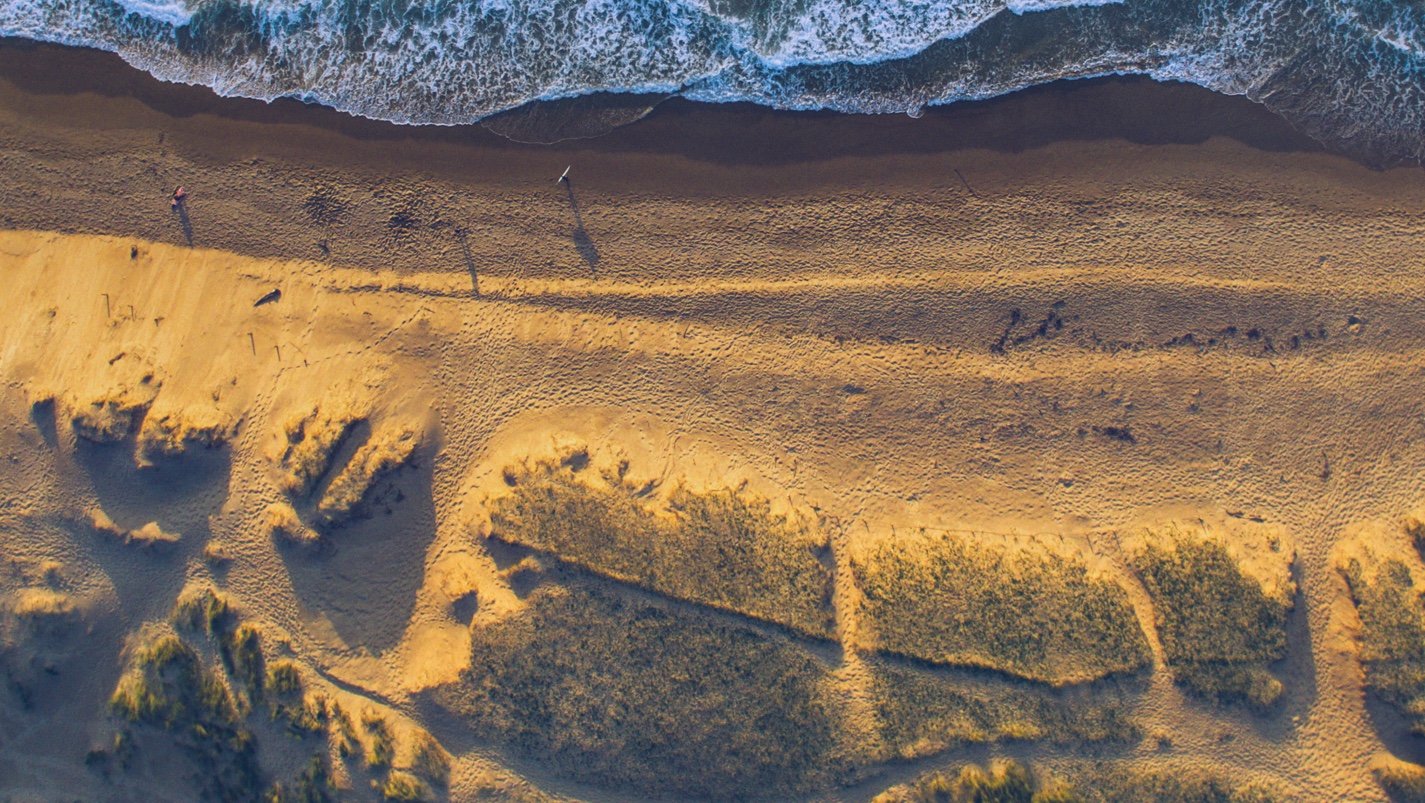

Orán: la perla oculta del Mediterráneo
Oran is still off the beaten tourist track, which makes it all the more appealing when it comes to planning a trip which avoids scheduled routines and well-worn tourist prototypes. During the French colonial period it was the capital of the Oran Department, and it is currently an important port city and commercial hub and boasts one of the leading universities in North Africa. Sunni Islam is the official State religion, although there are Christian and Jewish minority communities. A visa is required when travelling there.
The Spain Brand in Oran
The capital of western Algeria, Oran occupies a privileged, strategic location in the Mediterranean basin. It is regarded by Spaniards as the most Spanish city in Africa, given the wealth of Spanish vestiges still present right across the region. Indeed, traces of Spain linger in local culture, language and gastronomy. The Oranians eat cocas, a sausage similar to Spanish sobrasada, and claim to have invented the paella, a word derived from the Arabic baiya, consisting of rice and seafood. The city also sports a bullring – now in disuse – which was inaugurated in 1954.
In geographical terms, Oran is the point in Algeria closest to the Iberian peninsula and indeed, on a clear day, the city of Almería can be seen from Oran, or vice versa. Its privileged position has enabled it to build up all manner of land and maritime connections. Its bay opens to the north-east, while the western flank is dominated by the steep Aïdour mountain. The city lies sheltered between the old colonial city and the new developments, which lend it a more modern air. Not to be missed is a stroll down the seafront promenade with its delightful panoramic view of the harbour and the old city. From here you can walk to the interesting Pacha Mosque.
You should not pass over the occasion to visit the famous Santa Cruz Fort. Built atop a mountain adjacent to the city, where it has served as a faithful lookout for over four centuries, this is undoubtedly the masterpiece of Spanish military architecture in the city, and also houses the well-worth-seeing Chapel of the Virgin.
The Place de la Perle (or Plaza de Armas), once the centre of Oran, while the city was under Spanish rule, is another of the prime sightseeing spots. Together with the Spanish Gate, the Casbah, the Porte de Santon, the St Philip Garrison and the Tambour de San José, it is one of the best preserved places from that period, from the 16th to the 18th century. Most striking is this latter monument, due to its important role in the Spanish history of Oran. Radiating from there was a network of underground galleries which ran underneath the old citadel and connected the Qasr el-Bey (Bey Castle) to the Santa Cruz Fort.
Historical District
The old town features an alcazaba (citadel), a fortified urban enclosure built to house the governor’s residence, to defend a specific area and its surroundings and to garrison troops, making up a small military precinct. The cluster of buildings forming this citadel includes an 18th-century mosque.
The district of Sidi El Houari, the patron saint of the city, is the oldest in Oran. There are guided tours of the walls and tunnels dating from the Spanish period, the Spanish Gate, the Madrid Ramp, la Blanca, la Escalera, the Casbah, etc. In this historical district you can also see the old Saint-Louis school, and the Pacha Mosque, built during the 17th century. Before leaving Oran, make sure you visit the marabout or Moorish shrine of the city’s patron saint, Sidi El Houari and make a wish, as tradition dictates.
This district also houses some of the city’s most important museums. The Ahmed Zabana Museum, formerly known as the Demaeght Museum, has archaeological, ethnological and natural history collections from the Maghreb on display, as well as an exhibition area devoted to Oran. In the archaeology section, the Carthaginian and Roman collections take pride of place. The buildings date from 1933, while in 1986 the museum was taken over by the Ministry of Culture and renamed. It comprises seven sections focusing on Oran and its surrounding region – fine art, the Moudjahid, numismatics, pre-history, old Oran, ethnography and natural history. Another prominent museum is the Moudjahid, located in the USTO district, which is dedicated as a memorial to the struggle for independence during the Algerian War.
Discover one of the best kept secrets of the Mediterranean! Check out our prices here.
Text by ISABELYLUIS Comunicación
Photos by Algerian Embassy
more info
Turin for Film Lovers
It was a film that led me to Turin. I was stunned by a giant edifice topped by a spire which towered over the city. It was the Mole Antonelliana, a vivid name alluding to both its blunt presence and its designer, Alessandro Antonelli, who had initially conceived of it as a synagogue. I discovered it in a humble but significant independent film entitled Dopo Mezzanotte (After Midnight), by Davide Ferrario, who lives in the city and has shot many of his films there. It is a hymn to cinema, a passion triangle with the action set in the Museo Nazionale del Cinema, which has been housed in the Mole since 2000. With an area of 3,200 square metres, it is the largest in Europe dedicated to “the Seventh Art”. It is a highly original, spectacular exhibition, both for its location and the layout of its collections, including pre-cinematographic devices, magic lanterns, and both old and modern stage items – notably masks from Star Wars and Bergman’s The Seventh Seal, Superman’s cloak and Marilyn Monroe’s bodice. It is actually one of the most frequented museums in Italy, quite a feat in a country with such a rich history and art heritage. It is also the site of the Turin Film Festival, next slated for 20 to 28 November, which has featured such filmmakers as Nanni Moretti, Gianni Amelio and Paolo Virzi.
The City that Bewitched Risi, Tornatore and Argento
The fact that Turin was Italy’s first capital is evident in its cinema, from Neorealism to erotic comedies, with a profusion of such explicit detective films as Double Game, Black Turin and Torino, centrale del vizio. It was in Turin that the master of horror movies and self-confessed lover of the city, Dario Argento, shot several scenes from one of his first hits, The Cat o' Nine Tails. He went on to film in their entirety his latest works, Do You Like Hitchcock?, Sleepless (Non ho sonno) and Giallo.
The city of the Juventus and Torino football clubs, the annual contenders at the “Derby della Mole”, is also an obligatory stop on the journeys depicted in the perennial classics. Enrico Loverso emigrates from the poor south to the Turinese industrial north in The Way We Laughed (Così ridevano) by Gianni Amelio. In Everybody's Fine (Stanno tutti bene), by Giuseppe Tornatore, an elderly, splendid Marcello Mastroianni visits his adult children distributed across Italy and finds the last of them – of course – in Turin. And, the irascible blind captain played by Vittorio Gassman sets off from Turin station in Scent of a Woman, directed by Dino Risi (the remake, with Al Pacino, came years later). Risi also happened to make his cinema debut in the same Alpine city, when he was assistant director during the shoot of Piccolo mondo antico (Little Ancient World), and it was there, too, that he one night declared his eternal love to the stunning actress, Alida Valli, while they were sitting in a carriage in the rain, in the romantic, lush gardens of the Parco Valentino.
The Setting for Robberies and Spies in American Movies
In The Pink Panther 2, with Steve Martin, one of the city’s most prized treasures is stolen – no less than the Turin Shroud. However, the film that has probably set Turin most on the map is the 1969 cult movie, The Italian Job, by Peter Collinson (which has seen a recent remake). In it, Michael Caine flees with his loot from the carabinieri in his Mini Coopers, through the Palazzo Carignano, along the inner staircases of the Palazzo Madama and around the exterior of the Gran Madre di Dio Church, skidding through the glamorous Galleria San Federico shopping centre, and driving over the flared roof of the Palazzo a Vela, built for the Italia 61 Exhibition and refurbished as a sports centre for the 2006 Winter Olympics. He also drives up the heady oval test track on the old FIAT factory – the city’s veritable economic driving force for decades – housed in the Lingotto building, now a multidisciplinary space for trade fairs and festivals. In his final getaway, his Minis reach the nearby Alps, the formidable mountain range which acts as the backdrop for this stunning city, after having crossed the river Po.
And, opposite the Po stands the majestic Piazza Vittorio Veneto, which appears in The Bourne Ultimatum, a saga starring Matt Damon. However, the café where we later see the fired up secret agent sitting is actually in Madrid! The fact is that the film crew were back working in Spain when a change to the script forced them to repeat the shoot of the scene originally filmed in Turin. The magic of cinema always involves some hidden devices!
If you fancy seeing the city for yourself, secure your ticket here!
Text by Carlos G. Vela para ISABELYLUIS Comunicación
Images by Felipe Cadona Colombo, Jean-Pierre Dalbera, Luigi Giordano, Marco Coïsson, MarkusMark, Nicola Gambetti
more info
Three Essential Hiking Trails on La Palma
La Palma is one of the most beautiful islands in the Atlantic. Unlike its sisters in the Canary Island archipelago, it is blessed with a highly fertile ecosystem endowed with outstanding natural traits, making this an idyllic island. Indigenous fauna and flora are an integral part of its spectacular scenery. Its well-kept natural environment is ideal for enjoying an alternative, exciting holiday, doing all kinds of sports and indulging in activities close to nature.
This authentic Eden for ramblers offers a host of options for hikers. Before setting out, you are advised to check the weather forecast and to avoid walking alone. Let someone know what route you are taking and the time you are due to return. You need to take a small back-pack with a warm jacket, a raincoat, food and plenty of water and don’t forget essentials such as a hat, sunblock and sunglasses, as well as a mobile phone with the battery charged, a map and, if possible, a compass. Observe the signposting along the route and keep to the track and, above all, make sure you wear proper hiking boots. You are also advised to check the gradient, walking distance and duration of the hike on the website, www.senderosdelapalma.com. Of all the various routes, we have made a selection of three, with different difficulty ratings, which will allow you to admire the aforementioned scenic diversity of "The Beautiful Island":
Puerto de Tazacorte – Roque de Los Muchachos
This itinerary has a high difficulty rating and is intended for experienced sportspeople. The main difficulty lies in the pronounced gradient. You are urged to avoid the hike in summer or on particularly hot days, while in winter, take into account that it rises to high altitudes and you may even encounter snow and ice on the Roque de los Muchachos. The route covers a distance of 17.16 kilometres, with an accumulated slope of 2,600 m. The route starts at Puerto de Tazacorte, at sea level. From there, it rises steadily for 3.8 kilometres as far as El Time. It then runs past Hoya Grande and Risco de las Pareditas, where it is wise to stop to regain your strength and take in the marvellous scenery at an altitude of 1,500 metres. There are still nearly 7 kilometres to go before reaching the end of the route, after passing through Hoya del Estrabito, Pinos Gachos and Degollada de Las Palomas, where the slope is gentler up to the finish. The high points of this route are the stunning views of the Barranco de las Angustias gorge and those of the Caldera de Taburiente from the Roque de los Muchachos.
Cubo de la Galga
This trail has a low difficulty rating and is therefore suitable for taking children along. Signposted as the GR 130, it starts and finishes at La Galga, Puntallana, at the intersection with the GR 130. The overall walking distance is 12.4 km, with an accumulated slope of 750 metres, and the estimated walking time is 3 hours 45 minutes. The route takes you through the Parque Natural de Las Nieves, a protected nature reserve so spectacular you are unlikely to switch off your camera. The trail is negotiated in two sections – one is a circular itinerary, which takes you through the most interesting area, the Cubo de la Galga temperate laurel forest, a warm, humid forest with some frost, featuring huge trees,guaco and lianas, with leaves similar to those of the laurel, hence the name. The other section connects this route to the main road orguagua, as well as to La Galga mountain, where you simply must stop off at the Somada Alta viewpoint, and the GR 130, with the option to continue on to Puntallana or Los Sauces. You can also continue down the PRLP5 footpath to the district of El Pósito, on the main road.
Valencia – Pico Bejenado – Valencia
This is ideal for visitors hiking with the family. The route is circular and, if you complete it, covers a total of 10 km, rising from 1,100 to 1,800 metres. The estimated walking time for the circuit is three hours and the whole trail is confined to the limits of La Caldera de Taburiente National Park. You can drive up to the end of the dirt road in the Valencia district. From there, you set out on foot along the PRLP 13.3 footpath as far as El Bejenado. The ascent to the summit of this mountain follows a winding trail through pine forest and takes an hour and a half. The route affords some superb views, both of the interior of La Caldera de Taburiente and towards the Route of the Volcanoes and the whole of the Aridane Valley. Also, don’t forget to sign the visitors’ book when you get there.
The above are but three of the multiple routes possible, each with a different difficulty rating, designed to take in a maximum of the island’s scenic diversity and lead us past the most emblematic spots – Pinar, Parque Nacional, Angustias, Laurisilva, Puerto Tazacorte, volcanoes, dragon trees, village where time stands still almond trees in blossom, coastal cliffs, etc. For further information, see the Patronato de Turismo de La Palma.
Don’t wait to discover La Palma – the Beautiful Island! Check out our flights here.
Text and photos by Patronato de Turismo de La Palma
more info
Five Point Guide to Enjoyment at Seville’s April Fair
The countdown has started to the days when Seville gets decked out in all its colour and finery, dressed up once more in polka-dot and flounced skirts, parading about on horseback and in carriages, a time when Sevillians again dream full blast and the monumental gate at the fairground lights up to announce the start of theFeria de Abril.Each year hordes of visitors – what with locals, regulars, celebrities, tourists and passers-by – descend on Seviile’s fairground to experience what is possibly one of the leading Andalusian festivities, El Rocío notwithstanding, of course. Now, what should newcomers to the Fair do, and what should they know, in order to avoid sticking out like a sore thumb? Here are some pointers to attending the April Fair without dying in the attempt.
1. Origins of the Feria de Abril
What was to become one of the most popular fiestas in Andalusia made its debut some time around 1846. It was created by Narciso Bonaplata and José María de Ybarra, two businessmen resident in Seville. It started out as a purely commercial, agricultural fair but then grew over the years – the first casetas (stalls) began to appear, as did the first decorative elements and it was eventually transferred to its current fairground and transformed into an entertainment event.
2. Where and When
The April Fair is held in grounds located in the district of Los Remedios. The best way to get there is by metro (get off at the Parque de los Príncipes or Plaza de Cuba stops), or the special bus service laid on by the Seville City Council for fair attendees. And no – do not go there by car, because trying to park can turn out to be a nightmare.
As for dates, the Seville Fair is usually held one or two weeks after Holy Week and lasts for six days, although this year, by popular vote, it will be extended by another day.
3. Once in the Fairground…
The fairground is divided into two areas – the Real de la Feria, where the casetas are located, and another known as the Calle del Infierno (Street of Hell), home to the various attractions, which the Sevillians have rechristened as cacharritos (“rattletraps” or “clunkers”). As the saying goes, “a friend in need is a friend indeed” and here, at the Seville Fair, you will need a well-connected friend to facilitate access to the casetas, the only place where you can experience the festivity in all its splendour. Not all the casetas are private, but there are far fewer public ones and they tend to be crowded.
4. Dress Code is Important
Part of the charm of this fiesta resides in the splendid colourfulness of the costumes worn by women, and the elegance of the suits worn by men. Sevillians take the garments they show off at the Feria de Abril very seriously and there are even flamenco fashion labels and catwalks that set the latest trends for the season. So, if you want to avoid being conspicuous, you could hire a costume (you’ll have to fork out about 150 euros a day for a Sevillian dress) or settle for adding some flamenco highlights to your apparel, namely such accessories as the typical flower, earrings, necklace and shawl. As for men, chino or peg trousers and a shirt, with a suit or sports jacket. Bear in mind that the ”Lunes del Alumbrado“ (Monday of Lights), also known as the Noche del Pescaíto (Night of the Little Fish), is the only time when flamenco attire is not worn.
5. “Rebujito” and “Pescaíto” – the Culinary Leading Lights
Rebujito is the April Fair drink par excellence. This combination of a dry sherry – manzanilla or fino – with Sprite, 7 Up or mint has its origins in an English cocktail from the Victorian era known as Sherry Cobbler, and is served up in all the casetas. Beware, though, as the hangover it produces is one of the most feared, so try not to get swept away by all the excitement and drink in moderation. The other leading light of Seville’s Fair is the fried fish or pescaíto frito typically consumed on the “Night of the Alumbrado”, with other notable favourites being chickpeas and codfish, bull’s tail and the churros and buñuelos (fritters) that mark the end of the fiesta.
Fire up and come to Seville’s April Fair, to be held from 30 April to 7 May – book your Vueling here.
Text by Los Viajes de ISABELYLUIS
Photos by Sandra Vallaure
more info