

Town of Dreams
The Hay Festival of Literature & Arts, to be held this year from 21 to 31 May, has its origins in the small Welsh town of Hay-on-Wye, some 50 kilometres from Cardiff. An annual event, it brings together writers, musicians, film-makers and other leading lights of the art world. The main goal of the festival is to open up channels of dialogue between the various cultural fields, an idea which has been exported to other countries and has prompted similar events in England, Spain, Colombia, Kenya, India, Mexico, the Lebanon and Hungary. Featuring over 900 activities spread over a ten-day period, its participants include some of the world’s finest intellectual talent.
Not Only Letters
The festival does not live by letters alone. It also hosts conferences and workshops on painting, social activism, medicine, sport and architecture. Notable, too, is the music scheduled for this year, offering live performances by London’s King Charles, a winner of the International Songwriting Competition, the Glasgow group Texas, whose twenty-five-year career is marked by the release of their disc, “Texas 25”, and the Touareg musical ensemble, Tinariwen, among many others.
A Festival For Children and Families
Hay Fever is the name by which the children’s version of the festival is known. Noteworthy scheduled activities include story-telling, illustration workshops tutored by the world’s leading story illustrators, puppet theatre and children’s concerts. Check out the varied programme for all ageshere.Hay-on-Wye is located in the Brecon Beacons National Park. It is the ideal starting point for viewing its stunning natural beauty and participating in open-air activities, like embarking on a panoramic cruise down the Monmouthshire and Brecon Canalor hiring a canoe to paddle along it with the whole family.
Hay-on-Wye – the Town of Books
Hay-on-Wye, the original, authentic town of books, has a charm all its own, as evinced in its houses and cottages. The town is packed with delightful bookshops, their shelves crammed with second-hand books. But, how did it actually become a magnet for book-lovers? It all started when Richard Booth, a bibliophile and Oxford graduate, turned up one day in this small town on the border between Wales and England with the firm intention to establish it as a world literary landmark. He purchased the fire station and castle and set up second-hand bookshops on the premises. The idea caught on quickly and other bookshops joined in, turning the town into a tourist destination for book enthusiasts. Hay-on-Wye, with a population of under 2,000 inhabitants, is currently estimated to house up to a million books.
Richard Booth still has his two bookshops in Hay-on-Wye. The largest of them, Richard Booth’s Bookshop, at 44 Lion Street, is a charming timber store including a cinema and cafe. The other one, Hay Castle Bookshop, is located in Hay Castle. One of its towers houses the large bookshop run by Booth’s wife, and there are umpteen metres of shelves crammed with books in the garden, too. Here, there are no shop assistants – you choose the book you want and put your money into the so-calledhonesty boxes.
Are you rearing to go? Check out our prices here!
Text: Scanner FM
Images: Stephen Cleary | Hannah Swithinbank
more info
Doñana Europes Iconic Nature Park
Distributed across the provinces of Huelva, Seville and Cádiz stretches one of the most emblematic national parks in both Spain and Europe. The Doñana National Park and Nature Reserve, made up of 108,086 hectares of National Park and 53,835 hectares of Nature Reserve, is a jewel coveted by nature enthusiasts, ecosystem devotees and even lovers of outdoor activities. In the following we reveal the secrets to an in-depth encounter with this vast and wonderful natural enclave.
An Ecotourist Paradise
You enjoy roaming through natural surroundings and soaking up their charms? Here you will find a variety of ecosystems to indulge in –preserves, pine groves, lagoons, marshes, wetlands, beaches and dunes will escort you on your journey through Doñana, and in them a rich variety of fauna and flora.
The park’s flora includes over 900 different species, prominent being the large-fruited juniper, cork oak, stone pine, oleander, broom, thyme, rosemary, brambleand a long list of others. Noteworthy among the fauna of Doñana, of which there are over 500 species, is the Iberian lynx, one of the most strictly protected species in the park, as well as a plethora of bird life, which we deal with below.
Birds, Birds and More Birds
While the fauna of Doñana is not limited to its bird life, birds are undoubtedly the leading lights of the park’s fauna, the lynx notwithstanding. They are also the reason most visitors come to this nature reserve. This national park is a longstanding favourite among ornithologists as a huge variety of migratory birds make a stopover at Doñana en route to warmer climes. Large numbers of birds also spend the winter in the park’s wetlands. Visiting the park in autumn or winter will bring you within sight of birds from northern Europe, while doing so in spring will afford views of those coming from Africa.
Planning Your Visit
There are various ways of touring Doñana, although you should take into account at all times that there are certain restrictions on moving about. The first thing to remember is that the nature reserve has fewer restrictions and is more accessible than the national park, to which access is more limited. The easiest and most popular means is to take an all-terrain minibus with a guide, as this is a way of seeing large areas of the park in comfort. A second option is by boat, which you get in Sanlúcar de Barrameda and which takes you along the Guadalquivir, with stops at various points along the river.
Lastly, there are other options that require more of an effort but which are bound to bring you into closer contact with nature, like hiking along the trails on foot or by bicycle. However, you are advised to first enquire at one of the visitor’s centres dotted around the park where you can get information on the various routes.
From Autumn To Spring
The best period to visit Doñana ranges from autumn – when the dry summer season comes to an end and the first migratory birds start flying in – until spring. In summer the park is rather too arid as most of the wetlands dry out during that season.
A Stopover at El Rocío
Whether or not it is time for the shrine pilgrimage, you should not fail to visit El Rocío on your Doñana route. The village is famous for its vastly popular shrine pilgrimage in honour of the Virgin Mary, which takes place at the Pentecost weekend and attracts throngs of people each year. Except when the festivity is in full swing, this village is a backwater of peace and quiet. There you should visit El Rocío shrine and take in the splendid views of the lagoon.
Book your Vueling to Jerez de la Frontera, located 35 kilometres from the Doñana National Park, and discover all the charm of this magnificent nature reserve.
Text by Los Viajes de ISABELYLUIS
Images by Nacho Pintos, Calvin Smith, Mr. Theklan, Porphyrio, Vince Smith
more info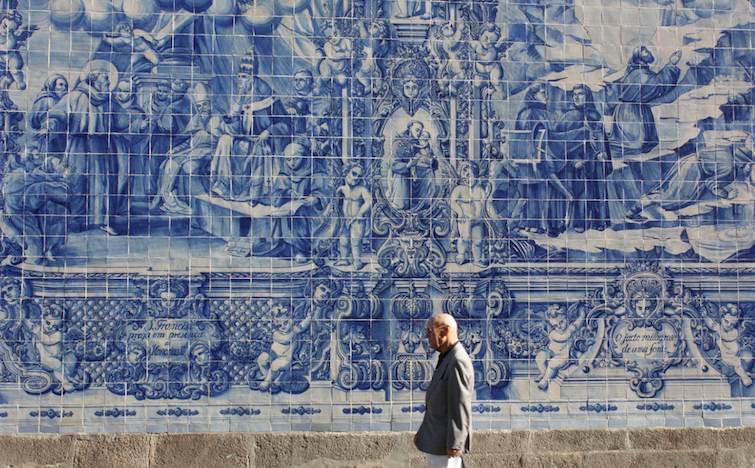
The Azulejo Tiles of Portugal
When you first visit Portugal, one of the things that invariably catches your eye is the pervasive presence of ceramics and wall tiles in ornamentation. Whether used as wall facings on the inside and outside of buildings – on churches, palaces or private homes, both in large cities and small villages – ceramic tiles are king in Portuguese decoration. Unlike the rest of Europe, where they are used more sparingly, in Portugal they seem to take over the walls. They feature in two major varieties – polychromed tiling and the signature blue-and-white combination, some of which are technically and aesthetically superb.
This cultural heritage of Moorish origin first took seed in Portugal in the 15th century, having entered the country via neighbouring Spain. It soon became the wall facing of choice among Portuguese royalty. The use and quality of ceramic tile decoration reached their zenith in the 18th century. Nowadays, azulejos are still very much in vogue and large workshops continue to operate.
While ceramics are in evidence throughout the country, following is a selection of the leading sites. They are well worth visiting – both for the exquisiteness of their ornamentation or owing to the presence of a large production centre.
Lisbon
As befits a capital, Lisbon is graced with numerous examples of azulejo tile facings, which even cover the walls of the city’s metro system. Among some unusual landmarks to be found in the city is the Quinta dos Azulejos, housed in the Colégio Manuel Bernardes on Paço do Lumiar street. The sheer decorative beauty of the scenes depicted on the walls in the garden is simply stunning.
However, the main reason for including Lisbon in this tour is the Museu Nacional do Azulejo, where visitors can learn all the ins and outs, production techniques and history of this quintessentially Portuguese element of architectural ornamentation. It is also a good point to start off the tour.
Aveiro
This small, beautiful city, also called the “Venice of Portugal” for its canals, which you can sail along in colourful boats known as moliceiros, is enchanting in itself. A coastal city famed for its fishing and salt production, it has a beautiful centre with outstanding examples of Modernist buildings. The authentic jewel of this city is the Railway Station, striking for its ceramic ornamentation and a fitting final flourish to any visit here. The polychromed azulejos feature depictions of railway scenes, as well as motifs from nature, culture and traditional activities. And, while you are in the city, be sure to see the beach with its bathing boxes painted in colourful stripes.
Ovar
This coastal city is worth visiting for its beaches, but it also boasts a large number of public buildings adorned with azulejos, most of which come from the factories at Vila Nova de Gaia and Aveiro. The plethora of tiled wall facings has earned Ovar the nickname of the “Azulejo Museum City”.
Válega
Just six kilometres from Ovar lies the village of Válega, where you should make a point of visiting the Church of Nossa Senhora do Amparo. Its walls are faced, both inside and out, with mostly polychromed tiles, except for the external side walls and back, which are bicoloured in blue-and-white tiles. Construction work on the church began in 1746 and lasted for a whole century.
Ilhavo
Ilhavois noteworthy above all for its Vista Alegre Factory, one of the most internationally acclaimed sites in Portugal. Founded by José Ferreira Pinto Basto in the early 19th century for glass and porcelain production, it houses a museum where visitors can learn about ceramics culture through the collections on display and the values associated with Vista Alegre.
Book your Vueling to Lisbon and discover for yourself this wonderful ceramic ornamentation on Portuguese buildings and monuments.
Text by Los Viajes de ISABELYLUIS
Images by Sunny Ripert
more info
Cascais a Game of Kings and Spies
Cascais is a Portuguese municipality some 25 kilometres west of Lisbon. It is now a tourist resort with a host of facilities – extensive beaches and secluded coves, a rugged terrain suited to all kinds of sports, culinary offerings based on quality products and endless leisure options. It also has an exciting history, reminding us that this spot in Portugal was once the refuge of royal families and the nobility and a nest of spies during the Second World War.
Today Cascais is a quiet town dotted with small urban beaches and sheltered from the rough Atlantic by a beautiful bay and a formidable fortress. It is well worth taking a relaxing stroll along the beach known as either La Ribeira or Los Pescadores and discovering its beautiful buildings, notably the Palaces of Condes da Guarda and Seixas.
The ocean is one of Cascais' great assets as it supplies the town with its culinary foundations – fish and seafood, prepared in a special way here. Among the most popular dishes in the region are fresh sea bass and white seabream and the delicious Cascais sole, accompanied by fine garnish. They can be ordered in any of the highly varied array of restaurants in the town, from the simplest, economical eateries to the more refined establishments, where culinary innovation is very much in evidence.
In Cascais harbour you can catch sight of luxury yachts, leisure craft and competition boats, as the town and, by extension, the Coast of Estoril, is a worldwide hub of sailing competitions. Apart from this sport, the waters in this part of the Atlantic attract thousands of surfers (particularly to the beaches of Guincho and Carcavelos), windsurfers, paddle surfers and sports fishing enthusiasts, which is increasingly gaining more devotees. The town harbour is also very lively at nightfall as it is full of restaurants, bars and café terraces, ideal for dining or having a drink.
Home of Kings, Land of Spies
In the late 19th century, this region was a pioneer of tourism in Portugal. Indeed, in 1870, the Portuguese royal family chose the Cascais citadel for their summer residence on account of its excellent location. It was also the destination of the nobility and European families of noble lineage, among them Spain’s monarch in exile, who lived in Villa Giralda for many years.
Apart from being a town that breathes tradition, owing to its geographical situation, during World War II Cascais attracted countless spies, including Ian Fleming (best known for having created the celebrated fiction spy, James Bond) and the Serb Dušan Popov, a hardened womaniser whom Fleming is said to have based his 007 character on. The agents who lived in Cascais followed similar routines. They loved lodging at the elegant Hotel Palácio, having tea and delicious Portuguese pastries at the Pastelaria Garrett and burning the midnight oil in the famous Casino Estoril which witnessed more than one row between the secret agents that gathered there.
On the outskirts of Cascais is the natural vantage point of Boca do Inferno (Hell’s Mouth) and, twenty kilometres further north, Cabo da Roca (Cape Rock), the westernmost tip of continental Europe. This privileged spot, “where the land ends and the sea begins”, as the poet Luís de Camões would have it, affords stunning views of the sunset, reminding onlookers that Cascais is the perfect choice for a relaxing getaway.
Book your Vueling to Lisbon and head for Cascais, where you are sure to succumb to its charm.
Text by Tus Destinos
more info