
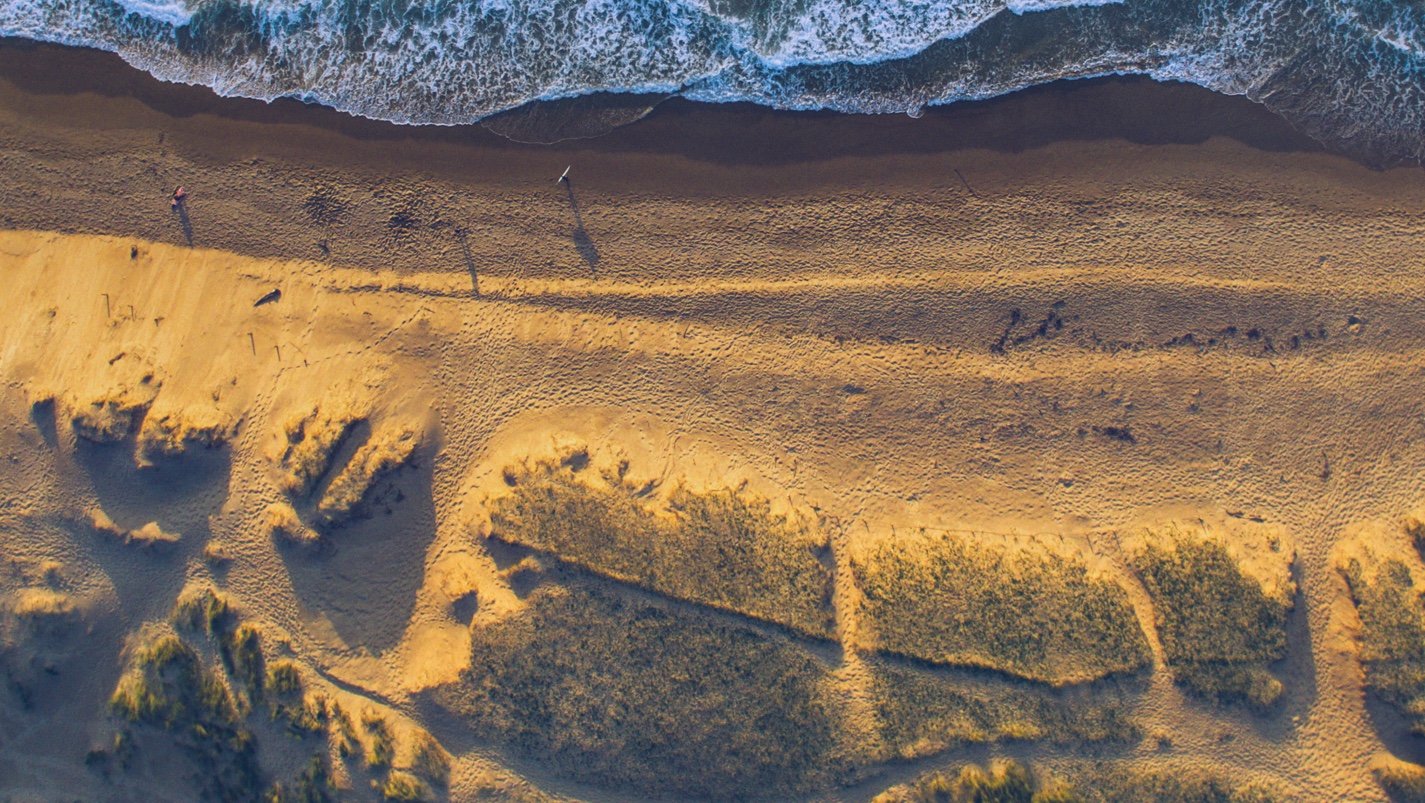

Sardinia: an amazing island
Up to Sardinia, the second largest island in the Mediterranean, comes all kinds of tourism attracted by its fantastic contrasts. Big claims are its magnificent landscapes, crystal clear waters and beaches – that nothing have to envy to the beaches of the Caribbean-, considered to be one of the most beautiful in the world. But up to Sardinia becomes also a tourism seeking to discover their valuable cultural legacy.
Ancestral traditions and rural ambiences that intermingle with modern cities and, in many areas, a luxurious tourism with big purchasing power. The fact that till not long ago, the island was a slightly exploited turísticamente, it does that the Sardinians still preserve predisposition is good towards the tourism. They always prove to be kind and ready to help and to advise.
Olbia is located in the North of the island. Olbia means ‘happy town’ and is not for less!. Here you will find that, for some, are the most beautiful beaches of the Mediterranean. It will cost you to choose between all of them, with its crystal clear waters and fine white sand. The beaches of Porto Istana, Lido del Sole, Li Cuncheddi, Bados, Il Pelikano happening by the 55 kilometres from the Coast Emerald in a postcard landscapes. And for the more daring, remember that it is an excellent area to practice the exciting kite surfing!
The Coast Emerald is a holiday place of jet set. The area of the gulf in which it places Olbia finds full luxurious yachts, and it is frequented by celebrities of all kinds that culture and history come attracted by the fascinating nature miscellany. And the fact is that Olbia preserves historical buildings and architectural value as the Town hall, the Romanesque iglésia of San Simplicio, the ruins cistenses or the Carthaginian wall.
The city of Cagliari, the capital of Sardinia, is located on seven hills (Sant’Elia, Bonaria, Monte Urpinu, Castello, Monte Claro, Tuvixeddu San Michele), in the gulf south of Sardinia and surrounded by marshes. Cagliari, and the entire island of Cerdagne in general, retains important vestiges of the Phoenician and Roman civilizations, and a true medieval air. You ll marvel at their culture, and the taste of marinera capital.
The oldest district of the town is the Castello, in which are the main points of interest. Perched high on a hill, you can easily access, either from the elevator of the market of Santa Chiara, from which it is located near to the Torre di San Pancrazio or climbing the staircase of St Remy that comes out of the piazza Constituzione. This square is a very lively place at night, with performances and lively local.In the district of la Marina, more mediterranean atmosphere, with plenty of typical taverns to eat. And let’s not forget the beaches! The most popular is the of Poetto, and one of the most beautiful of all the Mediterranean, as well as the marshes where you can see a host of migratory birds such as flamingos.
Finally, mention her excellent gastronomy. As in the rest of the Mediterranean, Sardinia is an island rich in healthy products from land and sea. Starting with its typical bread, the pane pane Carasau – of thin mass and crunchy, which many times is served drizzled with olive oil or to which you add tomato, fried egg or cheese. If you want to apply for a rich incoming, choose between the octopus, tuna, soup of fish, squid, shrimp, a dish of pasta or the rich rice that so well prepared. To choose a wine, keep in mind that the best come from the area of Alghero or Oristan.
A place well worth discovering! Check out our flights here.
Picture by Alsecommons
more info
Catania: Flavor, Fire, Light and Water
The province of Catania offers to travelers a wide range of landscapes, passing by small bays and bucolic trails, from Etna, the highest volcano in Europe, to the waters of the Ionian coast. And, as in landscapes, gastronomy of Catania is formed by great diversity of traditional recipes where converge Mediterranean tastes and textures.
Herbs, spices and products make a journey of flavors on the palate. From oriental spices like cinnamon and saffron - that flavored so many dishes-, to the sweet and sour or citrus contrasts.
The Etna volcanic soil is rich in minerals which, alongside with its characteristic climate, allows the cultivation of excellent fruits like lemons and oranges, tangerines, apples, olives, almonds, strawberries, cherries, hazelnuts, chestnuts and the production of quality wines worldwide recognized.
One of the great products of this dark and fertile land is the Bronte pistachio, the "green gold of Sicily", which is used for making ice cream, sauces and in many recipes.
Historic markets
Perfect to discover the land's products, nothing better than to visit its historic markets, the Fescheria and the Piazza Carlo Alberto Markets, who from early hours swarm at a frantic pace.
In Fescheria, located in Duomo Square, the visitor can try some of the products in site , such as clams, mussels, sardines, anchovies, oysters, sea urchins or mauru, an algae of the area which is eaten raw and dressed with a few drops of lemon.
Granita
To start the day, especially in summer, you should try the typical Catanese breakfast with lemon granita, almond, strawberry or chocolate, accompanied by a brioche called Tuppu. The granita is a Sicilian icecream that has little to do with the typical Italian icecream; it is similar to the typical granita but more creamy and refreshing, and is made with natural fruit.
Pasta alla Norma
The most traditional dish is "Pasta alla Norma", which is normally prepared with macaroni or spaghetti, tomato sauce, crispy fried eggplant, fresh ricotta, albahaca, and is named after the most famous opera composer Vincenzo Bellini, born in Catania.
Arancini
Taste as well the typical arancini for a snack or a light meal. It is a ball of fried rice prepared in Sicily in a thousand ways: filled with meat, spinach, ham or eggplant. It must be eaten by holding the tip. They are very good at restaurantes such as Etoile d'Or (the Piazza Umberto), Spinella (Via Etnea 298) or Da Ernesto. (Via Ruggero di Lauria 91/93)
Catanese pastry
Do not forget the famous Catanese pastry and, especially, the popular cannoli -a flaky pastry filled with ricotta and nuts-, the cassata alla ricotta or almond and pistachio pastries. They can be found in many local street Etnea, as in Pasticceria Savia, one of the most prestigious bakeries in Catania. (Via Etnea 300 http://www.savia.it/)
Chioschi
One of the attractions of the Catanian cuisine are its chioschi , a octagonal shaped booths at strategic shadowy places, where thirst and temporary fatigue are relieved. Some refreshments are traditionally served based in fruit syrups mixed with carbonated water time.
Each neighborhood has its own chioschi. It comes to be the place where people get together at any time as they are open almost 24 hours a day. Here you will appreciate the habits and customs of the Catanese.
The first chioschi called Costa, opened in 1986 in Piazza Stesicoro, and later opened Vezzosi in Piazza Duomo. The Costa moved to Piazza Santo Spirito and Vezzosi moved to Piazza Vittorio Emanuele III, where they are today.
Picture Pasta alla Norma by Paoletta S.
A place well worth discovering! Check out our flights here.
more info
Warsaw: Beyond the Royal Route
The city of Warsaw extends into two unequal parts on both sides of the Vistula river. Even though most of the tourist attractions are located on the left bank, in the so called Royal Route- the prestigious historic walk in Warsaw Trakt Królewski – and the trendy shops of Nowy Swiat. But beyond the Royal Castle, the Wilanów Palace and the Tomb of the Unknown Soldier we find a modern city, wanting to reinvent itself.
Prague: the bohemian district of Warsaw
On the right bank of the Vistula, right after crossing the historic zoo, it is located the neighborhood of Prague, a place that has successfully reinvented itself like no other in Warsaw and where now come to live young artists that have boosted the area with art galleries and craft shops. Its walls, once gray, are now full of murals and paintings that give a different color to the district.
Prague is now one of the most active cultural centers in town and with the mostt exciting nightlife scene beyond fashions and conventional trends. A place where creativity arises from the most unexpected corner.
Come up to the number 14 in Otwocka street, where is located the artistic, gastronomic and leisure center Centrum Artystyczne Fabryka Trzciny; certainly one of the most vibrant parts of the city.
The pianist in Warsaw
The Polish director Roman Polanski perfectly recreated the city occupied by the Germans in his film The Pianist, which recreates the memories of the pianist Szpilman, played by actor Adrian Brody. It was precisely the Prague neighborhood the chosen one for the filming of some scenes due to the abundance of original buildings of the time, who set the perfect city’s set for that time. Other scenes were shot in and around the city, and in the Military Academy in Warsaw, where the Umschlagplatz’s scene happens , when the family of Szpilman along with other Jews are tucked to death in a freight train that will take them to the concentration camp.
Close to Centrum metro station, we can find the area where the Ghetto was located during the German occupation and some few remains of the wall that formed the Warsaw Ghetto’s boundary, in the streets and Zlota Sienna.
On the trail of Chopin
Warsaw is the city of composer Frédéric Chopin, so following ”the avenue of musical banks” that indicate the main points related to the great musician is a fun way to discover it ; 15 black interactive banks that were installed in 2010, coinciding with the 200th anniversary of Chopin’s birth.
These banks will guide you through the most emblematic places of his life like his home in Warsaw in the Czapski Palace and the Church of the Holy Cross where you will find his heart in a box . To facilitate the route there is a QR code that will take you directly to a web audio guide in several languages. In addition, the banks have a button that, when pressed, releases fragments of some of his compositions.
The Cluster Waste
Gnojna Góra (the cluster waste) is the peculiar name of the main viewpoint of the city. Here was indeed, from the Middle Ages until the late eighteenth century, the municipal rubbish dump but as the city began to expand this area was too central to such use. From here, you have the best views over the river, district of Prague or the Cathedral of St. Michael.
Discover its cuisine
Of course! One of the best and most enjoyable ways to know a city is starting from its cuisine. Try the bigosz – Poland’s national dish which is prepared with boiled cabbage and sausages-, the pierogy -the cooked dumplings so common in Polish gastronomy-, the varszcz – a soup made of beet very usual in almost all Eastern European cuisine – and the various recipes using mushrooms.
Why not take a trip to Warsaw? Have a look at our flights here!
more info

Bayonne A City That Tastes of Chocolate and Ham
Bayonne, capital of the French Basque Country, is one of the most surprising cities in the new French region of Aquitaine-Lemosín-Poitou-Charentes. Basque from head to toe, this city located at the confluence of the rivers Nive and Adour is well worth strolling through, as you will discover buildings that stand out for their colourful facades and traditional half-timbering. This reveals the Basque influence and indeed Bayonne is part of the historical territory of Labourd – Lapurdi, in Basque. One of the most widely visited spots in the city is the Basque Museum, which features one of the most important ethnographic collections in southern France. Their culture is present in some local businesses, such as the shops selling typical Basque fabric, in such sports as pelota – very popular among the Bayonnais – and in the language, as French and Basque coexist in Bayonne.
Bayonne, in the department of Pyrénées-Atlantiques, has long been unjustly upstaged by the thermal baths and glitter of neighbouring Biarritz, located less than 10 kilometres away. The historic centre of this locality in Aquitaine is made up of three quarters – Grand Bayonne, Petit Bayonne and Saint-Esprit. Prominent in the first of these is the Cathedral of Sainte-Marie de Bayonne, with its wonderful 13th-century cloister, the Château-Vieux (Old Castle), built in the 12th century by the Viscounts of Lapurdi, and the Spanish Gate, which the old main road leading to the border once passed through. In the Grand Bayonne you can also make out the three walls that encircled the city in former times – one, of Roman origin, a second from the period of King Francis I (early 16th century) and the last one designed by Sébastien Le Prestre de Vauban in the second half of the 17th century.
Petit Bayonne, for its part, is a secluded quarter presided over by the Château-Neuf (New Castle), built by Charles IV in the 15th century. Sited in this area is the aforementioned Basque Museum, on the Nive riverbank, housed in a 16th-century palace known as the Maison Dagourette. Inaugurated in 1922, it is a veritable ethnographic gem, boasting displays ranging from traditional burial sites to houses, furniture and craftwork. Lastly, on the far side of the river lies Saint-Esprit, with the citadel and train station as its major landmarks. That is where Spanish and Portuguese immigrant Jews lived after fleeing from the Inquisition.
Gastronomy in Bayonne
Bayonne market is an ideal place for trying the city’s typical dishes, like the tasty Gâteau Basque,in addition to cured ham, accompanied by peppers from the neighbouring town of Espelette, and chocolate, brought here by the Jews from the Iberian Peninsula who settled in Bayonne. Apart from the market, one of the streets treasured by lovers of the cocoa derivative is Rue Port Neuf,home to a number of craft workshops such as L’Atelier du Chocolat, where a delightful spicy chocolate is made, and Chocolats Cazenave, an establishment which has been running for one and a half centuries and counts among its specialities water-based chocolate and mousse.
Bayonne Mini-Guide
Sleep at…
The Hôtel & Restaurant Les Basses Pyrénées, a central hotel located just a few minutes from the Cathedral and Spanish Gate.
For a meal, be sure to visit…
La Karafe (25, Quai Jaureguiberry), with typicalpinchosand sausage.
Brasserie du Trinquet (4, Rue du Jeu de Paume), sited next to a court where Basque pelota is played on Thursdays.
You can shop at…
Tissage de Luz (3, rue Port de Castets) who sell tablecloths, bags and bedclothes bearing the typical Basque hallmark, as well as other more modern types in bright colours.
The airport of San Sebastián lies 40 kilometres from Bayonne. Book your Vueling here and discover it for yourself!
Text by Tus Destinos
Images by B. BLOCH - CRTA y tuvemafoto-OT Bayonne
more info