

Rome is a Different Kettle of Pasta
This post is another of those roads that lead to Rome. We trust it will persuade you to want to go (or go back) to Italy’s capital. In the eternal city, the pasta, pizza and even aperitifs taste different. The Romans know it, and so do the rest of the Italians. Because, as you well know, there is more than one Italy.
Having landed, strolled and got lost amid all La Grande Bellezza, these are the key destinations for savouring Rome tastefully and with sprezzatura, which has no exact translation – it refers to a nonchalant, seemingly effortless (but studied) attitude characteristic of Italian culture.
Where to eat
Roma Sparita. Located in the Trastevere, in a secluded corner sheltered from the hubbub, where time seems to stand still. Their cacio e peppe is a must, as is the Roman spaghetti par excellence, their seasonal mushroom recommendations and their tiramisu.
Romolo e Remo. Out of the way, but well connected by bus, this traditional trattoria romana is usually chock-full, so it is wise to book ahead. Home cuisine with generous helpings – go for the pasta dishes combined with the best fresh produce, and the pizzas if you’re there in the evening. Warm, obliging service. Open all week.
E-45 Piadineria Romagnola. Near the Vatican, it is ideal for a quick, quality meal. You choose the type of pasta and the filling. They make it on the spot and you can also have a homemade birra or take it out and have it elsewhere. Try the Roman classic, the number 12 on the establishment’s menu.
Taverna Trilussa. This tavern features exquisite antipasti, local sausage and outstanding stir-fries in the Trastevere.
Assunta Madre. On a quiet backstreet running parallel to the river Tevere lies this seafood temple. The fishtank in the entrance is their best testimonial, as are the photos on the walls, featuring celebrities that have graced their establishment.
Da Felice. A must-see trattoria in Trastevere; a family business offering tried and tested recipes. Try the roast lamb and the bucatini all’amatriciana, a type of hollow (or perforated) spaghetti, slightly thicker than the usual. It is typical of the Lazio region and is eaten with amatriciana sauce, which becomes infused in the pasta. Amatriciana is a variation on the different tomato sauces, this one including pork jowl bacon and cheese. The assortment is huge. All’amatriciana means any pasta or dish with this sauce. Order any of their select wines to go with it.
I Luzzi. A family trattoria serving Roman dishes near the Colosseum. Go for the set menu or one of the pizzas. This economical trattoria is in a tourist enclave.
A good ice-cream can be had either at Carapina – try their Nero assoluto – or Vice café.
Where to drink
Roscioli. This salumeria or delicatessen features tastings of pickled produce – mainly types of local sausage and canned foods, although it also boasts an excellent wine bar. If you’re looking for a good wine, you’ll find it here for sure. It’s a bull’s-eye. As are all their Italian specialities.
Café Doney. With its small terrace right on the Via Veneto, this is one of those distinguished cafes relished by both Romans and tourists looking to enjoy a good aperitif in one of Rome’s quieter, more select areas.
Porto Fluviale. A former warehouse restored as a trendy gastronomic enclave in the Termini area. It offers both food and drink but, above all, try their coffee and spritz as an aperitif.
To NY. The interior design and long bar counter dotted with cocktail shakers could not be more eye-catching. Best to drop in at night, with the atmosphere in full swing, and submit to the bartender.
Where to sleep
The Westin Excelsior Roma
An imposing, classical-style hotel just a stone’s-throw away from the Piazza di Spagna and the city’s prime shopping area. A unique spot for indulging in la dolce vita with its full-blown breakfast, its slew of homemade cakes and pies and even side dishes from all over the world. The hotel boasts spacious rooms with views, bathrooms with all manner of amenities, imperial-style salons and a spa to relax and recuperate, before taking in more of Rome. Well placed on the metro (the Barberini stop) and bus routes.
Text and photos by Belén Parra (Gastronomistas)
more info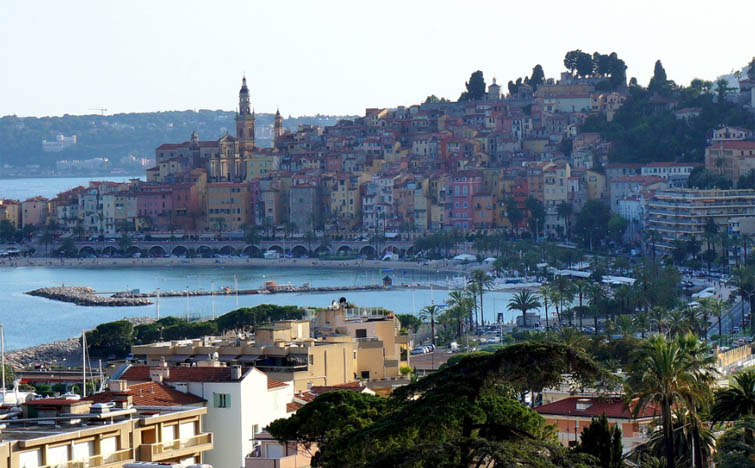
Shopping in Ventimiglia
By Michael Shuermann from Easy Hiker
I still remember the first time we came into contact with Ventimiglia market – without even knowing that such a thing existed. We were boarding the local train from Nice to Menton, eastwards down the coast of the French Riviera in the direction of the Italian border. We were amazed to find it packed to the rafters at around 11 am on a Friday. From other trips on that line, we had been used to having a choice of seats on a weekday morning, but on that day, it seemed as though the entire population of the Cote d’Azur was on the move.
We did not find out until much later what was going on, but all these crowds were going to the Italian border town of Ventimiglia – the last stop on that line – for the popular weekly Friday street market.
The market mainly offers clothes, handbags and other leather goods – of mixed quality, it must be said, but occasionally, you can find well-crafted products at large discounts.
One of the market’s attractions apparently has something to do with the fact that – whisper it – the Italian police is less strict than its French counterpart in pursuing brand counterfeiters, so the French customs occasionally stop people on their way back from the market, asking them where they bought their shiny and new “Louis Vuitton handbag”. Be forwarned.
The market also features a section where farmers offer domestic food products. You can buy specialties from all over Italy here – Calabrian sausages, Parmesan cheese, olive oil – but also local produce such as sun-dried tomatoes and home-made pesto sauce, one of the things for which the province of Liguria (which includes Ventimiglia) is famous.
Have a coffee in one of the many charming little coffee houses around the 1930s municipio, the City Hall. You are only 15 km away from the French border town of Menton, but you will already feel a marked difference in the general liveliness (and noise levels) of the street life.
On market days, there is also a particularly large number of ambulant traders around who are walking from cafe to cafe peddling key chains that glow in the dark, small novelty household items and the like.
We have gone shopping many times at Ventimiglia market, and often, what we have bought from the peddlers turned out to be our most unforgettable purchases. What would our lives have been without the cicada fridge magnet that starts to sing when somebody approaches it?
You can reach Ventimiglia conveniently by local train (TER) from Nice. Trains leave frequently, generally every 30 minutes throughout the day. Don’t forget to bring a valid ID!
By Michael Shuermann from Easy Hiker
Why not take a trip to Nice? Have a look at our flights here!
more info

La meca de los golosos
The most characteristic cakes & sweets in Sicily
There are plenty of sweet reasons for the food lovers to plan a trip to Palermo, especially for those that love sweets. Some of the most famous sweets in Sicily, like cassata, cannoli or the best ice creams and chocolates, are available here. You can eat them on holidays or special occasions and is one of the most common culinary habits for the people in Sicily.
Before you get inside one of the well-known 'pasticcerias' in Palermo, you need to know a little bit more about this delicious desserts.
Cassata is the most typical cake in the area of Palermo. Generally speaking, it has a round shape and is made of layered cakes softened by liquor and fruit, plus layers of ricottacheese. Toppings are usually baroque, made of marzipan and all kinds of decorations, usually candied fruit from the area.
The famous cannolis are a dessert, very typical in Sicily, which you should try if you are in Palermo. It is made of a wafer cone pastry filled with sweet cottage cheese and usually toped with hazelnuts, pistachio or chocolate, depending on the area, sprinkling with powdered sugar.
The buccellato is a cake made of shortcut pastry filled with dried fruit like figs, raisins or almonds, aromatized with orange peel or other ingredients, depending on the area. The dessert is toped with cake icing and candied fruit.
The ice cream from Sicily is probably one of the best ice creams in Italy, due to the wide variety of fresh fruits in the area. In fact, the regular breakfast here is usually a roll filled by ice cream, generally of the classic flavours like pistachio, almond, chocolate or seasonal fruits.
The baduzziare pastries made of almond and cocoa powder. Another sweet made of almond are cardenales, made of candied fruit, pistachio, lemon zest and eggshell, the cucchiteddi from Sciacca are almonds paste filled by pumpkins and mostachones from Mesina are aromatized with cinnamon.
The chocolate from Módica is made in southern Sicily, with a traditional technique inspired by the Aztec, using only three ingredients: cocoa, sugar and spices.
Some of the best bakeries and confectioners in Palermo
Pasticceria Matranga
Via Cesareo, 38
www.pasticceriagbmatranga.it
Pasticceria Capello
Via Colonna Rotta, 68
www.pasticceriacappello.it
Pasticceria Costa
Via D’Annunzio, 15
www.pasticceriacosta.com
Pasticceria La Cubana
Via G. Pitrè, 143
www.lacubana.it
Pasticceria Oscar
Via Mariano Migliaccio, 39
www.oscarpasticceria.it
Spinnato
Via Principe di Belmonte, 107
www.spinnato.it
Why not take a trip to Palermo? Have a look at our flights here!
more info
Irresistible Turin
Turin is Piedmont Capital town, and the first historical capital of Italian unified nation, in 1861. The city is surrounded by green charming hills, fascinating all types of tourist.
Easy to be reached, positioned into the heart of Europe, Turin is the perfect short break destination, as well as an unmissable stop along a tour of Piedmont or Italy.
Museums for all tastes
Turin is a friendly and surprising town, with more than 40 museums, from ancient history to contemporary arts, from natural and environmental sciences to the “seventh art”, from car-history to culture of food.
“Mole Antonelliana” – the building, symbol of the town- with its 167m of height, hosts the Cinema Musuem. The Egyptian Museum, with its set-up by Oscar awarded scenographer Dante Ferretti, is second only to the Cairo one.
Lingotto former FIAT factory, hosts Pinacoteca Giovanni y Marella Agnelli, with its unvaluable Canaletto, Modigliani, Balla and Matisse masterpieces.
XIX Century and contemporary Art addicted, will certainly visit GAM – Modern and Contemporary art Gallery- and Rivoli Castle.
And last but not least, National Automobile Museum, with Françoise Confino set-up, and National Italian Risorgimento Museum
Royal Residences “Crown of Delights”
Savoy Court dinasty left the magnificent Royal Residences, UNESCO world heritage. Royal Palace and Madama Palace, flanking the majestic Piazza Castello, Valentino castle, built on Po riverside , and some other castles in the boundaries of the town, form the “Crown of Delights”. Among these, the Royal Palace of Venaria, structured achitecture complex, surrounded by La Mandria Park and its gardens, and Stupinigi hunting residence, are the most significant.
What to taste in Turín
A travelling in Turin is also a trip through food culture. Aperitivo is a must: a glass of wine or a cocktail, with some snacks, tastings and salads, in one of the trendy bars is a modern habit with an ancient origin. Vermouth has born in Turin in 1757 and Martini & Rossi still has its main base close to town.
Historical Cafès, with their vintage atmosphere, are beautiful places for tasting local delis: such as Bicerin- traditional Turin drink, made with coffee, chocolate, and cream – hot chocolate with cream, or the liquour flavoured Sabayòn, and the “Gianduiotti”( chocolate candy with hazelnuts).
Picture: Hpnx9420
Why not take a trip to Turín? Have a look at our flights here!
more info