

5 recommendations for day trips close to Barcelona
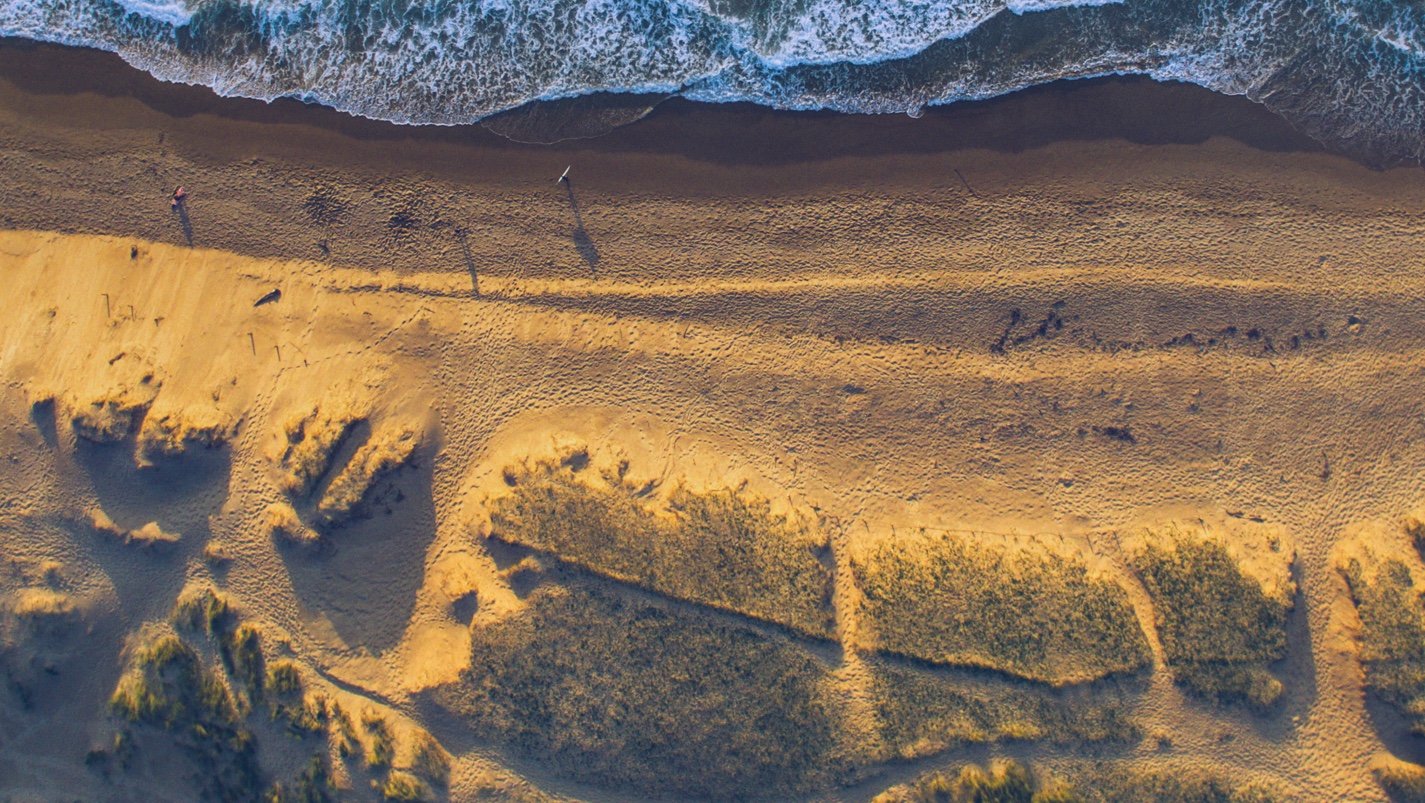
Looking for things to do around Barcelona? If you’re planning a visit to the Catalan capital and want to get off the beaten track, we’ve put together 5 getaways for you. Discover hidden spots just half an hour from the city: unspoiled beaches, hot spring resorts, a Gaudí creation far from the teeming crowds of the Sagrada Familia, and the monastery where Columbus was greeted by the Catholic Monarchs following the conquest of America.
more info
Holland The Bicycle Paradise
The bicycle is clearly one of the identity traits of the Netherlands, as are their canals, windmills and tulips. The flat terrain, with hardly any slopes, and the fabulous infrastructure available for this ecological means of transport, makes it the ideal land for cyclotourism. Following is our selection of four itineraries for discovering Holland from a healthier perspective, both in terms of environment and fitness.
Route Through Amsterdam
A comfortable, entertaining way of touring the Dutch capital is by emulating most of its inhabitants and pedalling through it on two wheels. Riding comfortably along the city’s streets poses no problems, as Amsterdam is fully cycle-aware and caters specifically for bicycles. You should, however, be mindful of the rules governing the use of cycle lanes and cycling areas; otherwise, you are more than likely to be on the receiving end of a reprimand.
In addition to getting about the historic centre in search of landmarks, we recommend you head for Amsterdamse Bos (Amsterdam Forest), where you can indulge in nature to the full. Located four kilometres from the centre, this huge park acts as the city’s green lung and leisure area. Take note!
Tulip Route
The best way to enjoy spring in Holland is by pedalling through the countryside carpeted in tulips. The most spectacular sightseeing period is in April and May, when the tulips come into flower. This route, which starts and ends in Amsterdam, will bring you into contact with nature in all its splendour. It runs for 305 kilometres and lasts 8 days, taking you to such towns as Gouda, known for its cheese; Delft, famous for its blue ceramic; Leiden, the birthplace of Rembrandt, and Haarlem, where you should make a point of visiting the museum dedicated to the painter, Franz Hals. The highlight of this itinerary is Keukenhof. This huge park, regarded as one of the most beautiful in Europe, is located between the towns of Leiden and Haarlem.
Windmill Route
Another iconic landmark of the Netherlands are its windmills, which also have their own bicycle route. The point of departure and arrival is Bunnik, located next to Utrecht, and the itinerary involves covering 200 kilometres in six days. The high point of this trip isKinderdijk,a polder situated at the confluence of the rivers Lek and Noordt which is drained by a system of 19 windmills built around the year 1740. The route will also take you past Dordrecht, one of the oldest cities in Holland, and Gokum, set amid some fantastic scenery.
North Sea Route
The North Sea coast has some beautiful spots that make a cycling getaway well worth your while. To see it in all its splendour, we propose an itinerary of under 50 kilometres, running from The Hague to Zandvoort, which affords some beautiful sea views and takes you past lovely beaches.
You can obtain maps of these and many other routes, with details of each itinerary, from the Dutch Tourist Board. Book your Vueling here and venture through the Netherlands on their star means of transport – the bicycle.
Text by Los Viajes de ISABELYLUIS
Images by Bùi Thụy Đào Nguyên, Mandie, Tarod
more info
Three Day Adventure in the South of Catalonia
The Tierras del Ebro and its mountains, situated in the south of Catalonia, offer anything an adventure lover could wish for – pleasant boat rides, walking or horse-riding expeditions, paragliding flights for the most daring, kitesurfing for the more sports inclined or potholing for inquisitive minds, among many other activities. Here, then, is a selection of activities you can embark on to make the most out of your visit to these splendid climes during a three-day getaway.
First Day
Safari in the Ebro Delta
A good way of making your first contact with the Ebro Delta is by venturing across it. The crew at Natura & Aventura offer an interesting outing along its beaches, lagoons and rice paddies. An expert ornithologist will point out the most interesting species on the way, prominent among them being flamingos, which are sure to be the subject of some of your souvenir photos.
A Bird’s-Eye View of the Priorat
Imagine being able to see the vineyards of the Priorat from the air! With Parapente Montsant, you can do just that. Located in Cornudella de Montsant, they offer flights in a two-seater which will take you above the Serra de Montsant Nature Reserve, an experience you are not likely to forget ever.
Discovering Els Guiamets
After flying over the Priorat, we return to earth and head for the Guiamets reservoir, located in the heart of the Priorat, where the Centro Natura ServiKaYaK offers pleasant rides by kayak, pedal boat or fishing vessel. The idyllic scenery which accompanies the ride is the final flourish to your thrilling first day.
Second Day
The Seductive Sebes Nature Reserve
The second day also starts out in the Ebro Delta, but this time you embark on a guided tour of the Sebes Nature Reserve and the Flix meander. This area is known for its wetlands where you will again be treated to sightings of local fauna, particularly storks, and to exciting panoramic views from a number of observation platforms.
Underground Beauty Too
One of the more unusual attractions in the Tierras del Ebro is provided by the Benifallet Caves, commonly known as the “Cuevas de las Maravillas” (Caves of Marvels), where water has eroded the rock into a unique landscape. Make a point of including it on your wish list.
Third Day
Galloping Across the Montsià
A great way of exploring the Montsià mountain range is on horseback. The Carlos Cid Riding School offers outings through the mountains, following a route studded with olive groves, orange and carob groves, bulls, watering holes with bird-life and dry-farming land. A unique and entertaining way of touring the area. Be sure to sign up for it!
Kitesurfing in the Ebro Delta
Sports enthusiasts should take the opportunity to delight in the playful side of the Ebro Delta’s waters. One option is to try your hand at kitesurfing. The folks at DeltaKiteSup will guide you through your first few paces or bring out your more advanced kitesurfing streak. Take note!
Text and photos by Turisme Catalunya
more info
5 Brussels Museums For the Autumn
Brussels has a heady cultural agenda where exhibitions andvernissagesare common fare. Some especially interesting spaces have been unveiled there in recent times, augmenting the established ones. Thus, art enthusiasts and culture devotees in general would do well to visit them on a brief getaway.
The first of these is the ADAM (Art & Design Atomium Museum), located in the Atomium, an iconic construction in the Brussels district of Heysel which was built for the 1958 World Fair. ADAM is an art and design centre which showcases a unique collection of plastic furniture and other objects owned by the Belgian artist, Philippe Decelle, who has been collecting these artefacts since the 1970s. And, while you’re in the vicinity of the Atomium, you should make a point of dropping in on the light and sound installation, ID#2016, which runs until 13 November 2016 and forms part of the ID (Innovative Display) programme, a digital art festival which has been operating since 2013.
Another major cultural landmark in Brussels is MIMA (Millennium Iconoclast Museum of Art), located in the enduringly interesting district of Molenbeek. This space revolves around the highly specific, innovative theme of the evolution of contemporary art following the advent of Internet and the emergence of Culture 2.0.
Another highly edifying cultural landmark in Brussels is the Museum of Natural Sciences, famed for its Dinosaur Gallery, and particularly its iguanodons, the skeletons of which were unearthed in 1878 at a mine in Bernissart in southern Belgium. Be sure to also visit the Gallery of Humankind, a unique exhibition unveiled just a year ago which traces the evolution of man and the human body.
It is always a good time to visit the Bozar Centre for Fine Arts, not only because it is one of Belgium’s most dynamic art hubs (it receives an impressive 1 million visitors each year), but for the building itself. Designed by the acclaimed Belgian Art Deco architect, Victor Horta, it is a magnificent specimen of the country’s architectural heritage. An exhibition showcasing 80 sculptures by Pablo Picasso entitled Picasso. Sculptures is due to run here in the next few months – specifically, from 26 October 2016 to 5 March 2017. Organised in conjunction with the Musée Picasso of Paris, the exhibition will feature works expressing the creative power of the innovative Malaga art genius, who used a host of materials and numerous techniques in his sculptures.
Lastly, an area well worth strolling about and which always throws up some novelty is the Parc du Cinquantenaire (“Quincentenary Park”). Located in this park, a case in point is the Horta-Lambeaux Pavilion which showcases the stunning bas-relief known as Human Passions, the crowning work of Jef Lambeaux, sculpted in white Carrara marble. Another interesting venue is Autoworld, featuring the world’s most important automobile collection which this year marks its 30th anniversary.
Ready to discover these offerings in Brussels? Book your Vueling to Brussels here.
Text by Tusdestinos.net
Images by Tusdestinos.net, IRScNB-KBINTh.Hubin (Museum of Natural Sciences) and Visit Brussels (Olivier van de Kerchove)