
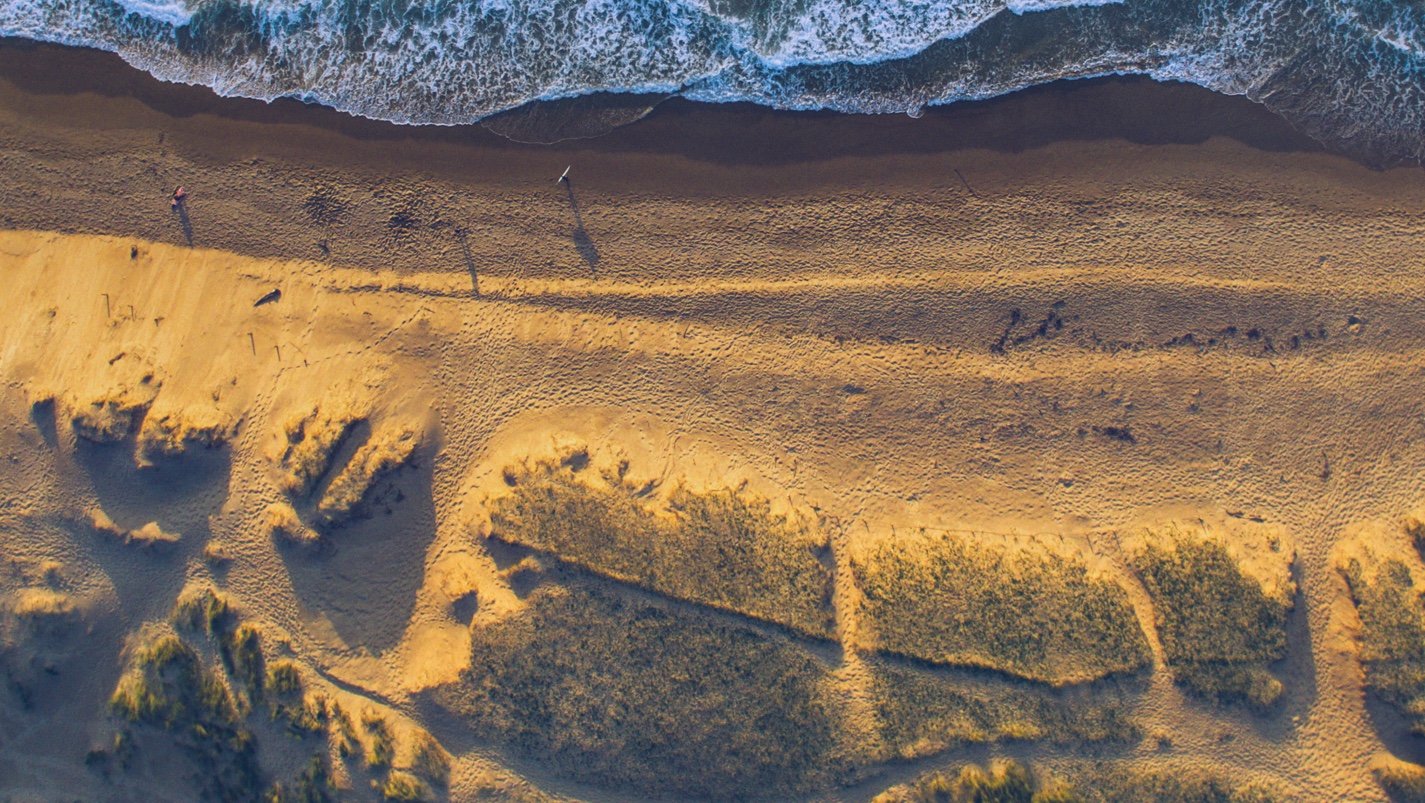

Let's Go to the Beach
What makes Gran Canaria unique is its very diverse ecosystem. The coastline features 60 kilometres of greatly varied beaches. The infinite options offered everywhere on this island are ideal to explore alone or with all the family. Its different types of landscape will seriously make you believe you are on the continent. This Atlantic enclave has a 236-kilometre coastline, kissed by a gentle sun that makes it pleasant even in summer. In today's issue of My Vueling City, we will focus on Gran Canaria's beaches and all you can do there. What are you waiting for to grab your swimsuit?
Our Top Beaches
Here is a list of our beaches of choice. The island boasts more than 120 of them, all quite different from one another – from long, golden, sandy beaches to hidden coves. If you don't find your favourite beach here, you surely haven't searched properly. We also confess that, to a great extent, our preferences coincide with those of the canariones – the locals of Gran Canaria:
1.- Maspalomas
Some beaches are very popular, such as the long sandy tongue of Maspalomas. A massive line of white sand that runs from Playa del Inglés to the foot of the great Maspalomas lighthouse, after skirting a desert of sand dunes that covers the southern coast of the island.
2.- San Agustín
In the south, a calm and relaxing beach with a family environment.
3.-Amadores
Ideal to come with all the family. Also located in the south, the great weather can be enjoyed almost all year around.
4.- Puerto de Mogán
Small and ideal to switch off from your daily routine. This beach is very suitable for children.
5.- Las Canteras
It is well known as one of the best urban beaches of Spain.
6.- Puerto Rico
If you prefer, you can just go with the flow and join the bustle of this traditional touristy spot, which boasts one of the best climates in the whole country.
I'll Be Waiting for You in the Water
Gran Canaria boasts the ideal sea and wind conditions for doing water sports such assailing,windsurfing,surfing, and deep-sea fishing. This has also attracted enthusiasts to the increasingly popular practice of bodyboarding – with a sail or without – in addition to kitesurfing – an enjoyable water sport that uses a kite to pull the surfer over the waves. Gran Canaria's unique location makes it ideal to pursue these activities: thanks to the trade winds, most waves are either medium-sized – and suitable for beginners – or considerably large – ideal for more experienced surfers.
If you're more into exploring the seabed, we suggest you dive down into these crystalline waters. Several diving spots can be found along the island's coastline, such as Pecios de Mogán, the artificial Reef of Arguineguín, Taliarte and Las Merinas. Prefer to do your own thing? You can always go snorkelling. We suggest you rent a car and explore the coast. We can still tell you a secret though – Risco Verde, Caleta Baja and Sardina are ideal places to start off with. Here you'll find all the information you need on diving schools and clubs.
With Children
Gran Canaria indeed offers a myriad of options for those planning to spend their holiday with all the family, in addition to a great choice of kid-friendly activities. This of course includes spending time on the beach. We definitely recommend the vast extension of dunes in Maspalomas and the coves in the coastal area of Mogán. The latter is fail-proof: is there anything better than the sea to bathe and frolic in the waves, or the endless beach to make sand castles and play with toy cars? Well, surprisingly, there is. You can enjoy a ride on camelback, or spend the day at Sioux City, a theme park devoted to the Wild West. Who hasn't played Red Indians against cowboys as a kid? Alternatively, for the more adventurous, you can go on a submarine or watch the dolphins in the south of the island, or even travel to the amazing world of Palmitos Park, where the sight of astonishing animal species can be enjoyed in a tropical environment. Marabou storks, silver-cheeked hornbills, emus, wallabies and Komodo dragons are waiting eagerly to welcome you.
Another sure win is a tour of the whole island to experience its scenic variety first-hand. The tourist bus in the capital travels to some of the island's most emblematic locations, like Vegueta, the historic centre of Las Palmas de Gran Canaria. You can visit this more than 500-year-old district to recharge your batteries in one of its many tapas bars. Oh, and don't forget to visit Cristopher Columbus' house, where he stayed for a last stop before embarking on his legendary voyage to The Americas.
An Appointment Not to be Missed
With all this beach talk, you shouldn't forget your swimming costumes. Do not miss out on Gran Canaria Swimwear Fashion Week 2015, an event where more than 40 brands show off their designs in three intense fashion days. This catwalk has become a showcase of swimwear fashion for firms from all over the archipelago, also sharing their stage with national and international first-class brands. This event takes place in Meloneras (Plaza de las Convenciones), in the municipality of San Bartolomé de Tirajana from 18 to 20 June.
Come and enjoy the beach in Gran Canaria! Check out our flights here.
Text and images by Turismo de Gran Canaria
more info
Santiago de Compostela in 10 Takes
Do you dream of taking home the best photos of Santiago? Buying postcards and books might be the quickest solution, but, if you enjoy taking your own pictures, you shouldn’t hesitate to embark on this eminently photogenic route through Compostela. Here are 10 of its most emblematic subjects.
1. Praza do Obradoiro
We admit you’d be hard put to capture its entirety, as it covers 7,700 square metres. Surrounded by monumental buildings, snapping a whole picture of the Praza do Obradoiro is no mean feat. A wide-angle shot of the portico of the Colexio de San Xerome will yield an image of the Cathedral – cloister and towers included – as well as the Pazo de Xelmírez, the front of the Hostal dos Reis Católicos and the Paxo de Raxoi to the left.
2. Cathedral Facade
The centre of the square is a reasonable viewpoint, as are the arcades of the Pazo de Raxoi, to stand square in front of the Cathedral, if you have a fish-eye lens. But, if you’re looking to take full-length photos with a normal lens, the trick is to go down the stairs of the Rúa de Raxoi, where you get a complete view of the facade with the towers. Ideal for group photos.
3. Goal and Excitement
While its monumental beauty tends to hog everyone’s gaze, the Praza do Obradoiro and its surroundings are indeed the most intensely exciting spots in all Santiago de Compostela. The arrival of pilgrims and the display of satisfaction at having achieved their goal are commonplace scenes in this privileged setting.
4. Bird’s-Eye View
The ascent to the Cathedral Rooftops, 30 metres above the Praza do Obradoiro, affords some of the best views of the squares surrounding the Cathedral, as well as revealing its architectural features and the rooftops and chimney stacks in the old town. The tapestry gallery in the cloister, which can be visited using your museum ticket, provides another fine perspective of the Obradoiro, and of the cityscape south of the Cathedral.
5. The Photogenic Quintana
The stark bareness of the Plaza de la Quintana takes on special significance with the interplay of light on the stone. Noon yields snapshots of the granite in all its hardness. Late afternoon throws the shadows of the spires and lantern of the Cathedral on the wall of the Convento de Antealtares. Night lighting turns the surface into a quasi aquatic medium, like some silent fish tank. You can also get good shots from the Casa da Conga arcades.
6. A Tiny Playhouse
Secluded and motley, the Plaza de las Platerías and its stairs provide splendid group snapshots all day long, thanks to the south-facing portal. In a low-angle shot, the horses on the fountain will seem to graze the Torre del Reloj. To capture the whole square, you have to backpedal to the entrance to the Rúa do Vilar. If you have a wide-angle lens, use the towers to frame the shot. Night light endows the Casa del Cabildo and the stepped cloister tower with a special relief when seen from the church door.
7. Streets and Towers
The rúas (streets) in the monumental site are rich showcases of typical Galician architecture. The Torre de las Campanas or Belltower can be photographed from the middle and upper stretches of the Rúa do Franco. The Rúa do Vilar, flush with the Airas Nunes Café, provides a classic view of the arcades and main facades, with the Torre del Reloj or Clocktower in the background. The parallel street, Rúa Nova, affords a picture postcard view of the porticoed houses around the tower of the Church of Santa María Salomé.
8. The Bountiful Market
Getting back to the historic core, the Mercado de Abastos or market is abuzz with activity, particularly first thing in the morning, suggesting detailed portraits of myriad people and gastronomic delights. Between the green of peppers and turnip greens, the orange of the velvet crabs and the blue of the lobsters, your pictures will look almost aromatic.
9. A Park With a View
You get to Bonaval Park through the Porta do Camiño, between the CGAC and the Convento de Bonaval. There, Álvaro Siza and Isabel Aguirre designed a succession of platforms and terraces which are a delight for any photographer. They are highlighted by the shadows cast by trees, the ruins of old monastic dwellings, the spring, the old cemetery with its lone cypress tree… Late afternoon light is magical, revealing splendid views of the monumental precinct with back lighting. The best time is in autumn, when the landscape is carpeted with yellow, red and brown foliage and branches become denuded, revealing towers and sturdy chimneys in the distance. Extraordinary views of the city from its carballeira and the neighbouring Rúa de Bonaval, which in the afternoon reflects the sun’s rays like no other street.
10. Walkway To A Historic City
By proceeding down the Avenida de Xoán XXIII as far as the transport terminal you get a contrasting image between the contemporary layout of the long steel marquee and the back facade of the Convento de San Francisco. The pergola grows smaller as you approach the monumental area, creating the optical effect of having “entered” the historic city.
How long can you afford to put off enjoying such a beautiful setting, Come on – free up some space on your smartphone and start packing. Check out our flights here.
Text and images: Santiago de Compostela Turismo
more info
Zürich – A Box Filled With Chocolates
“It turns out that in 1917, Einstein, Lenin and Joyce coincided in Zürich.There, Einstein lectured at the ETH, Lenin busied himself preparing the Russian revolution, while Joyce wrote Ulysses. The city is growing on me every day.”
These lines were posted in the Facebook profile of a Spanish friend living in Switzerland’s largest city. She also writes, and is somewhat revolutionary. She doesn’t lecture, that we know of, but it’s early days still. What is such a Mediterranean girl doing in a place like that? The moment we arrived there we had our answer. You can enjoy the vibrant cultural scene, its restaurants, its lake, the river Limmat, its parks, the silence and its modest size as cities go, meaning you can cross it by tram, or be tempted to cycle or walk around it.
Did you know that what the Swiss miss most when they travel is bread? That the owner of the legendary Café Odeon was able to build it thanks to the money he won on the Spanish lottery? That muesli was invented by the physician, Maximilian Bircher-Benner, from Zürich University, and that the historic Opfelchammer restaurant, a favourite of the local novelist, Gottfried Keller, allow you to carve your name on the beams if you drink enough wine? You imagine there is a luxurious city awaiting you, having forgotten that the Protestant Reformation started precisely here 500 years ago and that all ostentation was banned. Like filled chocolates, Zürich holds out surprises. You never know what you’re likely to come across.
Zürichis not an economical destination, but there are ways of reining in your expenditure. Before setting out to discover the city, buy a ZürichCARD. It permits you to catch the train from the airport to the city, where you can take all the tram lines and gain free (or discounted) entry to over 90 establishments.
If you fancy dining at a traditional – yet modern – spot, make sure you head for Haus Hiltl, Europe’s longest surviving vegetarian restaurant, dating from 1898. It offers a buffet with a choice of over 100 specialities – you pay according to how much you fill your plate – in addition to a bookshop, store, culinary studio and bar lounge.
If you’re into the eclectic, you should drop in on Les Halles, an erstwhile warehouse which doubles as a restaurant and market and is famous for its moules frites (mussels with fries). There, you can also buy and eat sausage, cheeses, wines and other delicacies from the old Europe.
If you prefer to dine in a formal atmosphere, make your way to La Salle. They serve a fine steak tartare, various fresh pasta dishes and a classic, homemade meat pie with red wine and mashed potato sauce which you really must try.
You can while your way into the night at numerous bars and clubs, such as the Nietturm Bar, located on the top floor above La Salle. This stylish locale serves the Hugo cocktail (prosecco, elderflower syrup, sparkling water, mint, lime and ice), or you could order a glass of local Zürich wine while taking in the breathtaking views over the city.
If the weather turns nasty or you’re numbed by the cold, go on a cruise around Lake Zurich. And, while you’re at it, enjoy a Swiss brunch – with cheese, bread, salmon, jam, fruit and pastries – while vineyards and fairytale houses parade before your eyes as you drift soothingly along. The brunch-cruise only operates on Sundays and you must book beforehand through Zürichsee Schifffahrt.
If, on the contrary, what you fancy is hoofing it as much as you can, go for their street food. You can wolf down the sausages at Sternen Grill, a hot soup at La Zoupa and marroni (roast chestnuts) at the street stalls. If your stay takes in more than just the weekend, make sure you try their looped pretzels and the other bäckerei (bakery) specialities in season at Vohdin (Oberdorfstrasse, 12), a shop front that has been open since 1626.
If you can afford it, take up lodgings on the 10th floor of the Sheraton Zürich Hotel, located in Zürich–West, the in district. The rooms are spacious, bright and comfortable; wifi is free-of-charge and there are two culinary options – the Route Twenty-Six restaurant (from the 26 Swiss cantons), featuring sumptuous breakfast buffets, and the Café & Bar Nuovo,ideal for afternoon coffee or a nighttime Qüollfrisch naturtrüb beer.
If you fancy bringing back a genuine souvenir in your suitcase, head for a local supermarket and get yourself a mini fondue of Gerber cheese and a bag of Frey chocolates, two historic brands that will sit sweet on the palate. Although – be warned – it will never be the same as having a fondue at Adler’s Swiss Chuchi or hot chocolate at Péclard.
Make haste and savour the Swiss delights of Zürich! Check out our flights here.
Text by Carme Gasull (Gastronomistas)
Photos by Mireia Aranda and Zurich Tourism

The markets of St Petersburg and surrounding areas
Its markets are the best place to take the pulse of any city,places where you can experience the day-to-day life of the people and mingle with the local population. This is no less true in Saint Petersburg, where haggling is encouraged and stallholders will even offer you their wares without any kind of pressure to buy.
Kuznechny Market
The most central and representative of the markets in Saint Petersburg (and also the most expensive) is the Kuznechny Market where you will find flowers, vegetables, cheeses and natural honey for sale.
Numerous attractions are located close to the market: the Arctic and Antarctic Museum can be found in the former Church of Saint Nicholas and includes exhibits on the characteristics of the polar regions, the history behind the conquest of the Great North and the economy and culture of the Nordic people. The Floral Exhibition Centre, the Vladimirskaya Church and the Lensoveta Culture Centre at 42 Kamennoostrovsky Avenue are also worth visiting.
The Dostoevsky Museum is another nearby attraction – the place where this famous writer and author of such novels as ‘Crime and Punishment’, ‘Demons’ and ‘The Idiot’ lived and died. This house museum has been faithfully restored to how it was originally.
If you get hungry, why not try the Marius Pub or the Tres Amigos restaurant. However, if it is thirst that needs quenching, Mollie’s Irish Bar is a great place for a drink.
Sennoy Market
What was once an old hay market has now become a major food market with clothing stalls that fill the surrounding streets.
A large part of ‘Crime and Punishment’ by Dostoevsky is set in the streets of the Sennaya district, where the Sennoy Market is to be found. It is more popularly known as the Dostoevsky District.
It is an excellent area for a spot of shopping in the large department stores. Sennaya Square is a bustling hive of activity where you can find the famous PIK and the large Sennaya Shopping Centre.
For some nice, reasonably-priced home-made food, you should head over to Kafe Adzhika.
If you’re up for a short walk, take a stroll over to Yusupov Palace, located on the edge of the River Moika and one of the most spectacular monuments to classicism to be found in Saint Petersburg.
Sitni Market
On the small Zayachy Island in the River Neva is the true historical centre of the city: Peter and Paul Fortress, the original citadel of Saint Petersburg. Peter I the Great ordered its construction in 1703 and it contains such remarkable buildings as the Peter and Paul Cathedral, where all the Tsars from Peter I the Great to Nicholas II and his family are buried. Standing 122 metres tall, the cathedral bell tower is the highest point in the city.
Although initially designed for defensive purposes, it never needed to be used for that but rather served as a prison until 1917. Its most famous prisoners included such individuals as Trotski, Dostoevsky and Bakunin.
Also nearby is the Saint Petersburg Zoo and the Political History Museum.
A good choice for something to eat would be the popular Salkhino restaurant where they serve Georgian cuisine. In the evening, you might want to try out the legendary Tunnel Club, the first techno club to open in Russia.
Vernisazh Souvenir Market
Less of a market and more a collection of souvenir stalls, this is to be found behind the Cathedral of the Resurrection of Christ or the Church of the Saviour on Spilled Blood and is one of the most popular tourist sites and an attraction in itself. Here you will find many traditional Russian gifts and souvenirs.
The Church of the Saviour on Spilled Blood was built on the spot where Tsar Alexander III was killed. The interior and exterior mosaic decorations are fantastic, as are its stained glass windows. The temple was built in the Russian architectural style of the 16th-17th Centuries (pure Russian orthodox) and bears a striking resemblance to Saint Basil’s Cathedral in Moscow’s Red Square.
Its five large bulbous domes decorated in numerous colours and gold, as well as the meticulous detail work that covers the exterior, are yet more features that make this an outstanding piece of architecture.
Imagen de iwillbehomesoon
Makes you want to go, right? Do it! Check out our prices here!
more info