

Discover the Island of La Graciosa
Lanzarote is one of the most beautiful of the Canary Islands and La Graciosa, situated north-west of the latter, is one of its well-kept treasures. The two islands are separated by a strait known as El Río. The origin of the island’s name is not clear – some hold that it already existed before Lanzarote was added to the Crown of Castile following the expedition of the Norman conqueror, Jean de Béthencourt, in 1402. Whatever the case, its name is well deserved.
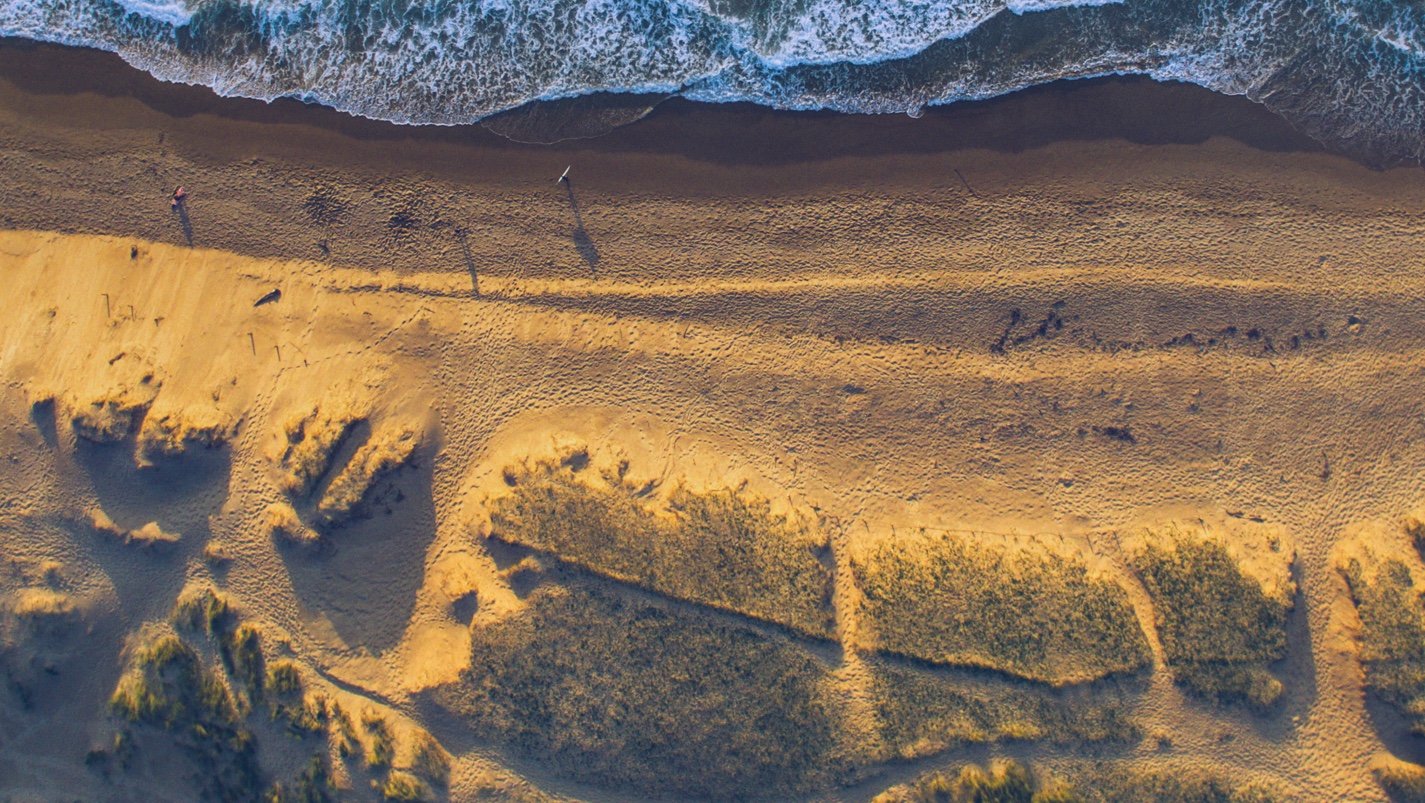
La Graciosa is the largest of the islands and islets that make up the so-called Chinijo Archipelago and its south side is dominated by extensive beaches of yellow sand, like La Cocina and La Francesa. Also located on the seaboard is its only two towns, Caleta de Sebo and Pedro Barba. Caleta de Sebo is the main population centre, while Pedro Barba is currently uninhabited. Like the rest of the Canary Islands, La Graciosa is volcanic in origin. Its highest peak is Las Agujas, which rises to 266 metres.
Chinijo Archipelago Marine Reserve
La Graciosa is part of the Chinijo Archipelago Marine Reserve. The word Chinijo, a local place-name meaning “small”, is usually applied to children here. With an area of 70,700 hectares, it is the largest marine reserve in Europe and is endowed with incalculable scenic value. This large reserve, which stretches between the towns of Teguise and Haría, comprises the islands of La Graciosa, Alegranza, Montaña Clara, Roque del Este, Roque del Oeste (also known as Roque del Infierno) and El Risco de Famara.
The biological wealth of La Graciosa is immense. Some 304 species of marine macroalgae have been catalogued thus far, accounting for 53.15% of the Canary Islands’ overall flora. Indeed, it boasts the greatest diversity of macroalgae species in the archipelago.
The rich resources contained in these waters account for the abundance of marine birds which feed on them for their staple diet. The geopark is designated a Special Conservation Area for Birds (ZEPA, in Spanish). The most common bird species here is Cory's shearwater. Also in considerable numbers are some rare or endangered species such as the kestrel, barn owls, Eleonora's falcon and the guincho or osprey.
Another highly significant potential value of this Marine Reserve are the historical references regarding the presence here of the monk seal. This marine vertebrate, which is now an endangered species worldwide, survives thanks to the tranquility and biological wealth contained along these shores, pitted with sea caves and jameos (collapsed lava tunnels) where they take shelter and reproduce. Alegranza is currently one of the best suited spots for reintroducing the monk seal whose numbers have dwindled sharply due to poaching on the nearby Mauritanian and Mediterranean coasts.
Underwater Journey
Diving is becoming increasingly more popular on the island, which features three major diving spots. El Canal, located between Alegranza and Roque del Oeste, has a platform at a depth of 25-30 m and a pronounced, 35-40 metre fault containing a large amount of fauna. There are abundant populations of large-size grouper, island grouper and amberjack, as well as abundant violescent sea-whip, yellow sea-whip and white gorgonian. Another ideal diving area is Montaña Amarilla, in the south-west of La Graciosa near Punta del Pobre. A short distance from the shore is a berm which dips down 12 metres and becomes more perpendicular to the coastline the further offshore you swim, sloping into a 20-m chasm. This is densely populated with mainly common two-banded seabream, red mullet, barred hogfish and Mediterranean slipper lobster. As you approach the last area, Alegranza, a marked increase in coastal marine life becomes evident. Large crabs and limpets can be seen from the boat. Diving in these waters is a privilege, especially since the Marine Reserve came into being. To dive there, you need you first apply to the Canary Island government for the relevant permits.
One surprising feature of these underwater seascapes are the large colonies of sea-whip where the current is strong. They latch onto the rock and catch the nutrition that flows to them through the water. The ban on commercial fishing in this restricted area enables fish to reproduce freely, enriching these waters in quantity and variety. Such species as the wrass, which has disappeared in other areas, is prolific here, as is red mullet, eagerly searching for food on the more sandy seabeds.
Come along and dive in the depths of La Graciosa in the Chinijo Archipelago off Lanzarote. Check out our flights here.
Text and photos by Turismo Lanzarote
more info

Day of the Canary Islands: 10 places not to be missed
Urban beaches, idyllic little coves, rolling hills, mountainous landscape, lunar landscape, sunsets, forests, mountains, fairy-tale paths and friendly locals. The Canaries have it all!
more info
Walking Among Volcanoes
When you picture yourself on holiday in Lanzarote, it’s easy to make the mistake of conjuring up images of black, sandy beaches streaked with rows of sunshades and deck chairs, sun-reddened tourists wielding selfie sticks while perched on a camel’s hump – they are actually dromedaries – and hotels offering a free buffet three times a day. While clichés might be hard to banish, the truth is that “the island of volcanoes” is much more than just that.
The route we feature today bears this out – Vulcan Walk Lanzarote is a walking trail which stretches from Playa Blanca in the south to Órzola in the far north and takes you through the island’s most virgin and solitary areas. Lanzarote in four easy, varied stages which, if you prefer, can be extended to five. Further, to round it off, at the end of the hike you can opt to ferry across the sea to the small, idyllic island of La Graciosa, there to spend a couple of days delighting in its coloured mountains, enticing white sandy beaches and, above all, the reigning peace and tranquillity.
Stage 1. Crossing Los Ajaches
From Playa Blanca to Uga - 17 km / 900 m+ / 6 hours
The route starts in Playa Blanca, on the Atlantic seaboard – specifically the beach of Las Coloradas, from where you can see the mysterious outline of the neighbouring Fuerteventura island. As soon as you leave the built-up area behind, you enter the desolate massif of Los Ajaches. This vast, eroded landscape emerged some 20 million years ago and it is there that you start climbing up towards the summit of Hacha Grande (561 m).
After this first ascent, the best thing is to refuel on a delicious meal of ropavieja (meat, chickpeas, potatoes, red peppers, onion and garlic, bay leaf, thyme and cloves). This tasty dish is served up at the small Restaurante Femés, located at the village roundabout. Be warned that Femés is the only inhabited spot on today’s route.
The stage continues towards Atalaya de Femés (609 m), the second highest point on Lanzarote, after which you embark on the long, panoramic descent to Uga. The vast lava field you’ll be crossing tomorrow can be distinguished from the heights.
Stage 2. From the Heart of La Geria to the Malpaís of Timanfaya
From Uga to Tinajo - 21 km / 350 m+ / 7 hours
After spending the night in a cosy country house in Uga and breakfasting in their leafy garden – the ideal time to taste their traditional, energy-packed gofio– the second stage leads us to the heart of La Geria, a unique winemaking area in that the vines grow on picón,the volcanic gravel produced by eruptions from the early 18th century which changed the landscape of much of the island.
At the 5-kilometre mark you cross the main road and walk past two wine cellars. Bear in mind that this is your last food station before you get to Tinajo at the 18-kilometre mark.
The route continues through the malpaís of Timanfaya, a dream-like inferno of rocks, calderas and lava fields which is reached via a winding trail reserved for hikers. You wander along this route for hours through the chaos of Lanzarote’s youngest magma.
Stage 3. Coasting the Ocean
From Tinajo to Caleta de Famara - 21 km / 150 m+ / 6 hours
On the third day, the route leads from Tinajo to Caleta de Famara along the rugged seaboard, where the ocean roars between wave-eroded cliffs and volcanoes. After crowning Mt Bermeja, you come to the surfing capital of the island via an unforgettable coastal strip of white sand punctuated by large black rocks encrusted with olivine. At the end of the day, the formidable Risco de Famara cliff-face becomes tinged with the warm colours of the sunset.
For food, at the 8-kilometre mark you go through the small fishing village of La Santa (not to be confused with the nearby sports vacation centre). At the bar called El Quemao, in the street of the same name, which is frequented by local fishermen, you can eat well and cheaply. The seafood soup comes highly recommended, particularly when the fresh north wind is blowing.
Stage 4. The Abyss of the Heights
From Caleta de Famara to Órzola - 27 km / 1.500 m+ / 9 hours
The fourth stage, from Famara to Órzola, is the longest and toughest on the whole route. It runs entirely along the stunning cliffs of Risco de Famara. Access is via an amazing oasis which grows in the Barranco de la Paja, a valley flanked by sharp slopes rising over 600 metres above the Atlantic.
To have a rest and find something to eat, it is advisable to take the detour which goes through Haría (11-kilometre mark), as it has all kinds of bars and restaurants.
After your noon stopover, the route starts climbing towards the Gayo peaks, which feature some spectacular vantage points. From here it is only a few kilometres to the popular Mirador del Río. The panoramic view from this lookout is on a grand scale – the island of La Graciosa looks like a 3D map, with its colourful volcanoes, shining beach sand and white houses.
The final descent along the trail leads to the port of Órzola. Your baggage and tickets will be waiting for you at the lockers in El Graciosero. Half an hour later you land at the neighbouring island of La Graciosa, where time seems to stand still.
Relax on La Graciosa
The small island of La Graciosa, with an area of just 29 km2 and still free of tarred roads, is the ideal hideout for relaxing for a couple of days at the end of the hike. Or, if you are still rearing to go, for exploring its fantastic landscape.
Book your Vueling to Lanzarote and gear up for a heady shot of trekking across the island.
Text by Sergio Fernández Tolosa & Amelia Herrero Becker of Con un Par de Ruedas
Photos by Con un Par de Ruedas and Clara Bon Photography
more info

Lanzarote deportiva: ¿cómo preparar el Ironman más duro del mundo?
Ironman is a triathlon event with a swim course of 3.8 km, a bike course of 180 km and a 42-km marathon. 1992 was an Olympic year and one of marked change for Barcelona. That same year, 2,700 km south of Barcelona, Kenneth Gasque brought the Ironman to Lanzarote for the first time, having previously headed a sports centre on the island since 1983 and competed in the Ironman World Championship in Hawaii in 1985. From the outset, he waits for each competitor at the finish. After 22 events, in 2014 I was one of the more than 2,200 participants who received a hug from that endearing man at the end of the race. You can be sure I’ll be competing again but, if you would like to train for it too, here are five tips to get you started. The next event is on 23 May.
1. Ironman is not necessarily an event for just anyone. What I mean is that, if you want to do triathlon, you don’t need to start with the blue-ribbon or longest event.
2. Set yourself a realistic goal and plan each detail carefully. Don’t forget the invisible training (nutrition, massage and rest), flight bookings, registration (be warned – it gets sold out!), accommodation, as well as preparing and thoroughly testing your equipment well beforehand.
3. Train on the island for a few days in advance. Knowing the island is key. Constant, 40-knot winds; gusts of up to 60 knots and running under the sun, at a temperature of over 30°C, with wind. Your bodily sensation is delusive because you feel cool, when in reality you are rapidly dehydrating. You have to learn to pedal into the wind while ensuring you stay hydrated and protected from the sun (sun block and cap). To prep for the event there are training centres such as the one run by the organiser, Club La Santa, or races like el tri122 Costa Teguise. Here are some guidelines if you are unable to get here a few days ahead: avoid broad-profile tyres and choose a gear ratio that will facilitate a high-cadence ride. There are no large passes but the wind is worse than in a category 1 mountain pass.
4. On the day of the race, don’t create barriers – flow and enjoy. Forget the stopwatch – Lanzarote is a race that depends on sun and wind conditions on the day, which is what determines the duration of each course, and you need to be prepared to adapt.
5. Come accompanied and pamper your “groupies”. For me, this is the most important point – your family and friends also deserve a prize. Start off with a hearty dinner after the race. I recommend the Italian eatery, La Casa dil Parmigiano, for dinner, after the event. It is next to the finish and has a relaxed atmosphere, despite the bustle of the race. But, make sure you book ahead! Then relax – they have years of experience feeding famished finishers.
It’s a good idea to again calmly savour the beauty of the bike course by later driving across Lanzarote (Cicar is the local car-hire company and you can pick up and drop off the vehicle at almost any point on the island). This way you can make tactical stops at key points on the course.
Landscape
Timanfaya and the Mirador del Río viewpoint are the most spectacular. And, if you’re a vegetarian, you can stop to eat at the restaurante Puerta Verde in Haría.
Switching Off
Take a trip to La Graciosa, known as “the 8th island”, which can be reached by boat from Órzola. Once there, be sure to hire a bicycle and tour the island, and end up eating at the Restaurante Girasol. Order the fish of the day and the tarta de la abuela (granny tart), a stunning variation on your grandma’s Marie biscuits… and mine, too.
Local fare
The Teleclub de Tao comes highly recommended. For a light, traditional dish, don’t fail to try la vieja a la espalda con papas arrugadas y mojo.“La vieja” is a South American fish which in the Canary Islands is found mainly around Lanzarote – a simple but tasty, typical Lanzarote fish dish. A piece of advice if you’re a newbie – don’t come upstairs if you’ve had amojosauce that’s repeating on you!
Sun and Sea
From El Golfo, heading towards Playa Blanca, you come to the calas de Papagayo (Parrot coves), an ideal spot for surfing, windsurfing and kitesurfing to switch off altogether in the turquoise-blue waters, with views of Lobos Island off Fuerteventura.
Overdrive
if you’re not exhausted after reading through this posting, your thing is going into overdrive! In that case you should stop at Famara to do surfing or kitesurfing, in which you glide over the water pulled by a powerful kite. This cove is always crammed with surfers and you can take lessons from the pros. One of the instructors who can help you is José María Cabrera, who runs a surf school where you prep on dry sand before completing your training in the sea. I had a coffee with Manuel Lezcano, who explained how the school works. It seemed like a professionally sound teaching methodology based on safety.
I bet you’re now anxious to start training and live out the adventure on Lanzarote! Check out our flights here!
Text by Raúl Casañas
Images by Ginés Díaz, Ïoana Manolache
more info